Dan Jorgensen's Blog, page 407
April 10, 2018
'Ringing True' on Stage and Screen
“The films of which I'm most proud I've written are the ones that pivot on forgiveness.” – Peter Morgan
Born on this date in 1963, Morgan is a British film writer and playwright best known for writing the historical films and plays The Queen and Frost/Nixon, and for creating Netflix’s wildly successful drama series The Crown. He also co-wrote the screenplay for the multi-award winning movie The Last King of Scotland. In 2008, Morgan was ranked number 28 on "The 100 most powerful people in British culture" list.
The son of immigrants who fled to Great Britain to escape the Nazis (his father) and Soviet repression (his mother), he started writing while in college at the University of Leeds and had modest success with his early work until his big breakthrough with The Queen, for which he won a Golden Globe and lead actor Helen Mirren an Academy Award. Since then, everything he’s written has been successful and influential.
 In 2016 he was honored as Commander of the Order of the British Empire (CBE) for services to drama, and in 2017, he was awarded the prestigious British Film Institute Fellowship.
His advice to writers is to think about the audience, especially writing for the stage. “As a dramatist, you have 200 choices at every fork in the road. But the audience will reject it if you make the wrong choice, if they feel you are trying to shape the character in a way that suits you. It rings false immediately. People can sense when you're being cynical or schematic.”
Share A Writer’s Moment with a friend by clicking the g+1 button below.


April 8, 2018
The Magnificent Seven
My friend and fellow author John Cahill, who lives and writes in Vienna, Austria, recently posted a challenge to me on Facebook to share “7 Books That Made An Impact On Me” as a writer. While I first thought about my childhood days when I devoured stories of the Old West or books like Treasure Island, Tom Sawyer and The Wind in the Willows, I decided it was probably books I read in my late Teens and early 20s that propelled me along the path to writing historical fiction and adventure stories. It's hard to select just 7. Think about books that you have liked and felt made an impact on your own life or your own writing. The list can become very long, indeed.
Anyway, here are my 7 choices (and a bit about each) of books that made an impact on my writing, particularly my inclination to take real historical figures and employ them as “characters” who interact with the characters I create.
All The King’s Men by Robert Penn Warren
Warren’s tale of power and corruption in the Depression-era South is a deep meditation on the unforeseen consequences of every human act, the vexing connectedness of all people and the possibility— even if not much of one—of goodness in a sinful world. Willie Stark, Warren’s lightly disguised version of Huey Long, the onetime Louisiana strongman/governor, starts as a hero of the people and ends as a murderous populist demagogue. Jack Burden, his press agent, carries out the boss’s orders, first without objection, then with an increasingly troubled conscience. A remarkable and troubling tale, especially when taken in context of today’s political world.
The Caine Mutiny by Herman Wouk
Wouk’s 1951 Pulitzer Prize–winning novel grew out of his personal experiences aboard a destroyer-minesweeper in the Pacific Theater in World War II, dealing with, among other things, the moral and ethical decisions made at sea by the captains of ships. The mutiny of the title is legalistic, not violent, and takes place in December 1944. The court-martial that results provides the dramatic climax to the plot. And, it sets the stage for his later books Winds of War and War & Remembrance.
To Kill A Mockingbird by Harper Lee
It would have been very easy to write a novel about a rape trial involving a black man and a white woman, set in the deep, deeply racist South and seen through the eyes of a young girl, but thankfully that is not To Kill a Mockingbird. The young girl is the curious, clear-eyed Scout, and her father, who defends the accused, is Atticus Finch, what we can only all hope is a standard for our justice system. Lee’s story is neither simple nor sentimental, but is instead a classic of moral complexity and an endlessly renewable fund of wisdom about the nature of human decency.
Hawaii by James Michener
Written in episodic format like many of Michener's works, the book narrates the story of the original Hawaiians who sailed to the islands from Bora Bora, to the early American missionaries (in this case, Calvinist missionaries) and merchants, to the Chinese and Japanese immigrants who traveled to work and seek their fortunes on the Islands. Opening with the formation of the islands millions of years ago and ending just as Hawaii is to become our 50th State, each page-turning section explores the experiences of different groups of arrivals and their ultimate melding into the Society that is today’s Hawaii and a reflection on the American melting pot and dream.
The Crystal Cave by Mary Stewart The Crystal Cave is the first in a quintet of five magical novels covering the Arthurian legend and the life of the magician Merlin. Part of its attraction is that it isn’t about King Arthur as such, but about the events that led up to Arthur being born. This book and the subsequent ones in the series are great examples of taking mythology, history, fantasy and real events from the times and combining them into a jaw-dropping narrative.
The Winds of War by Herman Wouk
Out of Caine Mutiny came Wouk’s amazing The Winds of War, published in 1971 and followed seven years later by War and Remembrance. Those two books are really just one gigantic novel totaling nearly 2000 pages. These remarkable stories are tales of the time, historical fiction permeated with gripping drama and intrigue. They feature a mixture of real and fictional characters all connected to the extended family of Victor "Pug" Henry, a middle-aged Naval Officer and confidante of President Franklin Delano Roosevelt. All 3 books are historical fiction at its finest.
Ragtime by E.L. Doctorow
Doctorow’s tale of the American past remade the historical novel. In a story spanning the first decades of the 20th century, three groups of fictional characters — a white middle-class family, a family of Jewish immigrants, and an African-American couple — lead lives entwined with one another and with some of the great public figures of the day, including Harry Houdini, Emma Goldman, Henry Ford and Sigmund Freud. The interaction of real and fictional characters isn’t new in itself, of course, but with this absolutely amazing book, Doctorow makes it feel that way.
Share A Writer’s Moment with a friend by clicking the g+1 button below.
April 7, 2018
Maya Angelou's Legacy
“A wise woman wishes to be no one's enemy; a wise woman refuses to be anyone's victim.” – Maya Angelou
Born on April 4, 1928, poet, singer, memoirist, and civil rights activist Angelou left a lasting legacy. She published 7 autobiographies, 3 books of essays, several books of poetry, and a long list of plays, movies, and television shows spanning some 50 years.
 The recipient of dozens of awards, she was presented the Presidential Medal of Freedom and more than 50 honorary degrees before her death in 2014. For Saturday’s Poem, here is Angelou’s,
 When You Come When you come to me, unbidden,
Beckoning me
To long-ago rooms,
Where memories lie.
Offering me, as to a child, an attic,
Gatherings of days too few.
Baubles of stolen kisses.
Trinkets of borrowed loves.
Trunks of secret words,
I CRY.
Share A Writer’s Moment with a friend by clicking the g+1 button below.
April 6, 2018
Windows Into New Worlds
“That's what writing is all about, after all, making others see what you have put down on the page and believing that it does, or could, exist and you want to go there.” – Anne McCaffrey
An actress and singer for 15 years before she started writing, McCaffrey's first short story was published in the late 1950s and her first novel in 1967 after her three children were off to school each day and she made more time for her writing. That first novel, Restoree, was written as a protest against what she termed “absurd and unrealistic portrayals of women in science fiction novels in the ‘50s and early ‘60s.” It is, however, in the handling of broader themes and the worlds of her imagination, particularly the two series The Ship Who Sang and the 14 novels about the Dragonriders of Pernthat her talents as a storyteller are best displayed. Her 1978 novel The White Dragon was one of the first sci-fi books to ever appear on the New York Times Best Seller list.
 Born in April 1926, McCaffrey died in 2011, shortly after being honored by the Science Fiction and Fantasy Writers of America as a “Grand Master” and being inducted into the Science Fiction Hall of Fame. “(My worlds) contain scary things,” she said at the time. “They have problems, but also a sense of rightness that makes them alive and makes us want to live there.”
Share A Writer’s Moment with a friend by clicking the g+1 button below.
April 5, 2018
Choosing To Stand Together
“The writing partnership is a good collaboration for the same reason a marriage works, which is two people who can stand alone choosing to stand together.”– Ann Maxwell
Collaboratively (she's written with husband Evan Maxwell to whom she's been married over 50 years) and independently, Maxwell has produced over 60 novels and one non-fiction book with sales of more than 30 million. Born on this date in 1944 in Milwaukee, Wis., Maxwell, also writing as A.E. Maxwell and Elizabeth Lowell, has written in genres ranging from science fiction to historical fiction, to romance, mystery and suspense.
Maxwell’s writing started out of boredom. Home alone with a toddler while her husband worked a night shift, she voraciously read all the Science Fiction she could find and when she ran out decided to write a SciFi book of her own. After being rejected numerous times, the book finally caught on and she was off and running. She switched to crime fiction at Evan’s suggestion (he was a crime reporter for the LA Times) and they began their successful collaboration as A.E. (for Ann and Evan) Maxwell.
Each book begins with Evan doing the setting, then working together to create characters and plot. Evan then writes a first draft and Ann the second, with freedom to make changes for "clarity, pacing, dialogue, and characterization." Among their many best-sellers are Just Enough Light To Kill and Shadow and Silk.
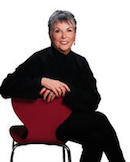
“The good news, when you write with another, is that you never have an empty page in front of you,” Ann said. “The bad news is... you never have an empty page in front of you.”
Share A Writer’s Moment with a friend by clicking the g+1 button below.
April 4, 2018
A Laborer Of The Word
“I see journalists as the manual workers, the laborers of the word. Journalism can only be literature when it is passionate.” – Marguerite Duras
Duras, a French novelist, playwright, screenwriter, essayist, and experimental filmmaker, was born in French Indochina (Vietnam) on this date in 1914 and grew up there in poverty before running away from home as a teenager to live and write in France.
The author of many novels, plays, films, interviews, essays, and works of short fiction, she is best known for tales that recalled her affair with a rich landowner’s son while still living in Vietnam. Leading that list was her best-selling, fictionalized autobiographical work L'Amant, translated into English as The Lover. That book won her the prestigious Goncourt prize. Variations on the story of her teenage affair also appears in The Sea Wall, Eden Cinema and The North China Lover.
In 1983 she was awarded the Grand Prix du Théâtre de l’Académie française, a national theatre prize awarded annually to a playwright in recognition of his/her lifetime body of work. She also was nominated for an Academy Award for Best Original Screenplay for her film Hiroshima mon amour.
 While best known for her novels, plays and films, she also was greatly admired for her many journalistic essays that spoke to human rights and issues of social justice.
“Journalism without a moral position is impossible,” she said. “Every journalist is a moralist. It's absolutely unavoidable.”
Share A Writer’s Moment with a friend by clicking the g+1 button below.
April 3, 2018
What A Character
“If you strive to become a creative writer, whether it be writing novels or short stories or plays, you must become deeply involved in the lives of your characters. You have to laugh and cry and agonize with them. And this involvement doesn’t end in ‘off hours.’ Like it or not, they are with you 24 hours a day. They become part of your life as long as the story is being written.” – Dan Jorgensen
I made this comment during a talk to students at Emporia State University in Kansas during a two-day classroom and lecture series appearance there and one of the writing profs recorded it and sent it to me, (along with this photo)
 and said "you should share nuggets like these with a wider audience, like in your blog."
 Hmmm, put a writing comment into a writing blog. Guess that IS a good idea. Happy writing!
Share A Writer’s Moment with a friend by clicking the g+1 button below.
April 2, 2018
Choosing The Right Path
“For every path you choose, there is another you must abandon, usually forever.”– Joan D. Vinge
Born in Baltimore on this date in 1948, Vinge is best known for such works as her Hugo Award-winning novel The Snow Queen and its sequels and her novelization of movies like Tarzan: King of the Apes, Lost In Spaceand Cowboys & Aliens.
 After starting her career as an anthropologist, Vinge turned to writing in the early 1970s and made it a full-time career change after the success of Snow Queen in 1980. Besides her award for that novel, she also won a Hugo for Best Novelette for her tale "Eyes of Amber,” and has been nominated for several other Hugo and Nebula Awards. Her novel Psion was named a Best Book for Young Adults by the American Library Association.
One hallmark to her writing has been strong, engrossing characters. “I wanted to show those characters,” she said, “discovering it is possible to find common ground, as they make their way through a plotline that I hope is engrossing enough to keep the reader a willing participant.”
Share A Writer’s Moment with a friend by clicking the g+1 button below.
April 1, 2018
Creating A Delicious Promise
“I can think of no other experience quite like that of being 20 or so pages into a book and realizing that this is the real thing: a book that is going to offer the delicious promise of a riveting story, arresting language and characters that will haunt me for days.” – Anita Shreve
Shreve, who died from cancer on Friday at her home in New Hampshire, wrote those kinds of books herself, including the mega-bestsellers The Pilot’s Wife, Testimony and The Weight of Water, all also made into successful movies. Shreve, 71, began writing fiction in the 1960s while still a high school student, and one of her early short stories Past the Island, Drifting, was named for the prestigious O. Henry Prize.
Shreve combined her creative writing with teaching – both in high school and college – and working as a journalist in the U.S. and Africa before writing The Pilot’s Wife in 1999. That book, selected by Oprah Winfrey for her Book Club, catapulted Shreve into her successful full-time writing career, and since then her books have sold millions of copies worldwide.
 Shreve authored 19 novels, and wrote them all in longhand. In a recent interview with The Writer magazine, she explained why she thought writing in longhand was the best thing an author could do. “The creative impulse, the thing that gets deep inside me, goes from the brain to the fingertips. When you’re writing by hand, even when you’re not consciously thinking about it, you’re constructing sentences in the best way possible. And I still get the thrill of the clean pad of notepaper and the pencil all sharpened.”
 Share A Writer’s Moment with a friend by clicking the g+1 button below.
March 31, 2018
From Poetry: True Wisdom
“An unsophisticated forecaster uses statistics as a drunken man uses lamp-posts - for support rather than for illumination.” – Andrew Lang
Born in Scotland on this date in 1844, Lang was a poet, novelist, literary critic, and contributor to the field of anthropology. He is best known as a collector of folk and fairy tales. His Blue Fairy Book (in 1889 and the first of many collections of fairy tales) was a beautifully produced and illustrated edition that has become a classic.
 The author of many hundreds of books, short stories and essays, his writings are studied and frequent quoted around the globe. The annual Andrew Lang Lecture Series at the University of St. Andrews honors his legacy. For Saturday’s Poem from among Lang’s dozens of “Ballades,” here is,
 Ballade of True Wisdom
While others are asking for beauty or fame,
Or praying to know that for which they should pray,
Or courting Queen Venus, that affable dame,
Or chasing the Muses the weary and grey,
The sage has found out a more excellent way -
To Pan and to Pallas his incense he showers,
And his humble petition puts up day by day,
For a house full of books, and a garden of flowers.
Inventors may bow to the God that is lame,
And crave from the fire on his stithy a ray;
Philosophers kneel to the God without name,
Like the people of Athens, agnostics are they;
The hunter a fawn to Diana will slay,
The maiden wild roses will wreathe for the Hours;
But the wise man will ask, ere libation he pay,
For a house full of books, and a garden of flowers.
Oh! grant me a life without pleasure or blame
(As mortals count pleasure who rush through their day
With a speed to which that of the tempest is tame)!
O grant me a house by the beach of a bay,
Where the waves can be surly in winter, and play
With the seaweed in summer, ye bountiful powers!
And I'd leave all the hurry, the noise, and the fray,
For a house full of books, and a garden of flowers.
Share A Writer’s Moment with a friend by clicking the g+1 button below.