Dan Jorgensen's Blog, page 406
April 20, 2018
Writing That 'Re-engages' Readers
What a writer can do, what a fiction writer or a poet or an essay writer can do is re-engage people with their own humanity. – Barbara Kingsolver
I’ve been reading Barbara Kingsolver’s wonderful – and sometimes wrenching – Pigs in Heaven, a great example of what she says above. Kingsolver has a gift for taking an ordinary scene and adding magic to it with her creative and descriptive writing.
 Here are a couple short examples from her remarkable Pigs in Heaven:
 “She’s the first woman he’s ever known who doesn’t give a damn how she looks, or is completely happy with the way she looks, which amounts to the same thing. Usually women are aware of complex formulas regarding how long the legs should be in relation to the waist in relation to the eyelashes – a mathematics indecipherable to men but strangely crucial to women.”
“Mr. Crittenden holds her accountable for every bead. In the morning he puts on his jeweler’s glasses and counts the beads in every piece she’s brought in, to make sure they’re all there. It must be hard work, she thought, this business of mistrust.”
“Alice breathes a little deeper. Sympathizing over the behavior of men is the baking soda of women’s friendships, it seems, the thing that makes them bubble and rise.”
Good writers must first be good readers. Even if you are a very fine writer already, if you read Barbara Kingsolver, I can pretty much guarantee that you’ll only get better.
Share A Writer’s Moment with a friend by clicking the g+1 button below.


April 19, 2018
Those Tales That Tease
“I loved to read when I was a kid, and as soon as I realized that an actual person got to make up the books I loved so much, I decided that that was the job for me.” – Margaret Haddix
Born on this date in 1964, Haddix grew up in a family of voracious readers on a farm in Ohio. She was so enamored with writing that she not only read everything she could get her hands on but started creating her own works in 2nd and 3rd grades.
She said there was never anything else she wanted to be than a writer. She earned degrees in English and Journalism at Miami University in Ohio, first writing for the school newspaper and then for area newspapers in both Ohio and Indiana. She enjoyed reporting but switched to fiction in the early 1990s, doing creative stories inspired by her work as a reporter. While she had a bumpy start – her first works were rejected multiple times – she finally found her niche with Young Adult and Children’s fiction and now has more than 30 books on the market.
Among her many writing awards are the International Reading Association Children's Book Award and several American Library Association listings for Best Books for Young Adults for “The Missing” and “Shadow Children” series. She’s also been selected for Readers' Choice Awards in 29 states.
“Generally I finish a first draft in 2-6 months, then I set it aside for a while so that when I come back to it I can read it with fresh eyes and figure out how to improve it,” she said about her prolific writing style.
 “I know I have to write a story when the story keeps me awake at night, teases at the back of my brain all day, just won’t let me go. And that’s why I became a writer.”
Share A Writer’s Moment with a friend by clicking the g+1 button below.
April 18, 2018
Nurturing The Storytelling Art
“I have two parents who are brilliant storytellers. The art of developing a story and nurturing a story was present in my household from the day I was born.” – Robert Kurson
Born on this date in 1963, Kurson is best known for his bestselling book, Shadow Divers, the true story of two Americans who discover a World War II German U-boat sunk 60 miles off the coast of New Jersey. Shadow Diversspent 24 weeks on the New York Times Bestseller list and was awarded the American Booksellers Association’s 2005 "Book of the Year Award."
A one-time lawyer with a degree from Harvard Law School, Kurson said he always thought writing was his real profession and he first decided to give it a try by working at the Chicago Sun-Times, where he started as a sports writer and quickly moved up to a full-time features writing job.
A self-proclaimed “adventure seeker,” Kurson also wrote one of the best nonfiction pirate books, the 2015 Pirate Hunters: Treasure, Obsession, and the Search for a Legendary Pirate Ship. It is a gripping account of the for the wreck of the 17th-century pirate ship Golden Fleece and pirate captain Joseph Bannister.
“Once you discover that real pirates are more interesting than fictional ones, you can't look away,” Kurson said. “I think that pirates represent every person's ability to get up and leave their current daily situation and go on an adventure, and maybe to see things and do things they've never done before or even dreamed of doing." “It's never too late in life to have a genuine adventure.”
Share A Writer’s Moment with a friend by clicking the g+1 button below.
Born on this date in 1963, Kurson is best known for his bestselling book, Shadow Divers, the true story of two Americans who discover a World War II German U-boat sunk 60 miles off the coast of New Jersey. Shadow Diversspent 24 weeks on the New York Times Bestseller list and was awarded the American Booksellers Association’s 2005 "Book of the Year Award."
A one-time lawyer with a degree from Harvard Law School, Kurson said he always thought writing was his real profession and he first decided to give it a try by working at the Chicago Sun-Times, where he started as a sports writer and quickly moved up to a full-time features writing job.
A self-proclaimed “adventure seeker,” Kurson also wrote one of the best nonfiction pirate books, the 2015 Pirate Hunters: Treasure, Obsession, and the Search for a Legendary Pirate Ship. It is a gripping account of the for the wreck of the 17th-century pirate ship Golden Fleece and pirate captain Joseph Bannister.
“Once you discover that real pirates are more interesting than fictional ones, you can't look away,” Kurson said. “I think that pirates represent every person's ability to get up and leave their current daily situation and go on an adventure, and maybe to see things and do things they've never done before or even dreamed of doing."
 “It's never too late in life to have a genuine adventure.”
Share A Writer’s Moment with a friend by clicking the g+1 button below.
April 16, 2018
Including All In Writing's Moments
“I don't want my books to exclude anyone, but if they have to, then I would rather they excluded the people who feel they are too smart for them!”– Nick Hornby
Hornby, who is English, writes about ordinary people in ways that translate into bestsellers, like Fever Pitch, About a Boy, and High Fidelity. Fever Pitch, while written about a fan’s obsession (based on his own) with English soccer, was made an even bigger hit as an American movie adaptation, where it focused on Jimmy Fallon’s character’s obsession with the Boston Red Sox. That’s the universality of writing sports – one situation or type of sport can be easily adapted into another. I used the technique myself with my Tweens’ book Kelli’s Choice. There, I took what I knew from my baseball playing days - and stories told to me by both my grandfather and father about their days on the diamond - and adapted it to girls’ softball, something I obviously never played. It becomes, of course, all about the people.
Also dedicated to helping kids with special needs, Hornby -- who turns 61 tomorrow -- has sold over 5 million copies of his books and donated many of his royalties to helping kids with autism.
 He also co-founded Ministry of Stories, a nonprofit set up to help children and young adults develop their writing skills, and to support teachers who inspire students to write.
 Happy birthday to one of writing’s really good guys who has, indeed, produced and lived many great writer’s moments.
Share A Writer’s Moment with a friend by clicking the g+1 button below.
April 15, 2018
Embrace Life; No Regrets
“Do not mind anything that anyone tells you about anyone else. Judge everyone and everything for yourself.” – Henry James
Born in New York City on this date in 1843, James grew up in wealth and with many educational opportunities from his early childhood. He aspired to writing while still in elementary school, a love that ultimately led to his full-time career in the profession. By his mid-20s he already was regarded as one of the most skillful writers in America.
By age 30 he had largely relocated to Europe, eventually settling in England and becoming one of the major figures of trans-Atlantic literature. His works frequently juxtapose characters from both Europe and the United States. His fundamental theme was the innocence and exuberance of the New World in clash with the corruption and wisdom of the Old, illustrated in some of his most well known novels like Daisy Miller (1879), The Portrait of a Lady(1881), and The Bostonians (1886).
James wrote hundreds of short stories, novels, books of criticism, travel, biography, autobiography, and plays, earning numerous writing awards, including 3 nominations for the Nobel Prize in Literature.
In an interview shortly before his death in 1915, he gave this advice to young writers: "Live all you can; it's a mistake not to. It doesn't so much matter what you do in particular, so long as you have your life. If you haven't had that what have you had?”

“I think I don't regret a single 'excess' of my responsive youth - I only regret, in my chilled age, certain occasions and possibilities I didn't embrace,”
Share A Writer’s Moment with a friend by clicking the g+1 button below.
April 14, 2018
Poetry Fortifies Your Inner Life
‘If poetry and the arts do anything, they can fortify your inner life, your inwardness.’ – Seamus Heaney
Born on April 13, 1939, Heaney is widely recognized as one of the major poets of the 20th century. A native of Northern Ireland, he was raised in County Derry, and later lived for many years in Dublin.
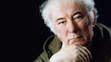 Author of over 20 volumes of poetry and criticism, he won the Nobel Prize for Literature in 1995 "for works of lyrical beauty and ethical depth, which exalt everyday miracles and the living past." For Saturday’s Poem, here is Heaney’s,
Follower
My father worked with a horse-plough,
His shoulders globed like a full sail strung
Between the shafts and the furrow.
The horse strained at his clicking tongue.
An expert. He would set the wing
And fit the bright steel-pointed sock.
The sod rolled over without breaking.
At the headrig, with a single pluck
Of reins, the sweating team turned round
And back into the land. His eye
Narrowed and angled at the ground,
Mapping the furrow exactly.
I stumbled in his hob-nailed wake,
Fell sometimes on the polished sod;
Sometimes he rode me on his back
Dipping and rising to his plod.
I wanted to grow up and plough,
To close one eye, stiffen my arm.
All I ever did was follow
In his broad shadow round the farm.
I was a nuisance, tripping, falling,
Yapping always. But today
It is my father who keeps stumbling
Behind me, and will not go away.
Share A Writer’s Moment with a friend by clicking the g+1 button below.
April 13, 2018
It's What You Do - Every Day
“Whether I'm critically well received, whether or not I sell books - of course it becomes progressively harder to get them published - nevertheless, it's what I do, every day.” – Tama Janowitz
Born on this date in 1957, Janowitz is part of the celebrated “Brat Pack” group of authors – along with Bret Easton Ellis and Jay McInerney from the 1980s. A novelist, short story writer, and close friend of artist Andy Warhol, she first gained acclaim through her 1986 short story collection Slaves of New York, later adapted into a film starring Bernadette Peters.Author of 7 novels, that short story collection, and 3 nonfiction books, including a celebrated memoir, she lived in both Manhattan and Brooklyn before settling near Ithaca, NY, where she continues to write and sometimes teach.
Among her many awards are the graduate fellowship that led to an MFA degree from Columbia, the Alfred Hodder Fellowship in the Humanities at Princeton University, and a grant from the National Endowment for the Arts. While she’s been chastised for her seeming obsession with money – a focus of many of her works – she says it’s just the part of life she’s chosen for her writings.
Her 2016 memoir, Scream: A Memoir of Glamour and Dysfunction, not only touches on that but also her somewhat “wild child” early life that often put her into the gossip columns and (some say) helped her book sales. But Janowitz has no deep desire to relive those years. “I did not particularly like being semi-famous,” she said.
 “I did not write books to be liked.”
Share A Writer’s Moment with a friend by clicking the g+1 button below.
April 12, 2018
That 'Itch' To Share
“A writer writes not because he is educated but because he is driven by the need to communicate. Behind the need to communicate is the need to share. Behind the need to share is the need to be understood.” – Leo Rosten
Born on April 10, 1908, Rosten was an American novelist, scriptwriter and humorist who also had a deep interest in the relationship of politics and the media and the intricacies of their connections.
 An immigrant (from Russia), Rosten grew up in New York City, started writing at age 9 and worked his way through all levels of school, including earning his doctorate degree at the University of Chicago. After starting as an economist, he did a series of government information jobs during WWII, wrote the first of many successful screenplays, and began a writing career that included 22 years at Look magazine as a feature writer and essayist. Fascinated by the power of of well-placed words, he once noted, “Words must surely be counted among the most powerful drugs man ever invented.”
 Rosten, who died in 1997, counted major luminaries in journalism, politics and the cinema as friends and confidantes and was a much sought-after speaker. His quotes were often shared, including one of his most famous – a version of which is often misattributed to Emerson. "The purpose of life is not to be happy. It is to be useful, to be honorable. It is to be compassionate. It is to matter; to have it make some difference that you lived."
Share A Writer’s Moment with a friend by clicking the g+1 button below.
Words: A Most Powerful Drug
“A writer writes not because he is educated but because he is driven by the need to communicate. Behind the need to communicate is the need to share. Behind the need to share is the need to be understood.” – Leo Rosten
Born on April 10, 1908, Rosten was an American novelist, scriptwriter and humorist who also had a deep interest in the relationship of politics and the media and the intricacies of their connections.
An immigrant (from Russia), Rosten grew up in New York City, started writing at age 9 and worked his way through all levels of school, including earning his doctorate degree at the University of Chicago. After starting as an economist, he did a series of government information jobs during WWII, wrote the first of many successful screenplays, and began a writing career that included 22 years at Look magazine as a feature writer and essayist. Fascinated by the power of of well-placed words, he once noted, “Words must surely be counted among the most powerful drugs man ever invented.” Rosten, who died in 1997, counted major luminaries in journalism, politics and the cinema as friends and confidantes and was a much sought-after speaker. His quotes were often shared, including one of his most famous – a version of which is often misattributed to Emerson. "The purpose of life is not to be happy. It is to be useful, to be honorable. It is to be compassionate. It is to matter; to have it make some difference that you lived."
Share A Writer’s Moment with a friend by clicking the g+1 button below.
April 11, 2018
Celebrating Libraries
“Whatever the cost of our libraries, the price is cheap compared to that of an ignorant nation.”– Walter Cronkite
This is National Library Week (April 8-14) and today (April 11) is National Bookmobile Day. Celebrated since 1958, National Library Week is sponsored by the American Library Association (ALA) and libraries across the country. It is a time to celebrate the contributions of our nation's libraries and librarians and to promote library use and support. All types of libraries - school, public, academic and special - participate. This year’s theme is “Libraries Transform: Libraries Lead.”
National Bookmobile Day is an opportunity for bookmobiles fans to make their support known—through thanking bookmobile staff, writing a letter or e-mail to their libraries, or voicing their support to community leaders.

 Walter Cronkite & Misty Copeland This year’s National Library Week Honorary Chairperson is American Ballet Theater principal dancer Misty Copeland, who also is a 3-time best-selling author for her memoir, Life in Motion, her picture book, Firebird, and her young people’s book, Ballerina Body. When asked by writer Amy Carlton what role libraries have played in her own life, Copeland said, “As a child, the library was a place to dream, learn, and escape. When you don’t have the means to travel or see possibilities for yourself, you can be transported through books and pushed to use your imagination.”
Share A Writer’s Moment with a friend by clicking the g+1 button below.