Dan Jorgensen's Blog, page 412
February 25, 2018
Perserverence: A Key To Success
“What a writer asks of his reader is not so much to like as to listen.” – Henry Wadsworth Longfellow
Born on Feb. 27, 1807, Longfellow may be the only American poet to ever have a rock song written about him. Neil Diamond's 1974 hit, “Longfellow Serenade,” and his reverence for Longfellow only echoes the reverence people had for the man when he was living in the mid-19th Century.
Longfellow wrote many lyric poems often known for their musicality and for presenting stories of mythology and legend, including the renowned Song of Hiawatha and the favorite of school children almost from its first day, The Midnight Ride of Paul Revere.
 He was the most popular American poet of his day and also had success overseas. So admired in the U.S. that his poems commanded huge fees for the time, young people turned out to welcome him much like rock stars of today are greeted when they come to town. His 70thbirthday took on the air of a national holiday, with parades, speeches, and the reading of his poetry.
 Although a “rock star” at the end, the beginning of his career started more slowly. “Overnight success” didn’t come until he’d been writing for more than 20 years. “Perserverance is a great element of success,” he said. “If you only knock long enough and loud enough at the gate, you are sure to wake up somebody eventually.”
Share A Writer’s Moment with a friend by clicking the g+1 button below.


Perserverence Leads To Success
“What a writer asks of his reader is not so much to like as to listen.” – Henry Wadsworth Longfellow
Born on Feb. 27, 1807, Longfellow may be the only American poet to ever have a rock song written about him. Neil Diamond's 1974 hit, “Longfellow Serenade,” and his reverence for Longfellow only echoes the reverence people had for the man when he was living in the mid-19th Century.
Longfellow wrote many lyric poems often known for their musicality and for presenting stories of mythology and legend, including the renowned Song of Hiawatha and the favorite of school children almost from its first day, The Midnight Ride of Paul Revere.
He was the most popular American poet of his day and also had success overseas. So admired in the U.S. that his poems commanded huge fees for the time, young people turned out to welcome him much like rock stars of today are greeted when they come to town. His 70thbirthday took on the air of a national holiday, with parades, speeches, and the reading of his poetry. Although a “rock star” at the end, the beginning of his career started more slowly. “Overnight success” didn’t come until he’d been writing for more than 20 years. “Perserverance is a great element of success,” he said. “If you only knock long enough and loud enough at the gate, you are sure to wake up somebody eventually.”
Share A Writer’s Moment with a friend by clicking the g+1 button below.
Perserverence Can Lead To Success
“What a writer asks of his reader is not so much to like as to listen.” – Henry Wadsworth Longfellow Born on Feb. 27, 1807, Longfellow may be the only American poet to ever have a rock song written about him. Neil Diamond's 1974 hit, “Longfellow Serenade,” and his reverence for Longfellow only echoes the reverence people had for the man when he was living in the mid-19th Century.
Longfellow wrote many lyric poems often known for their musicality and for presenting stories of mythology and legend, including the renowned Song of Hiawatha and the favorite of school children almost from its first day, The Midnight Ride of Paul Revere.
He was the most popular American poet of his day and also had success overseas. So admired in the U.S. that his poems commanded huge fees for the time, young people turned out to welcome him much like rock stars of today are greeted when they come to town. His 70thbirthday took on the air of a national holiday, with parades, speeches, and the reading of his poetry. Although a “rock star” at the end, the beginning of his career started more slowly. “Overnight success” didn’t come until he’d been writing for more than 20 years. “Perserverance is a great element of success,” he said. “If you only knock long enough and loud enough at the gate, you are sure to wake up somebody eventually.”
Share A Writer’s Moment with a friend by clicking the g+1 button below.
February 24, 2018
The Poetry of Life
“No poet or novelist wishes he were the only one who ever lived, but most of them wish they were the only one alive, and quite a number fondly believe their wish has been granted.” – W. H. Auden
Born in February 1907, Auden was an English-American poet noted for his stylistic and technical achievement, his engagement with politics, morals, love, and religion. He won the Pulitzer Prize for Poetry for his 1947 long poem The Age of Anxiety. Auden, who died in 1973, also was a prolific writer of essays and reviews and worked on documentary films, poetic plays, and music. “No poet or novelist wishes he were the only one who ever lived, but most of them wish they were the only one alive, and quite a number fondly believe their wish has been granted.” – W. H. Auden
Born in February 1907, Auden was an English-American poet noted for his stylistic and technical achievement, and his engagement with politics, morals, love, and religion. He won the Pulitzer Prize for Poetry for his 1947 long poem The Age of Anxiety. Auden,who died in 1973, also was a prolific writer of essays and reviews and worked on documentary films, poetic plays, and music.
 “A verbal art like poetry is reflective; it stops to think,” he said. “Music is immediate, it goes on to become.” For Saturday’s Poem, here is Auden’s If I Could Tell YouTime will say nothing but I told you so
 Time only knows the price we have to pay;
If I could tell you I would let you know.
If we should weep when clowns put on their show,
If we should stumble when musicians play,
Time will say nothing but I told you so.
There are no fortunes to be told, although,
Because I love you more than I can say,
If I could tell you I would let you know.
The winds must come from somewhere when they blow,
There must be reason why the leaves decay;
Time will say nothing but I told you so.
Perhaps the roses really want to grow,
The vision seriously intends to stay;
If I could tell you I would let you know.
Suppose the lions all get up and go,
And the brooks and soldiers run away;
Will Time say nothing but I told you so?
If I could tell you I would let you know.
Share A Writer’s Moment with a friend by clicking the g+1 button below.
February 22, 2018
'Being' a Full-Time Writer
“I think I'm a writer, and it's my job. People in other professions are expected to do their jobs all the time. Why shouldn't I?”– Richard Greenberg
Born on this date in 1958, Greenberg is a playwright and television writer who has written more than three-dozen plays, including the multiple award-winning Take Me Out and the highly acclaimed Dazzle, a finalist for The Pulitzer Prize.
A native of East Meadow, NY, Greenberg studied under Joyce Carol Oates at Princeton and went on to the Yale School of Drama’s playwriting program and early on wondered aloud about his choice of careers. “When you're writing plays, it's possible to believe you don't have any real world skill,” he said. “When you're adapting, it is really all about the mechanics, so you feel closer to, I don't know, an accountant or someone who has a body of information. It's not all about temperament.”
Noted for his intellectual and witty use of language,
 he was the first winner of the PEN/Laura Pels Award for a playwright in mid-career (in 1998). His writing style might be considered unorthodox but it definitely has paid big dividends for him.
 “I don't write a play from beginning to end. I don't write an outline,” he said. “I write scenes and moments as they occur to me. And I still write on a typewriter. It's not all in ether. It's on pages. I sequence them in a way that tends to make sense. Then I write what's missing, and that's my first draft.”
Share A Writer’s Moment with a friend by clicking the g+1 button below.
February 21, 2018
A Catalyst for Laughter and Joy
“If you can't make it better, you can laugh at it.”– Erma Bombeck
Born on this date in 1927, Erma Bombeck was perhaps the “most read” columnist in America and Canada in her lifetime, with more than 30 million readers per week in some 900 newspapers across the two nations.
A self-proclaimed “chronicler of suburban life,” she also published 15 books, most of which became bestsellers, and wrote over 4,000 newspaper columns, using broad and sometimes eloquent humor. She died at age 69 after battling nearly a lifelong kidney problem complicated further by a bout with breast cancer. Even during treatment she found humor, once noting, “Never go to a doctor whose office plants have died.”
 Bombeck’s writing began at the University of Dayton where she worked for the school newspaper. After college she wrote for the Dayton Herald, but said her “straight news” writing was less than staller. “I was terrible at straight items,” she said. “When I wrote obituaries, my mother said the only thing I ever got them to do was die in alphabetical order.” After becoming a stay-at-home mom, she started writing a weekly humor column for the Dayton Shopping News and the rest, as they say…
 Her popularity led to regular appearances on radio and television and even as catalyst for the 1986 Rose Parade theme – “A Celebration of Laughter” – where she was named Grand Marshal. Bombeck also wrote eloquently for human rights and against poverty, disease and hunger. Her book I Want to Grow Hair, I Want to Grow Up, I Want to Go to Boise: Children Surviving Cancer, raised millions for medical causes and received the American Cancer Society’s Medal of Honor.
While battling her own illnesses, she said she planned to write as long as possible. “When I stand before God at the end of my life, I would hope that I would not have a single bit of talent left, and could say, 'I used everything you gave me'.”
Share A Writer’s Moment with a friend by clicking the g+1 button below.
February 20, 2018
Write the Books You Want to Read
“You have to have heart's passion to write a novel.”– Alan Furst
Born in New York City on this date in 1941, Furst is noted for spy novels set just prior to World War II, an era and genre’ he first explored in the late 1980s after taking a trip along the Danube. Before becoming a full-time novelist, he studied English at Oberlin College, worked in advertising and wrote articles for both magazines and newspapers, including the prestigious International Herald Tribune in Paris.
Furst, who arguably can lay claim to the title “Inventor of the Historical Spy Novel,” has especially been lauded for his successful evocations of Eastern European peoples and places during the tumultuous era of 1933-1942. While all of his historical espionage novels are loosely connected, only his mega-bestsellers The World at Night and Red Gold share a common plot.
“I write about the period 1933-42, and I read books written during those years,” Furst said. “(I read) books by foreign correspondents of the time, histories of the time written contemporaneously or just afterwards, autobiographies and biographies of people who were there.” That, he said, has been a key to his success in bringing the period to life in his many bestselling books. “I don't really write plots. I use history as the engine that drives everything."
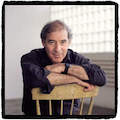 “My theory is that sometimes writers write books because they want to read them and they aren't there to be read. And I think that was true of me.”
Share A Writer’s Moment with a friend by clicking the g+1 button below.
February 19, 2018
Following Her Writing Instincts
“The sky is always beautiful. Even when it’s dark or rainy or cloudy, it’s still beautiful to look at. It’s my favorite thing because I know if I ever get lost or lonely or scared, I just have to look up and it’ll be there no matter what...and I know it’ll always be beautiful.” – Colleen Hoover
Colleen Hoover wrote her first novel Slammed just wanting to get the words on paper while they were in her head. The Sulphur Springs, Tex., resident was inspired by a line from an Avett Brothers song that said “Decide to be and go with it.” Throughout her first book, published in 2012, she refers to other lyrics from that same song “Head full of doubt/Road full of promise.” That writing formula was one that not only worked for her but also for her readers, and she’s been popular ever since.
Slammed, which she decided to self-publish,became the first of 11 best-selling YA books and half-dozen novellas.
 Definitely a testament to following your instincts – always a good trait for someone who wants to try writing and has a good feeling about what she has written.
As for her writing style, she said it’s very simple. “I'm not the type of writer who writes to educate or inform my readers. I simply write to entertain them.”
Share A Writer’s Moment with a friend by clicking the g+1 button below.
February 18, 2018
Entertaining and Enlightening With Her Words
“I have to entertain, because if I don't entertain you, you're not going to continue reading. But if I'm not out to enlighten, or change your mind about something, or change your behavior, then I really don't want to take the journey.” – Bebe Moore Campbell
Born in Philadelphia on this date in 1950, Campbell was an author, journalist and teacher who penned 3 New York Times bestsellers – Brothers and Sisters, Singing in the Comeback Choir, and What You Owe Me – before her death from cancer in 2006. What You Owe Me was also a Los Angeles Times “Best Book of 2001.”
Interested in writing from her high school days, she graduated from the University of Pittsburgh and taught elementary school before taking a chance on her writing skills, working as both a journalist and creative writer. Among her other acclaimed writings was the novel Your Blues Ain't Like Mine, a New York Times Notable Book of the Year and the winner of the NAACP Image Award for Literature.
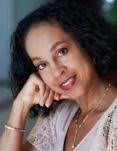 Her many essays, articles, and excerpts appear in many anthologies.
Campbell always said that writing should be a joy and she advised new writers to look at any opportunity to do so. “I would get up at 3 in the morning and write. Or sometimes I would write at midnight. Or I would write when my child napped. It wasn't a burden. I was so enthused about what I was doing at the time that I really didn't mind.”
Share A Writer’s Moment with a friend by clicking the g+1 button below.
February 17, 2018
Architecture For Our Lives
“Poetry is not only dream and vision; it is the skeleton architecture of our lives. It lays the foundations for a future of change, a bridge across our fears of what has never been before.” – Audre Lorde
Born on Feb. 18, 1934, Lorde was a writer and civil rights activist best known for poetry that deals with issues related to civil rights, feminism, and the exploration of black female identity. Among her most powerful and oft-quoted writings are the award-winning book of poetry, Coal, and her book on women’s rights, Sister Outsider: Essays and Speeches.
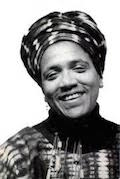 She also wrote and spoke eloquently about battling cancer, a disease from which she died at age 58.
For Saturday’s Poem here is Lorde’s,
Coping
It has rained for five days
running
the world is
a round puddle
of sunless water
where small islands
are only beginning
to cope
a young boy
in my garden
is bailing out water
from his flower patch
when I ask him why
he tells me
young seeds that have not seen sun
forget
and drown easily.
Share A Writer’s Moment with a friend by clicking the g+1 button below.