Goodreads helps you follow your favorite authors. Be the first to learn about new releases!
Start by following Michael Foley.

Showing 1-30 of 75
“The talent for self-justification is surely the finest flower of human evolution, the greatest achievement of the human brain. When it comes to justifying actions, every human being acquires the intelligence of an Einstein, the imagination of a Shakespeare, and the subtlety of a Jesuit.”
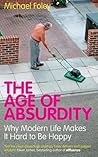
― The Age of Absurdity: Why Modern Life makes it Hard to be Happy
― The Age of Absurdity: Why Modern Life makes it Hard to be Happy
“However, the serious seeker of detachment will have to embrace the Holy Trinity of Ss - Solitude, Stillness and Silence - and reject the new religion of Commotionism, which believes that the meaning of life is constant company, movement and noise.”
―
―
“Being constantly the hub of a network of potential interruptions provides the excitement and importance of crisis management. As well as the false sense of efficiency in multitasking, there is the false sense of urgency in multi-interrupt processing.”
― The Age of Absurdity: Why Modern Life makes it Hard to be Happy
― The Age of Absurdity: Why Modern Life makes it Hard to be Happy
“To learn to die is to learn to live. Death is the giver of life.”
― The Age of Absurdity: Why Modern Life makes it Hard to be Happy
― The Age of Absurdity: Why Modern Life makes it Hard to be Happy
“Employees hate meetings because they reveal that self-promotion, sycophancy, dissimulation and constantly talking nonsense in a loud confident voice are more impressive than merely being good at the job - and it is depressing to lack these skills but even more depressing to discover one's self using them.”
― Embracing the Ordinary: Lessons From the Champions of Everyday Life
― Embracing the Ordinary: Lessons From the Champions of Everyday Life
“After a lifetime of engaging in long, passionate discussions I have come to the conclusion that it is a waste of time trying to convince anyone of anything.”
― Embracing the Ordinary: Lessons From the Champions of Everyday Life
― Embracing the Ordinary: Lessons From the Champions of Everyday Life
“It may well be that an analysis of figures would reveal a law - the duration of a marriage is inversely proportional to the cost of the wedding. Or, to put it another way, any union celebrated with personalized toasting flutes is doomed.”
― The Age of Absurdity: Why Modern Life makes it Hard to be Happy
― The Age of Absurdity: Why Modern Life makes it Hard to be Happy
“Day offers two equally necessary sacraments - the benediction of morning and the absolution of dusk. In the morning coffee blesses and in the evening wine absolves.”
― Embracing the Ordinary: Lessons From the Champions of Everyday Life
― Embracing the Ordinary: Lessons From the Champions of Everyday Life
“It is not possible to be original by trying to be original - those who attempt this in the arts will be merely avant-garde. Originality is the product of an impulse to intense and overwhelming that it bursts the conventions and produces something new - again more by accident than design.”
― The Age of Absurdity: Why Modern Life makes it Hard to be Happy
― The Age of Absurdity: Why Modern Life makes it Hard to be Happy
“The 1970s was the decade of liberation, of anger at injustice and demands for recognition and rights. But over time, the demand for specific rights degraded into a generalized sense of entitlement, the demand for specific recognition into a generalized demand for attention and the anger at specific injustice into a generalized feeling of grievance and resentment. The result is a culture of entitlement, attention-seeking and complaint.”
― The Age of Absurdity: Why Modern Life makes it Hard to be Happy
― The Age of Absurdity: Why Modern Life makes it Hard to be Happy
“Put any two people together and each will seek ways of feeling superior to the other. If a ship went down in the Pacific and a single sailor managed to swim to a desert island, would he be pleased to see, ten minutes later, another sailor emerging from the surf? Quite possibly - but only if the new arrival accepted that the first man was now a landed aristocrat while he himself was an illegal immigrant.”
― Embracing the Ordinary: Lessons From the Champions of Everyday Life
― Embracing the Ordinary: Lessons From the Champions of Everyday Life
“Snobbery management is as difficult and necessary as anger management.”
― Embracing the Ordinary: Lessons From the Champions of Everyday Life
― Embracing the Ordinary: Lessons From the Champions of Everyday Life
“Reverence for potential is a form of greed that believes there is always something better just ahead. But the spell of potential enchants the future at the expense of disenchanting the present. Whatever is actually happening today is already so yesterday, and the only true excitement is the Next Big Thing - the next lover, job, project, holiday, destination or meal. As a consequence, the most attractive solution to problems is flight. If there are difficulties in a relationship or at work, the temptation is to move on. This, in turn, rules out the satisfactions of confronting and surmounting problems and destroys the crucial ability to make use of tribulations, to turn to advantage whatever happens.”
― The Age of Absurdity: Why Modern Life makes it Hard to be Happy
― The Age of Absurdity: Why Modern Life makes it Hard to be Happy
“And a sensible work strategy might be: surrender to the task but not to the taskmaster, become absorbed in the work itself but never absorb the work ethos.”
― The Age of Absurdity: Why Modern Life makes it Hard to be Happy
― The Age of Absurdity: Why Modern Life makes it Hard to be Happy
“As royalty, celebrities and the rich have always known, a smile is the most subtle and satisfying way of shitting on the inferior.”
― Embracing the Ordinary: Lessons From the Champions of Everyday Life
― Embracing the Ordinary: Lessons From the Champions of Everyday Life
“94 per cent of us think we do above-average work.”
― The Age of Absurdity: Why Modern Life makes it Hard to be Happy
― The Age of Absurdity: Why Modern Life makes it Hard to be Happy
“Proust is famous for his rhapsodies on hawthorns but his book has only three of these, whereas there are thirteen scenes in brothels, one especially detailed episode running to more than forty pages. Few critics mention the brothels but they are more fun than the hawthorns.”
― Embracing the Ordinary: Lessons From the Champions of Everyday Life
― Embracing the Ordinary: Lessons From the Champions of Everyday Life
“Imagine someone sitting alone in a room without television, radio, computer or phone and with the door closed and the blinds down. This person must be a dangerous lunatic or a prisoner sentenced to solitary confinement. If a free agent, then a panty-sniffing loser shunned by society, or a psycho planning to return to college with an automatic weapon and a backpack full of ammo.”
― The Age of Absurdity: Why Modern Life makes it Hard to be Happy
― The Age of Absurdity: Why Modern Life makes it Hard to be Happy
“Only a determined and resourceful scholar could establish manuscript precedence - but in the race to masturbate on a printed page Proust definitely came first.”
― Embracing the Ordinary: Lessons From the Champions of Everyday Life
― Embracing the Ordinary: Lessons From the Champions of Everyday Life
“In sex women are largely guided by their sensible bodies but men are driven crazy by their feverish minds. Men love to think and talk about sex; women enjoy it while it lasts, if they can, and have little interest in pre-match build-up or post-match analysis.”
― Embracing the Ordinary: Lessons From the Champions of Everyday Life
― Embracing the Ordinary: Lessons From the Champions of Everyday Life
“Marxists interpreted everything in terms of class; Freudians in terms of childhood; and feminists in terms of gender.”
― The Age of Absurdity: Why Modern Life makes it Hard to be Happy
― The Age of Absurdity: Why Modern Life makes it Hard to be Happy
“The perfect servant is the one who attends to all the master's whims - anyone can do that - but the one who anticipates the whims.”
― Embracing the Ordinary: Lessons From the Champions of Everyday Life
― Embracing the Ordinary: Lessons From the Champions of Everyday Life
“And, like Buddha, Spinoza is often dismissed as a mere seeker of tranquillity – but what he valued most was joy, which he defined as a sense of empowerment created by the understanding mind. But, again as in the teachings of Buddha, understanding is not a passive, final state, but a process requiring ceaseless effort. In another insight prefiguring neurobiology, which defines living organisms as systems for optimizing life conditions, Spinoza suggested that our very nature is to strive. His Latin word for human nature, conatus, means ‘striving’ or ‘endeavour’: ‘The striving by which each thing attempts to persevere in its being is nothing other than the actual essence of the thing.’ And the striving has to be difficult to be valuable: ‘If salvation were readily available and could be attained without great effort, how could it be neglected by almost everyone? All that is excellent is as difficult to attain as it is rare.”
― The Age of Absurdity: Why Modern Life makes it Hard to be Happy
― The Age of Absurdity: Why Modern Life makes it Hard to be Happy
“Het centrale proustiaanse besef bestond eruit dat niets in de psychologie van de mens eenvoudig is en dat er geen misleidender gedrag bestaan dan dat wat voor de hand liggend lijkt. Niet alleen draagt iedereen een masker, maar mensen hebben ook verschillende maskers, een hele garderobe vol, voor verschillende gelegenheden. Het leven is een gemaskerd bal waar alle deelnemers met een grote koffer vol maskers naartoe komen voor elke ontmoeting een ander exemplaar opzetten.
Mensen begrijpen wordt nog verder bemoeilijkt door het feit dat alle kennis over anderen relatief is en volledig afhangt van de waarnemer (wat dat betreft zat Proust op één lijn met de moderne fysica). Er kan geen onbevooroordeeld, goddelijk begrip zijn, want de waarnemer oefent altijd invloed uit op de geobserveerde. Een ander probleem is dat de geobserveerde een bewegend doelwit is: mensen veranderen voortdurend, maar op subtiele manieren die moeilijk waarneembaar en nog moeilijker te beschrijven zijn. Een van de lastigste opgaven voor een romanschrijver is om het karakter weer te geven als een proces, als een voortdurend op onvoorspelbare manieren veranderende entiteit die tegelijk, paradoxaal genoeg, in essentie hetzelfde blijft. [...]
Het sociale leven is dus een ingewikkeld rollenspel tussen wat mensen eigenlijk zijn, wat ze zelf denken te zijn, hoe graag door anderen gezien willen worden en wat anderen feitelijk zien. Het komt maar zelden voor dat deze percepties met elkaar overeenkomen. Mensen veranderen ook voortdurend, maar zijn zich daar overwegend niet van bewust omdat ze zodanig door het rollenspel in beslag worden genomen dat ze geen ruimte hebben om nog iets anders dan hun eigen optreden te zien - en dus zijn de mogelijkheden voor misverstanden en conflicten schier eindeloos.”
― Lang leve het gewone. De lessen van het alledaagse leven.
Mensen begrijpen wordt nog verder bemoeilijkt door het feit dat alle kennis over anderen relatief is en volledig afhangt van de waarnemer (wat dat betreft zat Proust op één lijn met de moderne fysica). Er kan geen onbevooroordeeld, goddelijk begrip zijn, want de waarnemer oefent altijd invloed uit op de geobserveerde. Een ander probleem is dat de geobserveerde een bewegend doelwit is: mensen veranderen voortdurend, maar op subtiele manieren die moeilijk waarneembaar en nog moeilijker te beschrijven zijn. Een van de lastigste opgaven voor een romanschrijver is om het karakter weer te geven als een proces, als een voortdurend op onvoorspelbare manieren veranderende entiteit die tegelijk, paradoxaal genoeg, in essentie hetzelfde blijft. [...]
Het sociale leven is dus een ingewikkeld rollenspel tussen wat mensen eigenlijk zijn, wat ze zelf denken te zijn, hoe graag door anderen gezien willen worden en wat anderen feitelijk zien. Het komt maar zelden voor dat deze percepties met elkaar overeenkomen. Mensen veranderen ook voortdurend, maar zijn zich daar overwegend niet van bewust omdat ze zodanig door het rollenspel in beslag worden genomen dat ze geen ruimte hebben om nog iets anders dan hun eigen optreden te zien - en dus zijn de mogelijkheden voor misverstanden en conflicten schier eindeloos.”
― Lang leve het gewone. De lessen van het alledaagse leven.
“Verlangen doet alles bloeien, bezit verwelkt.”
― Lang leve het gewone. De lessen van het alledaagse leven.
― Lang leve het gewone. De lessen van het alledaagse leven.
“Stupidity, selfishness and good health are the three prerequisites of happiness, though if stupidity is lacking the others are useless.”
― The Age of Absurdity: Why Modern Life makes it Hard to be Happy
― The Age of Absurdity: Why Modern Life makes it Hard to be Happy
“The drive to make everything lightweight is depriving us of the the deep reassurance of heft.”
― Embracing the Ordinary: Lessons From the Champions of Everyday Life
― Embracing the Ordinary: Lessons From the Champions of Everyday Life
“Snatch religion back from the clerics and literature from the critics.”
― Embracing the Ordinary: Lessons From the Champions of Everyday Life
― Embracing the Ordinary: Lessons From the Champions of Everyday Life
“To survive is to strive. The problem is the tendency to strive for the wrong things, especially to emulate those who have found worldly success. The human creature is a search engine of great power and sophistication, but with little idea of how to choose search parameters or evaluate results. So, when misguided striving fails to provide satisfaction, there is a tendency to believe that the alternative must be a rejection of all striving, that the answer is to lie on a Caribbean beach lathered in coconut oil.”
― The Age of Absurdity: Why Modern Life makes it Hard to be Happy
― The Age of Absurdity: Why Modern Life makes it Hard to be Happy
“So a contemporary wedding is like the Olympic Games, a spectacle of detailed research and preparation but lasts only a short time. Even if it all goes according to plan, a wedding is over in a day, much of it spent being ordered around by photographers, and when the audience is gone and the costumes returned to their boxes (never again to be taken out), an ordinary man and woman look to each other and think: 'Is this all it is?”
― The Age of Absurdity: Why Modern Life makes it Hard to be Happy
― The Age of Absurdity: Why Modern Life makes it Hard to be Happy