
Discover new books on Goodreads
Meet your next favorite book

Greg
https://www.goodreads.com/gregfielder


to-read
(1)
currently-reading (3)
read (1121)
did-not-finish (0)
2026 (68)
2026-fiction (25)
2026-nonfiction (23)
2026-bio-memoir (20)
audiobooks (237)
fiction (209)
religion-faith-church (185)
bio-memoir (139)
currently-reading (3)
read (1121)
did-not-finish (0)
2026 (68)
2026-fiction (25)
2026-nonfiction (23)
2026-bio-memoir (20)
audiobooks (237)
fiction (209)
religion-faith-church (185)
bio-memoir (139)
2025
(105)
2019 (94)
2018 (90)
2023 (80)
race (78)
2021 (77)
2024 (76)
2020 (70)
2022 (70)
influential-books (67)
music (56)
2013 (54)
2019 (94)
2018 (90)
2023 (80)
race (78)
2021 (77)
2024 (76)
2020 (70)
2022 (70)
influential-books (67)
music (56)
2013 (54)



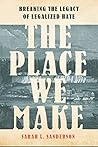
I have a White friend who believes that a hyper-focus on racism has led Black people to see racism where it doesn’t exist. “If you tell them that racism is happening, of course they’re going to see it all over the place,” she insists. “It’s
...more


“We all love justice … until there’s a cost. But here’s the tension and truth: There’s always a cost to doing justice. And there’s always a cost to following Jesus.”
― Overrated: Are We More in Love with the Idea of Changing the World Than Actually Changing the World?
― Overrated: Are We More in Love with the Idea of Changing the World Than Actually Changing the World?
“Do you want to be safe, or do you really want to change the world? The conflict is that we want to be brave, we want to take risks . . .but we also want to be safe. The problem is, we can't have it both ways.
We want the American dream: to graduate from high school, go college, get a degree, and then what? Find the love of your life and get married. Then what? Get a job. Then what? Buy a car, buy a house, buy life insurance. Then what? Grow old and retire. Then what? ls that it? ls that all there is?
In fact, couldn't we just sum up the entire American dream in the single word "safety"? That's what it's all about. No matter what you want out of life, you can achieve it in America in comfort, style, and in the end, safety. But there is a problem. We cannot be safe and take risks at the same time.
Eleanor Roosevelt said, 'You gain strength, courage and confidence by every experience in which you really stop to look fear in the face. You must do the thing which you think you cannot do' and 'Do something every day that scares you.'
This can get messy. It gets uncomfortable. It means touching people who are dying of diseases. It means going to the filthy slums, the garbage dumps, the places we would never normally go . . . just to reach that one hurting person.
So we must answer the question: Do we want to stay safe, or do we want to change the world? We can't have it both ways.”
― Awake: Doing A World Of Good One Person At A Time
We want the American dream: to graduate from high school, go college, get a degree, and then what? Find the love of your life and get married. Then what? Get a job. Then what? Buy a car, buy a house, buy life insurance. Then what? Grow old and retire. Then what? ls that it? ls that all there is?
In fact, couldn't we just sum up the entire American dream in the single word "safety"? That's what it's all about. No matter what you want out of life, you can achieve it in America in comfort, style, and in the end, safety. But there is a problem. We cannot be safe and take risks at the same time.
Eleanor Roosevelt said, 'You gain strength, courage and confidence by every experience in which you really stop to look fear in the face. You must do the thing which you think you cannot do' and 'Do something every day that scares you.'
This can get messy. It gets uncomfortable. It means touching people who are dying of diseases. It means going to the filthy slums, the garbage dumps, the places we would never normally go . . . just to reach that one hurting person.
So we must answer the question: Do we want to stay safe, or do we want to change the world? We can't have it both ways.”
― Awake: Doing A World Of Good One Person At A Time

“Christians best thrive as a minority, a counterculture. Historically, when they reach a majority they too have yielded to the temptations of power in ways that are clearly anti-gospel. Charlemagne ordered a death penalty for all Saxons who would not convert, and in 1492 Spain decreed that all Jews convert to Christianity or be expelled. British Protestants in Ireland once imposed a stiff fine on anyone who did not attend church and deputies forcibly dragged Catholics into Protestant churches. Priests in the American West sometimes chained Indians to church pews to enforce church attendance. After many such episodes in Christendom it became clear that religion allied too closely to the state leads to the abuse of power. Much of the current hostility against Christians evokes the memory of such examples. The blending of church and state may work for a time but it inevitably provokes a backlash, such as that seen in secular Europe today.”
― Vanishing Grace: What Ever Happened to the Good News?
― Vanishing Grace: What Ever Happened to the Good News?
“Christianity is, at its core, a minority religion. Those who follow Jesus must follow him in vulnerability. Christians don’t have any formal power or influence in the world. Those who try to accomplish God’s mission through power cannot follow Jesus in his work, because the way to follow Jesus is the way of powerlessness. The way of Jesus leads us to the cross.”
― Shrink: Faithful Ministry in a Church-Growth Culture
― Shrink: Faithful Ministry in a Church-Growth Culture

“Some might argue that the current generation seems uninterested in Christianity because they want to avoid issues like sin and repentance, but I don’t think that’s the case. I think people are hungry for Jesus, but they are starting to realize they have been fed a cheap American version, and they are rightly rejecting this counterfeit. Their rejection should be seen not as a rejection of Jesus, but a rejection of obscured versions of him.”
― Undiluted: Rediscovering the Radical Message of Jesus
― Undiluted: Rediscovering the Radical Message of Jesus

Greg’s 2025 Year in Books
Take a look at Greg’s Year in Books, including some fun facts about their reading.

208 books
|
10 friends

601 books
|
214 friends

18 books
|
6 friends

1,271 books
|
498 friends

295 books
|
103 friends

2,042 books
|
328 friends

768 books
|
86 friends

387 books
|
1,073 friends
More friends…


Favorite Genres
Polls voted on by Greg
Lists liked by Greg