This will prevent Lavinia from sending you messages, friend request or from viewing your profile. They will not be notified. Comments on discussion boards from them will be hidden by default.
Lavinia said:
"
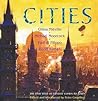
Read with a book group that knows way more about James Joyce than I do. I chose this edition because it had a greater surface area than the other edition in the store, but I feel it's inherently biasing because all the people on the cover look absoluRead with a book group that knows way more about James Joyce than I do. I chose this edition because it had a greater surface area than the other edition in the store, but I feel it's inherently biasing because all the people on the cover look absolutely miserable.
Eveline (read 2024-1-18): An extremely subtle, very short story. Eveline is a downtrodden working-class woman additionally burdened by an abusive and needy family. She meets Frank, a young sailor who dates her for a few weeks and offers to make her his bride in Buenos Aires. There are two levels depending on whether you think Frank is being frank.
In one universe, Frank is a predator who lures Eveline to Liverpool with promises of Argentina. He would have sex with her there and abandon her, socially ruined. At the very last second, she turns away and escapes this fate. Her life in Dublin is dreary and not to be missed, but she has a purpose there: she promised her mother at her deathbed that she'd keep the family together. Duty outweighs seduction. Eveline will curse herself some days that she didn't go with Frank, never knowing that it was all a lie.
In another universe, Frank is a sincere young man who struck it rich and wants an Irish wife to raise their children and keep his house in the ways of the old country. Eveline stares down a dark future of physical abuse and possibly madness in Dublin. Frank offers her a life in Argentina as the wife of a man wealthy enough to vacation in Ireland, but Eveline's entire self is bound up with Dublin. She's never even thought of leaving the furnishings in her family home -- perhaps she is one of those furnishings, an object to be taken for granted and used for family labor because it's the way of things. At the very last second, she turns away because leaving Dublin is death.
The first 3/4 of the story takes place entirely in Eveline's recollections as she sits motionless at the window. Frank is not even mentioned as the cause of her departure until the second half: he's not a great romance but a means to leave Dublin. It's jarring when she proclaims that he'll save her from becoming her mother, and even more jarring when she finds herself on the docks of the boat to Liverpool. At this point the narration becomes a little more external and it's interesting to imagine the last moments from Frank's point of view, if one takes the second path. Frank is an Irish expat looking for a connection with the motherland, and not only can he not take it with him, she regards him with neither love nor recognition nor farewell.
The Sisters (read 2024-1-18): A young boy has befriended a priest, dying after his third stroke. A vivid picture of "the adults" discussing something that is going way over your head, while presuming that you do know what's going on even though you still can't quite get the words right. (A member of the book group posited that "simoniac" could be a malapropism for "insomniac", as stroke victims often suffer insomnia.) The priest's life seems a story of thwarted promise: talented enough to be sent to Rome, but dying in some kind of disgrace in a small parish in Dublin.
Araby (read 2024-1-22): An older version of the "be sure to drink your Ovaltine" story of childhood disappointment. A boy develops an enormous crush on his friend's sister, and gets a chance when the bazaar comes to town: she can't go, and he's there to offer to bring her something. But his uncle (no explanation as to the prevalence of children living with uncles in these stories) comes home so late to give him an allowance that he arrives just as the bazaar is closing up. It isn't cool (though who knows, it might have been a few hours prior), there's nothing he wants to buy for his crush, and what's more he gets a vision of adult flirtation in the frivolous non-conversation between a young woman and two men....more
"
Lavinia said:
"
A Year in the Linear City (read 2023 November 25):
It was astonishingly hard to get ahold of this story, and I bought this entire book just for it. I now no longer remember why I wanted to read it, but I don't think I would have been prepared regardleA Year in the Linear City (read 2023 November 25):
It was astonishingly hard to get ahold of this story, and I bought this entire book just for it. I now no longer remember why I wanted to read it, but I don't think I would have been prepared regardless. It is very much what it says on the tin, a recounting of events over one year in a -- the -- linear city. Like a year in the life of most people, some story arcs tie up neatly and most don't.
The person into whose life we're invited is more or less an author-insert, and the linear city is an infinite and fantastical expansion of what might be any American city, though not Boston or any of those early-colonial cities with European street non-grids. The City is a perfect grid of 2 columns: on one side the River (the near-visible landmass beyond presumed to be Heaven), on the other, railway Tracks (beyond them, presumed to be Hell), and between them 2 blocks separated by a street called Broadway. The Broadway I know is a transverse and not an axis of Manhattan, but Manhattan of the 90s fits in pretty well. Probably even the 70s, though I know a lot less of that.
Everyday life is both humdrum (well, as much as that of a successful magazine author can be -- I hazard most readers can't evaluate the truthfulness of this depiction) and mundanely fantastic: just below the surface, everyone is obsessed with the afterlife. The denizens of the city have the curse of knowing which side their loved ones have gone to after death, though not the blessing of what that means. Their only hope is to go to the same side. Death is marked dramatically, with huge spectral beings flying into the room and removing the corpse. Those who go to the River are carried away by Fishwives (harpy-mermaids) and those who go to the Tracks are taken by Yardbulls (which I imagine as a cross between the stereotypical horned-winged devil and the Chicago Bulls logo). People believe the River is Heaven and the Tracks Hell because such obviously good and bad people go there respectively. Meanwhile, there's an illicit trade in scales, rumored to be from Fishwives but actually from god-knows-where under the city. And there are 2 currencies, each representing one of these psychopomps, whose relative value fluctuates all the time for some reason.
There are multiple little resolutions but the big resolution, (view spoiler)[withheld (hide spoiler)], is about the extent of the city. The protagonist's friend once marked a subway car to see if it would come back, and it never did. When he runs away in grief after the death of his lover, he too is never seen again. Troublingly, each borough (100 streets, or 200 blocks each containing ~1 building) specializes in certain goods, so everyone knows that some of their everyday goods come from elsewhere -- but not where. Communication is basically impossible with people from 250,000 blocks (2500 boroughs) away. A borough in this world is honestly quite long (and after all, it's said that British accents change every 25 miles or so) and has only 2 neighbors, but it's bizarre and probably satirical that the alienation of difficult terrain can occur in an urban environment connected by a subway.
(The math here doesn't really check out. It takes "about an hour" by ship to traverse a borough, yet the total trip in that direction is said to take 2 weeks, which is a factor of 7 too fast. By Manhattan-standard slim blocks, 100 blocks would be about 8km, and 8kph is a much more realistic speed for a passenger boat than 60kph.)
No one knows how the city really works, and engineers semi-blindly fix instead of building anything new. It takes to extremes the separation that many people have from the environment that sustains them. Some people know a great deal about how their environments physically work, whether it's the forager in the woods or the electrical engineer stringing up wires. Others know a great deal about physical principles that apply to any environment, but not necessarily how to manipulate their own immediate one, the natural scientists of the world. The protagonist and his friends are the sort who have dedicated their lives to the human interactions facilitated by the environment, without thinking too much about it: artists but also politicians. Even the firefighter is mostly reactive, valued more for her strength and bravery than her tactical knowledge. It's possible the protagonist is just not the type to care about these things and so wouldn't mention them, but it bothers me when speculative fiction takes this route out of depicting the world it's built.
I appreciated the big swing it took with the worldbuilding. I'm also somewhat disappointed because it seems like some of the worldbuilding was back-burnered, or used as a gag, to tell a rather banal story about being a writer with a hot girlfriend and a rakish best friend. I wanted to see more of or maybe even understand this mysterious world and the cultures in it. The gags about "ha ha, the sci-fi writer character is speculating about our universe, what a lark" were kind of frustrating because they wasted words that could have been spent developing his universe....more
"