Daniel

Add friend
Sign in to Goodreads to learn more about Daniel.


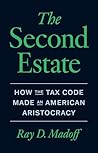
The Second Estate...
Rate this book
Clear rating

 
How to Spot a Fas...
Rate this book
Clear rating

 
The First Nationa...
Rate this book
Clear rating

 
See all 6 books that Daniel is reading…
Loading...
“ALL PROPERTY IS THEFT. SO ALL THEFT IS PROPERTY.
THEREFORE THESE PEARLS ARE MINE.

This is clearly rubbish because there is nothing to link the truth of the conclusion to the truth of the supporting claims. What we need is to ensure that the truth of the supporting claims is preserved by the argument. Logic is quite simply the study of truth-preserving arguments.”
Dan Cryan, Introducing Logic: A Graphic Guide

“The political scientists Kenneth Scheve and David Stasavage studied twenty countries, exploring the question of when, over the course of their histories, the countries imposed heavy taxes on the rich. They concluded that inequality was not sufficient on its own to cause countries to impose high taxes. Instead, they found that raising taxes on the rich happened only when the public believed that the state had unfairly privileged the wealthy, such that higher taxes on the rich were necessary to compensate for that unfair advantage. These perceptions of unfairness were more likely in times of war, when working classes faced conscription while capital owners benefited from increased demand for their products. Scheve and Stasavage argued that the reason progressive taxation saw its heyday in the United States in the twentieth century was because of these frequent conscriptions—first to fight two world wars, and then again to fight the Korean War and the Vietnam War. It is notable that the United States began cutting taxes on the rich only after the draft was eliminated in 1973.”
Ray D. Madoff, The Second Estate: How the Tax Code Made an American Aristocracy

“A frequent refrain of those defending the status quo is that the income tax system already heavily burdens the rich because the top 1 percent of earners pay 40 percent of all income taxes while 40 percent of Americans pay no income taxes at all. This is partially true: Individuals with the most taxable income do pay the most income tax. However, this statistic is about people who have high incomes, typically from work; it tells us nothing about the tax liability of those with the most wealth. Studies have shown that there is only about a 50 percent overlap between America’s wealthiest people and those who earn the most income. Moreover, as the leaked tax returns of several of the wealthiest Americans reveal, the ability of wealth owners to avoid taxable income means that they are just as likely to be among the 40 percent of nonpayers as they are the top 1 percent of earners.”
Ray D. Madoff, The Second Estate: How the Tax Code Made an American Aristocracy

“Third, DAFs (donor-advised funds) allow private foundations to avoid the public scrutiny that Congress wanted them to have. If a private foundation makes a direct donation to a hate group or other questionable charity, that information is available to the public through public disclosure of tax returns. But if the private foundation wants to avoid this disclosure, it can simply make a distribution to a DAF, then make the donation to the hate group from the DAF, and no one is the wiser.45 While DAFs do publish their distributions, they list them over thousands of pages, and the information is disconnected from any particular donor.

45. Charitable gifts to hate groups can have devastating effects both within and outside the United States. Proposed legislation in Uganda imposing the death penalty for homosexuals was supported by significant charitable donations from United States taxpayers, many of which came from donor-advised funds. — Lydia Namubiro, “Charity Loophole Lets US Donors Give Far-Right Groups $272m in Secret,” Open Democracy (July 5, 2023).”
Ray D. Madoff, The Second Estate: How the Tax Code Made an American Aristocracy

Dan Ariely
The personality elements of the funnel of misbelief

Personality—broadly understood as individual differences—plays a role in explaining why some of us are more susceptible to misbelief than others.

It is extremely difficult to do personality research on misbelievers, since they instinctively mistrust the motives of the researchers. However, some common traits have been observed.

Being more prone to misremembering, falling into the trap of false recall and false recognition, feeds misbelief.

Seeing patterns where none exist is linked to misbelief.

Overtrusting our intuitions is linked to misbelief.

Decision-making biases such as the conjunction fallacy, illusory correlations, and the hindsight bias are more pronounced in misbelievers.

Narcissism plays a role in misbelief.

Personality cannot be easily changed, but knowing which traits correlate with misbelief can help us to identify risky points.”
Dan Ariely, Misbelief: What Makes Rational People Believe Irrational Things

220 Goodreads Librarians Group — 327252 members — last activity 0 minutes ago
Goodreads Librarians are volunteers who help ensure the accuracy of information about books and authors in the Goodreads' catalog. The Goodreads Libra ...more
10855 Debate Religion — 578 members — last activity Jun 04, 2023 05:51PM
This group is for followers of any religion, atheists, agnostics, and anyone else with questions or concerns about faith. If there's anything you want ...more
660 Green Group — 2015 members — last activity 4 hours, 14 min ago
The Green group is about living in a sustainable manner--how human activity affects the environment and how a changing climate/environment affects how ...more
1219146 The book you like most — 50190 members — last activity 6 hours, 20 min ago
This group (ranked in the TOP 100 most popular groups on Goodreads) is dedicated to the "Vision and Story" project. Additionally, the group THE BOOK ...more
year in books
Ava Cairns
10,053 books | 1,459 friends

Rex
Rex
8,339 books | 279 friends

_drishti
1,128 books | 459 friends

Little ...
10,086 books | 906 friends

Clover
1,682 books | 34 friends

Dmitry ...
219 books | 5,001 friends

Alfred
832 books | 1,060 friends

Greg Mo...
284 books | 40 friends

More friends…


Polls voted on by Daniel

Lists liked by Daniel