Skip

Add friend
Sign in to Goodreads to learn more about Skip.


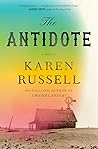
The Antidote
Skip is currently reading
by Karen Russell (Goodreads Author)
bookshelves: currently-reading
Rate this book
Clear rating

 
America Fantastica
Skip is currently reading
bookshelves: currently-reading
Rate this book
Clear rating

 
Apostle's Cove
Skip is currently reading
by William Kent Krueger (Goodreads Author)
bookshelves: currently-reading
Rate this book
Clear rating

 
See all 67 books that Skip is reading…
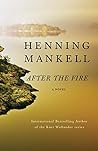
Book cover for After the Fire
people are never completely what we believe they are. Including me. There is always something unexpected within those we meet, those we think we have got to know.
Skip
from Mr. Mankell's last novel
Loading...
William Kent Krueger
“We all die, but some of us—those who are blessed or maybe just lucky—have the opportunity before that end to be redeemed. We can let go, forgive others, and also forgive ourselves for the worst of what we are or have been.”
William Kent Krueger, The River We Remember

John  Green
“There will come a time when there are no human beings remaining to remember that anyone ever existed or that our species ever did anything. There will be no one left to remember Aristotle or Cleopatra, let alone you. Everything that we did and built and wrote and thought and discovered will be forgotten and all of this”—I gestured encompassingly—“will have been for naught. Maybe that time is coming soon and maybe it is millions of years away, but even if we survive the collapse of our sun, we will not survive forever. There was time before organisms experienced consciousness, and there will be time after. And if the inevitability of human oblivion worries you, I encourage you to ignore it. God knows that’s what everyone else does.”
John Green, The Fault in Our Stars

William Kent Krueger
“Death is as ordinary in this world as birth or breathing. Though we may fear that journey and what awaits us there, it’s a revelation that will come to us all someday.”
William Kent Krueger, The River We Remember

Ken Kesey
“Why should one want to wake up dead anyway?” If the glorious birth-to-death hassle is the only hassle we are ever to have . . . if our grand and exhilarating Fight of Life is such a tragically short little scrap anyway, compared to the eons of rounds before and after—then why should one want to relinquish even a few precious seconds of it? And—thirdly—like: “If it’s such a goddamned hassle—why fight it?”
Ken Kesey, Sometimes a Great Notion

John Steinbeck
“them. Now farming became industry, and the owners followed Rome, although they did not know it. They imported slaves, although they did not call them slaves: Chinese, Japanese, Mexicans, Filipinos. They live on rice and beans, the business men said. They don’t need much. They wouldn’t know what to do with good wages. Why, look how they live. Why, look what they eat. And if they get funny—deport them. And all the time the farms grew larger and the owners fewer. And there were pitifully few farmers on the land any more. And the imported serfs were beaten and frightened and starved until some went home again, and some grew fierce and were killed or driven from the country. And the farms grew larger and the owners fewer. And the crops changed. Fruit trees took the place of grain fields, and vegetables to feed the world spread out on the bottoms: lettuce, cauliflower, artichokes, potatoes—stoop crops. A man may stand to use a scythe, a plow, a pitchfork; but he must crawl like a bug between the rows of lettuce, he must bend his back and pull his long bag between the cotton rows, he must go on his knees like a penitent across a cauliflower patch. And it came about that owners no longer worked on their farms. They farmed on paper; and they forgot the land, the smell, the feel of it, and remembered only that they owned it, remembered only what they gained and lost by it. And some of the farms grew so large that one man could not even conceive of them any more, so large that it took batteries of bookkeepers to keep track of interest and gain and loss; chemists to test the soil, to replenish; straw bosses to see that the stooping men were moving along the rows as swiftly as the material of their bodies could stand. Then such a farmer really became a storekeeper, and kept a store. He paid the men, and sold them food, and took the money back. And after a while he did not pay the men at all, and saved bookkeeping. These farms gave food on credit. A man might work and feed himself; and when the work was done, he might find that he owed money to the company. And the owners not only did not work the farms any more, many of them had never seen the farms they owned.”
John Steinbeck, The Grapes of Wrath / The Moon Is Down / Cannery Row / East of Eden / Of Mice and Men

year in books
Vera Ha...
520 books | 28 friends

Catheri...
40 books | 58 friends

Susanne...
0 books | 59 friends

Troy
170 books | 39 friends

Liz George
25 books | 42 friends

Douglas...
74 books | 5 friends

Charlee...
143 books | 20 friends

Marissa...
77 books | 66 friends

More friends…
The Grapes of Wrath by John Steinbeck
Best Survival Stories
1,177 books — 1,713 voters


Polls voted on by Skip

Lists liked by Skip