Find & Share Quotes with Friends
Waverley Quotes
Quotes tagged as "waverley"
Showing 1-5 of 5

“Walter Scott has no business to write novels, especially good ones. — It is not fair. — He has fame and profit enough as a poet, and should not be taking the bread out of other people’s mouths. — I do not like him, and do not mean to like Waverley if I can help it — but fear I must.”
― Jane Austen's Letters
― Jane Austen's Letters

“A lover persevere in his suit under very discouraging circumstances. Affection can withstand very severe storms of rigor, but no a long polar frost of downright indifference. Don’t, even with your attractions, try the experiment upon any lover whose faith you value. Love will subsist on wonderfully little hope, but no altogether without it.”
―
―
“Thou are boot for many a bruise,
And healest many a wound;
In our Lady's blessed name,
I take thee from the ground.”
―
And healest many a wound;
In our Lady's blessed name,
I take thee from the ground.”
―

“Here was... a revelation of a whole broad country, varied as nature is, and as true. The veil was drawn from the face of Scotland, not only to other nations, but to her own astonished delighted inhabitants, who had hitherto despised or derided the Highland caterans, but now saw suddenly with amazed eyes the courtly figure of Vich Ian Vohr descending from the mists, the stately and beautiful Flora, with all their attendants, such surrounding personages as Evan Dhu and Callum Beg, either of them enough to have made an ordinary man's fortune.”
―
―
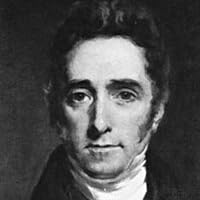
“Here is a thing very hastily, and, in many places, very unskilfully written - composed, one half of it, in a dialect unintelligible to four-fifths of the reading population of the country - relating to a period too recent to be romantic, and too far gone to be familiar - and published, moreover, in a quarter of the island where materials and talents for novel-writing have been supposed to be equally wanting; and yet, by the mere force and truth an vivacity of its colouring, already casting the whole tribe of ordinary novels into the shade, and taking its place rather with the most popular of our modern poems, rather than with the rubbish of provincial romances.”
― The Edinburgh Review, Volume 24: 1814-15
― The Edinburgh Review, Volume 24: 1814-15
All Quotes
|
My Quotes
|
Add A Quote
Browse By Tag
- Love Quotes 102.5k
- Life Quotes 81k
- Inspirational Quotes 78k
- Humor Quotes 45.5k
- Philosophy Quotes 32k
- Inspirational Quotes Quotes 29k
- God Quotes 27k
- Wisdom Quotes 25.5k
- Romance Quotes 25k
- Truth Quotes 25k
- Poetry Quotes 25k
- Life Lessons Quotes 23k
- Quotes Quotes 21.5k
- Death Quotes 21k
- Happiness Quotes 19k
- Hope Quotes 19k
- Faith Quotes 19k
- Inspiration Quotes 18.5k
- Relationships Quotes 16.5k
- Spirituality Quotes 16.5k
- Motivational Quotes 16k
- Religion Quotes 15.5k
- Life Quotes Quotes 15.5k
- Writing Quotes 15k
- Love Quotes Quotes 15k
- Success Quotes 14.5k
- Motivation Quotes 14k
- Time Quotes 13k
- Science Quotes 12.5k
- Motivational Quotes Quotes 12k