
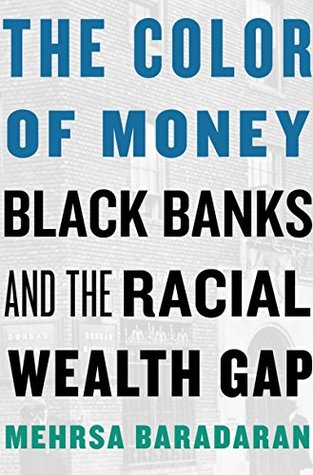
More on this book
Community


Kindle Notes & Highlights

Read between
December 31, 2022 - March 28, 2023

Though Washington painted a rosy picture of black business success, many black businessmen and leaders spoke of the tremendous challenges they faced. The main financial challenge was that black businesses relied exclusively on black clientele. Jim Crow segregation prevented black businesses from branching out to white customers.
White riots led by immigrant groups, who saw black businesses as competition, “often broke up Negro businesses which had
been prosperous for years.”71 This was not the respect Washington had promised would greet successful black business establishments.72
Black businesses had to find customers for whatever they were selling from within their own race, but the prohibitions did not work in reverse. White businesses often sold goods to blacks, which meant that black businesses had to compete not only with other black bu...
This highlight has been truncated due to consecutive passage length restrictions.
The first black entrepreneur in the United States to become a self-made millionaire was Madame C. K. Walker, born Sarah Breedlove in 1867. Walker made her fortune in 1910 selling hair products to black women. Many black women were suffering from severe hair loss because of malnutrition and constant labor. Walker herself suffered from the scalp condition, which led her to create an elixir from sulfur and capsicum that ameliorated the effect.
Another open marketplace for blacks was for undertakers and funeral homes, a thriving niche created because whites either refused to handle black bodies or treated them differently than white ones.
A relationship of trust and respect between an insurance salesman and his customer was a business imperative. Reports indicate that white agents visiting black clients not only failed to show “common
courtesy,” but they “frequently abused the property of their clients.”
83 One scholar of the period noted that “nothing has more greatly aided Negro agents in meeting the competition of their more experienced competitors than the abundance of examples of insults to and abuses of Negro policy holders at the hands of white agents which could nearly always be pointed out in every community.”84 After a white insurance agent participated in the lynching of a black man in Mississippi in the late 1800s, black customers flocked to...
This highlight has been truncated due to consecutive passage length restrictions.
Durham continued to be a vibrant business
center until 1958, when the state of North Carolina built a freeway through the heart of Hayti, bifurcating the area.
What was changing in the South was their appraisal of the past. The Civil War was no longer an embarrassing defeat over slavery, but an honorable and patriotic war fought by the South for their right to autonomy and freedom. General Robert E. Lee was canonized and the Southern rebel became a national hero.
The institution of slavery was whitewashed, as the slave plantation took on a romantic hue as an idyllic place where master and slave lived together in harmony. Slavery’s cruel history was muted in the name of national unity, and the victims, the black population, had to be recast in the national psyche in order to achieve peace about
the past. For northern and southern whites to reunite, they had to suppress the “race issue” that...
This highlight has been truncated due to consecutive passage length restrictions.
Generally, scientists found that whites, or more accurately those descended from certain regions in Europe such as Germany, were the pinnacle of racial advancement.120 Below them were others including the Irish, Italians, and Eastern Europeans. Much further down were Mongols (Middle Easterners and Asians) and the indigenous tribes of the Americas. At the bottom of every racial chart was the “African,” who was portrayed as a step above the common ape.
Evolutionary theory was corrupted to deal with this cognitive dissonance. Americans could now see blacks not as victims of racial oppression, violence, and exploitation, but as a naturally inferior race who were a burden on the nation, just
as Europe cast its colonial peoples as the “white man’s burden.”
The takeaway, according to Dixon, was that “God ordained the southern white man to teach the lessons of Aryan supremacy.”124
President Woodrow Wilson, an acknowledged racist and a college classmate of Dixon’s, aired the film at the
White House, the first movie shown there.
“Negro rule under unscrupulous adventurers has been finally put an end to in the South and the natural, inevitable ascendancy of the whites, the responsible class has been established.”126
Wilson purged the federal bureaucracy of any blacks who had managed to secure a government job. He prohibited the hiring of any black employees and fired those his predecessor had hired. The South had determined that it would not move forward without total separation of the races, and they wanted the rest of the country to follow suit.
The Great Migration, which lasted roughly from 1910 until 1970, radically transformed the country.1 During this seismic shift, approximately six million blacks left the south. In 1900, ninety percent of black Americans lived in the rural areas of Southern states. By 1970, 80 percent of black Americans lived in urban areas and nearly half outside the South.
They were pulled to the North by the promise of better jobs, better pay, and more opportunities for advancement.2
The concept and terminology of a racial ghetto derives from the forced segregation of Jews in Europe—first in enclaves in the seventeenth century and then with barbed wire during the Nazi regime.5 There was no barbed wire in America’s black ghettos, but even more effective modes of containment through racial covenants and government credit and zoning policies that maintained the boundaries of the ghetto. Often referred to as black enclaves, black neighborhoods, or other racially neutral descriptions, the word ghetto is a much more accurate descriptor because it captures the involuntary nature
...more
Binga’s bank deposits grew from $300,000 to over $1.1 million between 1921 and 1924. During that same time period, Binga bought a prominent home in a white neighborhood near Washington Park. His purchase drew ire and triggered violence. During the race riots of 1919, his house was bombed seven times.18 Each time, the bomber left a note demanding that Binga leave the property and sell it to a white buyer. Binga was resolute.
Chelsea’s deposit base was almost entirely Harlem residents, but they had no black board members, just the two black tellers.
Although Chelsea Exchange Bank took all of Harlem’s deposits, it did not make loans to Harlem. One white bank manager observed that black customer accounts were “based on straight cash deposits.”59 By 1920, there were complaints of prejudice and objections to the bank’s refusal to extend credit to black customers:
A white teller of the Chelsea Exchange Bank who went on to write a dissertation on black-owned banks in the 1930s explained that his bank received a “tremendous amount” of money from black customers. He also observed without apology that, “All of this money is transferred downtown to the home office where it is loaned to white customers.”62 He defended this practice as one that was properly followed by most banks because they wanted to ensure their loans were “one hundred per cent sound.” According to him, safe loans could be made much more easily to their white customers because “the Negro is
...more
Not only were blacks unworthy of loans, but the white clerk also blamed fickle depositors for the instability of black banks, lamenting that if only these black depositors would allow their deposits to grow, the banks would not be so burdened. He reasoned that the wage earners would often take out their deposits during the Christmas season, moralizing that this was because they lacked proper perspective and self-control.66 While his institution was diverting the scant resources of Harlem downtown, he was blaming the “unlearned” and “emotional negro” for his own poverty and lack of resources.
...more
It was widely acknowledged that white banks did not lend to blacks
for home buying, and if they did, they charged much higher interest rates.
The North maintained strict racial segregation through a series of tools used consecutively and simultaneously, including violence, zoning laws, and racial covenants—much of which was organized by neighborhood associations and realtors.
The black middle class were usually the early settlers forging into the racial frontier by buying homes in new territory. With a 50 percent down payment required for a home purchase at the time, the only buyers of black property were the black upper class—only 2 percent of the black population in the North in the 1920s.126
The lower market values were a result, he explained, “due entirely to racial prejudice, which may have no reasonable basis.”129 This declining property value did not affect the home prices of most immigrant groups—only blacks and Mexicans.
In other words, blacks paid much more for properties, which came to be worth much less the second they were purchased by blacks.
This sluggish real estate market contrasted sharply with the inflated rental market within the ghetto. In the densely packed black ghetto, the low supply of tenant housing coupled with high demand meant that rents skyrocketed by 50 percent or more in comparison to rental properties outside the ghetto.
It is
difficult to overestimate the damaging effects of housing segregation on the creation of black wealth or the viability of black banking.
The most crucial structural problem black banks faced was their inability to multiply money due to segregation.
Put another way, not only were the white banks multiplying white money, they were multiplying black money as well. If the whole point of black banking was to control the black dollar and put it to work in the black community, black banks simply could not do this.
The Depression only ratcheted up the hardships faced by the black community because Jim Crow segregation concentrated and intensified poverty.141
Starvation and disease were rampant, and infant mortality and premature death were much higher in the black community.142
Myrdal concluded that America’s professed creed of equality and freedom did not match the unjust and immoral treatment of its black citizens—this was the American Dilemma.144
The bulk of the New Deal reforms can accurately be described as “white affirmative action” because state resources were used to provide direct financial advantages to white Americans at the expense of other racial groups.1
Through collective action, white workers gained a voice and a seat at the bargaining table, while black workers were effectively silenced.
Black workers thus came to represent strikebreakers who posed a threat to union negotiations, which resulted in acts of open hostility and violence by union members toward the black workers.
The modern credit system created by New Deal reforms segregated access to loans based on race. The alphabet soup of new credit and banking agencies, the Home Owners Loan Corporation (HOLC), the Federal Home Loan Banks (FHLB), the Federal National Mortgage Association (FNMA or Fannie Mae), the Federal Housing Administration (FHA), and the Federal Deposit Insurance Corporation (FDIC), were all geared toward the rapid and effective dissemination of low-cost credit to new homeowners. These agencies coupled with postwar economic growth created a robust homeowning, capital-creating, and
...more
Ickes believed that the financial stimulus should be used to address America’s economic and social problems, including urban poverty. He warned that if the slums were not rehabilitated, they would continue to perpetuate poverty and inhibit economic recovery in America’s cities.
For example, many PWA grants in major cities like New York and Chicago were used to route roads and bridges over and through the ghetto, a decision that favored suburban car commuters, left public transportation in a state of neglect and disrepair for decades, and bifurcated
