
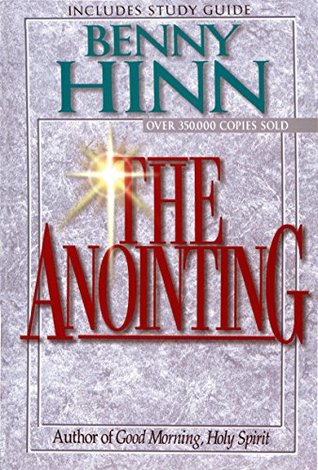
More on this book


Kindle Notes & Highlights

by
R.T. Kendall
Read between
November 10 - November 22, 2022

The interesting thing about R. T. Kendall is his ability to fall out with people at both ends of the theological spectrum.
But far deeper than the barbs is the inner battle of desperately wanting to see a body of people rise up who have a high view of Scripture and a belief that the God who wrote it is still active today; in short, a yearning for the coming together of the Word and the Spirit.
As I read I found an ache developing in my heart that by God’s grace I might not miss out on what the Spirit wants to do in this generation. It is not enough that we be theologically sound, nor sufficient to be seen to be successful, and it is certainly not enough to be busy. We need the anointing.
Read it and weep, read it and repent, read it and rejoice!
My wife and I prayed together before I headed for Paul’s hotel: “Lord, don’t let me be deceived if this man is a false prophet, but don’t let me misjudge him if he is from You.”
He loved, for example, my vision of “Isaac,” that for thirteen years Abraham sincerely believed that Ishmael was the promised son. But one day God said to Abraham, “Wrong. Isaac is coming” (Gen. 17:15-21). In much the same way, some sincere Christians have assumed that the charismatic movement is “it”—the revival the Church has been praying for. Wrong. Isaac is coming. This means a movement of the Holy Spirit will be so vast and powerful, surpassing anything this century has seen, even in proportion to the promise and significance of Isaac when compared with Ishmael.
I have often cautioned him: “Paul, do you realize what you are asking for—to be under my ministry? Don’t you realize I am reformed in my theology? How do you know you are being led by God to us?” His reply: “All my life I’ve sought to hear from God.” He assured me God brought him to us.
All I now remember was an hour later, coming past Smyrna, Tennessee, when I heard Jesus say to the Father, “He wants it.” The Father answered back, “He can have it.” In that moment the most incredible warmth and peace surged into my heart as if a liquid flame had entered. It was tangible. I beheld the face of Jesus for several seconds, less than a minute. The experience ended. Ten minutes later I got out of my
My old experience, combined with the way Dr. Lloyd-Jones taught me to think, kept me open to anybody in whom I saw an unusual anointing. And when God brought Paul Cain into my life I began to see that all I had experienced years ago was with a sovereign purpose that was beginning to make even more sense to me. The initial experience of 31 October 1955 was followed by a series of visions that would come to me over about a year. Some of them have been fulfilled, others remain unfulfilled.
The parents had prayed for a sign that their two-year-old son was truly in heaven. I assured them that he was safe in Jesus’ arms, but they still wanted more assurance.
Now Paul Cain knew nothing of this, nor had he met or heard of this godly couple. When I put the phone down Paul spoke up: “William—hole in the heart, now in heaven. That isn’t a Chinese name, is it, but they now have a son—Wing Yung.” You can imagine Benjamin’s astonishment and joy when I immediately phoned back what Paul had said.
As we consider the anointing and ultimately the coming together of the Word and the Spirit, we will focus on three biblical characters: King Saul, whom I see as a type of yesterday’s man (or anointing); the prophet Samuel, a symbol representing today’s man; and David, an example of tomorrow’s man. The book consequently is in three parts: Yesterday’s Anointing, Today’s Anointing, and Tomorrow’s Anointing. It is my belief that tomorrow’s anointing will result in the long-awaited combination, prophesied by Smith-Wigglesworth in 1947, of the Word and Spirit. I long for that day.
“If the Holy Spirit were taken completely from the Church, 90 percent of the work of the Church would go right on as if nothing had happened!”
What a travesty of what the Church was meant to be! And can it be true also of our personal lives—that many of us are churning out “Christian” activity that has no touch of God upon it?
There is only one antidote to such a situation: it is breathtaking in its possibility, it is awesome in its power, it is liberating in its ef...
This highlight has been truncated due to consecutive passage length restrictions.
“R. T.,” she said, “To the spiritual person the supernatural seems natural.”
The anointing is the power of the Holy Spirit.
Several years ago someone came into my vestry and asked me, “What do you mean by the anointing?” I remember replying something like this: “It’s a gift that functions easily when it’s working.” I had never said it like that before, but I must have thought it. The seed for this thought
The person who is filled with the Holy Spirit is able to do extraordinary things, but to them it seems quite natural. It is easy. That is, when it’s working.
The anointing, however, leads to what is good; it blesses and encourages others. And its function is carried out with ease and without strain or fatigue. It is also self-edifying.
When the anointing is working it is as natural and easy for our gift to function as eating or talking with friends.
Jesus said, “The wind blows wherever it pleases” (John 3:8), and one is continually surprised over the unexpected moment when the Holy Spirit flows from within.
Whether one is a secretary, professional person, homemaker, truck driver, or minister, the possibility of the anointing is there all the time; one never knows when God will manifest Himself in an unusual way. Therefore, in
The second explanation is the sovereignty of the person of the Holy Spirit. The anointing is the Holy Spirit and the Holy Spirit is a person. God the Father is a person with
He therefore moves in at will when we least expect it, and sometimes when we are least deserving of it. A lot of prayer no doubt has something to do with it, but there are times when the Spirit operates sovereignly when I haven’t prayed as much as I should. The anointing is unmerited favor—it is sheer grace.
One should pray for the anointing on one’s gift—or even pray for an anointing on one’s anointing! This is because of the various ways the Holy Spirit manifests Himself.
At ease. No pressure. Having nothing to prove. At home. Next to the gift of salvation and the sure knowledge that we will go to heaven when we die, the anointing is our most precious possession. The anointing, then, is the Holy Spirit. It is really just another word for the Holy Spirit. It is one of John’s special words for the Spirit. “You have an anointing from the Holy One . . . The anointing you received from Him remains in you, and you do not need anyone to teach you” (1 John 2:20, 27). Because the Holy Spirit is our teacher, He “will teach you all things” (John 14:26), and “will guide
...more
Jesus stood up to read in the synagogue.
“The Spirit of the Lord is on me, because he has anointed me to preach good news to the poor. He has sent me to proclaim freedom for the prisoners and recovery of sight for the blind, to release the oppressed, to proclaim the year of the Lord’s favor” (Luke 4:18-19).
In my church we have administered the anointing of oil for years and have had a number of people testify to being healed.2
The word comes from the root chrio in the Greek and is the word that underlies “Christ,” which means “Messiah” or “the Anointed One.”
And yet, as we shall see, the latter words, charisma and charismata, are nonetheless the result of the anointing.
The anointing was said to be on holy things.
Second, the anointing referred to the consecration of priests.
The same oil that anointed holy things was poured on Aaron’s head and on h...
This highlight has been truncated due to consecutive passage length restrictions.
Third, the anointing refers to the consecration of kings. The first occasion for this was when Samuel anointed Saul.
Fourth, the anointing became closely connected to the Holy Spirit. Soon after Saul was anointed by Samuel, the Spirit of God came on him in power (1 Sam. 10:6), God changed Saul’s heart (1 Sam. 10:9), and he prophesied (1 Sam. 10:10-11).
The Spirit of God came on David later when Samuel secretly anointed him king. Saul still wore the crown but was rejected by God from being King (1 Sam. 16:1). Samuel anointed David, who had no crown. But the Holy Spirit came on him immediately. “So Samuel took the horn of oil and anointed him in the presence of his brothers, and from that day on the Spirit of the LORD came upon David in power” (1 Sam. 16:13). It could be said that Saul
In this fourth use, then, emerges what has been implicit all along: the oil was a symbol of God’s Holy Spirit.
Although the prayer offered in faith is what healed sick people, this was to be preceded by the anointing of oil (James 5:14-15).
The fifth use of the word did not seem to require any oil at all.
Prophets were said to be...
This highlight has been truncated due to consecutive passage length restrictions.
This pointed to the anointing of God’s Messiah, the LORD Jesus Christ, and yet I know of no reference to oil being literally poured on Jesus.
should not surprise us that people in the Old Testament had this anointing. The Holy Spirit is “eternal” (Heb. 9:14),
The descent of the Holy Spirit at Pentecost was not the beginning of the Holy Spirit any more than the birth of Jesus was the beginning of the Word, the Logos, the second person of the Trinity (John...
This highlight has been truncated due to consecutive passage length restrictions.
the supreme manifestation of the Spirit now that Jesus had returned to the Father. But the Holy Spirit was present in the Old Testament from the beginning of creation (Gen. 1:2). As the Old Testament stalwarts did what they did by faith (Heb. 11:2), so likewise is the anointin...
This highlight has been truncated due to consecutive passage length restrictions.
He simply prayed, “O LORD, God of Abraham, Isaac and Israel, let it be known today that you are God in Israel and that I am your servant and have done all these things at your command.” Then the fire fell. When the people saw this they fell prostrate and cried, “The LORD—he is God! The LORD—he is God!” (1 Kings 18:36, 39).
The only explanation for Elijah’s success: his anointing.
The anointing is what lay behind Stephen’s face shining like the face of an angel and the reason the Jews could not “stand up against his wis- dom or the...
This highlight has been truncated due to consecutive passage length restrictions.
It is the reason Moses’ face was radiant (Exod. 34:30). It is why he could say to the people, “Do not be afraid. Stand firm and you will see the de...
This highlight has been truncated due to consecutive passage length restrictions.
