
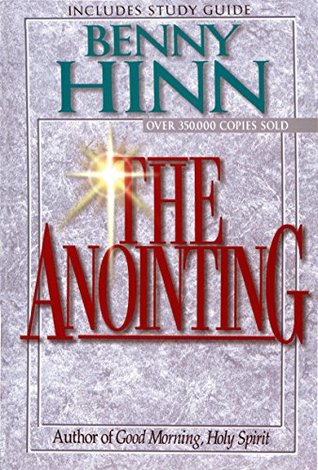
More on this book


Kindle Notes & Highlights

by
R.T. Kendall
Read between
November 10 - November 22, 2022

Fallen leaders can be partly explained by an absence of their being accountable to others.
It wasn’t easy to do this. First, accepting the kingship. Second, abandoning it. Both were the result of obedience to God’s fresh revelation.
The paramount stigma of being today’s man or woman is probably that of being misunderstood. Nothing is more painful than this.
I sometimes think that much of Jesus’ pain at the crucifixion was through His being misunderstood.
When a detachment of soldiers fell back (John 18:6), Jesus could have fled. There were any number of ways in which He could have stopped being crucified. Common sense told everybody this. So why was He being crucified? The disciples couldn’t figure it out— they all forsook Him and fled (Matt. 26:56). Never once did Jesus explain Himself. It must have been almost unbearable emotional pain for Jesus to see Mary Magdalene sobbing her heart out at the scene of the cross and not be allowed to whisper to her, “It’s OK, Mary, all is going according to plan, I’m atoning for the sins of the world by My
...more
This serves to show how all relationships must ever be subservient to God’s greater glory. No
I think of some of my close friends. The dynamic that holds us together is that we love God more than we do each other.
If I stopped listening to God and turned away from Him I would expect my friends to warn me—then lovingly rebuke me if I did not come to my senses. It works both ways. If my closest friend broke with the principles that spawned our relationship, however much he has been like a brother, I would warn him and rebuke him—but I would keep loving him. No friendship or relationship is worth its salt if it does not have an inflexible commitment to God’s glory first and to one another second. It would
Perhaps you felt betrayed. “Even my close friend, whom I trusted, he who shared my bread, has lifted up his heel against me” (Ps. 41:9). No covenant with any person,
“How can you believe if you accept praise from one another, yet make no effort to obtain the praise that comes from the only God?” (John 5:44).
If you wish to be today’s servant then you must also resist gloating when you have been vindicated.
There was no gloating, only mourning. “Do not gloat when your enemy falls; when he stumbles, do not let your heart rejoice” (Prov. 24:17).
A good evidence that you and I can be trusted with today’s anointing and today’s stigma is that we mourn when a brother or sister slips or falls.
We look over our shoulders and, consciously or unconsciously, compete with one another. Virtually no consideration at all is given to seeking the glory that comes only from God. We want mutual adulation more.
D. L. Moody sat on the platform and heard the speaker say, “The world has yet to see what God could do with one man totally resigned to Him.”
As long as our deep concern is for the status of tomorrow’s generation we are in fairly good shape.
This ought to have sobered Hezekiah through and through. Instead, his only comment? “‘The word of the LORD you have spoken is good,’ Hezekiah replied. For he thought, ‘Will there
not be peace and security in my lifetime?’” (2 Kings 20:19). He was not thinking of the next generation but only of himself.
Jonathan Edwards said that the one thing Satan cannot successfully counterfeit is a l...
This highlight has been truncated due to consecutive passage length restrictions.
Samuel, one of the greatest men that ever was, simply followed the Lord all his days, no matter how he appeared to men. He was a symbol of today’s servant of God. He was on the lookout for tomorrow’s man.
The Lord said to Samuel, “Do not consider his appearance or his height, for I have rejected him. The LORD does not look at the things man looks at. Man looks at the outward appearance, but the LORD looks at the heart” (1 Sam. 16:7).
Today’s servant of Christ must be willing to hear the voice of the Spirit above his own personal biases and prejudices. So Samuel asked Jesse. “Are these all the sons you have?” (1 Sam. 16:11).
I sometimes think that God picks people whose natural style is quite off-putting. Like Arthur Blessitt with his cross, wearing jeans in the pulpit at Westminster Chapel. Or George Whitefield’s squint. His critics called him “Dr. Squintum.” They said of the apostle Paul, “In person he is unimpressive” (2 Cor. 10:10). As for John the Baptist, “John’s clothes were made of camel’s hair, and he had a leather belt around his waist. His food was locusts and wild honey” (Matt. 3:4). That was apparently odd even then. Uncle Buddy Robinson, an early Nazarene evangelist, left school at the age of nine,
...more
put off some who seem sophisticated, but he has an anointing that defies a natural explanation.
But I have found that many times my deep negative reaction was not only wrong, it was a test from God to see if I would look again—and see why I was so upset. I have learned again and again that I have been on the verge of rejecting the very anointing I was later glad I embraced.
They could not have felt more justified in their disgust. But God set them up.
Eliab, Jesse’s firstborn, was a setup. “This is surely the one,” even Samuel thought at first. But fortunately Samuel kept listening to that voice he trusted.
One of the most famous sights in Kentucky is Mammoth Cave, the largest underground cavern in the world.
The pain of being today’s man is that you can’t convince another person of what you see unless the same Holy Spirit shows them as well.
When my father showed his keenest displeasure one day—which shook me rigid—I felt an impression to turn to Philippians 1:12, having no idea what it was. But that verse, which held me in the days that followed, read: “But I would ye should understand, that the things which happened unto me have fallen out rather unto the furtherance of the gospel”
left after eighteen months, and returned to Florida to sell vacuum cleaners. The trauma of the era lasted for years. But it prepared me for battles far greater than anything I experienced then. “He that is faithful in that which is least is faithful also in much” (Luke 16:10 KJV). God gives little tests—however great they seem at the time—to get us ready for the battle royal.
Paul Cain sometimes says, “I am too old to disobey God.”
think I know what he means by that. Not that you reach an age when you are incapable of disobedience, but that you see time running out and you know it isn’t worth it to be influenced by any voice but the Holy Spirit. “We
We all are guilty of thinking of ourselves and how we will be remembered. But the irony of church history is that those who prepared most for tomorrow’s Church were the most remembered; those
When he was president, Ronald Reagan kept a little plaque on his desk that read, “There is no limit to how far one can go as long as he doesn’t care who gets the credit.” That to me is profound.
It would mean wanting, first of all, the honor that comes from God only, then to affirm his servants, no matter who they are. That is the challenge of being today’s man or woman.
Tomorrow’s servant of Christ is typified by David. He had the anointing without the crown. Yesterday’s man—Saul—had the crown but not the anointing. He remained king but was rejected in God’s sight. “So Samuel took the horn of oil and anointed him in the presence of his brothers, and from that day on the Spirit of the LORD came upon David in power” (1 Sam. 16:13).
David’s anointing was a secret anointing.
David’s next opportunity that demonstrated his secret anointing was facing Goliath.
We may think that the “much” that follows the “least” means we have arrived. But the “much” may lead us to an era of long preparation that is designed for the secret anointing entrusted to us. Any
service who had little if any academic preparation—the great Charles Spurgeon, for example. It is an embarrassment to this present day that Regent’s Park College, then in London but now in Oxford, rejected the young Spurgeon for admission!1 The Methodist Church turned down G. Campbell Morgan as a candidate for the ministry; he was regarded as unsuitable! He later became minister of Westminster Chapel and gave it an international reputation.
The most important kind of preparation in any case is spiritual preparation.
easy kind of preparation. It is when we find out what people are like, how mean and unkind they can be—those closest to us and those often thought to be the most spiritual.
is when we also learn our own hearts aren’t perfect.
All those gathered here will know that it is not by sword or spear that the LORD saves; for the battle is the LORD’s, and he will give all of you into our hands.” (1 Sam. 17:42-47)
This is a scenario that has been repeated many times since—sadly, in the Church. It is when a rival spirit emerges among God’s people, and they get more intent on destroying each other than the real enemy in the world.
is done to consolidate one’s following and constituency—like Saul trying to save his own skin.
But there was a purpose in this. David wasn’t ready to be king.
God had a different idea for David—that Saul be the means of David’s sanctification! David wasn’t ready to be king. He had a powerful anointing, yes. But he needed to be honed and refined. In the years to come, that anointing in David was to increase and develop so that when his time had truly come, David would be a transformed servant of the Holy Spirit.
me” (1 Cor. 13:11). We do not get the necessary refinement by merely praying for more of the Holy Spirit. Jesus had all the Holy Spirit that there was—the Spirit without limit (John 3:34), yet, “Although he was a son, he learned obedience from what he suffered” (Heb. 5:8).
