
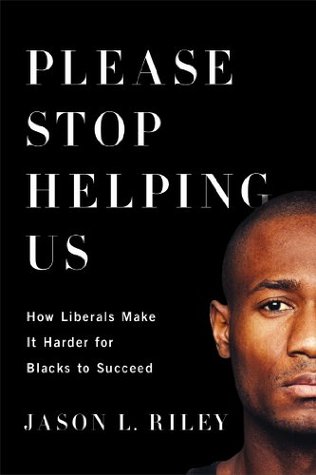
More on this book
Community


Kindle Notes & Highlights

Read between
March 31 - March 31, 2018

This pattern asks us to see ourselves as an embattled minority.
Black culture today not only condones delinquency and thuggery but celebrates it to the point where black youths have adopted jail fashion in the form of baggy, low-slung pants and oversize T-shirts. Hip-hop music immortalizes drug dealers and murderers.
liberal sages are preoccupied with “contextualizing” this cultural rot. Cornel West describes rap as “primarily the musical expression of the paradoxical cry of desperation and celebration of the black underclass and poor working class, a cry that openly acknowledges and confronts the wave of personal coldheartedness, criminal cruelty and existential hopelessness in the black ghettos.”16 Michael Eric Dyson, the sociologist and television commentator who credits rappers with “refining the art of oral communication,” says that “before we discard the genre, we should understand that gangsta rap
...more
“I think to criminalize how a person wears their clothing is more offensive than what the remedy is trying to do,” said Chavis.
two-parent families were more common among ex-slaves than freeborn blacks.
There is a much stronger case to be made that efforts to help blacks have had more pernicious and lasting effects on black attitudes and habits than either slavery or segregation. Social welfare programs that were initiated or greatly expanded during the 1960s resulted in the government effectively displacing black fathers as breadwinners, and made work less attractive.
More generally, the constraints that traditionally kept families together had weakened.
these efforts also made it easier for fathers to abandon their families or mothers to disengage from their husbands.23
A sad irony of the black cultural obsession with avoiding white behavior is that the habits and attitudes associated with ghetto life today can be traced not to Mother Africa but to Europeans who immigrated to the American South.
ghetto culture today. In the opening essay of his 2005 book, Black Rednecks and White Liberals, Thomas Sowell neatly summarized some of these findings: The cultural values and social patterns prevalent among Southern whites included an aversion to work, proneness to violence, neglect of education, sexual promiscuity, improvidence, drunkenness, lack of entrepreneurship, reckless searches for excitement, lively music and dance, and a style of religious oratory marked by strident rhetoric, unbridled emotions, and flamboyant imagery. This oratorical style carried over into the political oratory of
...more
The civil rights movement, properly understood, was about equal opportunity. But a group must be culturally equipped to seize it. Blacks today on balance remain ill equipped, and the problem isn’t white people.
She posits that prisons are teeming with young black men due primarily to a war on drugs that was launched by the Reagan administration in the 1980s for the express purpose of resegregating society.
wrote Alexander.4 “What this book is intended to do—the only thing it is intended to do—is to stimulate a much-needed conversation about the role of the criminal justice system in creating and perpetrating racial hierarchy in the United States.
blacks are simply “far more likely to be labeled criminals”7 and are as blameless as slaves in the antebellum South. “When we say someone was ‘treated like a criminal,’ what we mean to say is that he or she was treated as less than human, like a shameful creature,” Alexander wrote.
being treated like an animal, not a criminal.) Her chattel slavery and Jim Crow analogies are similarly tortured and yet another effort to explain away stark racial differences in criminality. But unlike prisons, those institutions punished people for being black, not for misbehaving. (A slave who never broke the law remained a slave.) Yet Alexander insists that we blame police and prosecutors and drug laws and societal failures—anything except individual behavior—and even urges the reader to reject the notion of black free will. “The temptation is to insist that black men ‘choose’ to be
...more
Progressives said that eliminating poverty and racism is the key to lowering crime rates. “You’re not going to make this a better America just because you build more jails. What this country needs are more decent neighborhoods, more educated people, better homes,” said Hubert Humphrey
In 1986, in response to the crack cocaine epidemic that was crushing American inner cities, Congress passed the Anti-Drug Abuse Act, which instituted harsher penalties for crack cocaine offenses than for powder cocaine offenses. For sentencing purposes, the law stipulated that one gram of crack cocaine be treated as equivalent to 100 grams of powder cocaine. Because crack cocaine offenders tended to be black and powder cocaine offenders tended to be white, critics of the law denounced it as racially biased in hindsight. But it’s worth remembering that black lawmakers led the initial effort to
...more
That effort culminated in the Fair Sentencing Act of 2010, which lowered the ratio to 18 to 1. This was no doubt great news for criminals,
Why should we care more about black criminals than their black victims?
These communities aren’t dangerous because of racist cops or judges or sentencing guidelines. They’re dangerous mainly due to black criminals preying on black victims.
The black inmate population reflects black criminality, not a racist criminal justice system, which currently is being run by one black man (Attorney General Holder) who reports to another (the president).
Perceptions of black criminality aren’t likely to change until black behavior changes.
Instead of talking about black behavior, they want to talk about racism or poverty or unemployment or gun control. The poverty argument is especially weak. In the 1950s, when segregation was legal, overt racism was rampant, and black poverty was much higher than today, black crime rates were lower and blacks comprised a smaller percentage of the prison population. And then there is the experience of other groups who endured rampant poverty, racial discrimination, and high unemployment without becoming overrepresented in the criminal justice system.
Those who want to blame crime on a lack of jobs cannot explain why crime rates fell in many cities during the Great Depression, when unemployment was high, and spiked during the 1960s, when economic growth was strong and jobs were plentiful.
“Poor blacks who live in high crime urban areas are not only the most likely victims of crime, they are also the ones who benefit the most from Stand Your Ground laws. It makes it easier for them to protect themselves when the police can’t be there fast enough. Rules that make self-defense more difficult would impact blacks the most.
the civil rights movement has become an industry, and that industry has no vested interests in realistic assessments of black pathology.
The NAACP, in other words, is way more interested in keeping whites on their toes than in addressing self-destructive black habits.
“The purpose of today’s civil-rights establishment is not to seek justice, but to seek power for blacks in American life based on the presumption that they are still, in a thousand subtle ways, victimized by white racism,
this leadership rather easily tolerates black kids killing other black kids.
Bill O’Reilly used his Fox News program to call attention to “the disintegration of the African America family,” which he identified as the ultimate source of “so much violence and chaos” in black communities.
NAACP’s agenda is about deflecting blame away from blacks and maintaining the relevance of the NAACP. Lemon’s agenda is about personal responsibility.
messengers. “The most critical factor affecting the prospect that a male youth will encounter the criminal justice system is the presence of his father in the home,
Black boys without a father were 68 percent more likely to be incarcerated than those with a father.
As Paul Moreno, the author of Black Americans and Organized Labor, noted, “Organized labor was largely hostile to the antislavery movement, and most abolitionists opposed unions.” Moreno wrote that “white workers feared competition from emancipated slaves, and white workers in the North especially feared an influx of southern freedmen.”1
1874 essay “The Folly, Tyranny, and Wickedness of Labor
Unions,” Frederick Douglass argued that there was “abundant proof almost every day of their mischievous influence upon every industrial interest in the country.” W. E. B. Du Bois called trade unions “the greatest enemy of the black working man.” Booker T. Washington, who was born a slave and opposed unions his entire life, wrote in the Atlantic Monthly in 1913 that “the average Negro who comes to town does not understand the necessity or advantage of a labor organization which stands between him and his employer and aims apparently to make a monopoly of the opportunity for labor.
there has been a steady decline in the number of such laborers, not because of lack of skill, but because trade unionism has gradually taken possession of such employments in the South, and will not allow the Negro to work alongside of the white man. And this is the rule of the trade unions in all parts of the country.
1967 book, The Negro Worker, which includes a chapter titled “The Racial Practices of National and Local Unions,” Marshall wrote that “in 1930 there were at least 26 national unions which barred Negroes from membership by formal means,” and ten of them were AFL affiliates.
minimum-wage laws destroy jobs.
percent of professional economists contend that increasing the minimum wage lowers employment for minimum-wage workers.
a rise in the cost of something tends to lower demand for it. Put another way, an artificial increase in the price of something causes less of it to be purchased. When that something is the price of labor, the result is a labor surplus, also known as unemployment.
“hike the minimum wage and you put people out of work.
When the government mandates that an employer pay someone more than the employer thinks the person is worth, fewer people get hired.
But the most insidious aspect of these policies is that the job loss is concentrated among the least-educated and least-skilled workers—the same group that minimum-wage advocates are trying to help.
What such individuals want and need are job opportunities, which minimum-wage laws reduce by pricing people out of the labor market. These laws keep the large number of blacks who lack the right education and skills from being able to compete for jobs by offering to work for less money, get on-the-job experience, and ultimately increase their skills and pay.
Massachusetts going first in 1912. Within a decade, fifteen states and the District of Columbia had minimum-wage laws on their books. This was the Progressive Era, and proponents said that workers were being exploited and needed more bargaining power. Employers disagreed, and challenged the laws in court on the grounds that they “violated employers’ constitutional rights to enter freely into contracts and deprived them of their private property (i.e., their profits) without due process,
reappear in 1933, when President Franklin D. Roosevelt signed the National Industrial Recovery Act, which called for
workweeks of thirty-five to forty hours and minimum pay of $12 to $15 per week.
the Fair Labor Standards Act and the Davis-Bacon Act, which was passed in 1931, remain in force today and continue to destroy jobs for millions of people, many of them black. This is not an accident. It was the intent.
