
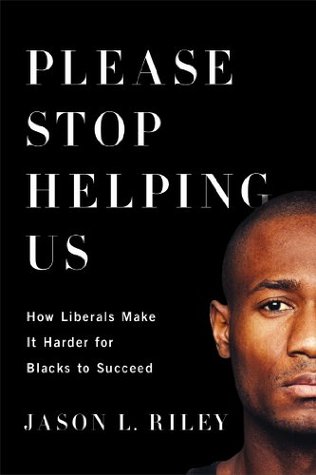
More on this book
Community


Kindle Notes & Highlights

Read between
March 31 - March 31, 2018

Freedom is the right to share, share fully and equally, in American society—to vote, to hold a job, to enter a public place, to go to school,” said Johnson. “But freedom is not enough. You do not wipe away the scars of centuries by saying: ‘Now you are free to go where you want and do as you desire, and choose the leaders you please.’ “You do not take a person who, for years, has been hobbled by chains and liberate him, bring him up to the starting line of a race and then say, ‘you are free to compete with all the others,’ and still justly believe that you have been completely fair.” Johnson
...more
dream.” But what if Johnson was mistaken? What if there are limits to what government can do beyond removing barriers to freedom? What if the best that we can hope for from our elected officials are policies that promote equal opportunity? What if public-policy makers risk creating more barriers to progress when the goal is the ever-elusive “equality as a result”? At what point does the helping start hurting?
Upward mobility depends on work and family. Social programs that undermine the work ethic and displace fathers keep poor people poor, and perverse incentives put in place by people trying to help are manifested in black attitudes, habits, and skills. Why study hard in school if you will be held to lower academic standards? Why change antisocial behavior when people are willing to reward it, make excuses for it, or even change the law to accommodate it?
black social and economic problems are less about
politics than they are about culture. The persistently high black jobless rate is more a consequence of unemployability than of discrimination in hiring.
And although black civil rights leaders like to point to a supposedly racist criminal justice system to explain why our prisons house so many black men, it’s been obvious for decades that the real culprit is black behavior—behavior too often celebrated in black culture.
‘What should we do with the Negro?’” said Douglass. “I have had but one answer from the beginning. Do nothing with us! Your doing with us has already played the mischief with us. Do nothing with us! If the apples will not remain on the tree of their own strength, if they are worm-eaten at the core, if they are early ripe and disposed to fall, let them fall.…And if the Negro cannot stand on his own legs, let him fall also. All I ask is, give him a chance to stand on his own legs!
being in a position to take advantage of opportunities, once equal rights had been secured.
fealty
Aside from the financial benefits, studies have shown that the children of homeowners tend to perform better in school and have fewer behavioral problems—outcomes of particular relevance to the disproportionate number of black communities where school completion rates are low and crime rates are high.
Congress told political scientist Carol Swain that “one of the advantages, and disadvantages, of representing blacks is their shameless loyalty
Yet these kinds of measures are used to foster an “us-versus-them” mentality among blacks and then exploit such thinking for partisan political gain. Liberals
Race consciousness helps cohere the political left, and black liberalism’s main agenda is keeping race front and center in our national conversations. That’s why, for example, much more common black-on-black crimes take a back seat to much less common white-on-black crimes. The last thing that organizations like the NAACP want is for America to get “beyond” race. In their view, racial discrimination in one form or another remains a significant barrier to black progress, and government action is the best solution.
Obama’s lack of attention to the economic problems of the black underclass, the president responded in a sharply worded address to the Congressional Black Caucus. “I expect all of you to march with me and press on,” he said, evoking the language of Martin Luther King Jr. and other black preachers of the civil rights era. “Take off your bedroom slippers, put on your marching shoes. Shake it off. Stop complaining, stop grumbling, stop crying. We are going to press on.
In his 1967 book, Where Do We Go From Here: Chaos or Community?, Martin Luther King Jr. wrote, “How shall we make every house worker and every laborer a demonstrator, a voter, a canvasser and a student?
“We must be in a position of power, a position to change these political units when they are not
responsive. The only way to achieve political objectives is through power, political power.
“In order to transform America into a just democracy, it is necessary to rebuild black politics.
Booker T. Washington, said “political activity alone” is not the answer. In addition, wrote Washington, “you must have property, industry, skill, economy, intelligence and character.” Where Washington wanted to focus on self-determination through independent black schools and businesses, Du Bois argued that civil rights are more important because political power is necessary to protect any economic gains.
What matters most is that the two men differed mainly in emphasis, not objectives. Washington never renounced equal rights, and Du Bois acknowledged the need for vocational education as a means to self-improvement.
Washington inherited the mantle of black leadership from the abolitioni...
This highlight has been truncated due to consecutive passage length restrictions.
For the next two decades Washington would be America’s preeminent black leader. He advised presidents, and wrote an autobiography that was translated into seven languages and became the best-selling book ever written by someone black. Andrew Carnegie called him the second father of the country. John D. Rockefeller and J. P. Morgan were major benefactors. Harvard and Dartmouth gave him honorary degrees. Mark Twain was an admirer.
Du Bois’s vision, by way of the NAACP, Malcolm X, and Martin Luther King Jr.,
If you are more interested in black self-development than in keeping whites on the defensive, you’re accommodating racism.
Blacks needed a reputation for being hard-working, intelligent, and patriotic, Washington taught, and not for being aggrieved.
By 2013 Mississippi had more black elected officials than any other state, but it also continues to have one of the highest black poverty rates in the nation.
And his findings show that political activity generally has not been a factor in the rise of groups from poverty to prosperity.
Today Asian Americans are the nation’s best-educated and highest-earning racial group. A 2013 Pew study reported that 49 percent of Asians age 25 and older hold bachelor’s degrees, versus 31 percent of whites and 18 percent of blacks. The median household income for Asians is $66,000, which is $12,000 more than white households and double that of black households. Yet Asians have little political clout in the United States.
“Empirically, political activity and political success have been neither necessary nor sufficient for economic advancement,” wrote Sowell. “Nor has eager political participation or outstanding success in politics been translated into faster group achievement.
Jackson and his successor, Andrew Young, implemented racial preference programs for hiring city workers and contractors, and the number of successful black firms increased rapidly. But according to Orfield and Ashkinaze, average blacks in Atlanta were left behind, and the black underclass lost ground.
The authors went on to make a broader point about intentions versus results.
“Many blacks have reached positions of local power, such as mayor, county commission chairman or superintendent of schools, positions undreamed of 30 years ago. But these achievements do not necessarily produce success for blacks as a whole. In fact, they may contribute to our lack of knowledge about low-income blacks. Black officials, like their white predecessors, tend to publicize successes, not problems.”25 History, in other words, provides little indication, let alone assurance, that political success is a prerequisite of upward mobility.
“Sometimes good legislation works precisely as initially intended.”27 But like so much civil rights legislation, the law’s justification soon shifted from equal opportunity to equal results.
black voter registration is higher in the South than it is in other regions of the country. They show that the racial gap in voter registration and turnout is lower in the states originally covered under Section 5 than it is nationwide. Finally, they show that black turnout now exceeds white turnout in five of those six states, and that in the sixth state the disparity is less than one-half of one percent. In other words, it shows tremendous voting-rights progress.
black politicians often act in ways that benefit
themselves but don’t represent the concerns of most blacks.
“Pollsters have long known of the remarkable gap between the leaders and the led in black America,”
Blacks have become their own worst enemy, and liberal leaders do not help matters by blaming self-inflicted wounds on whites or “society.”
having a black man in the Oval Office is less important than having one in the home.
Margaret Mead said that the ultimate test of any culture is whether it can successfully socialize men to willingly nurture their children.
“Each new generation of young males learn the appropriate nurturing
behavior and superimpose upon their biologically given maleness this learned parental role.
Today’s civil rights leaders encourage blacks to see themselves as victims. The overriding message from the NAACP, the National Urban League, and most black politicians is that white racism explains black pathology.
“We know that there are many things wrong in the
white world, but there are many things wrong in the black world, too,” Martin Luther King Jr. once told a congregation. “We can’t keep on blaming the white man. There are things we must do for ourselves.”
Today we have people trying to help blacks by making excuses for them. Thus, the achievement gap is not the product of a black subculture that rejects attitudes and behaviors conducive to academic success; rather, it results from “racist” standardized tests or “Eurocentric” teaching styles. Multiculturalists like Geneva Gay, a professor of education at the University of Washington–Seattle, tell ...
This highlight has been truncated due to consecutive passage length restrictions.
In other words, black kids are being asked to sit still in class, pay attention, follow rules, and complete homework assignments—all of which is a huge imposition on them, if not a racist expectation.
If “Eurocentric” teaching methods, rather than cultural values, explain poor academic outcomes among black natives, how to explain the relative success of black immigrants from backgrounds much more foreign than those of their U.S. counterparts?
The parents push the children to do well academically, and the students in turn encourage one another. The culture places a high value on education, and the results speak for themselves. So while multiculturalists are busy complaining about teaching methods and civil rights leaders are busy complaining about standardized tests, the Asian kids are busy studying.
A culture that takes pride in ignorance and mocks learnedness has a dim future. And those who attempt to make excuses for black social pathology rather than condemning these behaviors in no uncertain terms are part of the problem.
