
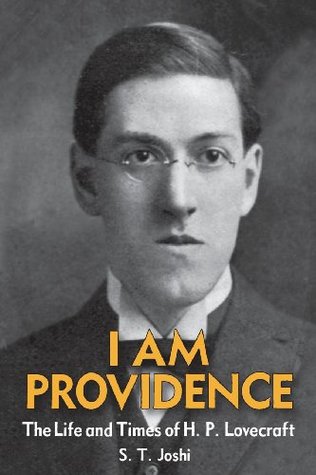
More on this book


Kindle Notes & Highlights

by
S.T. Joshi
Read between
September 3, 2022 - June 2, 2023

The result—the seventh and last volume of Wetzel’s Lovecraft Collectors Library (1955)—is a landmark, and the foundation for all subsequent bibliographic work on Lovecraft.
Jack L. Chalker’s anthology, Mirage on Lovecraft (1965), is very insubstantial. Perhaps the best item remained unfortunately unpublished: Arthur S. Koki’s “H. P. Lovecraft: An Introduction to His Life and Writings,”
Geistergeschichten
Colin Wilson’s The Strength to Dream: Literature and the Imagination (1961).
Creation Press edition of Crawling Chaos: Selected Works 1920–1925 [1993]),
Derleth published Campbell’s The Inhabitant of the Lake and Less Welcome Tenants in 1964,
By 1967 he began producing the tales that would fill his second collection, Demons by Daylight (1973),
Arkham Collector,
Arkham Sampler of 1948–49
The Caller of the Black, appeared from Arkham...
This highlight has been truncated due to consecutive passage length restrictions.
A very different work altogether is Dagon (1968), a novel by the distinguished poet, novelist, and short story writer Fred Chappell.
More Shapes Than One (1991).
Maurice Lévy’s Lovecraft ou du fantastique (1972),
HPL (1972), edited by Meade and Penny Frierson, with fine pieces by George T. Wetzel, J. Vernon Shea, and many others. One of the most important contributions was Richard L. Tierney’s “The Derleth Mythos,” a one-page article that began the destruction of Derleth’s conception of the mythos. This work was substantially fostered by Dirk W. Mosig in his landmark essay “H. P. Lovecraft: Myth-Maker” (1976), which received widespread dissemination
Darrell Schweitzer produced a respectable small anthology of criticism, Essays Lovecraftian (1976), but it received poor distribution. Also out of the fan community, although professionally published, was Lin Carter’s Lovecraft: A Look Behind the “Cthulhu Mythos” (1972), which made some egregious factual errors and wholly adopted the “Derleth Mythos,” but nevertheless presented an adequate “history” of the mythos,
Two bibliographies appeared, David A. Sutton’s Bibliotheca: H. P. Lovecraft (1971) and Mark Owings and Jack L. Chalker’s The Revised H. P. Lovecraft Bibliography (1973),
L. Sprague de Camp’s Lovecraft: A Biography (Doubleday); Frank Belknap Long’s Howard Phillips Lovecraft: Dreamer on the Nightside (Arkham House); and Willis Conover’s Lovecraft at Last (Carrollton-Clark).
Donald R. Burleson, a professor of mathematics and English who began writing careful studies of the topographical and literary sources behind Lovecraft’s tales. This phase of his work culminated in H. P. Lovecraft: A Critical Study (1983),
Lovecraft: Disturbing the Universe (University Press of Kentucky, 1990),
The Roots of Horror in the Fiction of H. P. Lovecraft (1977),
The Dunwich Horror and Others (1984), At the Mountains of Madness and Other Novels (1985), Dagon and Other Macabre Tales (1986), and The Horror in the Museum and Other Revisions (1989).
Lovecraft Studies, founded in 1979,
In 1981 Robert M. Price founded the fanzine Crypt of Cthulhu
Peter Cannon’s H. P. Lovecraft (1989) for Twayne’s United States Authors Series; Burleson’s Lovecraft: Disturbing the Universe; my H. P. Lovecraft: The Decline of the West (Starmont House, 1990).
The Lovecraft Annual (2007f.),
H. P. Lovecraft: Contre le monde, contre la vie (1991),
Peter Cannon’s superbly edited Lovecraft Remembered (1998), a virtually definitive collection of memoirs of Lovecraft. The Finnish scholar Timo Airaksinen has issued a dense but idiosyncratic study, The Philosophy of H. P. Lovecraft (1999), while Robert H. Waugh has gathered his Lovecraftian essays in The Monster in the Mirror: Looking for H. P. Lovecraft (2006).
The Ancient Track: Complete Poetical Works, originally scheduled for publication by Necronomicon Press, was issued by Night Shade Books in 2001. I edited Lovecraft’s Collected Esssays (2004–06) in five volumes for Hippocampus Press.
Necronomicon Press began such an undertaking by issuing the letters to Richard F. Searight (1992), Robert Bloch (1993), and others, but the project foundered soon thereafter. Schultz and I released two volumes of letters—Mysteries of Time and Spirit (2002) and Letters from New York (2005)—with Night Shade Books, along with two volumes—Letters to Rheinhart Kleiner (2003) and Letters to Alfred Galpin (2005)—with Hippocampuss Press; O Fortunate Floridian: H. P. Lovecraft’s Letters to R. H. Barlow appeared in 2007 from University of Tampa Press, which also issued a radically expanded and updated
...more
Essential Solitude: The Letters of H. P. Lovecraft and August Derleth and A Means to Freedom: The Letters of H. P. Lovecraft and Robert E. Howard, appeared in 2008 and 2009, respectively.
Peter Cannon. The first, Pulptime (1984), is a delightful novella in which Lovecraft, Frank Long, and the Kalems become involved with the aged Sherlock Holmes. The second, The Lovecraft Chronicles (2004), is a richly evocative work that imagines the transformation of Lovecraft’s life and career if he had actually issued a volume with Knopf in 1933. Richard A. Lupoff’s Lovecraft’s Book (1985) is substantially less interesting, being marred by a poor understanding of the details of Lovecraft’s life.
