
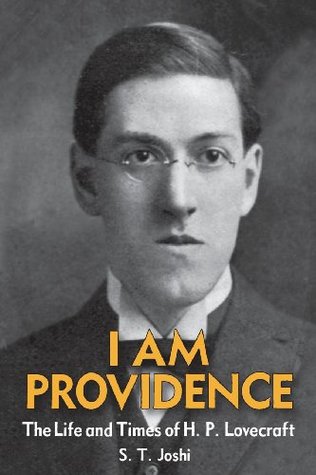
More on this book


Kindle Notes & Highlights

by
S.T. Joshi
Read between
September 3, 2022 - June 2, 2023

Machen’s Far Off Thin...
This highlight has been truncated due to consecutive passage length restrictions.
Dunsany’s Patches of Sunligh...
This highlight has been truncated due to consecutive passage length restrictions.
The Centaur (1911),
They were eventually collected in four volumes: Ghost-Stories of an Antiquary (1904); More Ghost Stories of an Antiquary (1911); A Thin Ghost and Others (1919); and A Warning to the Curious (1925).
650 pages in the later omnibus, The Collected Ghost Stories of M. R. James (1931)—is
psychological ghost story in the hands of Walter de la Mare, Oliver Onions, and L. P. Hartley.
Huysmans’s A Rebours,
William Beckford’s Vathek (1786);
John Uri Lloyd’s curious novel of underworld adventure, Etidorhpa (1895),
Walter de la Mare’s novel The Return (1910).
F. Marion Crawford’s superb posthumous collection of horror tales, Wandering Ghosts (1911),
Leonard Cline’s superb novel of hereditary memory, The Dark Chamber (1927), Herbert Gorman’s sinister novel of witchcraft in backwoods New England, The Place Called Dagon (1927),
portmanteau,
agrestic
lumbago,
“Sleepy Hollow To-day,” in Junior Literature: Book Two, published by Macmillan in 1930.
Hervey Allen in his biography (really a sort of biographical novel) Israfel (1926).
Harré’s Beware After
Dark!
Mary C. Phillips’s Edgar Allan Poe, the Man (1926),
Francis Brett Young’s Cold Harbour (A. L. Burt, 1925 [British edition 1924]), E. R. Eddison’s The Worm Ouroboros (Albert & Charles Boni, 1926 [British edition 1922]), Leonard Cline’s Dark Chamber (Viking, 1927), Herbert Gorman’s The Place Called Dagon (George H. Doran, 1927), H. B. Drake’s The Shadowy Thing (Macy-Masius, 1928 [British edition 1925]),
cacography
parvenu
“We see and feel more in Nature from having assimilated works of authentic art”; and so, “The constant discovery of different peoples’ subjective impressions of things, as contained in genuine art, forms a slow, gradual approach, or faint approximation of an approach, to the mystic substance of absolute reality itself—the
sanguine,
congeries
John Buchan’s enormously long novel Witch Wood (1927) are almost entirely in Scots dialect, as is the whole of Robert Louis Stevenson’s “Thrawn Janet.”
Herbert Gorman’s The Place Called Dagon (1927),
Jumbee and Other Uncanny Tales (1944) and West India Lights (1946),
redoubtable Forrest J Ackerman (1916–2008; the J stands for James, but Ackerman affected the policy of placing no period after it),
H. B. Drake’s The Shadowy Thing (1928),
Barry Pain’s An Exchange of Souls (1911),
Barlow’s later memoir, “The Wind That Is in the Grass” (1944), and also from a unique document—Barlow’s contemporaneous notes of the visit, first published in an adulterated form in 1959 as “The Barlow Journal” and in complete form in 1992.
First, of course, is H. B. Drake’s The Shadowy Thing, which we have already seen as an influence on “The Thing on the Doorstep.” Second, there is Henri Béraud’s obscure novel Lazarus (1925), which Lovecraft had in his library and which he read in 1928.[102] This novel presents a man, Jean Mourin, who remains in a hospital for sixteen years (for the period 1906–22) while suffering a long amnesia; during this time he develops a personality (named Gervais by the hospital staff) very different from that of his usual self. Every now and then this alternate personality returns; once Jean thinks he
...more
Walter de la Mare’s novel The Return (1910),
Leonard Cline’s The Dark Chamber (1927),
The idea of marching on a capital with the idea of influencing legislation is at best a crazy one and at worst a dangerously revolutionary one”),
Conover published in 1975 entitled Lovecraft at Last.
It is difficult to know exactly when Lovecraft realised that he was dying.
W. Paul Cook. Cook’s piece was an early version of his full-length memoir, In Memoriam: Howard Phillips Lovecraft: Recollections, Appreciations, Estimates (1941), which remains the finest memoir ever written about Lovecraft.
Francis T. Laney founded the Acolyte, the most noteworthy fan magazine since the Fantasy Fan
Laney later had a violent reaction against the fan world, recorded in his piquant autobiography, Ah, Sweet Idiocy! (1948).
A. Langley Searles’s Fantasy Commentator, also generated much valuable critical material about Lovecraft.
J. B. Michel’s “The Last of H. P. Lovecraft,” in the Science Fiction Fan for November 1939.
J. Chapman Miske’s “H. P. Lovecraft: Strange Weaver” (Scienti-Snaps, Summer 1940),
The Weird Shadow over Innsmouth and Other Stories of the Supernatural (1944),
The Dunwich Horror, containing only three long stories.[22]
Herbert A. Wise and Phyllis Fraser’s Great Tales of Terror and the Supernatural,
Donald A. Wollheim’s The Portable Novels of Science (1945), issued by Viking Press and including “The Shadow out of Time.”
In 1945 Derleth published another volume, The Lurker at the Threshold—“by H. P. Lovecraft and August Derleth.” This volume is the first of his sixteen “posthumous collaborations” with Lovecraft,
