
Discover new books on Goodreads
Meet your next favorite book
Listopia > Best Historical Fiction Books that Are Actually Historical Fiction
The original "Best Historical Fiction" list is a lost cause. It's littered with books that are either not Fiction or are not historical.
So, if you're going to add a book, it has to be:
1) Fiction. What is fiction? If you don't know the answer, you shouldn't be adding books to these lists. "Angela's Ashes", for example, is a memoir.
2) Historical. This is a bit more complicated. In this context, "historical" means the story is set in the past (relative to the author and time of publication). How far in the past is a reasonable question. "Huckleberry Finn" may seem historical to modern readers, and certainly has historical significance as part of the canon of American literature. It is not, however, historical fiction. Why not? Twain was describing events of his own time (albeit with a few decades of hindsight). It is in the past for us, but largely contemporary to him. In no way can an author fictionalizing events of his/her own time and place be said to be writing "historical fiction". Willa Cather's pioneer novels are good examples of how blurry this distinction can be. "Song of the Lark" is set in the 1890s (Cather was born in 1873), and written 25 years after the period it describes. The Wikipedia entry lists the genre for "Song of the Lark" as "novel", but for "My Antonia" (another of her prairie novels) as "historical fiction" , despite the fact that many of the events described in "Antonia" are drawn from Cather's own experiences, and the time is not far removed from that of her own life. "The Count of Monte Cristo" is another tricky example. Set during key historical events from 1815-1838, the historical setting is important (though hardly crucial to the story), but the book was published in 1844, when these events retained their relevance to the average French reader. Furthermore, no real research was required on Dumas' part to construct the setting. He knew much of it from experience, and what he did not know he could simply recreate based on the broad outlines of the facts. Thus, it seems that the "historical" component for "historical fiction" suggests two key criterion: first, a setting removed from the author's own experience; second, a recreation of that setting based on research.
A third, more stringent requirement would be that the setting have historical significance, but I disagree with this criterion. Historical fiction need not only concern great people and great events.
So this is a new list for great historical fiction books that are, in fact, both fiction and historical. Think before you add.
So, if you're going to add a book, it has to be:
1) Fiction. What is fiction? If you don't know the answer, you shouldn't be adding books to these lists. "Angela's Ashes", for example, is a memoir.
2) Historical. This is a bit more complicated. In this context, "historical" means the story is set in the past (relative to the author and time of publication). How far in the past is a reasonable question. "Huckleberry Finn" may seem historical to modern readers, and certainly has historical significance as part of the canon of American literature. It is not, however, historical fiction. Why not? Twain was describing events of his own time (albeit with a few decades of hindsight). It is in the past for us, but largely contemporary to him. In no way can an author fictionalizing events of his/her own time and place be said to be writing "historical fiction". Willa Cather's pioneer novels are good examples of how blurry this distinction can be. "Song of the Lark" is set in the 1890s (Cather was born in 1873), and written 25 years after the period it describes. The Wikipedia entry lists the genre for "Song of the Lark" as "novel", but for "My Antonia" (another of her prairie novels) as "historical fiction" , despite the fact that many of the events described in "Antonia" are drawn from Cather's own experiences, and the time is not far removed from that of her own life. "The Count of Monte Cristo" is another tricky example. Set during key historical events from 1815-1838, the historical setting is important (though hardly crucial to the story), but the book was published in 1844, when these events retained their relevance to the average French reader. Furthermore, no real research was required on Dumas' part to construct the setting. He knew much of it from experience, and what he did not know he could simply recreate based on the broad outlines of the facts. Thus, it seems that the "historical" component for "historical fiction" suggests two key criterion: first, a setting removed from the author's own experience; second, a recreation of that setting based on research.
A third, more stringent requirement would be that the setting have historical significance, but I disagree with this criterion. Historical fiction need not only concern great people and great events.
So this is a new list for great historical fiction books that are, in fact, both fiction and historical. Think before you add.


2,755 books ·
3,396 voters ·
list created October 31st, 2010
by Andrew Hill (votes) .
Andrew
1544 books
23 friends
23 friends

Jan
1340 books
82 friends
82 friends

Susanna - Censored by GoodReads
3388 books
848 friends
848 friends
Bettie
15686 books
19 friends
19 friends

Laura
13112 books
321 friends
321 friends

Lee
6850 books
259 friends
259 friends

Judy
882 books
8 friends
8 friends

Mishka
431 books
5 friends
5 friends
More voters…
Comments Showing 1-50 of 80 (80 new)

message 1:
by
Misfit
(last edited Oct 31, 2010 03:30PM)
(new)
Oct 31, 2010 03:19PM
 I am wondering how long it will be before someone adds Twilight to this list as well. Susannah, want to draw straws? :p
reply
|
flag
 Draw straws to remove it if (when!) it shows up?
 "The Odyssey" is not historical fiction. It's an epic poem that involves the active intervention of Greek Gods, for goodness sake. At what point in actual human history were Cyclops eating men and witches transforming men into pigs?
The Iliad? NOT historical fiction. The Epic of Gilgamesh? NOT historical fiction. I love epic poems, but come on.
You want me to remove them?
Susanna wrote: "You want me to remove them?"Can you remove them? That would be easier than asking the librarians to do it. Thank you for offering.
 I removed them.
Speaking of blurred lines, though:
I removed them.
Speaking of blurred lines, though: What about novels where a major part of the action is set in the past (not only from our, but also from the author's point of view), but the novel either ends in the author's own time or has a contemporary framework setting? E.g. Thomas Mann's "Buddenbrooks" (19th century, with a major initial focus on the earlier decades thereof, but concluding in 1877, i.e. 2 years after Mann's birth), Virginia Woolf's "Orlando" (beginning in the Tudor era, but concluding in the early 20th century) and Amy Tan's "Kitchen God's Wife" (framework setting: contemporary San Francisco, but most of the action is set in early 20th century China). I've added these books for the time being, but wil be happy to remove them again if you'd rather not have them on this list.
Themis-Athena wrote: "Speaking of blurred lines, though: What about novels where a major part of the action is set in the past (not only from our, but also from the author's point of view), but the novel either ends i..."
If a significant portion of the novel is set in the somewhat distant past (relative to date of publication), I think you have a good case to include it. The issue with epic poems is that they're not really "historical" in the strictest sense--they are somewhat fantastic versions of real events (the siege of Troy certainly happened, for example). In my opinion, elements of the supernatural preclude books from the "historical fiction" genre.
Misfit wrote: "I am wondering how long it will be before someone adds Twilight to this list as well. Susannah, want to draw straws? :p"Have people seriously put Twilight on historical fiction lists? Good grief.
Andrew wrote: "Themis-Athena wrote: "Speaking of blurred lines, though: What about novels where a major part of the action is set in the past (not only from our, but also from the author's point of view), but t..."
Thanks. I understand your points about epic poems (and certainly those mentioned). Just one more question: What about books such as Mark Twain's "Connecticut Yankee in King Arthur's Court"?
Leaving aside that one might well want to exclude this particular work on the grounds that King Arthur's court is a mythological (as opposed to historical) setting anyway, I'm wondering how to deal with works that use features such as time travel NOT because they are focused on the feature in question per se (such as, arguably, "The Time Traveler's Wife") but because they're using this feature as a writer's tool in order to achieve the work's overall major authorial purpose (i.e., contrasting King Arthur's world with that of late 19th/early 20th century America, in the case of Twain's "Connecticut Yankee"). Assuming, in other words, Mark Twain's "Connecticut Yankee" hadn't been bolted into King Arthur's world but, say, into that of Henry VIII or the Pilgrim Fathers (and the author's chief purpose would still be to contrast the respective historic era with that in which he himself lives): Would you rather not have the book included in the list because it uses an element of the supernatural in order to transport the protagonist -- and the reader -- into the respective historic era?
And, oh yes, the "Twilight" books have a habit of infiltrating EVERY list on this site ... whether they're appropriate additions or not! :) (Which, incidentally, is one of the reasons why some of us at least try to be so careful about defining list parameters from the outset ... and your detailed definitions and explanations are certainly much appreciated in that regard!)
Andrew wrote: "Misfit wrote: "I am wondering how long it will be before someone adds Twilight to this list as well. Susannah, want to draw straws? :p"Have people seriously put Twilight on historical fiction lis..."
I have seen Twilight on all kinds of lists where it's not appropriate!
Susanna wrote: "I have seen Twilight on all kinds of lists where it's not appropriate!"Amen ...
Themis-Athena wrote: "Andrew wrote: "Themis-Athena wrote: "Speaking of blurred lines, though: What about novels where a major part of the action is set in the past (not only from our, but also from the author's point ..."
Wow. My brain hurts. Is traveling through time a legitimate historical context? I understand that such a narrative gives an author interesting opportunities to observe the past while maintaining a modern (or alien) perspective. But it also feels somehow untrue to historical fiction as quasi-history. I don't really know the answer, but I do love Twain's "Yankee". The conjuring scene is one of the funniest I've read.
Another good question concerns alternate history. Much of it is garbage, but the really good authors build credible alternate histories on exhaustive research and great narrative development.
In both cases (i.e., time travel and alternate histories), I would say the standard should be pretty high in order to justify including the book. Again, this is just my opinion.
But hey, at least we're not debating the merits of "Twilight".
Great -- my feelings exactly ... on ALL the above! :)
 Try Rebel Puritan. New author- outstanding book, and it IS HISTORICAL FICTION!
 Kristin wrote: "Forgive me if someone has already posted this, but I see The Pianist on this list. Memoir?"
Ouch -- good catch. I removed it.
 What do people think about East of Eden by John Steinbeck? The story stretches from the 1860s to WWI, and so it overlaps with the first 10 years or so of Steinbeck's life. It wasn't published until 1952. Does it qualify?
Victoria wrote: "What do people think about East of Eden by John Steinbeck? The story stretches from the 1860s to WWI, and so it overlaps with the first 10 years or so of Steinbeck's life. It wasn't published until 1952. Does it qualify? "
What do people think about East of Eden by John Steinbeck? The story stretches from the 1860s to WWI, and so it overlaps with the first 10 years or so of Steinbeck's life. It wasn't published until 1952. Does it qualify?
Victoria wrote: "What do people think about East of Eden by John Steinbeck? The story stretches from the 1860s to WWI, and so it overlaps with the first 10 years or so of Steinbeck's life. It wasn't published until 1952. Does it qualify? "I wasn't sure about including it myself, either, but based on Andrew's response in message 8 above you might have a case. (Andrew?)
 FOrgive me if any of these are already on the list (I might have overlooked them). I don't want to add anything to this list without the creator first accepting them as true Historical Fiction.
The Crown Rose by Fiona Avery
The Lady Elizabeth by Alison Wier
The Dress Lodger by Sheri Holman
Victoria wrote: "What do people think about East of Eden by John Steinbeck? The story stretches from the 1860s to WWI, and so it overlaps with the first 10 years or so of Steinbeck's life. It wasn't published until..."Seems reasonable, but of course I defer to your judgement. Sorry for the delayed response. I have been recovering from a move and starting a new job, so life's been hectic. Looks like the list is in good shape. Relatively few misfires.
 Just finished Donati's "Wilderness" series. Thought they were great - up there with Gabaldon. Shouldn't these books be on this list? I may have overlooked them, but like others, am hesitant to add without the list creator's blessing.
 What about Bernard Cornwell's Sharpe series of books? Perhaps not all of them but I would certainly say the original series would stand up to being very good historical fiction?
 I'm new to Goodreads, an author, and I submit for the list creator's approval my book, The Hammock: A novel based on the true story of French painter James Tissot. It takes place in London and Paris during the 1870s, and I have relied on my training in art history to recreate the lives of Tissot and his friends Edgar Degas, James Whistler, Edouard Manet, Berthe Morisot, Lawrence Alma-Tadema, J.E. and Effie Millais, and others. I have attempted to present all the many characters accurately on each date they are depicted, showing where they were and interweaving their career progression and personal life with Tissot’s.
 As much as possible, dialogue and situations are drawn from the individual’s own words, in their letters or autobiographies, or from those of a contemporary. My aim was to let the characters speak for themselves and to blend imagined dialogue for a seamless recreation of these fascinating individuals playing off each other as they might have in life. Tissot's story has never been told, and he had a fascinating life -- war, glamour, love, scandal and tragedy.
It's not Twilight! And of all the lists on Goodreads, it belongs in this category of Historical Fiction Books that are actually Historical Fiction, but I defer to your opinion.
 Peter wrote: "I believe War and Peace is missing from this list."
Everybody can add books to this list, Peter -- there's a tab up top next to "all votes."
Deleted, for not being historical fiction within the description given above:Table 21
Mid Ocean
All Quiet on the Western Front
(not "historical" fiction but set during their respective authors' own lives and informed by their own experience)
The Pianist
(redeleted -- memoir, not fiction)
Undeadly
(supernatural, not historical fiction).
38 votes while 8 people say they've read it? That's impressive.
 I thought so too. His books have popped up on several lists all of a sudden.
Another case for the "authors behaving badly" list ...
I thought so too. His books have popped up on several lists all of a sudden.
Another case for the "authors behaving badly" list ...
 I'm new to Goodreads too. I think the Mary Renault's stuff starting with the Bull From the Sea works. Cornwell's Sharpe series is good. And Colleen McCullough's series beginning with the First Man in Rome qualifies. I have to laugh. I may have screwed up a time or two. Some books evoke a period, but don't really rely on history or a story about which we can only guess at the details. But, I'm clear that dragons and vampires do not exist. This is great.
 Removed for not being historical fiction relative to the time of publication:
For Whom the Bell Tolls
All Quiet on the Western Front
The Charioteer
The Count of Monte Cristo needs to go - Dumas was writing about his own time. (His lifetime: 1802-1870. Novel setting: 1815-about 1835.)
 I am not entirely clear what to consider when voting for a book. Am I saying simply that I thought it was a great book, or that I think it should be high on the list? My rating already signifies my opinion, so I am assuming the latter. I think it is difficult to vote then since I have read only around 10% of the books. I would appreciate others' perspectives on voting.
 Can I ask what A Distant Mirror: The Calamitous 14th Century is doing on the list? As far as I know, it's nonfiction (unless someone discovered a great fictional storyline in there?).
Sanne wrote: "Can I ask what A Distant Mirror: The Calamitous 14th Century is doing on the list? As far as I know, it's nonfiction (unless someone discovered a great fictional storyline in there?)."
Can I ask what A Distant Mirror: The Calamitous 14th Century is doing on the list? As far as I know, it's nonfiction (unless someone discovered a great fictional storyline in there?).
Sanne wrote: "Can I ask what A Distant Mirror: The Calamitous 14th Century is doing on the list? As far as I know, it's nonfiction (unless someone discovered a great fictional storyline in there?)."Deleted -- definitely nonfiction.
Markbckr wrote: "I am not entirely clear what to consider when voting for a book. Am I saying simply that I thought it was a great book, or that I think it should be high on the list? My rating already signifies my opinion, so I am assuming the latter. I think it is difficult to vote then since I have read only around 10% of the books. I would appreciate others' perspectives on voting."There are no ground rules that are set in stone, and people vote for various reasons. Courtesy towards the list creator's intentions would suggest a careful check whether any additions you make to the list are within the list description/topic (indeed, adding a book outside those bounds might cause it to be deleted again), but other than that, it's really up to you. Most people try to stick to books that they have actually read, or are at the very least seriously considering to read -- but again, that's just a rule of thumb; and similarly, there is no hard and fast rule how to sort the books you're voting for.
My own approach basically comes down to "these are books I think should be on this list," and whenever I do vote -- unless it's a "closed" list, i.e., one where the list creator has specifically asked that no books be added -- I try to add one or more books to those already on the list. If it's a list calling for the addition of books by my favorite authors, those authors may find themselves fairly high up in the order of my additions, but I may just as well sort my votes in a manner tailored to the list's topic, or chronologically (by approximation), or in any other way.
Other folks just go through what's already on the list and vote for the books they like -- in the order in which they appear on the list at the time of their voting. Yet others vote (and sort their votes) for other reasons and in a different order altogether. As I said, there really are no hard and fast rules, with the sole exception that any additions to the list should at least stick to the list's topic ...
 Considering the WWII happened within Wouk's lifetime, should The Winds of War be considered historical fiction?
Xenophon wrote: "Considering the WWII happened within Wouk's lifetime, should The Winds of War be considered historical fiction?"
Considering the WWII happened within Wouk's lifetime, should The Winds of War be considered historical fiction?
Xenophon wrote: "Considering the WWII happened within Wouk's lifetime, should The Winds of War be considered historical fiction?"Decidedly not. Removed.
 Scarlet Letter - Not historical fiction.
Hmm. Setting of novel: 1600s. Nathaniel Hawthorne's lifespan: 1804-1864.
Scarlet Letter - Not historical fiction.
Hmm. Setting of novel: 1600s. Nathaniel Hawthorne's lifespan: 1804-1864.Sounds like it qualifies to me.
Well I guess my definition of historical fiction is a little different. To me historical fiction weaves a fictional story around true historical events. For example, Ken Follet's Pillars of the Earth weaves a story around the Anarchy in England after the sinking of the White Ship. The Scarlet Letter doesn't really do anything like this as it is just a story of an adulteress that happens to be set in the 1600s. In my opinion just because a novel is set in a time before the author's lifespan doesn't make it historical fiction. There has to be true history in it.
The list creator did not include that criterion, however.
I guess the creator of this list sucks then.
Just explaining why I'm not removing it.
 Should Oliver Twist be on the list? (not sure if it's set during Dickens' lifespan)
And A Song of Fire & Ice definitely shouldn't be!
Dickens only wrote 2 historicals: A Tale of Two Cities and Barnaby Rudge (set in 1780).A Song of Fire & Ice is incredibly wrong; I'll remove it.
My instinct on "The Mayor of Casterbridge" is to remove it, by the way, as I don't recall that having a setting that Hardy would have conceived of as "historical."ETA: That goes for "Jude the Obscure" as well.
Jules wrote: "I am not sure why A Song of Ice and Fire is here, that's fantasy, no historical fiction."Because people can't read instructions. :-P Thanks for pointing that out; I removed it.
Related News
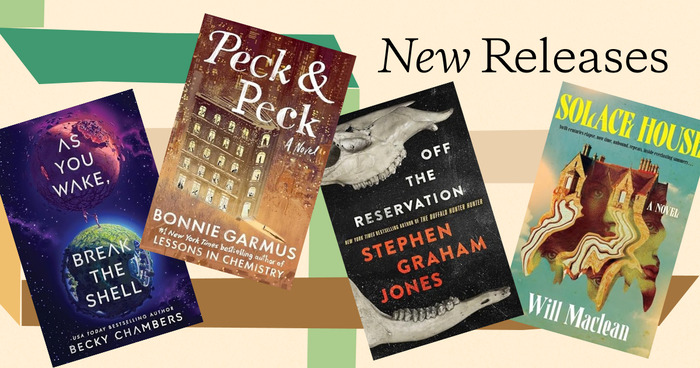
Need another excuse to treat yourself to a new book this week? We've got you covered with the buzziest new releases of the day, according to early...
Anyone can add books to this list.