

Good Minds Suggest—Sam Kean's Favorite Science Books for Nonscientists
Posted by Goodreads on July 2, 2012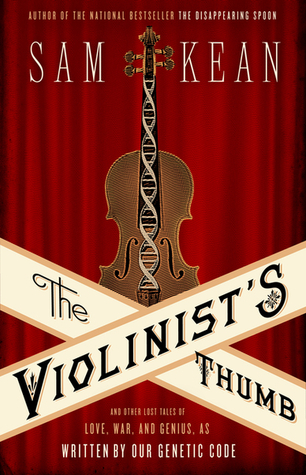 Most of us don't get to play scientist in our daily lives, but we may still yearn to unravel the mysteries of the world. Science writer Sam Kean is here to help. His previous work of nonfiction, The Disappearing Spoon, offered an anecdotal history of the periodic table of the elements by looking at the eccentric geniuses behind many discoveries. Kean, a Science magazine reporter whose work has also appeared in The New York Times Magazine and Slate, places a new subject under the microscope in his latest work. The Violinist's Thumb tells the story of DNA: how genes can explain nimble-fingered violinists—or even crazy cat ladies—and what the future may hold as our knowledge of genetics expands. Get your fix with Kean's recommended science books for nonscientists.
A Guinea Pig's History of Biology by Jim Endersby (Goodreads Author)
 "Everything about this book delights me, from the inverted premise—revealing science history through the lives of lowly lab animals—to the lovely details about some of the biggest breakthroughs in biology. Full of wonderful characters, [it] brings the real, hard work of science alive."
"Everything about this book delights me, from the inverted premise—revealing science history through the lives of lowly lab animals—to the lovely details about some of the biggest breakthroughs in biology. Full of wonderful characters, [it] brings the real, hard work of science alive."
Cryptonomicon by Neal Stephenson
"A novel, but the best example around of how to take esoteric ideas—number theory and cryptography—and invigorate them through a story. Just like Moby-Dick did with whaling, Cryptonomicon plays with even the most obscure details of mathematics and computer science and builds a world you can't wait to immerse yourself in."
"A novel, but the best example around of how to take esoteric ideas—number theory and cryptography—and invigorate them through a story. Just like Moby-Dick did with whaling, Cryptonomicon plays with even the most obscure details of mathematics and computer science and builds a world you can't wait to immerse yourself in."
The Making of the Atomic Bomb by Richard Rhodes
"The word that comes to mind is ''magisterial.' It's long, but you're glad it's so long, because it immerses you in probably the most important scientific story of the 20th century."
"The word that comes to mind is ''magisterial.' It's long, but you're glad it's so long, because it immerses you in probably the most important scientific story of the 20th century."
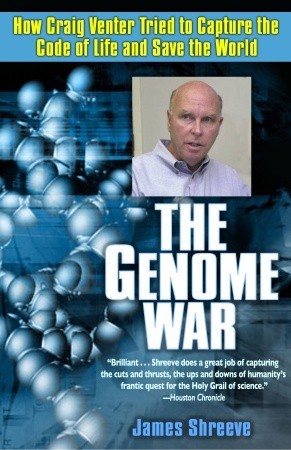
The Genome War by James Shreeve
"A book on genetics and narrative science history at its best. A great marriage of subject and author that takes you through the ups and downs, the pettiness and nobility, the solemnity and absurdity of the Human Genome Project. It's the Manhattan Project of biology, but way more zany."
"A book on genetics and narrative science history at its best. A great marriage of subject and author that takes you through the ups and downs, the pettiness and nobility, the solemnity and absurdity of the Human Genome Project. It's the Manhattan Project of biology, but way more zany."

Darwin's Dangerous Idea by Daniel C. Dennett
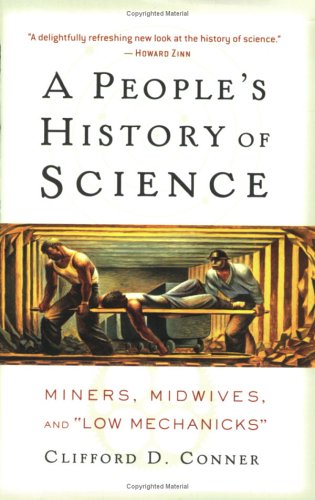
A People's History of Science by Clifford D. Conner
"I'm cheating a little in naming two books here, but I lumped them together for a reason. Each is a little more specialized and demanding than your average popular science book—but each one truly changed the way I think about science and the world. Dennett shows the pervasiveness of natural selection in the universe (it's waaaay bigger than biology!), and Conner details the long, rich history of informal science over the past few millennia, a history that long predates (and oftentimes even upstages) official 'science.'"
A People's History of Science by Clifford D. Conner
"I'm cheating a little in naming two books here, but I lumped them together for a reason. Each is a little more specialized and demanding than your average popular science book—but each one truly changed the way I think about science and the world. Dennett shows the pervasiveness of natural selection in the universe (it's waaaay bigger than biology!), and Conner details the long, rich history of informal science over the past few millennia, a history that long predates (and oftentimes even upstages) official 'science.'"
Vote for your own favorites on Listopia: Best Science Books
Comments Showing 1-50 of 52 (52 new)

message 1:
by
Carol
(new)
Jul 07, 2012 09:17PM
 Richard Dawkins "River Out of Eden"
flag
 أردت ان أكمل دراستي في جامعة هارتفورت لأني متحصل على شهادة الماجستير تخصص تقنية العلوم ولكم مني الشكر
موضوع دراستي في جامعة هارتفورت فهل ممكن أن أكمل الدراسة
In River Out of Eden, Dawkin shows how every marriage is really a marriage between distant cousins. As we go back in time the number of ancestors decreases until we find the most recent common ancestor for all humans via a particular gene pathway. Go back only 100 or 200 years, and most of us are cousins.
The genetic code is uncannily computer-like, comprising long strings of digital information. Dawkins pictures evolution as a vast river of DNA-coded information flowing over millennia and splitting into three billion branches/30 million extant species. We are "survival machines" programmed to propagate the database we carry.
أردت ان أكمل دراستي في جامعة هارتفورت لأني متحصل على شهادة الماجستير تخصص تقنية العلوم ولكم مني الشكر
موضوع دراستي في جامعة هارتفورت فهل ممكن أن أكمل الدراسة
In River Out of Eden, Dawkin shows how every marriage is really a marriage between distant cousins. As we go back in time the number of ancestors decreases until we find the most recent common ancestor for all humans via a particular gene pathway. Go back only 100 or 200 years, and most of us are cousins.
The genetic code is uncannily computer-like, comprising long strings of digital information. Dawkins pictures evolution as a vast river of DNA-coded information flowing over millennia and splitting into three billion branches/30 million extant species. We are "survival machines" programmed to propagate the database we carry.
 I've always been highly interested in science and competed throughout my school days in chemistry and biology. This list is perfect for me!
أريد أن أكمل دراستي في دول أمريكا أو بريطانيا فهل عندك رغبة في مساعدتي
I want to complete my studies in the countries of America or Britain does have a desire to help me
I've always been highly interested in science and competed throughout my school days in chemistry and biology. This list is perfect for me!
أريد أن أكمل دراستي في دول أمريكا أو بريطانيا فهل عندك رغبة في مساعدتي
I want to complete my studies in the countries of America or Britain does have a desire to help me
 Cryptonomicon was great. Am reading book next...just what I was looking for.
 Redha wrote: "أردت ان أكمل دراستي في جامعة هارتفورت لأني متحصل على شهادة الماجستير تخصص تقنية العلوم ولكم مني الشكر"
I wanted to complete my studies at the University of Hartfort because I obtained a Masters of Science and Technology Specialization me thank you.
Evolution: the View From the Cottage--J-P Rogel & N. Spencer
 ZOOBIQUITY What Animals Can teach us About Health and the Science of Healing by Barbara Natterson-Horowitz, MD and Kathryn Bowers.
 Dinosaurs with cancer?! Physiologically, we're much closer to our animal friends than we thought. A terrific book that looks at the parallels between disease, viruses, mental health & behaviors between humans and non humans. A terrific read!
Cryptonomicon! Sounds interesting and unraveling, can't wait to get my hands on it
 David Quammen, Natural Acts: A Sidelong View of Science and Nature (revised and expanded ed., 2008; orig. 1985). Quammen's essays are insightful gems, informative scientifically and at the same time plumbing philosophically the depth possible in humans' relationships to nature.
 A Short History of Nearly Everything, but Bill Bryson. I loved this book! I am a science geek, but I even recommend this book to my non-science geek friends, and they loved it too!
 The Beak of the Finch by jonathan weiner, which won a pulitzer in 1994 -- excellent.
 The Speckled Monster and The Great Influenza. I loved these two books teaching about the development of the medical profession while exploring two devastingly deadly viruses.
Bad Astronomy by Phil Plait Bad Astronomy: Misconceptions and Misuses Revealed, from Astrology to the Moon Landing "Hoax"
I read your Book about Periodic table element, charming
The Speckled Monster and The Great Influenza. I loved these two books teaching about the development of the medical profession while exploring two devastingly deadly viruses.
Bad Astronomy by Phil Plait Bad Astronomy: Misconceptions and Misuses Revealed, from Astrology to the Moon Landing "Hoax"
I read your Book about Periodic table element, charmingThanks


