

Colson Whitehead Follows Up Double Pulitzers with a Crackling Crime Caper
Posted by Cybil on September 10, 2021
This is the person who sells what has been stolen, the mover between crime and capitalism. In Colson Whitehead’s latest novel, Harlem Shuffle, you’re likely—and improbably—to be on the side of the fence, Ray Carney, the person who typically offers ten cents on the dollar.
In 1959, Carney is the medium-size son of a deceased full-time crook. He owns and runs a furniture store in Harlem, but with a wife, a child, and a baby on the way, he aspires to deliver a better life for his family. He’s on the cusp of membership in the Dumas Club, the most elite in Harlem. Ray’s cousin, Freddie, supplies extra merchandise and money, delivering electronics and jewelry to Carney at his store to be sold—no questions asked.
Harlem Shuffle follows Ray Carney, the fence, through five years, three heists, two stolen necklaces, one revenge plot, and countless characters who weave a story of opportunity, ambition, revenge, legacy, loyalty, family, and sentiment.
Colson Whitehead, the two-time Pulitzer Prize winner for fiction for The Underground Railroad and The Nickel Boys, spoke to Goodreads contributor April Umminger about his latest novel. Their conversation has been edited.
Goodreads: When did you start writing, and when did you think this would be your career?
Colson Whitehead: As a kid, I was very bookish. I didn't like to do sports and stuff like that. My dream afternoon was reading comic books on the living room floor, reading my parents’ Stephen King novels, and watching The Twilight Zone.
From an early age, like sixth or seventh grade, I wanted to be a writer and make up stories about Spider-Man or werewolves, stuff like that.
I started writing for a career as a journalist at The Village Voice in the early ’90s, doing reviews of music and TV and film and books. That gave me time to start writing on the side.
So, I wrote a novel, and everyone hated it.
I think I really became a writer when I failed to get that first book published, and I thought there's nothing else I could do, there’s no kind of “real job” I can actually find that would make me whole. So, I just have to write another one.
Committing to being a writer made me a writer.
GR: How did you get the idea for Harlem Shuffle? Is it based on true crime?
CW: No, I just like heist stories. I grew up watching a lot of TV, movies like The Taking of Pelham 123 from the early ’70s, when a group of criminals holds a subway train for ransom. Dog Day Afternoon is also a great sort of downbeat crime movie of my youth that was a big influence.
This one day in 2014, I was thinking how fun it would be to do a heist novel, and can I? I gave myself permission and started thinking about what sort of capers my main character would get caught up in.
GR: In this book, in terms of story, you’ve got a couple of sections that are a few years apart, starting in 1959 going through ’64. How did you come up with that structure, and how would you describe this book, other than being about a few heists?
CW: The initial idea is to have fun doing a crime novel.
I tried to figure out what calamity in New York City my robbers could use for cover for their crime. Maybe the blackout of ’77, the early 1940s race riots, the ’64 race riots, and I decided to use ’64. I was trying to find an anchor; Ralph Ellison owns the ’44, the early ’40s riots in Invisible Man, the blackout seemed a bit obvious, so it was ’64.
I kept coming up with different capers for my main character, so instead of it being about one crime, it became three novella-length crimes, showing Ray Carney’s embrace and rejection of his criminal side.


CW: The idea comes first. Let’s make the underground railroad real, let’s do a heist novel, a zombie book. And then, as I start outlining it—when does it take place? Where? Who is the anchor? What do they want? You know, all these sorts of details start accumulating.
In this case, I knew I wanted to have a fence as a main character. I think that figure is always interesting in heist movies when the criminals have executed their plan and then they bring it to a fence for appraisal, and the fence says, you know, “I’ll give you ten cents on the dollar.” It always seemed so appalling.
I hated fences, but it seemed like why not have a fence be a protagonist?
GR: I was thinking about fragmentation and equilibrium in the story—you have Striver’s Row and Crooked Way. The rise and falls of your characters seem a bit of a balancing act. Is keeping equilibrium in society something that was deliberate?
CW: I wouldn’t characterize it like that, but as we move through the book we see low-level Harlem criminals, Wall Street fat cats, and the distinctions are erased. Everyone’s a little crooked, and sometimes we’re talking about a matter of scale. The petty thievery that dominates the first part of the book and then the multimillion-dollar stakes in the last section of the book.
We talked briefly about following Carney in three different sections, three different years of his life, and each one I’m pulling back farther and farther to get a wider panorama of his world and how the world works.
His father was a petty criminal, and that was his example of manhood. He found his own path, made something of himself. He opened his own furniture store but does have this nagging voice inside him that is urging him to be bad.
I would say that he comes to more fully understand his crooked side and his motivations for being bad and being good. And, as with all of us, it’s an ongoing process.
GR: You have some incredibly memorable characters in Harlem Shuffle who are easy to get attached to and root for. Who is your favorite?
CW: You know, the cast of The Nickel Boys was pretty small. There are two main characters: Elwood and Turner. In this one, we have Carney as the main protagonist, but he does have this lively supporting cast.
I don’t have favorites, but I love when Pepper shows up. Pepper is a longtime crook who ends up showing Carney how the crooked side of the street works.
His wife, Elizabeth—I haven’t had a stable, family home in a while in my books, if ever. [Laughs.] Having a partner for Carney, who doesn’t know about his crooked side, was a challenge, but also very compelling. I like the way she turned out.
Then there’s Freddy, who is Carney’s cousin. They grew up together. He’s always the one getting Carney into trouble, and never grew out of their juvenile hijinks. As they start misbehaving in their 30s, the stakes are much higher.
GR: Pepper was a fantastic character. Who gets shot in the leg and walks it off?
CW: Yes. That’s all in a day’s work for Pepper. [Laughs.]


CW: It depends on the book. My book called Sag Harbor is about growing up in the ’80s. It’s definitely inspired by people I knew and things I did when I was a teenager.
In this one, everyone’s made up. I didn’t really pattern anybody on folks I knew. Carney comes first, and then trying to populate his world with characters who are compelling, who challenge him, or are foils for his personality, is part of the work.
All those people I named—Elizabeth, Pepper, and Freddie—hopefully they’re recognizable people, but also they’re there to serve Carney and his story, ultimately.
GR: The second section of your book is called “Dorvay.” How did that work as a device to help develop the plot?
CW: In the second section, I’m pulling back to see more of Carney’s world. There’s the second caper, that he gets involved in a revenge scheme.
I came across a story about dorvay a couple of years ago in The New York Times. Basically, before we had electricity, our body had a different sleep rhythm. We’d work on the farm, work outside all day, and when it got dark, we’d go to sleep.
People would wake up around 11 p.m., midnight, 1 a.m., and be up for a couple hours and then go back to sleep. That midnight period was called “the watch,” and was called dorvay in French, which means wakeful sleep. Medieval scholars talk about it, Benjamin Franklin, it’s in a bunch of Shakespeare.
When I first heard about it, I—one—wanted to use it. Then when I was working on Harlem Shuffle, I thought that’s the perfect prime-time crime time. Everyone’s asleep and there’s this midnight preserve that’s open for criminals, writers, alcoholics, insomniacs.
When I was younger, I used to work in those hours, like 11 p.m. to 1 a.m., I’d have a second shift of work. I know what it’s like to feel like you’re the only person up, scheming, when the whole world is asleep. So that became a metaphor for Carney’s crooked midnight industry.
GR: That’s fantastic. For readers who come to Harlem Shuffle who aren’t familiar with your other novels, how is this different from the other historical fiction that you’ve published? Why the shift from some of the fantastical elements to straight-up heist?
CW: I have written something like ten books, and some of them are realistic, some are fantastic, some are plot heavy, some are plotless. You pick the right tool for the job—pick the right narrator, pick the right tone, pick the right rhetorical devices.
With The Underground Railroad, I wanted to present alternative Americas, so that calls for a fantastic structure. But there is no need for that in a novel about 1960s Harlem and a heist. The Underground Railroad involves a lot of historical research and is also fantastic in structure; this one is a straightforward realism.
In terms of historical fiction, my first few novels were very contemporary. I’ve run out of things to say about contemporary life. Writing historical novels has forced me to break out of my comfort zone. I think it has been very rewarding.
GR: You mentioned you started this book in 2014…
CW: I had the idea in 2014, was taking notes around 2016, and then finally started writing it in 2018.
GR: When did you finish? You were writing this during a really uncertain and tumultuous time in our history, which we’re still living through. How did that influence you, or did it? What was your process?
CW: My process is I have an idea, and if it stays with me, it argues for its worthiness as something to take on.
I had the idea in 2014. I kept thinking about it after I finished writing The Underground Railroad. I started taking notes, and then I put it down to work on The Nickel Boys. But that meant in the fall of 2018 I had a big head start because I’d done a lot of foundation work before.
When the lockdown happened, I was two months from finishing. I’d done all the heavy lifting and was really on that downward slope, where you’ve established everything and are wrapping it up.
I finished my draft in May of last year [2020].
GR: All the events of 2020 with racial justice that happened after—that was just coincidental timing with your story?
CW: Well, if you write about a f---ed-up racial event, you wait two months or two weeks, and it’s going to happen again.
I picked the riot of ’64, which stemmed from a police brutality incident years ago. I finished writing most of it when lockdown happened, and the next day was the first day of the George Floyd protests.
It’s not being prescient, it’s not coincidence—if you write about a terrible racial incident, you don’t have to wait very long for something similar to happen again.
GR: You mentioned the other books that you wrote when you were working on Harlem Shuffle. Are there any in different stages of completion now?
CW: Right now, I’m working on a second book about Ray Carney that follows his adventures in the 1970s. For the first time I’m doing a sequel or continuing the series. It’s been very rewarding and fun not to put it in the can and forget about it but to continue embroidering the world.
GR: What is the Harlem Shuffle? How did you arrive at that for the title of this book, or were there others in the mix?
CW: I didn’t have any in the mix, and then the song came on, the original 1963 version by Bob and Earl, and I thought “That's it.”
It’s one of those this-is-how-you-do-a-dance type songs. It's like, “you move to the left, you shift over there.” But the horn section and the rim section are really ominous. Even though it’s a party song, there’s this ominous undercurrent to it. That seemed to capture some of the tensions of Harlem Shuffle, and I knew right then that's what the book would be called.
GR: What writer or stories give you inspiration? Who are some favorites that you draw from?
CW: Oh, it depends on the book. With The Nickel Boys, I was reading a lot of short novels. Mohsin Hamid, Exit West, Julie Otsuka's The Buddha in the Attic, Edith Wharton's Ethan Frome, Denis Johnson. I was trying to figure out how to write a short novel, so I was reading novellas and short novels.
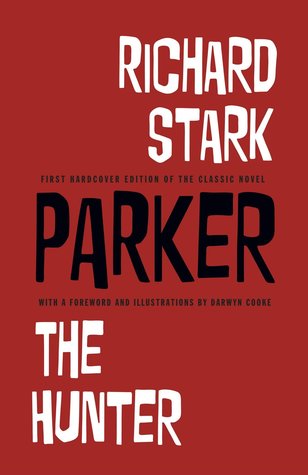
With this book, I was inspired by low-tech crime movies from the ’70s and ’60s, like The Outfit and Charley Varrick with Walter Matthau. In terms of books, Richard Stark wrote a series of crime novels about a sociopathic crook named Parker. Chester Himes, the great 1950s and ’60s Harlem crime writer, and then Patricia Highsmith and her Ripley novels.
We talked about the fractured self earlier. I like how Ripley, in those books, could never admit that he’s homicidal, he’s gay. He carries so much and will not let the reader see it, even though we’re in his thoughts and in his consciousness.
That divided self between crooked and straight plays out in Carney’s life as well.
GR: What books are you reading now?
CW: My weird casualty of lockdown is that my attention span for pleasure reading has evaporated. I’m glad I can read all these New York books, and crime novels, and memoirs of gangsters, but my pleasure reading definitely has gone down.
The fall books that I hope will break me out of it, there is Richard Powers’ Bewilderment, Anthony Doerr’s Cloud Cuckoo Land. These are both people I’ve been reading for decades now, and it’s inspiring to see them keep producing such high-level books. Hopefully the spell will break the next few weeks.
There are books I like for plot, like Richard Stark. Books I like because of their philosophical arguments, like Richard Powers’ The Overstory.
In my career, I’ve written a zombie novel, a coming-of-age novel, a nonfiction book about poker, so I don’t care so much about subject matter so much as the sentence. I love books that have really boring titles like Salt. It’s not what you write about; it’s how you write about it that always gets me.
GR: One final question: What is your favorite book of all the ones you’ve written?
CW: It’s always the one I’m working on now. Carney in the ’70s is currently my favorite.
Colson Whitehead’s Harlem Shuffle will be available in the U.S. on September 14. Don’t forget to add it to your Want to Read shelf. Be sure to also read more of our exclusive author interviews and get more great book recommendations.
Comments Showing 1-23 of 23 (23 new)
date newest »
newest »
message 1:
by
Cynthia
(new)
Sep 10, 2021 12:29PM
 I can't wait! I'm pre-ordering it now!
flag
 I love his writing. It's fascinating to read Whitehead's explanation to his approach to writing. First, an idea. Then when and where. And does the idea fight to live. I've already ordered Harlem Shuffle. Can't wait to read it.


 I loved Underground Railroad and Nickel Boys and look forward to something different again from Colson Whitehead!
 Will be reading Harlem Shuffle. Great stuff!!!
 Of course it’ll be a great book; it’s Colson Whitehead!
 He is an inspiration! It’s not the subject, it’s the sentence!
I have read three of Whitehead’s novels and loved each one. Harlem Hustle has been on my to read list since I heard about it. Can’t wait until the 14th.
He is an inspiration! It’s not the subject, it’s the sentence!
I have read three of Whitehead’s novels and loved each one. Harlem Hustle has been on my to read list since I heard about it. Can’t wait until the 14th.
 I think he is a great writer and I look forward to reading his latest.
 Heist stories are one of the types of novels I like read. Pepper, Elizabeth and the other characters seem very interesting. That word "dorvay" excites me too. First time reading of it happened here.
Cloud Cuckoo Land is on my list to read for the year too.
 oh my! what a craft lesson for me as a writer. He’s a chef. He plots these fantastic meals and he enjoys doing them! Once there was an image of troubled suicidal writers long ago. This interview fills me with joy.
Thank you for sharing it.

 “It’s not what you write about; it’s how you write about it that always gets me.“ EXACTLY!
 برج نوری سپهر صنعت آداک را در سایت این شرکت به نشانی زیر دنبال کنید
ssa.co.ir
 This interview was a nice appetizer, setting the tone to read the book. Looking forward to reading my next Colson Whitehead novel.
 I didn't like it. 🥱 Disappointed in my first Whitehead novel.
I always enjoy hearing or reading Colson Whitehead interviews. He speaks to readers and writers. I will be reading Harlem Shuffle
I didn't like it. 🥱 Disappointed in my first Whitehead novel.
I always enjoy hearing or reading Colson Whitehead interviews. He speaks to readers and writers. I will be reading Harlem Shuffle
 I had about six books on my list before I started Harlem Shuffle. I'm finishing up Last Girl Gone, and my others were re-reads Silver Sparrow, Babylon Sisters, Things I Wish I had told My Daughter, and a couple more. My most intriguing read, however, remains The Book Of Harlan. I may reread it in the future, but next stop after this current read is Harlem Shuffle
