
Systems


Thinking In Systems: A Primer
The Systems Bible: The Beginner's Guide to Systems Large and Small
The Fifth Discipline: The Art & Practice of The Learning Organization
Complexity: A Guided Tour
An Introduction to General Systems Thinking (Silver Anniversary Edition)
Scale: The Universal Laws of Growth, Innovation, Sustainability, and the Pace of Life in Organisms, Cities, Economies, and Companies
The Systems View of Life: A Unifying Vision
Antifragile: Things That Gain from Disorder
Systems Thinking For Social Change: A Practical Guide to Solving Complex Problems, Avoiding Unintended Consequences, and Achieving Lasting Results
Work the System: The Simple Mechanics of Making More and Working Less
Limits to Growth: The 30-Year Update
Chaos: Making a New Science
Emergence: The Connected Lives of Ants, Brains, Cities, and Software
Complexity: The Emerging Science at the Edge of Order and Chaos
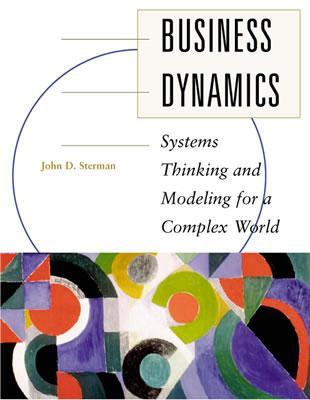
Business Dynamics
Designing Data-Intensive Applications by Martin KleppmannHow Linux Works by Brian  WardThe Linux Programming Interface by Michael KerriskLinux System Programming by Robert   LoveThe Elements Of Computing Systems by Noam Nisan
Systems Programming
17 books — 4 voters
Doughnut Economics by Kate RaworthFor the Common Good by Herman E. DalyBeyond Growth by Herman E. DalyLimits to Growth by Donella H. MeadowsBiomimicry by Janine M. Benyus
Regenerative Economics
22 books — 1 voter

Crucial Conversations by Kerry PattersonThe Skilled Facilitator by Roger SchwarzDiscussing the Undiscussable by William R. NoonanThe Fifth Discipline by Peter M. SengeSystems Thinking by Jamshid Gharajedaghi
Organizational learning
10 books — 1 voter
The Myth and Magic of Library Systems by Keith Joseph KelleyThe Accidental Systems Librarian by Nicole C. EngardThe Accidental Library Manager by Rachel Singer GordonThe Accidental Librarian by Pamela H. MackellarALA Glossary of Library and Information Science by Michael Levine-Clark
Systems Librarian Bookshelf
5 books — 2 voters

Freeman Dyson
The essential fact which emerges ... is that the three smallest and most active reservoirs ( of carbon in the global carbon cycle), the atmosphere, the plants and the soil, are all of roughly the same size. This means that large human disturbance of any one of these reservoirs will have large effects on all three. We cannot hope either to understand or to manage the carbon in the atmosphere unless we understand and manage the trees and the soil too.
Freeman Dyson, From Eros to Gaia

Stuart A. Kauffman
Pick up a pinecone and count the spiral rows of scales. You may find eight spirals winding up to the left and 13 spirals winding up to the right, or 13 left and 21 right spirals, or other pairs of numbers. The striking fact is that these pairs of numbers are adjacent numbers in the famous Fibonacci series: 1, 1, 2, 3, 5, 8, 13, 21... Here, each term is the sum of the previous two terms. The phenomenon is well known and called phyllotaxis. Many are the efforts of biologists to understand why pine ...more
Stuart Kauffman, At Home in the Universe: The Search for the Laws of Self-Organization and Complexity

More quotes...
Verve & Vision Book Club Get more things done in flow. For sovereign spirits mastering midlife Videos each month Book clu…more
4 members, last active 10 months ago
Reading Space for Systemic Thinkers This group is for those who are interested in reading with the intention of exploring the text w…more
3 members, last active 11 years ago
SystemsConnect This is for reading books about mpd and did. This is also where systems can talk and make friend…more
4 members, last active 2 years ago
A group for the UK O&P team to share what books are great reading for IBM O&P Consultants…more
2 members, last active 13 years ago