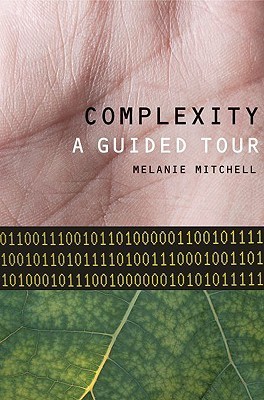
What enables individually simple insects like ants to act with such precision and purpose as a group? How do trillions of neurons produce something as extraordinarily complex as consciousness? In this remarkably clear and companionable book, leading complex systems scientist Melanie Mitchell provides an intimate tour of the sciences of complexity, a broad set of efforts that seek to explain how large-scale complex, organized, and adaptive behavior can emerge from simple interactions among myriad individuals. Based on her work at the Santa Fe Institute and drawing on its interdisciplinary strategies, Mitchell brings clarity to the workings of complexity across a broad range of biological, technological, and social phenomena, seeking out the general principles or laws that apply to all of them. Richly illustrated, Complexity: A Guided Tour--winner of the 2010 Phi Beta Kappa Book Award in Science--offers a wide-ranging overview of the ideas underlying complex systems science, the current research at the forefront of this field, and the prospects for its contribution to solving some of the most important scientific questions of our time.
Melanie Mitchell is a professor of computer science at Portland State University. She has worked at the Santa Fe Institute and Los Alamos National Laboratory. Her major work has been in the areas of analogical reasoning, complex systems, genetic algorithms and cellular automata, and her publications in those fields are frequently cited.
She received her PhD in 1990 from the University of Michigan under Douglas Hofstadter and John Holland, for which she developed the Copycat cognitive architecture. She is the author of "Analogy-Making as Perception", essentially a book about Copycat. She has also critiqued Stephen Wolfram's A New Kind of Science and showed that genetic algorithms could find better solutions to the majority problem for one-dimensional cellular automata. She is the author of An Introduction to Genetic Algorithms, a widely known introductory book published by MIT Press in 1996. She is also author of Complexity: A Guided Tour (Oxford University Press, 2009), which won the 2010 Phi Beta Kappa Science Book Award.
A very informative and easy-to-read book on complexity and complex systems. Although I learned a lot about the computer science and biological perspectives to complexity and I enjoyed it, but I think the focus on these perspectives is too much and very detailed which leaves very little space for equally interesting perspectives, such as socio-economic approach, or the so called complex adaptive systems approach. Therefore, the book on complex adaptive systems by Miller and Page might be complementary to this book, if we share the same concerns
در بین چندین اثری که اخیرا در مورد علم پیچیدگی و کاربردهای آن خوانده ام، به لحاظ نگارشی و آموزشی بهترین اثر بوده است. میشود گفت که با رویکرد علوم کامپیوتری و با به کار گیری نظریات زیستی به پیچیدگی نوشته شده و بعد از خواندن این کتاب این جسارت را پیدا کرده بودم تا با دوستان متخصص در علوم ذهن و بیولوژی درباره موضوعات کتاب گفت و گویی داشته باشم.
اما در طرف مقابل، بسیاری از مسائل محتوایی و کاربردی، مثلا در حوزه های اجتماعی و اقتصادی یا به طور کلی سیستمهای پیچیده انسانی مغفول مانده اند. بنابراین، کتابهای دیگری که عموما بوسیله اقتصاد و مدیریت خوانده ها درباب کاربردهای علم پیچیدگی نوشته شده اند (مثلا آثار میلر و پیج) می توانند مکمل چنین اثری باشند. متوجه شدم که ترجمه ای هم از این اثر روانه بازار شده، اما اکیدا مطالعه متن روان انگلیسی توصیه میشود
1) صدتا مورچه رو در یک اتاق رها کنید و همگی اونقدر پرسه میزنن تا از گشنگی بمیرن. دهها هزار مورچه اما، قادرن منظمترین کلونیها رو بسازن، با چسبیدن به همدیگه برای رسیدن به غذا از یک شاخه به شاخه دیگه پل بزنن یا با تجمع کردن و تشکیل یک توده عظیم، حتی روی آب شناور بشن و از رودخانه عبور کنن! چنین هوشمندی دقیقا چطور بوجود اومد؟ از چه تعداد بیشتر مورچه، چنین همکاریهای شگفتآوری ممکن میشه؟
2) نورونها به عنوان سلولهای تشکیلدهنده مغز ما به هیچ وجه پیچیدهترین سلولهای بدن ما نیستن و هر کدوم رو به تنهایی بررسی کنی، کارکرد نسبتا سادهای دارن: وقتی سیگنال فعالسازی به یک نورون میرسه، اون فعال میشه و پالس الکتریکی ساطع میکنه که بعدا توسط نوروترنسمیترها به رهاسازی یک ماده شیمیایی منجر میشه که در اصل فعالساز نورونهای دیگه است. عملکرد مغز ما حاصل اثرات تجمیعی همین سلولهای ساده است که شباهتهای قابل تاملی با رفتار مورچهها داره. ا{شبکه جهانی اینترنت، سیستم ایمنی بدن، و خیلی موارد دیگه صرفا مثالهای دیگهای هستن که در اونها رفتارهای "پیچیده" از برهمکنش اجزای تشکیلدهنده "ساده" حاصل میشه. }
3) آیا ممکنه آب و هوای ایران رو بدون پیشبینی کردن آب و هوای آلمان پیشبینی کرد؟ برغم سالیان دراز و موفقیتآمیز "تقلیلگرایی"1 در مدلسازی و مطالعه پدیدههای طبیعی، به تدریج و با بیشتر شدن شناخت ما از طبیعت، با سیستمهایی مواجه شدیم که مطالعه جزءبهجزء و بررسی روابط میان اونها نمیتونه به طور کامل اون پدیده رو توضیح بده و لاجرم باید کل اون رو یکجا بررسی کرد. مدلهای آبوهوایی، مطالعه مغز، یا رفتار جمعی مورچهها همگی یک ویژگی مشترک دارن: "بروز بیرونی رفتار اونها به عنوان یک کل، چیزی ورای مجموع رفتار تکتک اجزای تشکیلدهنده + برهمکنشهای هر جزء بر دیگری هست" بسیار بجاست که یک بار دیگه بپرسیم: هوشمندی مغز انسان یا یک توده مورچه در کجای روابط بین اجزای تشکیلدهنده اونها تعریف میشه؟
4) آیا ممکنه روزی برسه که بتونیم آبوهوای اقصی نقاط کره زمین رو با دقتی همچون همون دقتی که حساب روز و ماه و سال و دقیقه حرکت کره زمین به دور خورشید رو داریم، برای سالیان آینده پیشبینی کنیم؟ اگر نه، آیا این عدم توانایی ناشی از محدودیتهای شناختی یا محاسباتی ماست یا آیا اساسا غیرممکنه؟ اقرار به پیشبینیناپذیر بودن برخی سیستمها یاس فلسفی بزرگی برای دانشمندان به همراه داشت که همین شاید باعث شد مطالعه مدون چنین سیستمهایی قدری به تاخیر بیوفته. اونچه که امروز تحت عنوان "آشفتگی"2 و "سیستمهای آشفته" مطرح میشه، عنوان میکنه که چطور یک تغییر بسیار جزئی در رفتار یک جزء سیستم، میتونه منجر به تغییرات بزرگ و غیر قابل پیشبینی در رفتار کلی اون سیستم بشه. نه تنها مدلهای آبوهوایی که از مغز آدمیزاد بگیر تا اقتصاد کلان و تاریخ بنیبشر هم مشمول این مقوله میشه.
حقیقتش رو بگم، کتاب بسیار سنگینی هست و خوندنش اصلا آسون نیست. اونچه که تحت عنوان "پیچیدگی" عنوان میشه زمینهای هست که به مطالعه اشتراکات و مشابهتهای سیستمهای "پیچیده"، مثل مغز انسان، سیستم ایمنی بدن، شبکه اینترنت، اقتصاد کلان و امثالهم میپردازه و دائما از دیانای و آرانای و کروموزوم، میپره به ماشین تورینگ و علم شبکه و بعد پردازش اطلاعات و اصلا اینکه اصلا "اطلاعات"3 چیه و بعد یک گریز به مکانیک آماری و معادله بولتزمن و بعد الگوریتم ژنتیک و بعد نظریه تکامل و بعد توزیع توانی و شبکههای بیمقیاس و ... و خلاصه مغزتون رو میترکونه جدا! اگر واقعا به ساینس علاقهمند هستید و حوصله دارید با همون دقتی که یک کتاب آکادمیک رو میخونید این رو هم بخونید، کتاب واقعا جالبیه.
اما اینم لازمه بگم که علیرغم تلاش این نویسنده در تبیین "پیچیدگی" به عنوان یک شاخه علمی، هنوز توافق نظری روی چنین چیزی وجود نداره. بخش بزرگی از این عدم توافق، چنانکه بعد از خوندن این کتاب، خودتون هم متوجه خواهید شد، بخاطر اینه که در تلاشه بین مسائلی پل بزنه که خودشون هنوز در مرحله تکوین و تکامل هستن و هنوز خودشون به طور کامل درک نشدن. قاعدتا بررسی اشتراکات چنین مسائلی، کار بسیار دشواریه. با این همه امید زیادی هم وجود داره و کارهای زیادی هم در حال صورت گرفتنه که توی کتاب چندین موردش رو مبسوط بحث میکنه.
سر جمع کتابی بود که مرزهای ذهنی من رو بسیار جابجا کرد و از این جهت شاید بهترین کتابی بود که به عمرم خوندم. و اگرچه نمیتونم بگم همش رو فهمیدم، ولی امیدوارم روزی برسه که بتونم چنین ادعایی کنم. _________ 1- Reductionism 2- Chaos 3- Information
I actually brought this book by accident, thinking it was strictly about computation complexity theory. Instead, it turned out be about the newish science of Complexity Theory. What a happy accident - this is currently tied for most informative and interesting book I've read all year. The scope of this book is broad, and covers a plethora of topics - evolution, computational complexity, turing machines and definite procedures, molecular genetics, immunology, neurology, graph and network theory, power laws, fractal geometry, information theory and thermodynamics, to give an incomplete list, all as seen through the lens of complexity theory. If you're already familiar with most of these topics, you'll still find new information here, and some of the history given for these fields is, by itself, worth the price of purchase. If you've ever seen references to computation and information in physics and biology, but had only the vaguest notion of what they were getting at, this book will explain it for you in a clear and engaging fashion. Engaging, easy to read, and consistently mind blowing. I can honestly say I've acquired a new interest, and that I'm better informed about a number of topics than when I started, thanks to reading this book.
I find complexity research so fascinating, and got some new insights for sure. Unfortunately I soon discovered that my knowledge base made parts hard to follow, especially when it came to computers and mathematics.
This entire review has been hidden because of spoilers.
Nice introductory book about a number of topics in the emerging field of "complexity". Complexity is a very broad subject, still under significant theoretical development, that touches upon many scientific fields such as biology, computer sciences, information theory, genetics, network theory etc, so this book occasionally feels a bit disjointed (which is unavoidable considering the nature of the subject) - it must be said however that the author manages to convey, in a clear manner, the main features of this fascinating field of research.
Fascinating topics such as chaos theory (with a concise but very nice explanation of the "logistic map" example, which is a classic introductory subject), are competently treated by the author, and with enthusiasm and clarity. In particular, the author explains clearly how apparent randomness and chaotic behavior can arise even from very simple deterministic systems.
Fundamental concepts are also addressed in a lucid way: starting from the concept of information, down to the very concept of complexity (considered from a computational, entropic, fractal, logical depth, thermodynamical, and statistical perspectives). Fascinating examples and studies of complexity (and even of life-like behavior) arising as emergent phenomena in structures as conceptually simple as "cellular automata" (even a simple two-state cellular automaton has been demonstrated capable of universal computation), provide real food for thought. The technique of "genetic algorithms" provides amazing results and demonstrate how complex solutions and "intelligent" behavior can emerge even from the simplest set of rules. The relationship between computability and natural structures is also explored, with fascinating insights. The idea of life as essentially an information-processing phenomenon is quite appealing too.
Overall, the author explains very effectively, and convincingly, the great importance of thinking about complex systems in terms of nonlinearity, decentralized control, distributed feedback mechanisms, controlled randomness and statistical representation of information, and that a simplistic reductionist approach (according too which the global behavior of a system can be simply deduced from knowledge of the individual components) is in many case totally inadequate.
This is an enjoyable book for anyone who is interested in an introduction to the study of complexity, especially if you have a background in computer sciences.
Through no fault of its own, I did not enjoy "Complexity: A Guided Tour." The field of complexity has long interested me in the abstract, but I found this introductory text to be way over my head with respect to content. I was able to follow for the first 100 pages or so but, pun intended, it simply became too complex for me to handle. I think if I had a background in computer science or theoretical mathematics I could have found more to appreciate, but this is not to say that Melanie Mitchell's writing is obtuse or frustrating, rather it is the concepts that are puzzling. I also found the passages which related complexity to genetics and biochemistry most intriguing as they planted the notions in the fertile soil of my background (wow, that is just as terrible to read as I thought it would be). In any case, this may be a tremendous book, but it is leagues above and beyond my understanding.
Maybe I should not blame the messenger for delivering the news that measuring or even defining complexity is complex, and there are multiple conflicting ways to try and do that. So the issues I hoped would be addressed, such as a discussion of emergent properties that goes beyond vague hand waving, were not addressed, perhaps because they can’t be. There are some worthwhile chapters giving examples on the emergence of complex adaptive behaviour from a large number of simple but connected components. We learn about ant colonies, evolution, the immune system and the human brain. We can see what happens, but I guess the why, the underlying principles, are only there in a shadowy form at present.
Given the background of the author, I should not be surprised that the book quickly moved on to artificial intelligence rather than what was advertised in the title. We even get an entire chapter devoted to her thesis. It was all reasonably interesting, but it felt to me like a bit of a bait and switch.
Even in the bait section, the chapter on entropy replicates the popular confusion on this topic. We get the entropy as disorder interpretation, complete with the messy room analogy, then the Boltzmann definition as the set of all possible microstates, then back to disorder. In the middle of it all, she really annoyed me with this throwaway line: “The relationship between information and physics became clear only in the twentieth century, beginning with the discovery that the ‘observer’ plays a key role in quantum mechanics.” No, that is not a discovery; it is a hotly contested metaphysical assumption.
I have to wonder how much I should trust all the other information from outside her field, such as the immune system or the brain, when she can’t coherently explain basic physics.
Generally, I thought the book was an interesting and pleasant read. To be fair, the title only promised a guided tour, and that is what we got.
This is handily one of the best, most interesting, and (to me at least) the most useful popularly written science books I've yet to come across. Most popular science books usually bore me to tears and end up being only pedantic for their historical backgrounds, but this one is very succinct with some interesting viewpoints (some of which I agree with and some of which my intuition says are terribly wrong) on the overall structure presented.
For those interested in a general and easily readable high-level overview of some of the areas of research I've been interested in (information theory, thermodynamics, entropy, microbiology, evolution, genetics, along with computation, dynamics, chaos, complexity, genetic algorithms, cellular automata, etc.) for the past two decades, this is really a lovely and thought-provoking book.
At the start I was disappointed that there were almost no equations in the book to speak of - and perhaps this is why I had purchased it when it came out and it's subsequently been sitting on my shelf for so long. The other factor that prevented me from reading it was the depth and breadth of other more technical material I've read which covers the majority of topics in the book. I ultimately found myself not minding so much that there weren't any/many supporting equations aside from a few hidden in the notes at the end of the text in most part because Dr. Mitchell does a fantastic job of pointing out some great subtleties within the various subjects which comprise the broader concept of complexity which one generally would take several years to come to on one's own and at far greater expense of their time. Here she provides a much stronger picture of the overall subjects covered and this far outweighed the lack of specificity. I honestly wished I had read the book when it was released and it may have helped me to me more specific in my own research. Fortunately she does bring up several areas I will need to delve more deeply into and raised several questions which will significantly inform my future work.
In general, I wish there were more references I hadn't read or been aware of yet, but towards the end there were a handful of topics relating to fractals, chaos, computer science, and cellular automata which I have been either ignorant of or which are further down my reading lists and may need to move closer to the top. I look forward to delving into many of these shortly. As a simple example, I've seen Zipf's law separately from the perspectives of information theory, linguistics, and even evolution, but this is the first time I've seen it related to power laws and fractals.
I definitely appreciated the fact that Dr. Mitchell took the time to point out her own personal feelings on several topics and more so that she explicitly pointed them out as her own gut instincts instead of mentioning them passingly as if they were provable science which is what far too many other authors would have likely done. There are many viewpoints she takes which I certainly don't agree with, but I suspect that it's because I'm coming at things from the viewpoint of an electrical engineer with a stronger background in information theory and microbiology while hers is closer to that of computer science. She does mention that her undergraduate background was in mathematics, but I'm curious what areas she specifically studied to have a better understanding of her specific viewpoints.
Her final chapter looking at some of the pros and cons of the topic(s) was very welcome, particularly in light of previous philosophic attempts like cybernetics and general systems theory which I (also) think failed because of their lack of specificity. These caveats certainly help to place the scientific philosophy of complexity into a much larger context. I will generally heartily agree with her viewpoint (and that of others) that there needs to be a more rigorous mathematical theory underpinning the overall effort. I'm sure we're all wondering "Where is our Newton?" or to use her clever aphorism that we're "waiting for Carnot." (Sounds like it should be a Tom Stoppard play title, doesn't it?)
I might question her brief inclusion of her own Ph.D. thesis work in the text, but it did actually provide a nice specific and self-contained example within the broader context and also helped to tie several of the chapters together.
My one slight criticism of the work would be the lack of better footnoting within the text. Though many feel that footnote numbers within the text or inclusion at the bottom of the pages detracts from the "flow" of the work, I found myself wishing that she had done so here, particularly as I'm one of the few who actually cares about the footnotes and wants to know the specific references as I read. I hope that Oxford eventually publishes an e-book version that includes cross-linked footnotes in the future for the benefit of others.
I can heartily recommend this book to any fan of science, but I would specifically recommend it to any undergraduate science or engineering major who is unsure of what they'd specifically like to study and might need some interesting areas to take a look at. I will mention that one of the tough parts of the concept of complexity is that it is so broad and general that it encompasses over a dozen other fields of study each of which one could get a Ph.D. in without completely knowing the full depth of just one of them much less the full depth of all of them. The book is so well written that I'd even recommend it to senior researchers in any of the above mentioned fields as it is certainly sure to provide not only some excellent overview history of each, but it is sure to bring up questions and thoughts that they'll want to include in their future researches in their own specific sub-areas of expertise.
از اون کتاباییه که دوست دارم راجع بهش کلی بنویسم! این کتاب پر بود از اشارات به مباحثی که من عاشقشونم Complexity,chaos,fractals,network thinking,artificial intelligence ,.... و کاربردهای اینا توی زندگی واقعی! چیزایی که راجع به کتاب دوست داشتم: نویسنده تموم مفاهیم رو از پایه توضیح داده بود. واسه همین کسی که هیچ مطالعه در زمینه های کتاب نداشته کاملا میتونه متوجه متن بشه. خیلی از مطالب توضیح داده شده برای من تکراری بود ولی جذابیت کتاب در حدی بود که دوباره خوندنشون خسته ام نمیکرد. زبان طنز نویسنده رو بسی دوست داشتم نویسنده ی کتاب خانومه ^_^ به مفاهیم و نظریات پیچیده تر در حد اسم اشاره شده بود تا اگه علاقه داشت بره دنبالش. تعداد صفحات کتاب کاملا اندازه بود! نویسنده نه روده درازی کرده بود و نه از سر و ته توضیحات زده بود.
من دوست داشتم فرمول های کتاب بیشتر باشه :)))) کتاب کلا یک رابطه ی ریاضی داشت که بسی با ویژگی هاش کیف کردم. ولی از طرفی این کتاب قرار بوده یک کتاب عمومی باشه که همه بفهمنش پس نظرمو واسه خودم نگه میدارم :) خود نویسنده هم گفته بود همیشه میگن به ازای آوردن هر فرمول ریاضی توی کتاب، تعداد خواننده هاتو به نصف تقلیل میدی! پس ای کسایی که با دیدن فرمول ریاضی، کتاب رو از پنجره پرت میکنین بیرون ،از پاراگراف بعدی رد شین بعد مدت ها با این کتاب ذوقی رو تجربه کردم که فقط و فقط با مطالعه ی ریاضی به من دست میده! بیش از بیش از پیش خوشحال شدم میتونم توی زمینه ای کار کنم که بهش علاقه دارم! در آخر باید بگم این کتاب ترجمه ی فارسی هم داره ولی من انگلیسیشو خوندم(اره باید میگفتم) و خیلیم خوش گذش
This book was just the beginning of a long journey!
اولین مواجهه من با مفهوم پیچیدگی، آشوب و علم شبکه. ملانی میچل مفهوم پیچیدگی رو مثل نطفه ای در ذهن میکاره و طی 4 بخش پرورشش میده، و نهایتا در بخش آخر از علم شبکه و ارتباط اون با پیچیدگی و حل مسائل مربوط به پیچیدگی میگه. ترکیبی از زیست شناسی، علوم کامپیوتر، جامعه شناسی و فیزیک. به زودی ریویویی ازش مینویسم.
This book serves as a serviceable layperson’s introduction to the science of complexity, which is quite—surprise, surprise—complex. Melanie Mitchell is a knowledgeable and charming guide, and does an admirable job attempting to explain difficult concepts in an understandable way, as far as it is possible to do so. Some examples include: How do individual neurons firing in the brain lead to consciousness? How can nearly mindless ants act together as one? There are so many more…
Much ground is covered here; this book is a signpost that points in many different directions. I find the subject matter fascinating, even if many of the details are beyond my grasp as a nonscientist and nonmathematician. Still, I find value (and fun!) in striving to wrap my head around the concepts being discussed.
This book serves as a reminder that despite the advances in science of the last few decades, we still really have no clue about how our universe works at its most basic levels. There is plenty of work to be done, folks. The future of scientific advancement in many areas will evidently have to confront many of these issues in order to progress. Five stars.
If you have a background in biology or computer science you might find that you already much of the stuff that is discussed in this book, but as it's 'a guided tour' and not 'the expert's compendium to complexity' that's more than okay. If you want to learn about the investigation of complexity without having too much knowledge about it you will get a great overview that is pretty easy to understand imho.
For me it was a quick, fun read that put the different topics together quite nicely. And seriously, how couldn't I love a book that brings together von Neumann, Szilard, Turing, RA Fisher, Sewall Wright, JBS Haldane, Robert Axelrod and Stephen J Gould (lots or evolutionary biology/population genetics porn there!) — among many others! If not too many of those names ring a bell for you: that's a great chance to learn about some of the people whom I'd count to the greatest minds of the 20th century.
خیلی وقت پیش، زمانی که علم مدرن داشت یواش یواش پا میگرفت یه ترندی توی علم مدرن غربی پیدا شده بود: گشتن دنبال مایعی که هر چیزی که میکنی توش رو تبدیل به طلا میکنه. و دانشمندان زیادی درگیر این مسئله شده بودن، و دغدغه اصلی خیلیها این بود که یه مایعی پیدا کنن که شما بتونی لیوانت رو بکنی توش و لیوانت تبدیل بشه به طلا. الآن خیلی مسخره به نظر میاد ولی اون موقع که نمیدونستن مسخره هستش. واسه همین خیلی از دانشمندان بزرگ و کوچیک دنبال همین قضیه بودن؛ حتی آدمهای شاخی مثل نیوتون. ولی واقعیت اینه که با دیدی که ما از ساختار مواد داریم، میدونیم که همچین چیزی شبیه حکایت ملانصرالدینه که گفت «اگه بشه چی میشه!» به این مشکل میگن اندیشهٔ آرزومندانه. و من حس میکنم بخش عمدهای از چیزهایی که توی این کتاب اومدن در قامت یه علم نیستن و در حد اندیشهٔ آرزومندانه هستن. نمیخوام بگم بهدردنخورن، ولی واقعا به اون صورتی که سعی میکنه و زور میزنه، علم نیستن. یه سری الگوهای مشخص هستن که توی طبیعت تکرار شدن. و آره، اعتراف میکنم که خیلی باحالن! ولی واقعا هیچ برهان منطقیای پشتش نیست. یه سری چیزای مشخص یه طوری به نظر میان که انگار یه پدیدهٔ خاصه که داره تکرار میشه؛ ولی نویسنده سعی نمیکنه بگه که «چرا». یا حداقل مواقعی که سعی میکنه بگه چرا واقعا بنیههای حرفاش محکم نیستن. این که شما با یه مسئلهٔ پیچیده مواجه بشی و اولش سعی کنی با فرگشت و بیولوژی توجیهش بکنی، نشد چندتا گراف بکشی، نشد یه سری به الن تیورینگ بزنی، بازم نشد بیای نظریهٔ اطلاعات شنون رو انگول بکنی واقعا رویکرد علمی نیست به نظرم. ولی از حق نگذریم نیوتون با این که نتونست لیوانش رو طلا بکنه، ولی تونست با کشف رابطهٔ گرانش و ابداع قوانین سهگانه و ایجاد رویکرد تحیلی توی علم، پیشرفت قابل ملاحظهای رو ایجاد کنه توی فیلدهای مختلف. امیدوارم که از پیچیدگی هم چنین چیزی در بیاد؛ که با وجود نوابغی مثل ولفرام (که توی کتاب بهش اشاره شده و ما بهخاطر سایت ولفرام آلفا خیلی دعاش میکنیم!) چندان دور از ذهن نیست!
ولی جدای از اینها نظریهٔ پیچیدگی بیکاربرد نیست، و اخیرا از دوستی شنیدم که یکی (داخل ایران) اومده و از این نظریه استفاده کرده برای تحلیل نقاط بحرانی خطوط گاز توی ایران. و موارد مشابه دیگری هم میتونید توی جاهای مختلف پیدا بکنید. ولی اینها یه سری مسائل فرمالیته هستن که بیشتر با نظریهٔ گراف حل میشن. و حجم پردازششون بالاست ولی چیزی که پردازش میکنن واقعا شاق نیست.
نمیدونم. حس میکنم کتاب در اون حدی که تصورش رو میکردم خوب نبود. و گاها خیلی زده بود به جاده خاکی و مترجم هم که ماشالا قربونش برم کم نذاشته از نظر ترجمههای سلیقهای و اینها. ترجمهٔ کتاب واقعا ضعیف بود. ساختار جملات بههمریخته و عجیب بود خیلی از جاها و حس میکنم این کتاب ویراست نشده! و دویست و بیست هزار تومان پولشه! واقعا حسرت خوردم که چرا انگلیسیش رو نخوندم.
ولی به هر حال پیچیدگی یکی از شاخههای خیلی جذاب علمه و کلی چیز باحال توش پیدا میشه، ولی واقعا ارزش آکادمیک در اون حد دارد؟ خدا داند. باید مطالعاتم رو زیاد بکنم در این حوزه. ولی این کتاب واقعا رضایتبخش نبود. نمیدونم چرا انقدر توصیه میکنن خوندن این کتاب رو. شما هم اگر کتاب دیگری/بهتری سراغ داشتید ممنون میشم معرفی بفرمایید.
It's funny the ideas you get about books before you read them. I for some reason got the sense that this would be long and dense and impactful, and put off reading it for that reason. The truth is that it's almost entirely vacuous. The writing is plain and occasionally condescending, but the real sin is that it spends so much time retreading tangential intellectual histories. I know not everyone comes into this book off of two in-depth histories of biology, but it's a bit cheeky to just present chapters worth of wikipedia-tier descriptions of evolutionary concepts and never acknowledge that this is not, in fact, what "complexity" is. Mitchell lays out the conceptual space that Complexity inhabits, a realm that vaguely transcends mechanistic theories through terms like "chaos" and "emergence", makes some vast promises on what it can deliver, and then kicks the can down the road for a dozen chapters worth of much smaller ideas, most of which are just contexts where complexity occurs. At best, they're distinct concepts like network theory, genetic algorithms, cellular automata, and chaos theory, all of which have clearly defined uses on their own. They just never add up into anything broader.
Coming out of a deep dive into semiotics, it was also a bit frustrating to see her bring up so many problems it addresses, even ones from related disciplines like cybernetics, and yet never mention it at all. I know semiotics could easily feel like another one of the wishy-washy dead-end science-adjacent fields that complexity itself gets accused of being. Still, it does seem like it would help define the terms here a bit. I'm not convinced complexity is an empty box, because plenty of the things she's put in it seem valid and useful. Unlike semiotics, though, I'm just entirely unconvinced that the box itself is a meaningful new paradigm, that the pieces inside necessarily belong together, or that they're really disjunct from existing approaches.
نکات خوب کتاب این بود که چیزایی که میدونستید رو به هم ارتباط میداد و
کلا کتابهایی که علم رو برای عوام توضیح میدن به نظرم شهود رو افزایش میدن
اما مشکلی که هست به نظرم روند علمی رو ممکن هست به اشتباه صورت بندی کنند
همچنین در جذابی علم، کمی مبالغه میشود هر چند این کتاب در انتها با آوردن انتقادات وارده و مقداری هم در حین کار، از وجود این خلل کاسته است
در ضمن ساختار ذهنی شما رو مستحکم نمیکنند فقط دیدگاه تون رو وسیع میکنند
دیدگاه آنتروپی در واحد زمان، که جهت زمان رو مشخص میکند در مقابل ایجاد سیستمهای پیچیده که نظم رو ایجاد میکند باز هم فکر میکنم در برابر استدلال گودل نسبت به موهومی بودن زمان، ناوردا هست
هنوز م کتاب های عام رو برای این بخونیم که بدونیم آیا چیزی در اون هست؟
چیزی که توی این کتاب برای من الگو بود، روان گویی برای عوام بود
بهترین بخش این کتاب برای من، ایدهی بیان آنالیز ریاضی و چیزی مشابه آن که نیوتون ارائه کرد، برای پیچیدگی ، بود برای من
Melanie Mitchell è una docente di talento. Lo dimostrò con la sua "Introduzione agli algoritmi genetici", che per efficacia batte anche la presentazione del suo inventore (John Holland). Con questo testo Melanie colma una lacuna importante: un testo introduttivo e comprensivo alla disciplina che va sotto il nome di Complessità. E come c'era da aspettarsi il risultato è ottimo. Il testo introduce prima elementi di teoria dell'informazione, computazione, evoluzione e genetica, e poi passa in rassegna i numerosi campi in cui i concetti li sviluppati sono stati finora applicati (intelligenza artificiale, sociologia, reti, biologia e altro). Man mano che si avanza, mentre chi non conoscesse la materia rimarrà stupito dalla ricchezza di orizzonti e prospettive aperte, le correlazioni tra i campi diventano evidenti. E gli ultimi capitoli non risparmano interessanti e profonde riflessioni sul ruolo delle simulazioni nella scienza (la terza via, accanto a teoria e sperimentazione), sull'esistenza presunta di una teoria della complessità, sulla necessità di un nuovo linguaggio per questa nuova disciplina (così come il calcolo ha dato il linguaggio alla fisica newtoniana), sulle questioni aperte nell'evoluzionismo e nella genetica (ruolo dell'autoorganizzazione rispetto alla selezione naturale), sulla illusoria pervasività delle "power laws" che sembrano ormai "più normali delle distribuzioni normali (nel senso di gaussiane)". La Mitchell usa sempre un linguaggio chiarissimo e preciso, comprensibile senza sacrificare la rigorosità scientifica, ed espone la materia in maniera progressiva senza richiedere sostanziali pre-conoscenze dal lettore (se non la sua intelligenza). Ci sono capolavori divulgativi che dovrebbero essere lettura obbligatoria per quegli studenti di fine liceo/inizio università che volessero capire cosa la scienza può insegnare e mostrare loro quanto possa essere affascinante e ricca. "Un'occhiata alle carte di dio" di Ghirardi, "The evolution of complexity" di Axelrod, "Godel Escher Bach" di Hofstadter sono i primi che grandi esempi che mi vengono in mente. Questo testo della Mitchell è senza dubbio un ulteriore gioiello da aggiungere alla lista.
چه چیزی باعث می شود که حشراتی ساده مانند مورچه ها اینگونه با دقت و هدف به عنوان یک گروه عمل کنند؟ چگونه تریلیون ها سلول عصبی جداگانه ، چیزی پیچیده به اندازه ی آگاهی را ایجاد می کند؟ چه چیزی است که ساختارهای خود سازمان دهنده مانند سیستم ایمنی بدن ، شبکه جهانی وب ، اقتصاد جهانی و ژنوم انسانی را هدایت می کند؟ اینها تنها چند سوال جذاب و سخت است که علم پیچیدگی در صدد پاسخگویی به آنها است. در این کتاب ساده و در عین حال قابل توجه ، ملانی میچل ، دانشمند برجسته سیستم های پیچیده ، گشت و گذار صمیمانه و دقیقی در علوم پیچیدگی می کند ، مجموعه ای گسترده از تلاش هایی که انجام می شود تا توضیح دهد چگونه رفتارهای پیچیده ، سازمان یافته و سازگار در مقیاس بزرگ از ساده تعاملات بین افراد بیشمار ایجاد می شود. درک چنین سیستم هایی نیاز به یک رویکرد کاملا جدید دارد ، رویکردی فراتر از تقلیل گرایی علمی سنتی و نقشه برداری مجدد از مرزهای انتظامی طولانی مدت. میچل با توجه به کار خود در انستیتوی سانتافه و با استفاده از استراتژی های میان رشته ای آن ، در زمینه طیف وسیعی از پدیده های بیولوژیکی ، فناوری و اجتماعی ، وضوح عملکرد پیچیدگی را به ارمغان می آورد. او به دنبال اصول کلی یا قوانینی است که در مورد همه آنها اعمال می شود . وی همچنین رابطه بین پیچیدگی و تکامل ، هوش مصنوعی ، محاسبات ، ژنتیک ، پردازش اطلاعات و بسیاری از زمینه های دیگر را بررسی می کند. کتاب سیری در نظریه پیچیدگی ، مروری جامع و کاملا قابل درک از ایده های اساسی سیستم های پیچیده ، تحقیقات فعلی در خط مقدم این حوزه و چشم انداز سهم این حوزه در حل برخی از مهمترین سوالات علمی زمانه ی ما را ارائه می دهد.
Very nice introduction to complex systems research & "complexity" in general.
This book made me flash-back to my Computer Science studies, but in a very good way. It touches on theoretical foundations (Turing Machines, decidability, halting problem, genetic algorithms, fractals, laws of thermodynamics, ...) but the writing is very fluent and approachable.
The author introduced me to the field of Network Theory, a science that builds on graph theory. It leads to interesting questions (and answers!) like "Why is the world wide web so resilient?" or "How can we structure an organization to become more resilient?" Good stuff!
What I really like about the book is the way the author links all these topics. Before reading this, I never thought about the similarities between, say, the way the immune system works, how ant colonies forage for food and how a genetic algorithm looks for an optimal solution.
If you're not afraid of a bit of math in your books and want an overview on topics like: * What is complexity? * How do we measure and/or compare complexity? * How does nature "compute"? * Can we extract common principles from complex systems as different as ant colonies and the global economy?
I have been trying to read other books on complexity before, but think this is a book everyone should start with. Compared to what I learned in the "Complex Systems" course in my first year at university, goes this book more into technical and computational depth. I really enjoyed learning about mathematical concepts and simulation principles of complexity and how they are applied to concrete problems.
It took me a couple of weeks to read through this book, and I am glad. This way I could reflect on single chapters for a few days and see how they apply to my work and daily life. A few ideas were also quite new and complicated for me to understand (but incredibly interesting!), so I read slow.
I am so glad my university introduced me to complexity science. It has helped me in getting my current position, and I really hope I will one day be at the Santa Fee Institute for a project! While reading this book I found out that my friend is currently an intern at SFI under Melanie Mitchell, how cool is that? Fingers crossed one day I will be too :)
This is my first encounter with a book (non-fiction) so dedicated to explicitly mentioning the limitations of the ideas and theories it champions. So much so that it got a bit annoying when I would get to the end of a chapter, all excited and ready to dive into a new topic that has great implications, which it still does despite the limitations, and then I would be brought back down to earth by her mentioning all the controversies and limitations surrounding said idea/theory. This is why I loved the book though. I believe the most important thing a popular science book can do is make sure readers, who might not be as informed or have the time to get informed in more depth, leave the book understanding its limitations and not get too carried away with excitement. And it's always refreshing to read a book written by a computer scientist, they understand so well how to explain things and what to elaborate on.
First of all, let's say that "Complexity: A Guided Tour" is a clear and understandable picture of what "mainstream introductory Santa Fe Institute Complex Systems Science" (SF-CSS) is concerned with. It's a fine book about what has now come to strike me as a strange tradition.
There is a lot to like: all of the greatest hits are here with suitable background knowledge (bifurcation in logistics maps, numerical chaos, cellular automata, genetic algorithms and adaptation, information theory, theory of computation, various measures of complexity, game theory, network dynamics, etc.), I was particularly pleased to learn a few new things about complexity in biology (such as metabolic scaling theory and the complexity of gene regulation) presented as a bridge to topics I knew, which was what I was hoping for. There's a point of view, but it's clearly trying to be fair.
What does complexity mean to SF-CSS? Complexity is the phenomenon where complicated behavior emerges from the interaction of 'simple' parts, and moreover some complicated aspect of the system's dynamics or structure continues to manifest even after simplifying those parts in models. This seeming interest in primarily the models themselves is a much different treatment of what complexity is about than from, say, Thomas Homer-Dixon or researchers who build world dynamics models. Why isn't "Complexity" about complex issues? or about complicated truths? or difficult problems? or problematic situations?
In no small part, SF-CSS seems to be the way it is because it comes from particle physicists looking to the next stage of their career; physicists who have successfully transformed how we understand the small and are looking to the large. They are looking for the model systems of interaction; the simple systems that display identifiable complex traits, as this is how physical intuition works. Computer scientists and mathematicians, necessarily confined to their corresponding abstractions, also shaped this community. Therefore, modeling plays an oversized role in these discussions, with a chapter on computer modeling coming up suddenly in the discussion.
The one character of modeling this book doesn't notice is that models are not benign: the adaptivity of people means that we stoop to the level of the models we are presented. There is the tragedy of when people following the models themselves. For example, we now know that if you teach an economics where people act in a self-interested way, they tend to act in a more self-interested fashion. There is also the tragedy that results when others are expected to behave according to models: the difficulty of handling an insurgent population is that they don't care about rational game-theoretic outcomes, but will not respect any power that does not have legitimacy, a legitimacy earned by being perceived as treated in a fair and decent way. Let's not even get into the tragic ways Darwinism has been misunderstood in the past or network logic distorts our lives today. Scientific models have a context beyond where they are introduced in scientific history, but echo back into society with the classical effects of structuration, making us into something new.
In this regard, the capacity of analogy making and conceptual slippage is also treated only positively, as a source of innovation and creativity. Today, we know that unconscious substitutions are also the source of biases and confusions. Sometimes, these slippages take hold to the degree that they are no longer visible to a particular scientific community, such as we see from Philip Agre's critiques of some artificial intelligence traditions.
Having said that, my concern is not that the material isn't sufficiently critical. I love a sense of scientific wonder and think it leads to a richer life. What I think is generally missing in SF-CSS (as presented here) is a kind of groundedness and specificity. To be fair, some of the subjects mentioned as not being mentioned (ecology, climatology, medicine) tend to be more grounded. This book is also a tour of the conceptual highlights of the subject, so maybe a conceptual focus is to be expected. Yet I fear that some of SF-CSS culture has internalized a bit of Rutherford's "All science is either physics or stamp collecting." I think we need more stamp collectors, particularly when some kinds of stamps start fading and shriveling up. A complexity topic notably missing, path dependency, also speaks to the need for a more specific and contextually grounded science.
I know however that things are looking up in this regard. I heard a recent talk by Eric Smith (a well-respected member of the SF-CSS community), who said that it's time for the complex systems community to start taking the specificity of chemistry and biology seriously. I have hope for a more grounded science of complex systems.
Great book. Made me feel the same way reading a brief history of time made me feel in highschool. Every chapter was interesting and introduced me to new ways of viewing reality and the book struck a great balance of being deep but also readable.
Melanie Mitchell is an excellent writer and teacher. She explains things very clearly, providing enough detail to be informative without overwhelming readers who have limited prior knowledge of the subject. This is an extremely useful book for anyone who wants to become familiar with basic concepts in the study of complexity. Mitchell exemplifies the concepts by discussing the immune system, ant colonies, biological metabolism and genetic networks. I found the book informative and enjoyable.
The book succeeds in conveying some of the excitement surrounding the new interest in complexity. My one reservation is that it may actually understate the revolutionary implications of the field by neglecting some of the more visionary ideas of thinkers like Stuart Kauffman and Robert Rosen. For example, seven of the nineteen chapters are devoted to computer simulation. Although Mitchell discusses many definitions of complexity, she never mentions Rosen's contention (in Life Itself) that the world of computing machines is inherently simple, and that true complexity is exactly what cannot be reduced to an algorithm and simulated by a machine. For Rosen, a complex system is a system of interdependent functional components, each of which is meaningful in the context of the whole. Recognition of this complexity allows us to take explanation to a higher level, not just asking how a component does something (the mechanism or algorithm), but why it does it (its relevance within its organizational context, which is part of a larger ecological context) I think this kind of explanation requires methods of contextual interpretation that are more common in the humanities and social sciences, consistent with Kauffman's call (in Investigations) for a new union of art and science. Scientists doing computer simulations can evade the problem of investigating natural contexts that may be boundless and changing, since they get to define a fixed context for the machine when they write a program. They tell the machine what game to play, what kind of network to build, what pattern to look for in the data. The machine cannot and need not construct its own context within which its actions can be meaningful to itself. Mitchell is well aware that our computers do not yet construct meaning, function or purpose--she calls it AI's hardest problem--but she seems to feel that this can be overcome with more sophisticated machines and programming. So we keep using mechanical models for natural systems that some of our deepest thinkers believe to be irreducible to mechanics.
In an effort to get a machine to do something meaningful, Mitchell wrote a program named "Copycat" to get a computer to make analogies, under the direction of Douglas Hofstadter. She simplified the problem by asking the computer to work with strings of letters, solving problems such as "abc is to abd as mrrjjj is to ?" She operationalized some basic concepts for the computer, such as rightmost, leftmost, successor and predecessor, and programmed it to build on those concepts as it made associations. After six years of very smart programming (and a doctoral dissertation), she got the computer to complete analogies sensibly. (Its most common solution to the problem above was mrrkkk, but occasionally it came up with the more subtle mrrjjjj--get it?) She has discovered a possible mechanism--a very elaborate one at that--by which a system could recognize a certain kind of pattern in the data. But if we ask, why this pattern, the answer remains simple. The machine seeks the kind of pattern we told it to look for. If we were studying a natural system, the answer would be inherently complex, since we would have to understand what patterns the system itself looks for, by seeing their relevance within its own developing organizational and ecological context. I don't see how that understanding could be expressed in an algorithm. I agree with Kauffman that the biosphere "is doing something literally incalculable, nonalgorithmic." I wish that the book had included some discussion of these issues, which a science of true complexity must address.
I guess that up until then chapter 5, concepts were abstract about complexity sciences notions and basic information. But if you're a neophyte you'd better read those chapters to grab the main essence of complexity sciences and its objectives.
The author teaches a famous introductive course on complexity in SFI (a MOOC on Complexity Explorer), I wasn't successful to enrol it in due time, but this book quite tackles all the chapters of the course.
The equations aren't hard to understand as she explains all the parameters bit by bit, and finds analogies to better illustrate the abstract notions.
And speaking of analogies, complexity sciences objective might be counterintuitive... It uses transdisciplinary tools and models to answer basic questions about LIFE. It's very common in CS to find social scientists collaborating with biologists, mathematicians and computer scientists to understand a specific question: understanding evolution, collaboration patterns to be used in international affairs and political sciences... Or even understand markets..
In any case, this field may be recent compared to the classic sciences we know, but it has made a big difference in understanding today's world... As a matter of fact it has made some bold statements and suggested controversial theories too...
The ultimate objective of this science next to understanding how the world / globe / life works, is to find any contingencies among different fields... Ideally reaching a unified theory of everything... Rings a bell?
I think the philosophical framework of this emerging science is what interests me most, collaboration across fields in between fields where everyone's insight is welcome to help come up with answers... Some sort of democratization of research...
I think this a good start before attending this year's Complexity Interactive seminars at Santa Fe Institute, we are set!
Complexity is an emerging multidisciplinary branch of science. The origins of this new branch of science is in the realm of biologic ecosystems such as ant colonies in which a network of relatively simply programmed "building block" agents (i.e. ants) seems in net to exhibit a certain level of environmental ecosystem cognition (i.e. complexity). This cognition supports adaptation, and hence the term Complex Adaptive Systems is often used inclusive at the apex of human brain and global internet systems. The author Melanie Mitchell has a background in computer science, which is indicative of the multidisciplinary underpinnings of complexity science. The academic focus for complexity science comes from the Santa Fe Institute which was created by researchers from nearby Los Alamos Labs to foster muiltidisciplinary connections, primarily among academics.
The author uses a broad brush that is successful in presenting what can be difficult concepts to a broad audience. At the same time this is an overview which progresses in later chapters towards the more cutting edge topic of network thinking. Network thinking extends and broadens the concept of ecosystem beyond what most people think of as an ecosystem which is biologic, to for example physics where there is an ecosystem of networked subatomic particles making up matter. This brings us to the 800 pound gorilla in the science room, i.e. the recent inferences of mysterious dark matter and dark energy which make up some 95.1% of the universe and are dark because they cannot be observed. The 800 pound gorilla in the science room wrestles with the age old scientific paradigm of making predictions and verifying with observation. Thus progress on dark matter and dark energy will likely come from a physics that has a strong dose of network thinking supporting inference, and this book is a good place to start.
با چنان شور و هیجانی این کتاب نسبتا قطور رو ورق میزدم که به سختی متوجه گذر زمان بودم. آنچه که در این کتاب خوندم باعث شد بسیاری از مطالبی رو که تا به حال به نظرم کاملا پراکنده و نامربوط به هم میرسیدن، به شکل کلیتر و یکپارچهتری ببینم؛ سطر به سطرش چیزهایی به من آموخت که سالها نقطهی کور ذهنم بود. نمیتونم حدس بزنم اگه بخت با من یار نبود و این کتاب رو اصلا نمیدیدم و نمیخوندم بالاخره کی پاسخشون رو پیدا میکردم. باید در مرحله اول از ملانی میچل، مولف توانمند کتاب و دیگر دانشمندانی که نتایج سالها تلاششون در این اثر گرانقدر به مخاطب هدیه شده، نیز از رضا امیررحیمی به خاطر ترجمه استادانه و در آخر از نشرنو بابت اهمیتدادن به این قبیل آثار، با تمام وجود تشکر و قدردانی کنم. ملانی میچل در این کتاب شرح میده که چگونه از مجموعههایی بزرگ متشکل از اجزای ساده، رفتار پیچیده سر میزنه؟ چه چیز باعث میشه که حشراتی ساده و مستقل مانند مورچهها این چنین دقیق و پیچیده و هدفمند در قالب گروه کار کنند؟ چگونه تریلیونها نورون چیزی فوقالعاده پیچیده مانند ذهن رو به وجود میارن؟ به زبان ساده سیری آگاهیبخش رو درباره علوم پیچیدگی در اختیار ما قرار میده. این علوم مجموعهای گسترده از تلاشهایی است که سعی دارن نشون بدن چگونه سیستمهای کلان پیچیده و نظمیافته و سازگاریپذیر، از فعل و انفعالات میان اجزای بیشمار اون سیستم شکل میگیرن. چگونه انداموارههای وابسته به هم، اما منفعتجو، قادرند کنار هم قرار گیرند تا در حل مسائلی همکاری کنند که بقای اونها رو در کل تحت تاثیر قرار میده؟ آیا اصول یا قوانین عمومیای وجود داره که در چنین پدیدههایی کاربرد داشته باشه؟ و آیا میتوان حیات و هوش و انطباق رو به صورت ماشینوار و محاسباتی فهمید؟ اگر اینطوره، آیا واقعا میتونیم ماشینهای هوشمند و زنده رو بسازیم؟ میچل به روشنی کارکرد علم پیچیدگی میان پدیدههای زیستشناسی، فناوری و اجتماعی رو شرح میده. این کتاب از ترجه بسیار روانی برخورداره و مباحث به شکل بسیار گویایی مطرح شده. کمی سطح مطالب در بعضی از بخشها بالا است و نیاز به مطالعه آهستهتر و همراه با تحقیق داره اما روند کلی کتاب، بسیار جذاب و گویا است.
Expansive but not comprehensive. The book gives a good smattering from a scattering of niche scientific fields but doesn’t really tie it all together satisfyingly.
It felt like I was carefully examining a specific puzzle piece and then I’d set it down and examine another piece intently but it never fit with the previous or consecutive pieces. In the end I was still left with a jumbled pile of puzzle pieces. Granted I can see the contours of the individual pieces a little more clearly but I’m still frustrated I can’t see the finished (puzzle) picture.
Basically, the book lacks a “big picture” structure to hold it all together. There could have been more of an effort to connect the nodes and try to describe the whole. Also, the book is somewhat abstract and mathematical—not overly so but some people (like me) may struggle. I really appreciated the frequent use of diagrams and the rare effort she made to keep things a little more concrete (i.e. Robby the robot).
All in all, it was an interesting read. And Melanie Mitchell was a good guide considering the range she had to cover. She was articulate and clear. Her pacing was good. I did often feel like I somehow got behind the whole tour group and needed to stop and ask a few questions to clarify. This being a book, I couldn’t do that. I guess next time I will have to go on an actual tour to annoy the guide with all my questions.
How does an ant colony organize itself? How does the immune system work? What is the similarity between the world wide web and your brain?
If you have pondered any of these questions, "Complexity: A Guided Tour" is just the book for you.1
Any computer scientist who graduated in the last ten or so years would have covered some of the topics in Melanie Mitchell's "Complexity: A Guided Tour", and would have probably wished that they had Ms. Mitchell as a lecturer!
Ms. Mitchell is clearly passionate about her subject. Her book covers a number of topics in the emerging field of Complexity such as emergent behaviour, computer science, genetic algorithms, network theory, etc. Ms. Mitchell does not get too technical, but still manages to convey the key ideas with clarity. Her explanation of Turing's universal computer and the "Halting Problem" are great examples of explaining a complex topic in an approachable manner. I enjoyed the chapters on genetic algorithms, computability and cellular automata. I wish she had gone into a bit more detail on Network theory.
This is an enjoyable book for anyone who is interested in computer science or is mathematically inclined. Those without a background in computer science may find it a bit of a slog. Ms. Mitchell also provides generous notes and references for further study. I enjoyed this book very much.
The science is closest to my heart, and I appreciate the effort to bring economics, biology and computing under one umbrella, but as it's a fairly old book, it's pretty outdated and a bit too eager. Plus, I'm getting really tired of the perspective of scientific fields led by an elite group of white male scientists, who are cast into the role of lone geniuses, or at least whose creativity was dismissed for a while as crackpot'tery' until of course their Nobel laureate colleague backed them up and got them into this "really cool new institute". Can we stop feeding this myth please? In fact, some of the incidents (from the 80s) were cringe to me, reek of arrogance and nepotism and elitism and even misogynistic. Also the discussion of "artificial life" and cellular automata was over interpreted in my opinion. Even granted that this is meant to be a pop science book, but oversimplification and too many metaphors do have their drawbacks. I would have preferred a more nuanced discussion of the math and philosophical connotations of self organisation. And if you do want to bring in implications for ethics and morality and sustainability practices, please ask a social scientist who does the actual research, rather than the physical scientist's "opinion". I'm sure there are better books on the topic out there..