“
What sustains our eagerness to speak of sex in terms of repression is doubtless this opportunity to speak out against the powers that be, to utter truths and promise bliss, to link together enlightenment, liberation, and manifold pleasures; to pronounce a discourse that combines the fervor of knowledge, the determination to change the laws, and the longing for the garden of earthly delights.
”
―
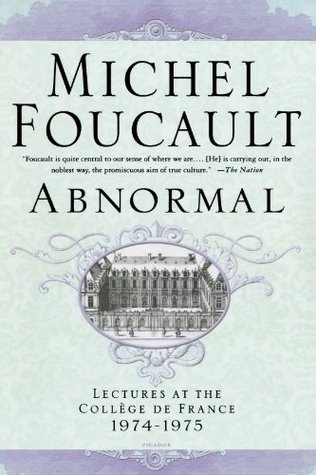
Michel Foucault,
The History of Sexuality, Volume 1: An Introduction
“
Historical ontology is about the ways in which the possibilities for choice, and for being, arise in history. It is not to be practiced in terms of grand abstractions, but in terms of the explicit formations in which we can constitute ourselves, formations whose trajectories can be plotted as dearly as those of trauma or child development, or, at one remove, that can be traced more obscurely by larger organizing concepts such as objectivity or even facts themselves. Historical ontology is not soHistorical ontology is about the ways in which the possibilities for choice, and for being, arise in history. It is not to be practiced in terms of grand abstractions, but in terms of the explicit formations in which we can constitute ourselves, formations whose trajectories can be plotted as dearly as those of trauma or child development, or, at one remove, that can be traced more obscurely by larger organizing concepts such as objectivity or even facts themselves. Historical ontology is not so much about the formation of character as about the space of possibilities for character formation that surround a person, and create the potentials for "individual experience"....more
”
―
Ian Hacking,
Historical Ontology