Next
Hau‘oli Makahiki Hou Kākou — Happy New Year my friends!
There are many who choose a word, or a phrase, or a theme to succinctly describe their prediction or personal persuasion for the year to come. Well, if you’ve spent any time reading what I write, you know this about me: Try as I might, I’m not succinct. ‘Pithy’ is a pipe dream.
Gaining Energy from Kaona
I prefer to write to learn. To investigate. To discover in the process of doing.
So I’m usually adding and expanding instead, trying to articulate my version of some concept I have rooted in the kaona of my mana‘o. Truth is, I gain a lot of good energy from this balancing act between more words or less, and hope you do too: One of the things that intrigues me most about our cultural mo‘olelo is its’ kaona, reflecting in the Nānā i ke kumu connections: When and where did I, or we, come into this story, and take up the telling, or the living/ working/ managing/ leading of it? Why? What is my, or our, Language of Intention kēia lā — today?
Sidebar: The paragraph above is itself an example of kaona in language or chosen lexicon. Selected from our glossary and value statements:
— Kaona. Hidden meaning, or concealed reference. Most commonly used in poetry and in language.
— Kēia lā. Today. This is a phrase of opportunity, and full presence in the moment.
— Mana‘o. One’s thoughts and beliefs that have become what is true for them, serving to empower them and give them certainty and conviction.
— Mo‘o ‘ōlelo. Succession of talk; all stories of old Hawai‘i were oral and not written, and mo‘o ‘ōlelo describes how they were verbally composed, from person to person, and conversation to conversation. Mo‘ōlelo is the result: a story, tale, myth, history, tradition, literature, legend, journal, log, yarn, fable, essay, chronicle, record, article, minutes of a meeting.
— Nānā i ke kumu. Look to the source [to] Find your truth. Chapter 17 of Managing with Aloha, which also covers Sense of Place.
The certainty that Kaona exists to be reckoned with, is one of the reasons I love the linking conventions of the blogging platform so much: I can link back to a previous conversation for us, and weave it in rather than repeat it. Such a cool thing in our technology today, that you can hover over a link, see a title or message like this one, and decide if you need to backtrack or not, deciding for yourself in your Mana‘o! But I digress, sorry.
Now what? What’s next?
As we reflect on those questions — When and where did we come into this story, and take up the telling of it? Why? What is our Language of Intention kēia lā? — New Years Day arrives, whether we are ready for it or not, and adds another question — Now what? And another… Are we ready for whatever comes next?
Next is a word that has pervaded my consciousness the past few weeks, refusing to be ignored. Seems to me that ‘next’ is to be my word for the year, and I might as well accept it with all the grace, intuitive wisdom and good intention I can gather and weave in. As I write this post, I’m just starting to get used to this idea of next-ness for me, immersing within it so I can sort it out, and wear my choices well — so I can emerge from the batching I had already done for the holidays, and emerge from them ready to tackle what’s next.
Next.
For a single-syllable, 4-letter, smallish looking word, ‘next’ packs a punch, doesn’t it?
‘Next’ isn’t likely to provide you with an answer; it’s more likely to ask more questions, reminding you to ho‘o — to get on with it, and make something happen. To have good impatience, and to convince yourself you’re ready, even if you aren’t. If there’s a ‘next’ prompting that’s bugging you, and questioning you, then it’s likely you’re ready enough.
In my own immersion thinking about this, I have much admiration for “the ethical, sweet-natured, hard-working, thrifty, and public-spirited Millennials” — Joshua Glenn’s description of those born from 1984-1993, and my childrens’ generation. As they enter their 30s, we are starting to see, and benefit from their art, their creativity, and their entrepreneurial work ethic, and what we largely see, is that they are true ‘nexters’ in imagining, and then setting about to create our world’s newness. They get it done, and they welcome us to enjoy the fruits of their labor. (Would you like some examples? Glenn has a bountiful listing here: Social Darwikians: 1983-92.)
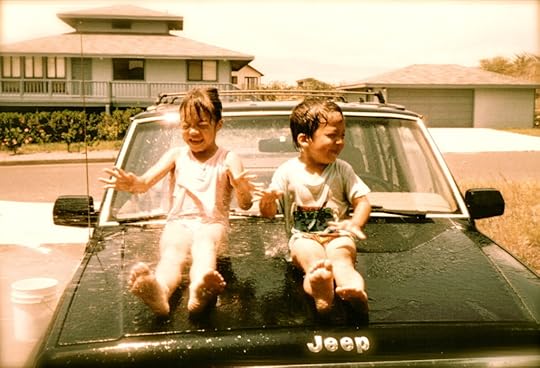
From our family album when my own Social Darwikians were young: Laughing, they climbed up onto our car hood while their dad was washing it, fully knowing what would come next, and jubilantly embracing every moment of it.
Be a Nexter.
Imagine your own possibilities. Your age does not matter.
If the New Year compels you to reflect on resolutions, I encourage you to go for your Next within whatever listing you come up with. Imagine your own nexting possibilities (we have referred to it here at MWA Central as our attitude of positive expectancy) and manifest them. Get them done one by one, constantly moving on to your next expression of living out loud, and with joy.
Our resolutions are often about what we resolve not to do, and while that can certainly work for you, push through those won’t do thoughts and into your will do possibilities. Focus on what’s next for you instead, for life is rich, and waits for you to discover all of it.
“You don’t have to be a believer to recognize a moment of grace. By grace I mean those precious, rare times when exactly what you were expecting gives way to something utterly different, when patterns of thought and behavior we have grown accustomed to and at times despaired of, suddenly cede to something new and marvelous.”
— Andrew Sullivan, in a beautiful essay on the cultural meaning of Pope Francis: Untier of Knots, The Dish
“Invent, grow, and build stuff. Hack, modify, and fix stuff. Get mobile. Plug into the world. Seize control of your time. Study history, in order to see that the stuff we consider natural, permanent, and inevitable is none of those things.” — Joshua Glenn
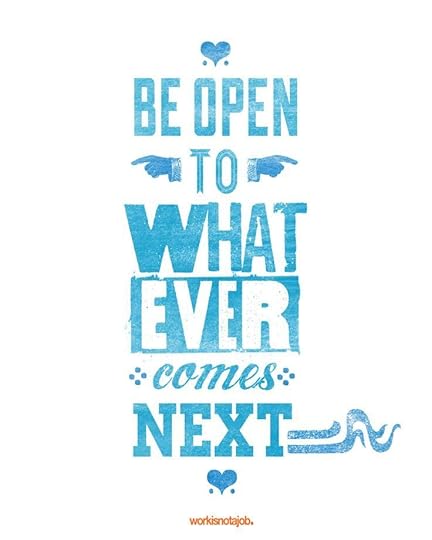
Let’s sum up by going back to our good questions, and restate them as our 2014 Affirmation in Next: We’re in this story, and we’ll happily take up the telling of it. We’re ready, for we are living, working, managing, and leading with Aloha.
This will be a very good year. Thank you for being here in our Ho‘ohana Story.
— Rosa
Milepost markers, with still-relevant coaching for us:
January 2013: Going Forward into 2013, with Aloha. Our 19 values, from “Aloha ~ In Grace and Kindness” to “Ka lā hiki ola ~ Back to the Beginning is Opportunity.” There are several nexting triggers still waiting here for me!
Mid-year: July 1 = 6 Months of Value Immersion. “Goals change. Values are forever.”
Postscript: As promised, my next Ke Ola article is up on RosaSay.com today as well — here is a quick link: The value of Ho‘okipa. The reference posting, archived with links to my previous articles, is this one: The 19 Values of Aloha ~ continuously learned and shared.