
WHY WE WRITE
 Ziggy Wants to Know WHYYYY?
Recently, I put my first small, self-published ebook into the world - a Jaguar Addams novelette titled A Two Faced Fear - which you can locate and buy easily through this link to smashwords. As I was wending my way through the logistics of the process, I stopped and asked myself once again why I do this. Why I write. This is something my mother asked me a lot. WHY must you write, even though you know it disturbs everyone? WHY can’t you be a nurse, or even a doctor? Of course, let’s keep in mind that this is the same woman who told my brother, when he was deciding between being an astronaut and a violinist, “Be an astronaut. You can always play the violin in space, where no one can hear you.” Later, much later in her life, in fact, just before her life ended, my mother seemed to understand the truth about her daughter, which is something I want to share with you. We write because we’re built to write. Because our entire being, including our brains, insists on it. If you’re a writer - or any other kind of creative artist, because I suspect this applies to you as well - please don’t take what I say as an insult. I mean it in the most complimentary of terms. Given what the world says is normal, I’ll do without. If you can’t figure that out, well, you need to develop a bit more complexity in your writing and your life, something I’m always telling my students. So dig deep. Here it is. Why We Write.1. BECAUSE THERE’S SOMETHING WRONG WITH OUR BRAINS. Wrong, in the sense that our brains are different than people who don’t engage in creative activity on a regular basis. This comes from a Harvard study on the differences and similarities between schizophrenics and creative artists, which said that we share something in common. We both have a lowered latent inhibition. Meaning the part of the brain that filters out unnecessary stuff isn’t as strong in our brains as in others. Simply put, we take more stuff in. For schizophrenics, that means getting overwhelmed. For creative artists, that means organizing it into art. So the Harvard study says. Of course, the question is, for creative folk, were we born to a lowered latent inhibition, or did we teach ourselves to filter out less because of our artistic inclinations? I have no answer, and as far as I know, neither does Harvard. I only know we tend to take in more. More information, more emotional impact, more images, more of everything. And so, we write, because messy things could happen if we don’t.2. BECAUSE THERE’S SOMETHING WRONG WITH OUR BRAINS. Meaning, we can do something with our brains other people can’t. We can daydream and logically sequence at the same time. Trying this unsupervised can set your hair on fire. If you don’t believe me, look deep into the eyes of a writer when they’re writing, and you’ll see the flames starting to leap. Though writing looks easy, the brain is set up so that daydreaming turns off the capacity to logically sequence, and vice versa, so it’s actually a highwire walk while juggling light sabers, and it takes a lot of energy. How do we do it? God only knows. Perhaps we’re addicted to the thrill of that supremely delicate mental dance, the impossibility of the mental act required to surf worlds, emotions, events that don’t exist until we make them exist. Wheeee! I love my job.3. BECAUSE THERE’S SOMETHING WRONG WITH OUR BRAINS - We are determined, stubborn, pigheaded, OCD. We truly believe that the stories we have to tell need telling. What’s our evidence? Well, who needs evidence? Haven’t I already explained about our brains? And that we’re pigheaded, stubborn, OCD, and must finish the stories we begin to tell, or our characters will attack us in the night, our strange and miraculous brains will implode, and someone will have quite a mess to clean up? We wouldn’t want that to happen, so we write, smashing and pinging our way through twisted neural circuits, a weird business paradigm, and the tsk-tsking of our relatives and friends. Go figure.4. BECAUSE THERE’S SOMETHING WRONG WITH OUR BRAINS - A Ford Center study set out to determine the difference between violent offenders and other folk, and found that the primary difference was their ability to mediate experience through language. Yeah. Really. And writers mediate experience through language, because we know we’re the storytelling animals, our primary job to teach through story. Given that 2.2 million of our population is in prison, that suggests we have something important to teach, which we’d love to do, if congress didn’t continually cut funding for prison education. Again, go figure. 5. BECAUSE THERE’S SOMETHING WRONG WITH OUR BRAINS - I’m not sure if it’s because of all the other things wrong with our brains or a whole separate thing, but writers continue to BELIEVE in the possibility of change for the better. In spite of Congress, in spite of the Tea Party’s resistance to reality, we truly are idealists, believing that the needs of the people, the supremacy of the earth and all its nurture, matters. Okay, our beliefs may differ in some fundamental ways - for proof of that, put Normal Mailer and Marilyn French in a room and see what happens - but whatever our beliefs, we write about them a lot, sometimes in metaphor, sometimes more directly. We do this because we also know, intuitively and intrinsically, that stories shape and define us. We understand archetypes and dreams, and believe that if we get enough of our stuff into the world, the people will shift paradigms and move toward love and peace and all that good stuff. Really. That’s who we are. What we do. And if we say we’re not in it for that, we’re kidding you and ourselves.
So the next time you meet a writer, don’t ask them (really, don’t) if they hope to be as rich and famous as Rowlings. Ask them why they write, and what they hope their writing will accomplish. If they’ve had enough to drink and it’s late enough at night they’ll tell you the truth. They hope their imaginings will shape the imagination of the world, for the better. Amen. Long life. Honey in the heart, no evil, and 13 thank yous.
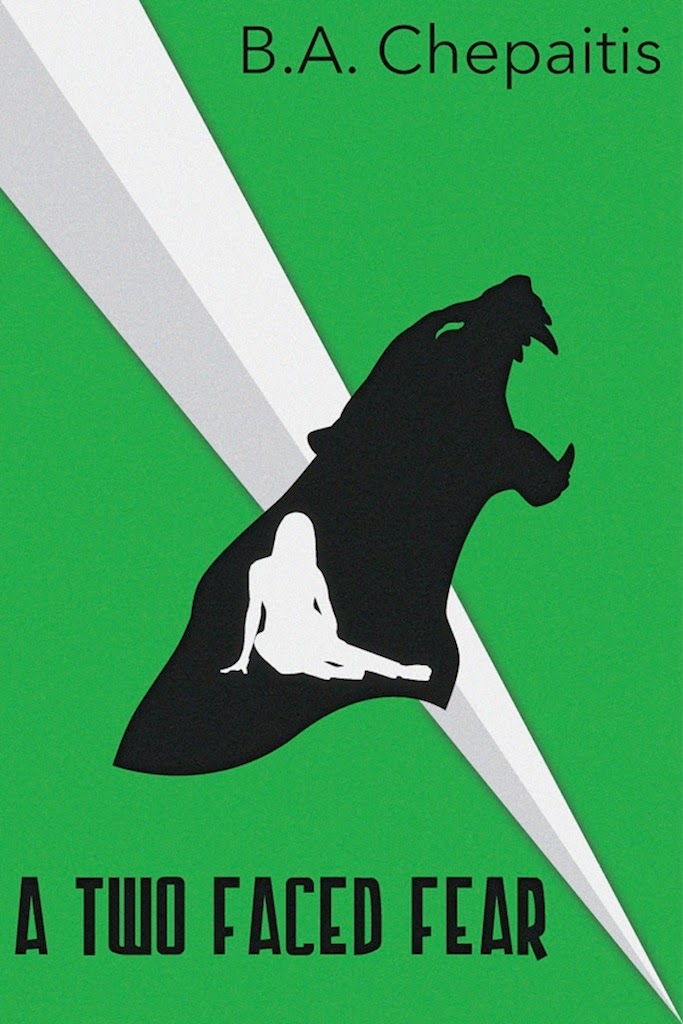 To read the weird stuff my brain does when it’s working, check out my new Jaguar novelette on
Smashwords,
or the Jaguar novels on Wildside
To read the weird stuff my brain does when it’s working, check out my new Jaguar novelette on
Smashwords,
or the Jaguar novels on WildsideSOMETHING RIGHT RAVIOLI (Ravioli L’uovo)
This recipe is perfect for writers. It’s complicated and difficult, and the first three times you try it, you’ll probably fail. It asks you to coordinate a variety of highly detailed tasks, some of which require a high degree of intuitive understanding, and all of which must ultimately mesh into yummy flavorfulness, with a rich reward hidden inside a well-structured framework. If you’re lucky. If not, there’s always Chinese take out.
THE SAUCE (Do this first. You’ll be glad you did)
1 cup fava beans, parboiled and skinned. (Fiddly dee work, skinning favas, but wowie zowie they’re good. Take care of this before ANYTHING else.)1 cup GOOD chicken broth (canned is okay if it’s low sodium. I use my own homemade)1 clove garlic, grated or mashed through a garlic presssalt and pepper to taste7 fresh (Like they talk back fresh) sage leaves, sliced into chiffonadeOlive oil1 tablespoon butterAbout a quarter cup of cream or half and half
Put the oil in a pan and heat it up. Add the butter. When it melts, add the sage chiffonade and let it sizzle a bit, like a rumba rather than a tango. Then pour in the broth, and add the garlic. Stir it about a bit. Taste. Add salt and pepper to your liking. Gently urge the fava beans to join the party. Tell them they’ll like it. Stir it all about. Add the cream or half and half and stir some more. Turn the heat off and let everyone get to know each other.
PASTA DOUGH
2 eggs2 cups of flourWater as needed.
Make a mound of the dough, with a dent in the center. Beat the eggs and pour them into the hole. Gradually work the flour into the egg, the egg into the flour. If it’s not coming together entirely, add a bit of water. You’ll have to do this bit by feel, because the hands know when dough is ready. Smooth and elastic is the term used, so look for that. When it’s a nice smooth and elastic ball, wrap it up in plastic or cloth and let it rest in the fridge for about 30 minutes. Or, make it the night before and let it dream.
THE FILLING
1 cup ricotta cheese1 cup spinach, chopped, cooked, and SQUEEZED until it giggles. About half a cup of Locatelli Romano cheese, or reggiano parmigiano, as you prefer8 medium egg yolks, or 8 whole quail eggs (These will be used later. DO NOT MIX THEM IN WITH THE REST OF THE FILLING!)
Mix everything EXCEPT the eggs in a bowl. Add parsley if you like because you know the rule: PLAY WITH YOUR FOOD!
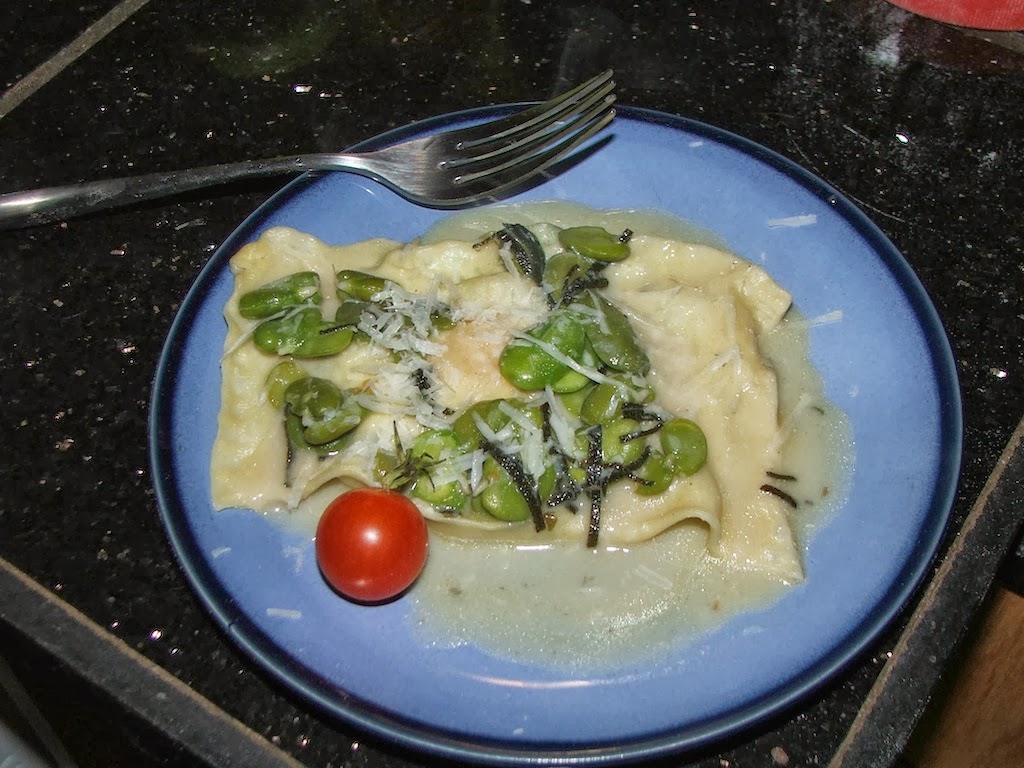 Oscar for Best Story in Food FormFILLING THE RAVIOLI
Now’s a good time to put a BIG pot of water on the stove and get it heated. Add salt - maybe a tablespoon or so. Dust your work surface with flour, like it’s a gentle drifting of snow. Using either a rolling pin or a pasta machine (If pasta machine, I go to about 5 for thinness), roll out four sheets of pasta, about 12 inches long. Equally space 4 mounds of the ricotta (About a tablespoon each) mix on two of the sheets, and make a dent in each mound.
Put either an egg yolk, or crack a quail egg into each dent. (Do I have to say that you get the quail egg out of the shell before you put it in the dent? If so, I’ve said it.)
Dab a bit of water or egg white around the edges of your pasta dough, then lay a sheet on top of the one with the filling. You can use your fingers or a ravioli roller to seal the edges, then either a knife or the ravioli roller to separate our your little bundles of joy.
When the water is boiling, add half the ravioli to it, and cook for around 3 minutes. Carefully transfer to a good size bowl, then cook the rest and do the same.
Slather them in the sauce you made, add Parmesan or Romano cheese to taste, and say Aaaah! I did it!


No comments have been added yet.


