
HONEY FROM THE BONES
 Ziggy Also Loves Bones This week is the halfway point betweeen equinox and solstice, traditionally a time of cross-currents, a time when the veil between this and other worlds is taken down and shaken out. We call it Halloween and we dress up as those characters who live inside us and give and receive candy and have parties. Others call it Day of the Dead or Samhain. My Lithuanian ancestors, who use this time to speak with their ghosts, call it Ilges, which means pangs of longing, or Velines, which refers to the souls of the visiting dead. Today, as I wait for Frankenstorm to make landfall in our area, creating its own crosscurrents, I’m thinking of bones. That’s right. Bones. Skeletons and Halloween go together, right? And on the Day of the Dead, you make sugar skulls as candy. Other cultures think of bones this time of year as well. If I was in Naples, I might go to the churches and rub the bones of the nameless dead, praying their souls out of purgatory, so that when they got to heaven, they’d pray for me. My Italian ancestors are practical as well as mystical. Personally, I’ve always loved bones. There’s plenty of them around my house - skulls, animal paws and claws, and so on. One year at Christmas, the year my mother-in-law happened to be visiting, my son and my husband and I all gave each other bones. A petrified bear claw, a buffalo skull, a beaver skull. Mom-in-law was a bit taken aback, but we were all pretty happy with our gifts. Here’s what I love about bones. They have beautiful lines, and give the impression of revealing the truth beneath the skin, of uncovering the hidden, straightforward frame that holds the complexities together. I want to write just like that, peeling away the skin of characters and events to show what lays beneath them. I also want a good, strong skeleton to hang the flesh of my story on, a narrative structure that can jump up and dance, with or without skin. Often, when I’m working on a book, I’ll step aside from details of dialogue and narrative poetics for a kind of mental x-ray to view the spine, making sure it’s solid and true. I’ll run my hand over it, feel the interconnections, the smoothness of it all. When you write, you want to feel the bones beneath your hand. I think that applies to our lives as well as our writing. It’s a good thing to occasionally step back and ask yourself what frames you, what holds you up beyond the surface of your life. The people in Naples who rub the bones understand that. So do the people In Madagascar, who have a ritual where they periodically disinter the bones of their ancient kings, cover them in honey, and lick them clean. A wonderful shivery kind of image, isn’t it? And it’s also useful in everyday life. If we want to know our own bones, the frame of our lives, we must periodically disinter our dead, take our ghosts out for viewing. If we’re both wise and courageous, we’ll honor them with honey and lick them clean, our mouths taking in both the sweet and the strange they’ve bequeathed to us. Only in that way can we become the next chapter in the long story our ancestors want us to tell. This Halloween, consider your bones. What’s your spine made of? What central beliefs, ethics, and core values hold you up, provide a framework for the surface you show to the world? If you can, dance in your skeleton alone, unafraid to show that to the world. If you can, choose your costume, your mask, accordingly. Or, as Jaguar Addams would say, see who you are. Be what you see. Down to the bone. And if you want something to do with bones in your kitchen, below is a recipe for Roma Broda, a broth that needs bones more than anything.
 If you’d like to know how Jaguar and Alex honor this holiday, you can check out Learning Fear, either as an ebook , or as hard copy .
BONE SOUP (AKA ROMA BRODA)You’ll need two days to make this. Not that you’ll be standing at the stove all that time, but it has to sit overnight, so you can skim the fat away.
FOR THE BROTH:
About 1 pound lamb bones (I use stew bones, or ones I get from my butcher)About 2 pounds chicken pieces (wings or necks and backs will do just fine.)! marrow bone1 or 2 veal bones
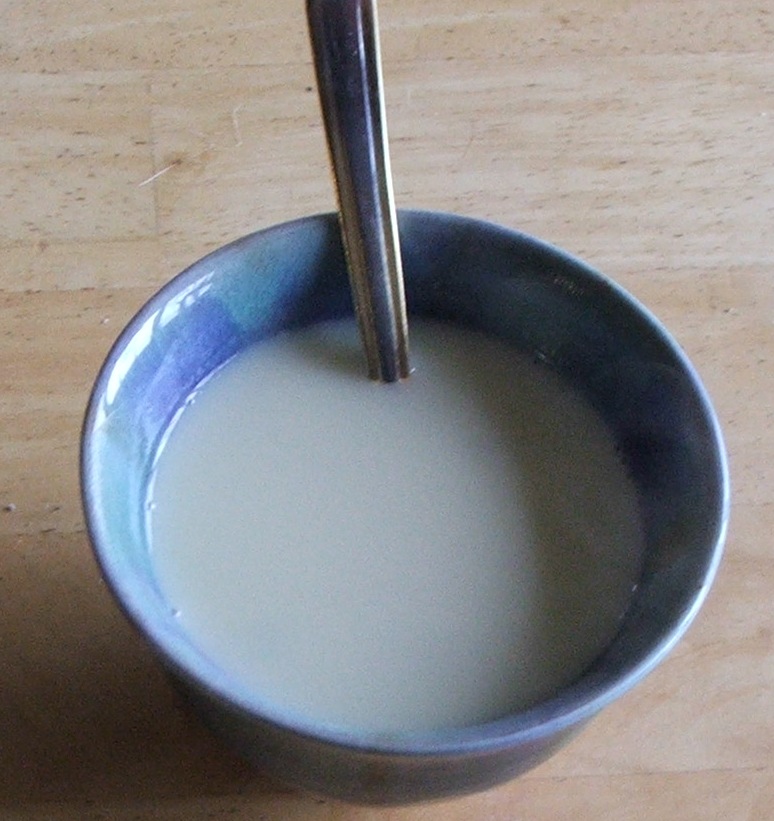 Simple Soup. Embellish At Will2 medium tomatoes2 bay leaves2 carrots, scraped1/2 onion, peeled2-3 cloves garlic, smashefA bunch of thyme sprigs, parsley stems, and 1 rosemary spring, all tied togethersalt and pepperFOR THE BIG FINISH
6 egg yolksjuice of 1 lemonCroutons (You can make your own, or buy. Of course, home made is more fun because you can DO things to them and you know the rule PLAY WITH YOUR FOOD!)About a quarter cup of chopped fresh parsleyAbout a quarter cup of fresh grated parmesan (get the good stuff and grate it yourself!) or fresh grated locatelli romano, depending on your preference.
OPTIONAL: You can cook up some jumbo shrimp and add one to each cup, or add spinach or chicken as well. I’ve tried each, and like them all.
Put all the broth ingredients in a BIG stockpot with water to cover. Bring to a boil, reduce heat and allow to simmer for about 3 hours, occasionally skimming the surface. Admire the bones as you do so. Say ‘Ahh, what a marvelous thing life is.‘
Remove the stock pot from the heat and let it cool. Then take the bones out and put them in a separate bowl, because you’ll want to pick the meat off to give treats to your dogs and cats.
Strain the stock, and refrigerate overnight. Go to sleep and dream of dancing bones.
The next day, remove the surface layer of fat. Strain the broth again and measure out about 6 cups to serve 6 people. Put that in a pot, put the pot on the stove and bring to a boil, then take it off the heat. (If you’re adding spinach do so now and let it cook a bit. If you want to use chicken, what I do is cut some thin slices off of one skinless, boneless chicken breast and cook it at this time as well)
Beat the egg yolks thoroughly in a bowl with the lemon juice. Gradually whisk in some of the broth, a little at a time, continuing to whisk as you pour. This is called tempering - meaning if you let the eggs cook you’ll be in a bad temper and so will they. You want the mixture to remain smooth and even tempered. You see? Pour this mixture back into the pot, again working slowly and whisking as you go. Add the parsley at this point. Get your bowls ready and put cheese and croutons in the bottom of each. Pour the hot soup over the top, and taste the honey in the bones.
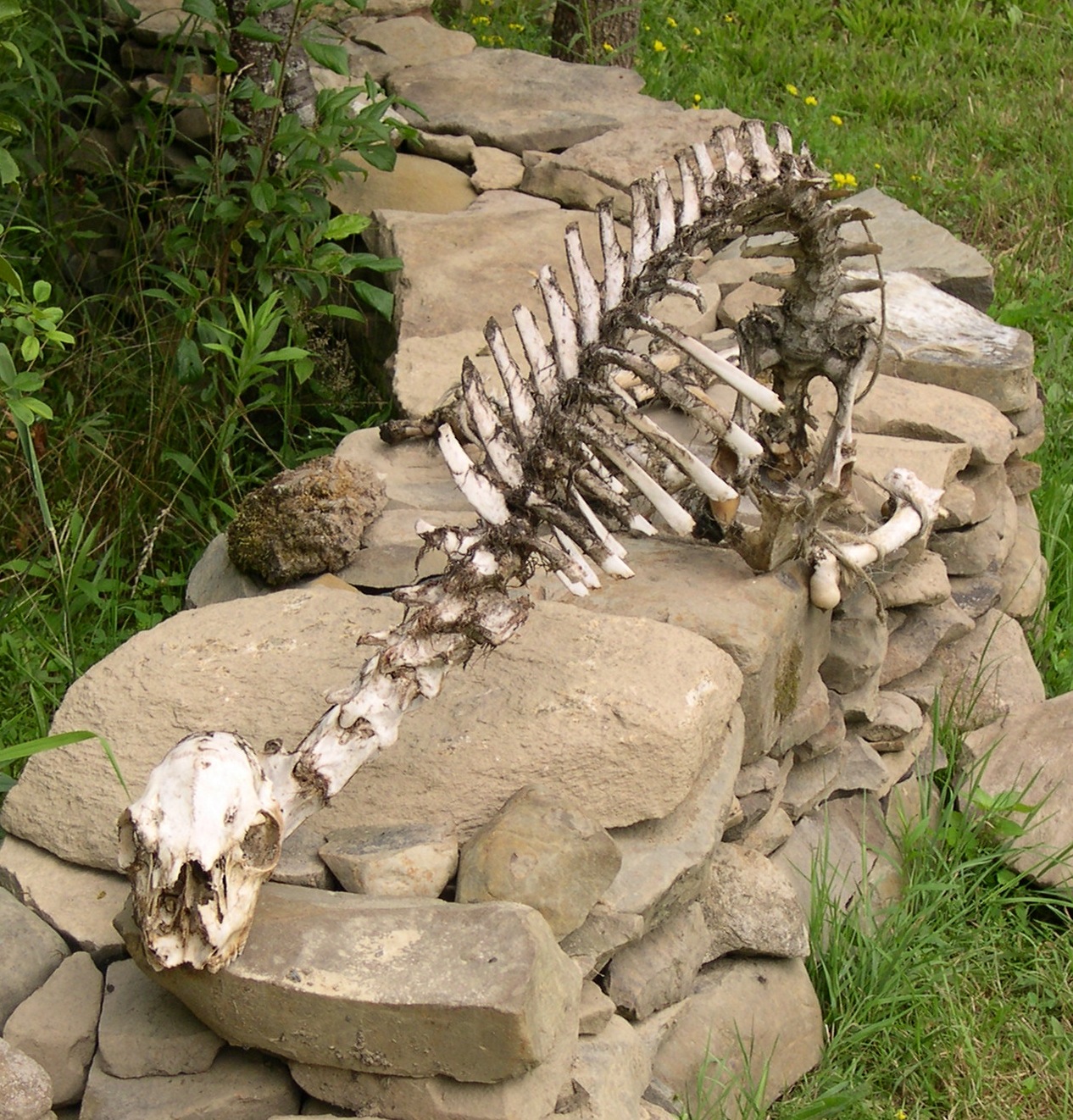 He Followed Us Home. We Call Him Didier


No comments have been added yet.


