
Collaborative Steering
Today, AI tools are mostly solo sports. Developers write more code. Designers create more images. PMs crank out more docs. That's cool... but it's more cool to work together. So how does that work with AI?
Many AI-driven productivity tools have evolved from chatting with an AI model to guiding the work of agents capable of a lot more than just answers. But when everyone on a team runs their own agents they guide them towards the outcomes they want, towards their version of things. So in a agentic world, it becomes even easier for perspectives to drift apart. As one design leader recently put it at the Design Futures Assembly: when anybody can build what they want, you feel it in the product because you ship fifteen different ideas instead of one unified point of view.
One of the reasons this happens is that people use different ways to guide agents. Agent markdown files, skills markdown files, system prompts, agent prompts, memory, MCP servers, and so on. The combination all of these disparate elements influences the outcomes AI agents produce.
That's complicated enough for an individual but multiply it across a team and it becomes really difficult to work on the same thing together. Everyone's agents are optimized for their own perspective, not a shared one. And the elements influencing them are scattered across people's computers, codebases, and servers.
We need a different approach for simplifying context management not only for individuals but for groups as well. Think of it as collaborative steering: a mechanism for guiding agents that's collaboratively created, edited, and maintained by teams.
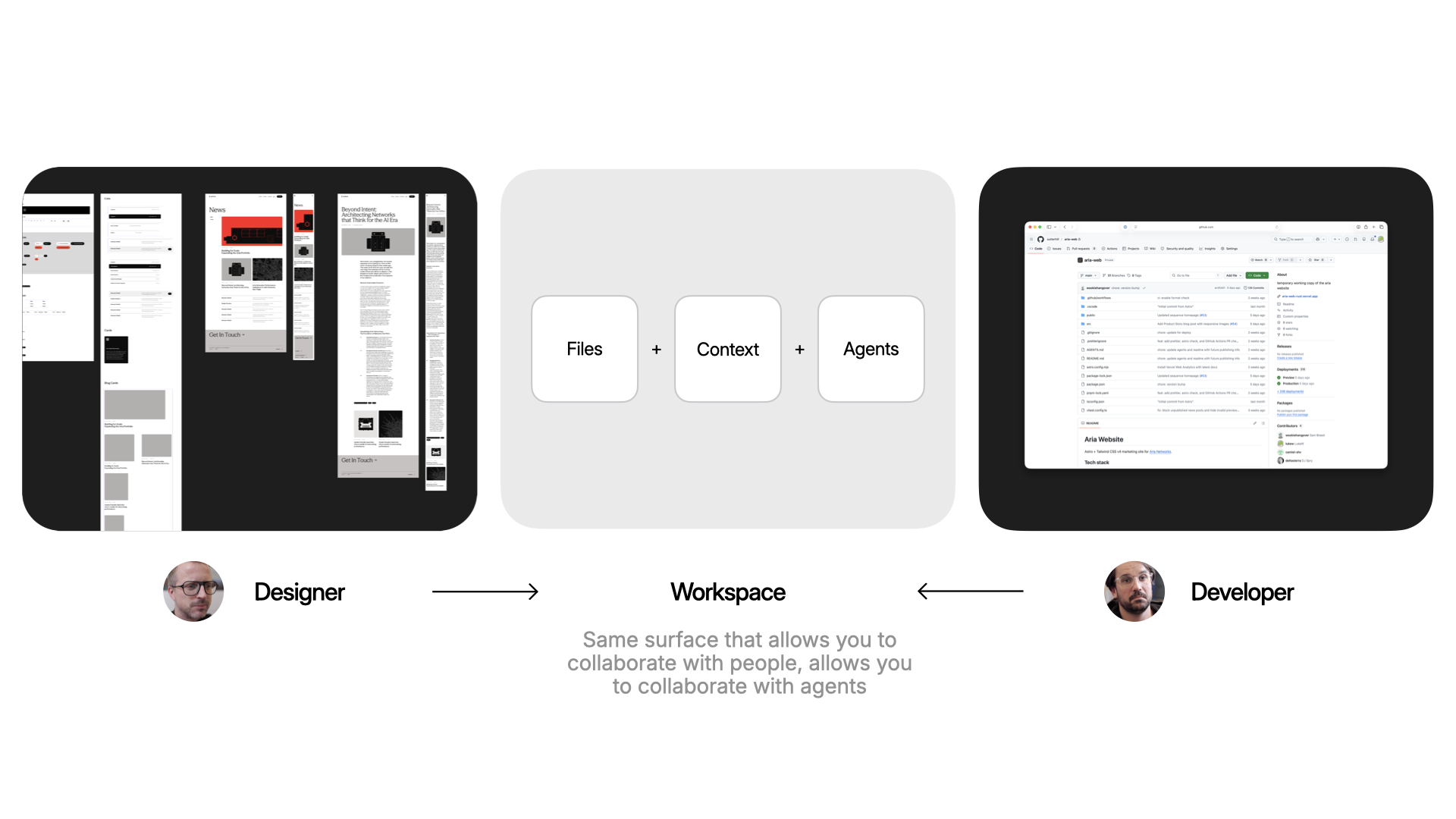
Why collaborative steering? Because, even with all-knowing AI, people have specific expertise and experiences that when brought together make products better. Designers versed in interaction design principles, brand voice, visual design integrity. Engineers focused on performance optimization, easy to maintain code structures, infrastructure choices. But ensuring these distinct roles produce a coherent whole has always been hard. AI can help.
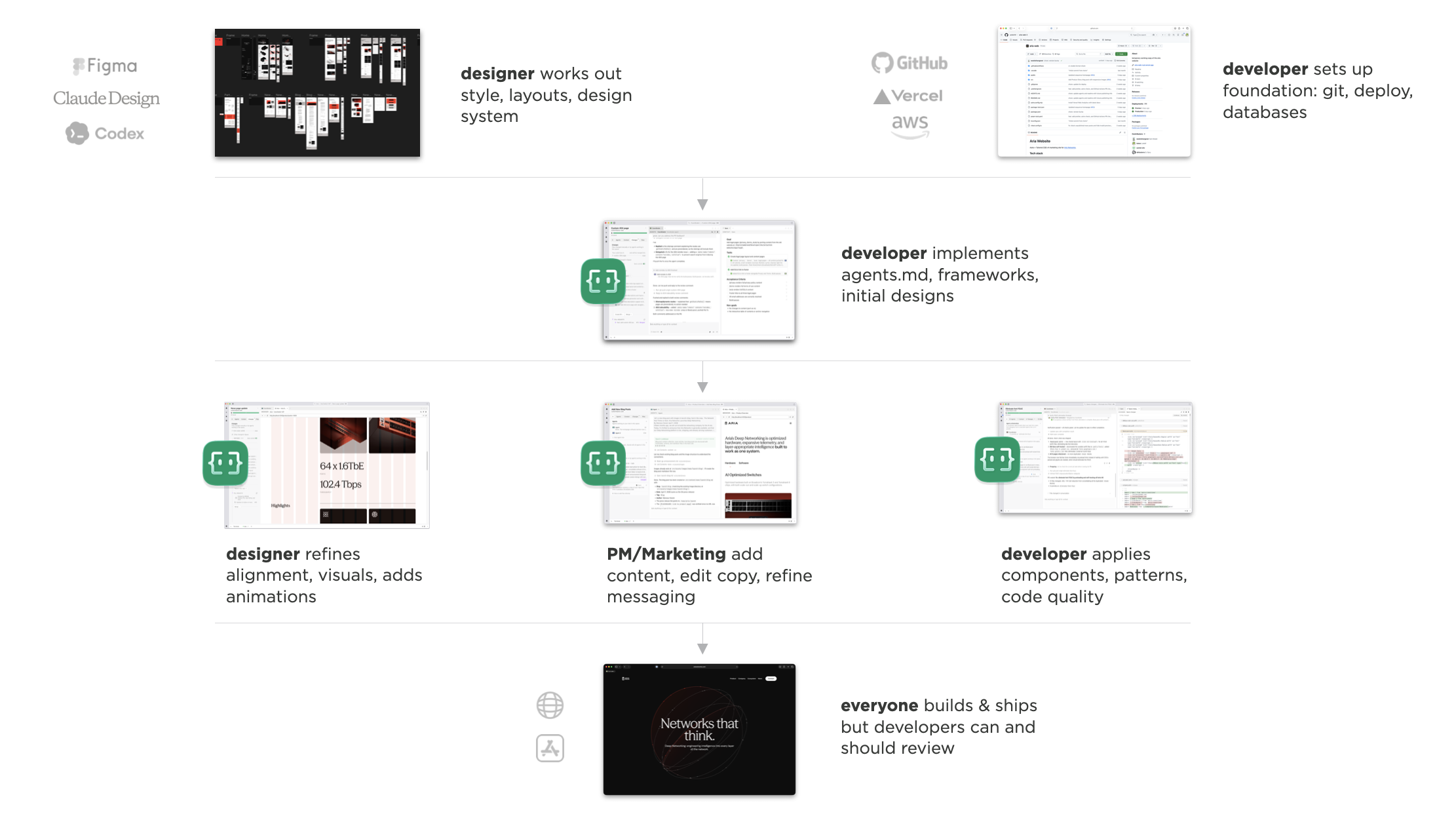
In several of our recent projects we've used Intent, to define project-level context that steers agentic workflows toward shared goals, not away from them. We're currently applying what we learned to larger scale and more ambitious work, which I'll share in the coming weeks.
But after seeing how far we've gotten already, I'm pretty certain that the era of everyone on a team piloting their own disconnected agents can't be the end state. The tools that figure out how to make collaborative steering natural and lightweight are going to change how teams, not just individuals, build.


Luke Wroblewski's Blog

- Luke Wroblewski's profile
- 85 followers

