AEO: The New Frontier Beyond SEO That’s Changing How Content Gets Found
You’ve mastered SEO. Your content ranks. Traffic flows in steadily.
Then ChatGPT happens. Perplexity emerges. Google AI Overviews starts answering questions.
And suddenly, your audience isn’t Googling anymore—they’re asking AI.
Welcome to Answer Engine Optimization (AEO), where the game has completely changed. If you’re still playing by SEO-only rules, you’re already behind.
What Is AEO?AEO is optimizing your content so AI platforms like ChatGPT, Perplexity, and Google’s AI Overviews actually cite you when answering user questions.
Unlike traditional search where users scroll through ten blue links, AI tools give direct answers by synthesizing information from multiple sources.
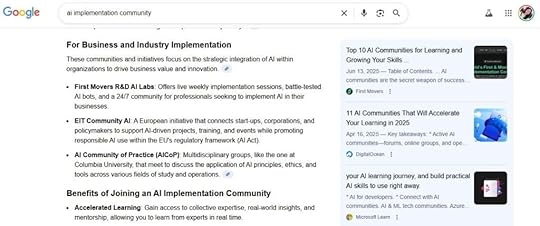
Like this:
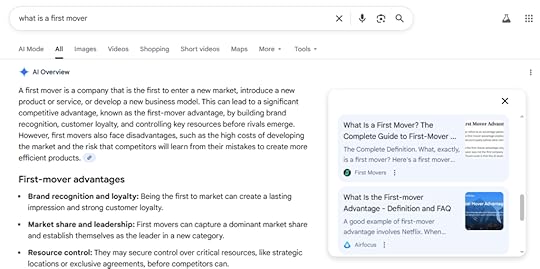
Notice how the Overviews answers the query, then provides sources on the right side?
Your goal is to be one of those sources AI trusts and references.
Think of it this way: SEO gets you ranked on a results page. AEO gets you quoted in the answer itself.
That’s a massive difference.
When an AI platform references your brand or content directly in its response, you’re not competing with nine other listings. You’re the answer.
The mechanics are different too.
Search engines crawl and index based on keywords and backlinks. AI platforms analyze content structure, entity relationships, conversational patterns, and authority signals to decide what information deserves inclusion in generated responses.
Why AEO Matters More Than You ThinkHere’s the reality: consumer behavior has shifted dramatically.
People don’t want to click through five articles to find an answer anymore. They want instant, synthesized information.
I mean, wouldn’t you?
Let me ask you this.
For example: you want to know what “SEO” is.
Would you rather click on all these blue links and read each blog one by one?
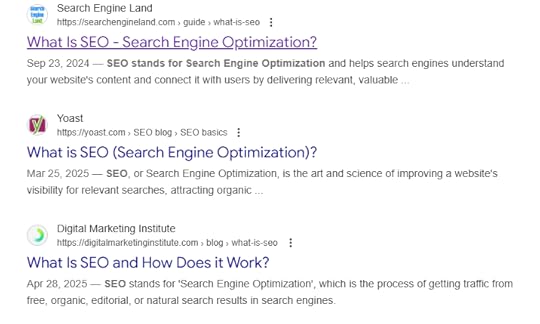
Or would you rather get a concise, direct, complete answer like this?
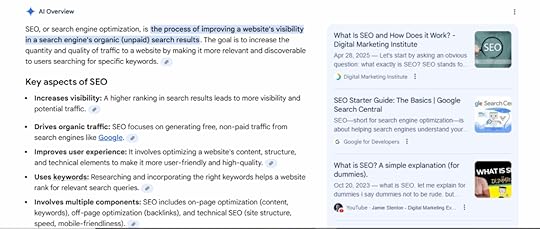
If you’d pick the latter, you prefer AEO (like so many other people today do).
So, what are the other reasons AEO is so important?
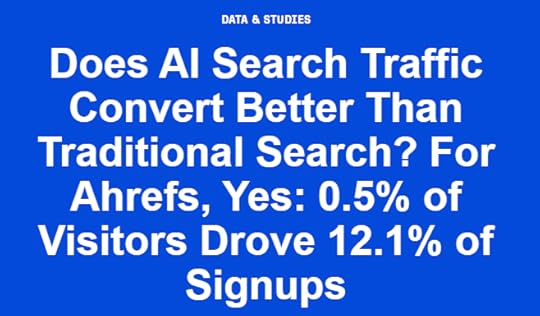
1. AEO Brings Visitors With Money in HandTraffic from AEO carries significantly higher purchase intent than traditional search.
When someone asks an AI “what’s the best project management tool for remote teams,” they’re usually days—not months—from making a purchase decision.
They’re past the awareness stage. They’re ready to evaluate and buy.
Compare that to someone typing “project management” into Google. That person could be anywhere in the buyer journey.
They might be a student researching a term paper.
The AI user is asking specific, action-oriented questions that signal buying readiness.
Want proof?
Here’s what Ahrefs has to say about it:
 2. The Generational Shift Is Real
Data shows 60% of millennials and Gen Z now use AI platforms for research and decision-making.
Check out what WebFX says about it:
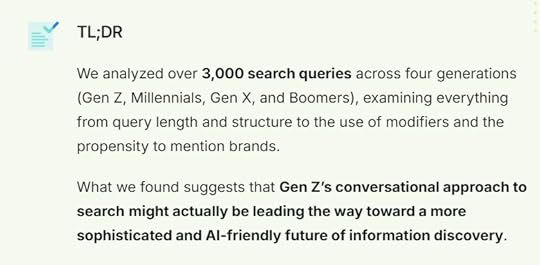
These aren’t edge cases or early adopters anymore. This is mainstream behavior.
And these demographics represent massive purchasing power—both now and for decades to come.
If your content strategy ignores AEO, you’re essentially invisible to the fastest-growing segment of online users.
They’re not Googling your brand. They’re asking ChatGPT if you’re worth their time.
3. Brand Visibility on SteroidsWhen ChatGPT cites you by name in an answer, that’s brand visibility you can’t buy with ads.
The AI becomes your endorser. Users trust it because they trust the platform.
Getting referenced in AI-generated answers builds authority, credibility, and top-of-mind awareness in ways traditional SEO simply cannot match.
Plus, there’s a network effect.
One mention in an AI response can lead to direct site visits, social shares, and even more backlinks—which then strengthens your traditional SEO while simultaneously boosting your AEO performance.
How to Actually Rank for AEOGetting cited by AI platforms requires a completely different content approach than what worked for SEO alone.
Here’s what actually moves the needle.
1. Give Answers Before ExplanationsAI algorithms scan for direct, concise responses they can extract immediately.
Start every section with a two to three-sentence summary that answers the core question straight-up. No fluff. No preamble. Just the answer.
After that quick summary, expand with details, examples, and supporting evidence.
This fan-out technique helps both AI extraction and user experience. The AI gets what it needs fast. Users who want depth can keep reading.
Active voice works best here.
Write subject-first sentences like “you can optimize content by implementing structured data” instead of passive constructions.
This clarity helps AI platforms parse context more accurately.
2. Structure Like Your Life Depends On ItBreak everything into scannable chunks. Use bullet points liberally. Add numbered lists where appropriate.
Create tables for comparisons.
AI-generated answers include lists 78% of the time because lists convey information clearly and quickly.
Keep paragraphs short—two to three sentences max. Aim for sentences under 20 words when possible.
Avoid walls of text at all costs. Each paragraph should make one clear point, then stop.
Use semantic cues throughout your writing.
Phrases like “according to,” “the key difference is,” “as a result,” and “for example” signal to AI how sentences relate to each other.
These linguistic markers improve comprehension and extraction.
3. Make Headlines Work HarderYour H2s and H3s need to clearly encapsulate what each section covers.
Vague headings like “benefits” don’t cut it anymore.
Instead, use descriptive headers like “why AEO drives higher-intent traffic than traditional SEO” or “three reasons millennials prefer AI search over Google.”
Better yet, format headings as questions that mirror actual user queries.
Questions like “what makes AEO different from SEO?” or “how do AI platforms choose which content to cite?” align perfectly with how people interact with AI tools.
Use nested heading structures logically.
Your H1 states the main topic. H2s break it into major subtopics. H3s develop those subtopics further.
Users and AI should understand your content’s skeleton just by scanning headings.
4. Define Everything ClearlyStart new sections by explaining key terms, even if they seem obvious.
When introducing complex concepts, spell out exactly what they mean and why they matter.
Use related terminology naturally throughout your content.
If your main keyword is “answer engine optimization,” also include connected terms like “AI search,” “conversational queries,” “entity optimization,” and “generative AI platforms.”
But weave them in organically—forced keyword stuffing destroys readability and trust.
Linking phrases help too.
Use connectors like “in contrast,” “similarly,” “as a result,” and “for instance” to show how ideas relate.
This helps AI understand the logical flow of your argument and improves the chances of accurate citation.
5. Schema Markup Still CountsStructured data helps AI platforms locate and extract information faster.
Implement JSON-LD schema for articles, FAQs, how-tos, and organization details.
Make absolutely sure your schema matches your visible content exactly—inconsistencies trigger trust issues with AI algorithms.
FAQ schema works particularly well for AEO.
When you mark up questions and answers properly, AI tools can pull that information directly.
Validate your schema through Google’s Rich Results Test before publishing. Broken schema helps nobody.
Only use markups when genuinely appropriate.
Don’t force FAQ schema onto content that isn’t actually answering common questions. AI platforms recognize when schema implementation feels authentic versus manipulative.
6. Think Entity, Not Just KeywordsEntity optimization means establishing a clear, consistent digital identity that AI platforms recognize and trust.
Maintain identical brand information across all platforms—LinkedIn, Twitter, your website, industry directories, everywhere.
Inconsistency confuses AI algorithms.
Build relationships with other strong entities in your space through partnerships, collaborations, guest posts, and mentions.
AI systems understand the web as a network of connected entities. Your associations matter.
Establish expertise through thought leadership content, speaking engagements, published research, and media mentions.
The stronger your entity presence, the more likely AI platforms will reference you as an authoritative source.
7. Question-Based Content WinsAI search queries are conversational by nature.
Users ask full questions like “how do I optimize content for AI search” instead of typing “AEO tips.”
Format your content to match this behavior.
Create dedicated Q&A sections or FAQ-style posts that directly mirror common queries.
Each question becomes an H2 or H3, followed immediately by a concise answer. Then expand with additional context, examples, and practical steps.
This approach aligns perfectly with how AI platforms parse and present information.
You’re essentially pre-packaging your content in the exact format AI tools prefer.
Master AI-Powered Marketing With First Movers R&D AI Labs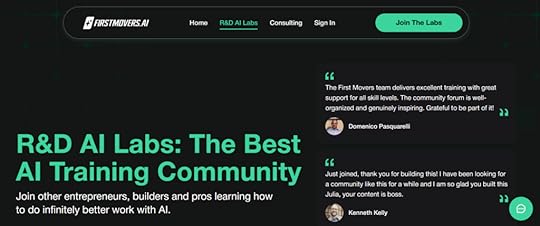
Everything I’ve shared about AEO is exactly what we teach inside First Movers R&D AI Labs.
We’ve built 40+ courses specifically designed to help you implement AI in your business—including comprehensive training on creating content that ranks in AI-generated answers.
This isn’t theory. This is practical, learn-by-doing education that builds your skills fast.
You’ll discover how to train AI to clone your voice, automate content creation, and optimize everything for both traditional search and AI platforms.
No fluff. No dependency. Just real implementation that drives measurable results.
Whether you’re building content systems, scaling your business, or positioning yourself as an authority in AI-driven search, First Movers gives you the complete roadmap.
We reached $100k monthly in under a year with just two people by following these exact strategies.
Now we’re teaching you how to do the same.
Ready to dominate both SEO and AEO? Join First Movers R&D AI Labs today.
FAQs About AEOWhat is the difference between AEO and SEO?The difference between AEO and SEO is that SEO focuses on ranking your content in search engine results pages, while AEO focuses on getting your content cited directly within AI-generated answers.
SEO targets traditional search engines like Google. AEO targets AI platforms like ChatGPT, Perplexity, and Claude.
Both matter, but they require different optimization strategies.
How long does it take to see AEO results?AEO results typically appear faster than traditional SEO because AI platforms don’t rely solely on accumulated backlinks and domain authority.
If you optimize content correctly with clear answers, proper structure, and strong entity signals, you can see citations within weeks.
However, building consistent AEO visibility across multiple queries takes three to six months of focused effort.
Can I rank for AEO without good SEO?Not really. While AEO requires unique optimization tactics, strong SEO fundamentals create the foundation AI platforms need.
Technical SEO, quality content, authoritative backlinks, and proper schema markup all contribute to AEO success.
The platforms work together—you can’t completely separate them. Think of SEO as the base and AEO as the next evolution layer on top.
Which AI platforms should I optimize for?Focus on ChatGPT, Perplexity, Claude, and Google’s AI Overviews as your primary targets.
These platforms have the largest user bases and most significant impact on brand visibility.
However, the optimization principles remain similar across platforms.
Content structured well for one AI platform typically performs well across others because they all prioritize clarity, authority, and entity recognition.
Do I need different content for AEO versus SEO?No. The best strategy is creating content that serves both purposes simultaneously.
Write comprehensive, well-structured content with clear answers, proper headings, and natural language.
Add schema markup and entity optimization.
This approach satisfies both traditional search algorithms and AI platforms. Trying to maintain separate content for each creates unnecessary work and fragmentation.