
When Fiction Heals the Dreamer: Writing Trauma as Art
There’s a quiet moment that comes after finishing a dark book—that first deep inhale, the feeling that the air has changed somehow. That’s what writing Long Since Buried felt like for me. I’d exhaled years of unspoken fear, and when the final chapter ended, the silence that followed wasn’t emptiness. It was relief.
But the story didn’t stop on the page. Healing never does.
What I learned in therapy—and later through mindfulness—is that creative survival isn’t about mastering pain; it’s about making room for it to transform. Long Since Buried gave the nightmare form. Bedridden & Gutted to Mindful taught me how to live beyond it.
[image error]Pexels.com" data-medium-file="https://angelagrey.wordpress.com/wp-c..." data-large-file="https://angelagrey.wordpress.com/wp-c..." src="https://angelagrey.wordpress.com/wp-c..." alt="" class="wp-image-3618" style="aspect-ratio:1.50044656147663;width:270px;height:auto" />Photo by Engin Akyurt on Pexels.comThe Two Languages of Survival
In therapy, I discovered that trauma speaks two dialects: chaos and control. Fiction became my translation of chaos—the wild, cinematic projection of buried emotion. Mindfulness became my translation of control—the patient return to breath, to the present, to what is still possible.
Writing Long Since Buried was visceral. It bled from dreamscapes and flashbacks, the body remembering danger. Every paragraph was an adrenaline pulse, an echo of that twelve-year-old’s terror.
Writing Bedridden & Gutted to Mindful was slower—a reclamation of quiet. It was learning to listen to the world again, one heartbeat at a time. While the thriller roared, the memoir whispered. Both, however, were love letters to survival written in different tongues.
[image error]Pexels.com" data-medium-file="https://angelagrey.wordpress.com/wp-c..." data-large-file="https://angelagrey.wordpress.com/wp-c..." src="https://angelagrey.wordpress.com/wp-c..." alt="" class="wp-image-3611" style="aspect-ratio:1.502851392150285;width:318px;height:auto" />Photo by Atlantic Ambience on Pexels.comThe Mind–Body Bridge
Trauma divides us—the mind races ahead while the body stays trapped in old danger. Through therapy I learned how narrative and mindfulness work together to build a bridge back to wholeness.
Fiction let me remember safely. I could approach the pain through story, where characters held the fear for me. Mindfulness let me return safely. It anchored me to the now, reminding me that the threat was past.
I began to see that the very act of creating—forming sentences, describing light, naming sensation—was neurological repair. The brain’s storytelling instinct and the body’s breathing instinct are twin healers. Together they weave coherence from chaos.
When readers tell me Long Since Buried feels immersive, I know it’s because I wrote it with my entire nervous system. When they tell me Bedridden & Gutted to Mindful feels calming, it’s because I wrote it with the same system finally at rest.
Writing the Body Back Home
During therapy, my clinician once said, “The body keeps score, but it also keeps rhythm.” That sentence changed how I wrote. I started noticing rhythm everywhere—the pattern of my steps, the cadence of my sentences, the rise and fall of my breath.
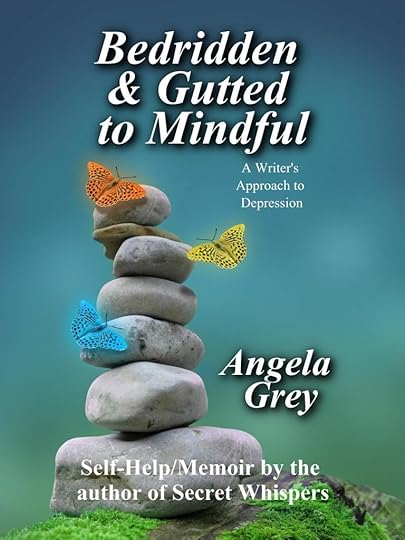
In Bedridden & Gutted to Mindful, I intentionally explored this rhythm. The prose mirrors the inhale–exhale cycle: tension, release; grief, gratitude. It’s structured mindfulness, disguised as narrative.
In Long Since Buried, rhythm became heartbeat and gunshot—the percussive language of suspense that mirrors trauma’s pacing: freeze, run, breathe. The thriller was the storm; the mindfulness memoir was the still water after.
Together, they compose a symphony of the same theme: how the body returns to itself after being lost in fear.
[image error]Pexels.com" data-medium-file="https://angelagrey.wordpress.com/wp-c..." data-large-file="https://angelagrey.wordpress.com/wp-c..." src="https://angelagrey.wordpress.com/wp-c..." alt="" class="wp-image-3628" style="aspect-ratio:1.50044656147663;width:330px;height:auto" />Photo by Pixabay on Pexels.comWhy the Dark Still Matters
People sometimes ask why I continue to explore the dark—murder, secrets, obsession—after publishing a book devoted to calm and healing. I think it’s because darkness isn’t the opposite of peace; it’s the doorway to it.
Writing thrillers like Long Since Buried allows me to enter that darkness on my own terms. The fear that once hunted me now waits on the page, obedient to craft. Through fiction, I can orchestrate the chaos that once consumed me. Through mindfulness, I can sit beside it without flinching.
The two practices are not opposites—they are partners. One dives deep into the abyss; the other teaches how to resurface without drowning.
The Craft of Compassion
When I teach or speak about writing through trauma, I remind others that craft and compassion are inseparable. Good storytelling isn’t about dramatizing suffering; it’s about humanizing it. The line between a scene of violence and a scene of healing is empathy—for the characters, for the reader, for yourself.
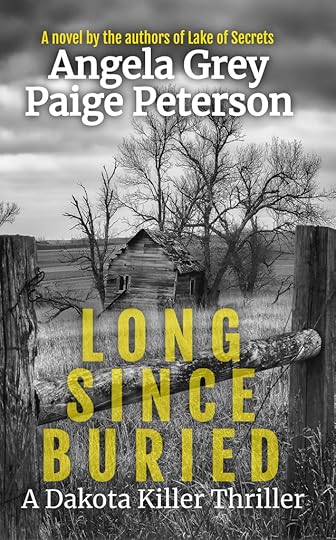
While revising Long Since Buried, I played with quiet moments amid tension—the smell of coffee in a sheriff’s office, the tremor of a hand brushing against a windowpane—small reminders that even in fear, life insists on beauty.
In Bedridden & Gutted to Mindful, compassion showed up differently: as permission to rest, to not perform recovery as productivity. I wrote those pages with gentleness, the way you might speak to a frightened animal—softly, patiently, without sudden movement.
Both books required the same heartbeat of grace: You survived. Now, what will you make from the pieces?
[image error]Pexels.com" data-medium-file="https://angelagrey.wordpress.com/wp-c..." data-large-file="https://angelagrey.wordpress.com/wp-c..." src="https://angelagrey.wordpress.com/wp-c..." alt="" class="wp-image-3630" style="aspect-ratio:1.7769942706037902;width:352px;height:auto" />Photo by Frank Cone on Pexels.comCreativity as Continuum
Looking back, I can trace a clear lineage between the two works—between the hunted girl of Long Since Buried and the healing woman of Bedridden & Gutted to Mindful.
One wrote from the wound.The other wrote from the scar.Together they tell a larger truth: healing is not an endpoint but a continuum of creation. We write the pain to understand it, and we write the peace to remember it.
If Long Since Buried was the exorcism, Bedridden & Gutted to Mindful was the benediction.
A Note to the Dreamers
If you’ve ever woken from a nightmare that feels too real, or carried a story inside you that no one believes—this is for you. You are not alone in the dark. The act of writing, painting, singing, or simply breathing through it is a radical declaration: I am still here.
Fiction may not heal the wound, but it can build a bridge to the part of you that wants to. Mindfulness may not erase memory, but it teaches you to hold it gently, without letting it consume you. Every story we tell from a place of survival becomes a lighthouse for someone still lost at sea. That’s why we keep creating. Not because we’ve conquered the dark—but because we’ve learned to live with its light inside us.
[image error]Pexels.com" data-medium-file="https://angelagrey.wordpress.com/wp-c..." data-large-file="https://angelagrey.wordpress.com/wp-c..." src="https://angelagrey.wordpress.com/wp-c..." alt="" class="wp-image-3622" style="aspect-ratio:0.666931321953156;width:302px;height:auto" />Photo by George Milton on Pexels.comIn Closing, A Reflection…
When I look at my bookshelf now, I see not just titles but testaments. Long Since Buried stands as the girl’s scream turned into structure. Bedridden & Gutted to Mindful stands as the woman’s whisper turned into prayer.
Between them runs a thread of ink, breath, and bravery—proof that stories born of pain can become the architecture of peace.
And perhaps that’s the most honest definition of healing I know:
Not erasing the nightmare,
But rewriting it until it learns how to dream.





![[image error]Pexels.com](https://angelagrey.wordpress.com/wp-content/uploads/2025/10/pexels-photo-5993627.jpeg)
![[image error]Pexels.com](https://angelagrey.wordpress.com/wp-content/uploads/2025/10/pexels-photo-1438404.jpeg)
![[image error]Pexels.com](https://angelagrey.wordpress.com/wp-content/uploads/2025/10/pexels-photo-321576.jpeg)
![[image error]Pexels.com](https://angelagrey.wordpress.com/wp-content/uploads/2025/10/pexels-photo-416920.jpeg)
![[image error]Pexels.com](https://angelagrey.wordpress.com/wp-content/uploads/2025/10/pexels-photo-3573555.jpeg)
![[image error]Pexels.com](https://angelagrey.wordpress.com/wp-content/uploads/2025/10/pexels-photo-7034502.jpeg)
![[image error]Pexels.com](https://angelagrey.wordpress.com/wp-content/uploads/2025/10/pexels-photo-2681319.jpeg)