Sindh in books: breaking silence, rebuilding memory
A round-up of recent books about Sindh
Saaz Aggarwal
The story of Sindh has fascinating layers andnuances, but has largely been neglected or trivialised. The forceful scatteringafter Partition created confusion. The internet is clogged with wrong dates,misinterpretations, and one-sided accounts – enormous swathes of informationthat remain two-dimensional, insular, detached from historical reality, oftenshrouded in unappealing clouds of unresolved trauma. Those who work to create acoherent, reliable body of knowledge about Sindh are swimming against the tide.Those who grasp the breadth of Sindhi poetry, philosophy, music, architecture,cuisine – despair at how public perception has narrowed to a single icon, Jhulelal,and an annual festival, Cheti Chand. Yet, as newer generations respond to thecall of their ancestry, a quiet resurgence has begun.
One of the most remarkable new titles is Lionof the Sky by Ritu Hemnani (HarperCollins, 2024). Written in free verse, itplunges the reader into pre-Partition Hyderabad (Sindh) and, through the eyesand heart of a young boy, brings the lost land and a vanished world alive. Eachword creates a vivid image, each pause a moment of recognition.
Ifyou break a kite string it’s bad
If the stitches break, it’s bad
If you can’t calculate, it’s bad
If you block a railroad, it’s bad
I may not know very much
about the line thisBritish man is drawing
but Ido know one thing.
It’sbad.
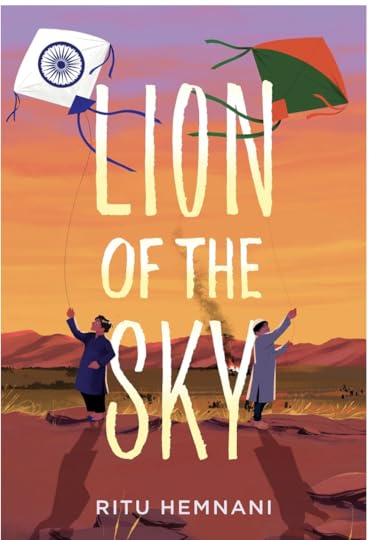 In less than half a page, we are immersed in thedomestic and political world of that time: a festive activity, the genderedexpectations of a trader family, passionate participation in the freedommovement, and that ominous line which would end an era.
Anothercompelling title is SIMSIM by Geet Chaturvedi, translated by Anita Gopalan (Penguin, 2023). Theprotagonist – that peculiar old man, trembling and dribbling, half in the pastand half in myth – embodies the haunting loneliness of exile, among the finestcontemporary explorations of Sindhi displacement.
Long before these newer voices, Meira Chand (born1942) brought the Sindhi presence into global literary consciousness. Writingfrom Singapore and Japan, her novels – some adapted for the stage in the 1990s –include well-drawn cameos of Sindhi characters.
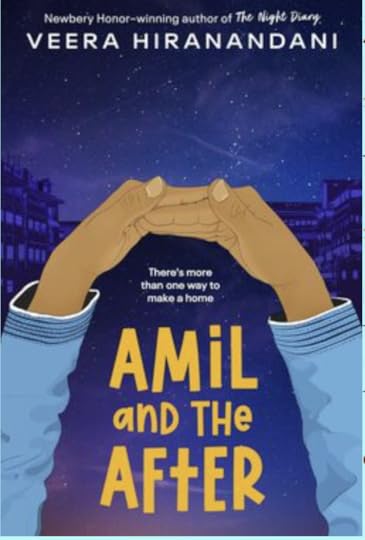 For readers seeking an intimate understanding ofPartition in Sindh, The Night Diary and Amil and the After byVeera Hiranandani offer rare insights. Through the eyes of children, theyrecreate what it meant to lose one’s home and to rebuild life amid confusionand resentment. These stories balance tenderness with historical precision:they bring out the complex relationships between communities, the moraldisarray of that moment, and the struggle to make sense of a world suddenlydivided. These are books for younger readers, and deal with themes of death andviolence unflinchingly and with such care that they feel redemptive rather thantraumatic. Friendship, family, and courage become the motifs through whichhistory’s hardest truths are encountered.
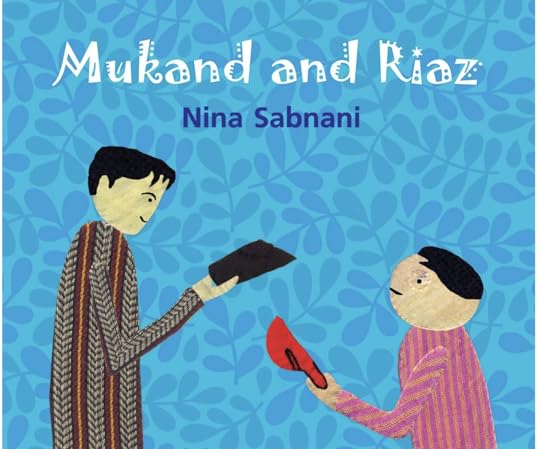 Equally evocative is Mukund and Riaz,written and illustrated by Nina Sabnani, as it transforms her father’slate-life memory of friendship and loss during Partition into a thirty-page picturebook and a short film. Using Sindhi appliqué motifs and luminous colour, Sabnanicreates a tender meditation on a memory her father shared with her short yearsbefore he died, something he had never spoken of before: his best friend, andwhat happened to his cap. Using motifs drawn from Sindhi appliqué, every frameglows with colour, underlaid with sadness.
Othernovels which explore Sindh’s landscape of loss and renewal include TRYST WITH KOKI bySubhadra Anand (Authors Upfront 2023), THE TATTOO ON MY BREAST by Ravi Rai (Bloomsbury,2019), THE SWING byIsha Merchant (Notion Press 2023) written when the author was 12.
Other novels which explore Sindh’s landscape ofloss and renewal include Tryst with Koki by Subhadra Anand (AuthorsUpfront 2023) and The Tattoo on my Breast by Ravi Rai (Bloomsbury, 2019.The Swing by Isha Merchant (Notion Press 2023) is notable because it waswritten when the author was just 12 years old. You Have Given Me A Countryby Neela Vaswani (Sarabande Books 2010) retails in India at ₹2514 but MurliMelwani (introduced below) called it “an excellent read,” particularly thechapter about her visit to India to meet her father’s family. The most authentic glimpses into Sindh, though,come through translation. Ittehad by Guli Sadarangani (1928–2017),translated by Rita Kothari (Zubaan, 2025), resurrects a lost literary voice aswell as the intellectual world that thrived in Sindh before its dismemberment.Written in 1941, this extraordinary novel brims with “progressive” ideas – theneed for women’s financial independence, the right to choose one’s partner,religion as a path of spiritual growth rather than division, and the treatmentof labour as partner rather than subordinate.
Another compelling contribution is The Pagesof My Life, memoir of Popati Hiranandani (1924–2005), translated by JyotiPanjwani (OUP 2010). It recounts her girlhood, education, Partition, andprofessional life as a writer and academic with candour and verve. One of the mostmemorable anecdotes describes a prospective suitor discussing dowry, to whichshe calmly replies that since she earns more than he does, perhaps his familyshould be paying dowry to hers.
GuliSadarangani and Popati Hiranandani belonged to Sindh’s Amil community, which valuededucation, reform, and social consciousness, more about which in THE AMILS OF SINDH [black-and-whitefountain (bwf) 2019].
 Guli Sadarangani and Popati Hiranandani belongedto Sindh’s Amil community, which valued education, reform, and socialconsciousness. Their world is explored in my book The Amils of Sindh [black-and-whitefountain (bwf) 2019], which traces the community’s history from itsadministrative roles in Sindh to its post-Partition adaptation in India.
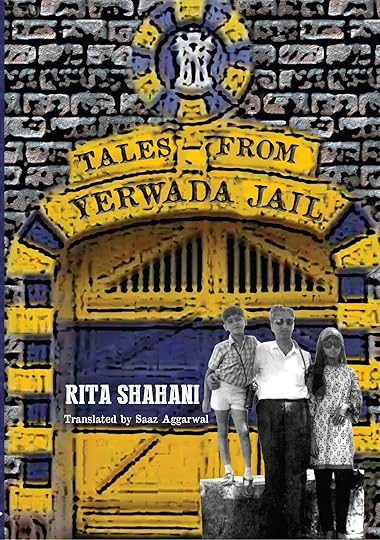
Talesfrom Yerwada Jail (bwf,2013), by the prolific Rita Shahani (1935-2013), deeply beloved even today inthe lost homeland, is also significant. Through memories from within her family,the book offers a glimpse of the passionate involvement of Sindhis in thefreedom movement – only to face permanent exile when Independence finally came.I cannot speak or read Sindhi, and translated this book in collaboration with theauthor. She read aloud the Sindhi text while I made notes, and we refined successivedrafts together until both were satisfied.
The most exceptional translation yet is RitaKothari’s Unbordered Memories, a curated anthology of post-Partitionshort stories. It presents the Sindhi experience from various vantage points –departure, wrenching farewells, humiliation in refugee camps, and thedesolation of those left behind in Sindh. The stories are filled with pain andnostalgia, emotions almost never expressed in Sindhi families. Freedom andFissures (Sahitya Akademi, 1998), a collection of Partition poetry issimilar, translated by pioneers Anju Makhija and Menka Shivdasani, working withSindhi poet Arjan “Shad” Mirchandani. Like me, neither translator can read orspeak Sindhi. These collaborations reveal the paradox of a language thatsurvives largely through mediation; a poignant commentary on Sindhi’s fracturedafterlife.
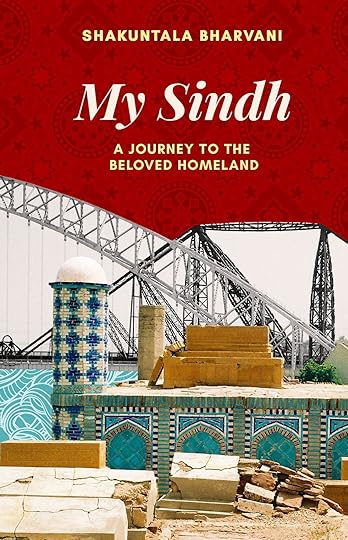
Other books weave family histories, oraltraditions, and lost geographies into personal testimony. My Sindh byShakuntala Bharvani (bwf, 2022) blends essays, family stories, and musings on colonialtexts into a mosaic of nostalgia and scholarship. Refugees In Their Own Countryby Sunayna Pal (bwf, 2022) distils the Sindhi Partition experience intoillustrated verse – graceful, dignified, grief-struck. Sunrise Over Valivadeby Susheel Gajwani (bwf, 2025) sets the Sindhi resettlement story within aKolhapur camp originally built for Polish refugees, linking it to a globalnarrative of displacement.
In Sindhi Tapestry: An Anthology ofReflections on the Sindhi Identity (bwf 2020) I received contributions fromsixty contributors of different ages, backgrounds, and professions, exploring awide range of themes around heritage, displacement, and belonging. Severalrecalled being taunted: “If you see a Sindhi and a snake, whom should you killfirst?”
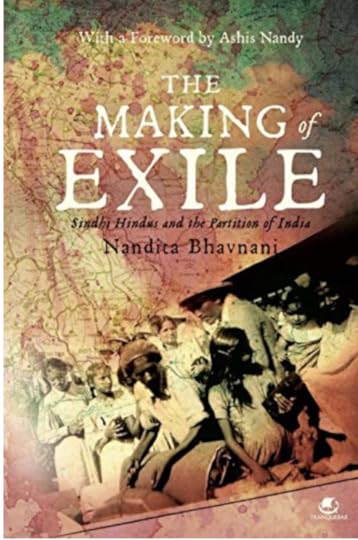 Many books on this list are self-published, byno means vanity or lack of competence, rather the valiant efforts of survivorsof a catastrophe to keep their culture alive. The most notable exception is TheMaking of Exile by Nandita Bhavnani (Tranquebar Press, 2018). A comprehensiveand nuanced account of the Sindhi experience of Partition, it meticulouslyexamines every dimension – political, social, and psychological. Her narrativeis precise and compassionate, and through its measured prose, the reader feelsthe full emotional weight of dislocation. Among its most affecting sections arethose describing the despair of Sindhi writers who, after Partition, lost notonly their homes but also their readership, their sense of audience, and, inmany cases, their will to write. Many died heartbroken.
Among newer finds is The Son-in-Law fromSindh by Premilla Rajan. The title suggests a humorous cultural study of themuch-pampered Sindhi son-in-law – and the cover, the mugshot surrounded by stampsfrom around the world, heightens that anticipation. What emerges, however, is apatchwork comprising affectionate anecdotes, lists of information some wildlyinaccurate, and a few priceless glimpses into the Sindhworki world.
Who were the Sindhworkis? Soon after the Britishannexation of Sindh in 1843, groups of young men began to board steamshipsladen with “Sindh work” – intricately crafted goods, textiles, and curios – andsailed out to trade across the Empire. Long before Partition, they hadestablished mercantile networks, a remarkable history documented by the Frenchscholar Claude Markovits in The Traders of Sindh: From Bukhara to Panama(2000).
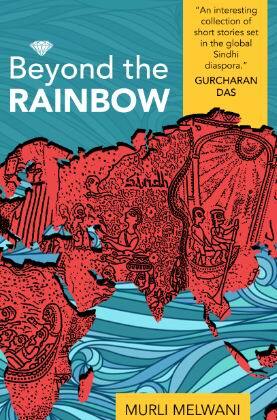 Among the earliest fictional treatments of thisworld is Beyond Diamond Rings (Pustak Mahal, 2009) by Kusum Choppra.Daring and emotionally charged, it portrays the anguish of Sindhworki womenwhose husbands lived in distant lands and who, when Partition erupted, had toflee alone with their children and elderly. The most luminous portrayal of theSindhworki world, however, is Beyond the Rainbow (bwf, 2021) by MurliMelwani, which won the International Impact Book Award in 2025. Its elevenshort stories, set in Chile, Hong Kong, Canada, Thailand and other countries,trace the arc of Sindhi enterprise and endurance. Murli, who grew up inShillong, studied English Literature and became a professor – and later adiaspora businessman – writes with precision and empathy, exploring the deeperthemes of a homeland that no longer exists, the fragility of language, and themoral codes of a people who survived upheaval through work and faith.
 Sindhworkand Sindhworkis(1919) was written by Tekchand Karamchand Mirchandani after a long career in Sindhwork.It describes the drab lives of the young men who toiled abroad, exploited by thecapitalists comfortably ensconced in Hyderabad. Itdescribes the drab lives of young men who toiled abroad, exploited by capitalistscomfortably ensconced in Hyderabad. Sarla Kripalani (1920-2022) translated it in2001, preserving a rare and invaluable record. The translation is included in Sindh Bani (Rupa, 2025),with two other works also long in the public domain: Short Stories of Sindh – shared digitallyon Sarla’s ninetieth birthday in 2020 – and Aaya Pir, Bhagga Mir and Other Sindhi Proverbs,published in 2008. The beautiful cover, displaying “Kutch” rather than “Kachchh”,inadvertently shows how regional identities can be altered in print. Sarla was apassionate storyteller and it’s unfortunate that public acclaim of her work waswithheld from her.
Tracesof colonisation, the blurring of idiom, the subtle drifts of meaning that erodea culture from its own vocabulary appear in many of the books listed here: sethiafor setha, maike for peko, Ramadan for Ramzan, dupatta for ravo; a lost diarynever returned because its pages were needed for cleaning backsides, a claim atodds with lived practice in South Asia.
WhenSindhis say they “came to India” or “our roots are in Pakistan,” they arereiterating the absurdity that Pakistan existed before their expulsion. Sindhis often described as having escaped the full fury of Partition’s violence. Butthe violence of Sindh’s Partition was insidious – social, linguistic,psychological – and continues to echo through generations.
Appearedin Hindustan Times on 23 October 2025 https://www.hindustantimes.com/books/from-sindh-in-books-breaking-silence-rebuilding-memory-101761212246870.html