
Being a Designated Driver
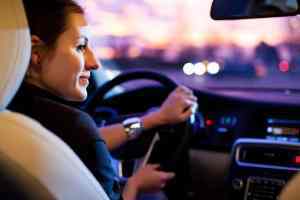
A friend of mine (who is active LDS) was recently telling me about one aspect of how he builds relationships with friends who have different interests. He goes with them when they go to bars for the evening. He has no judgement about their drinking, and takes on being their designated driver. They have built a community of trust for each other, acknowledging and appreciating their differences.
I have been a designated driver on occasion. I understand the importance of fulfilling that role without judgement, appreciating time with friends and loved ones in a setting different from my usual activities. I have benefitted from this practice, becoming more aware of how others have been there for me in situations that are not usual for them, ready to be a steadying influence for me when circumstances might make it difficult for me to function effectively. Advocacy and activism require working in community with those who support each other, to be each other’s designated drivers.
I find there is a need for filling a similar role in faith communities.
The main responsibility of a designated driver is that they are the ones behind the wheel of a vehicle that, if driven by someone whose brain and actions are impaired by the influence of substance, could become a deadly weapon that leaves innocent bodies in its wake.
I have seen different kinds of weapons inflicting damage in faith communities. Sometimes the realization has come because I saw that I was wielding the weapon. I had to recognize the damage caused, my part in it, and put in the work of burying that weapon. Over and over. Sometimes the realization has come when the words or actions directed at me by those in my community inflict deep wounds. The wounds are real, whether the intention was malicious or not.
Declaring who God does or does not love because of ideology is a weapon that wounds and leaves bodies in its wake.
Denying or refusing to witness the value and existence of anyone because of an interpretation of a scripture verse is a weapon that wounds and leaves bodies in its wake.
Rejecting any family member because their life does not align with what you pictured, is a weapon that wounds and leaves bodies in its wake.
Worshipping any person, or leader, or book, or words, or policy, or doctrine, or ideology, or dogma, or rhetoric more than you practice love, empathy, connection and at-one-ment is a weapon that wounds and leaves bodies in its wake.
Making the most addictive human characteristic – the need to be right, more important than the opportunity to love is a weapon that wounds and leaves bodies in its wake.
Trying to fix, or “should-ing” someone who is burdened, or mourning, or in need of comfort is a weapon that wounds and leaves bodies in its wake.
Using statements of certainty which come from repeated traditions of fathers and mothers, or fear of difference, or intentional ignorance, which limit possibilities of God, love, empathy, and compassion in order to shut down someone who is on a difficult but soul expanding journey of seeking is a weapon that wounds and leaves bodies in its wake.
Claiming, or even hinting that a title or position or calling automatically means someone has the ability, knowledge and authority to have the answers and power over anyone’s life, and that it is wrong for someone to question or have discernment is a weapon that wounds and leaves bodies in its wake.
These weapons, and more, are as dangerous to mental, emotional and spiritual health as a car with an impaired driver is to the physical health of anyone in its path.
I know humans want to be back in the Garden, a state of not being responsible, and be able to plead for Jesus to take the wheel. And then claim it is god’s will if things don’t work out.
But Jesus not only wants me for an activist, Jesus wants me for a designated driver when weapons are being slung around in my community.
Christ was an example of one who did not try to conquer weapons or force with greater force. He showed us and called us to overcome evil with good, with love.
When someone at the pulpit, or in class, or in the foyer, or at gatherings, or online, or at work, is wielding a weapon that wounds- be aware of those at risk, those in its path, those whose existence is being denied, those worn down by burdens, those who are mourning, those who seek to breathe. Then be the presence healing, of speaking love, witnessing existence, being hope, bearing burdens, sitting with them in shared woundedness.
This is one of the most sublime, moving, transformative tenets of my Mormonism. It is described in some of the visually beautiful verses from the Book of Mormon, in Mosiah 18:8,9,30
“…he said unto them: Behold, here are the waters of Mormon…and now, as ye are desirous to come into the fold of God, and to be called his people, and are willing to bear one another’s burdens, that they may be light…and are willing to mourn with those that mourn…and comfort those that stand in need of comfort, and to stand as witnesses of God at all times and in all things, and in all places that ye may be in…all this was done…by the waters of Mormon, in the forest that was near the waters of Mormon; yea, the place of Mormon, the waters of Mormon, the forest of Mormon, how beautiful are they to the eyes of them who there came to the knowledge of their Redeemer.”
No matter where your path takes you, no matter what community in which you create belonging, you and those around you are human, and will always have access to the weapons humans often use, for whatever reason, to wound. Anyone who was ever Mormon has a connection to this promise made by the waters of Mormon, to shift the direction, to interrupt the influence that is impairing the one wielding a weapon.
I don’t think I was fully aware of the promises I made when I was baptized at age 8. I have since sought them and experienced healing when others have lived them. When I practice mourning, comforting, witnessing, and sharing burdens, healing occurs in the giver and receiver, and the line between them is faint.
The role of designated driver is one of being aware and present in places and times that matter for others, and shift possible destructive outcomes to healing outcomes. I know I am in need of this, and I can be this. More than ever, the world needs this.


