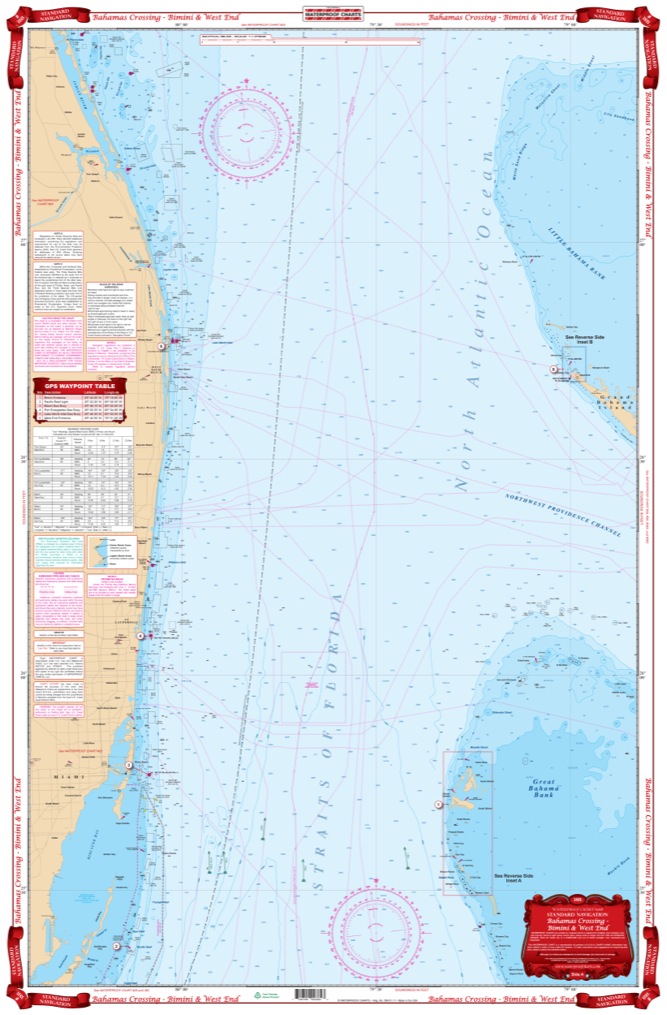
Islands In The Stream, (Hemingway, 1970) x Islands In The Stream, (B. Gibb, M. Gibb, R. Gibb, 1983)

A man named Thomas Hudson, who was a good painter, lived there in that house and worked there and on the island the greater part of the year. After one has lived in those latitudes long enough the changes of the seasons become as important there as anywhere else and Thomas Hudson, who loved the island, did not want to miss any spring, nor summer, nor any fall or winter.
Sometimes the summers were too hot when the wind dropped in August or when the trade winds sometimes failed in June and July. Hurricanes, too, might come in September and October and even in early November and there could be freak tropical storms any time from June on. But the true hurricane months have fine weather when there are no storms.
Thomas Hudson had studied tropical storms for many years and he could tell from the sky when there was a tropical disturbance long before his barometer showed its presence. He knew how to plot storms and the precautions that should be taken against them. He knew too what it was to live through a hurricane with the other people of the island and the bond that the hurricane made between all people who had been through it. He also knew that hurricanes could be so bad that nothing could live through them. He always thought, though, that if there was ever one that bad he would like to be there for it and go with the house if she went.
The house felt almost as much like a ship as a house. Placed there to ride out storms, it was built into the island as though it were a part of it; but you saw the sea from all the windows and there was good cross ventilation so that you slept cool on the hottest nights. The house was painted white to be cool in the summer and it could be seen from a long way out in the Gulf Stream. It was the highest thing on the island except for the long planting of tall casuarina trees that were the first thing you saw as you raised the island out of the sea. Soon after you saw the dark blur of casuarina trees above the line of the sea, you would see the white bulk of the house. Then, as you came closer, you raised the whole length of the island with the coconut palms, the clapboarded houses, the white line of the beach, and the of the South Island stretching beyond it. Thomas Hudson never saw the house, there on that island, but that the sight of her made him happy. He always thought of the house as her exactly as he would have thought of a ship. In the winter, when the northers blew and it was really cold, the house was warm and comfortable because it had the only fireplace on the island.
It was a big open fireplace and Thomas Hudson burned driftwood in it.
He had a big pile of driftwood stacked against the south wall of the house. It was whitened by the sun and sand-scoured by the wind and he would become fond of different pieces so that he would hate to burn them. But there was always more driftwood along the beach after the big storms and he found it was fun to burn even the pieces he was fond of. He knew the sea would sculpt more, and on a cold night he would sit in the big chair in front of the fire, reading by the lamp that stood on the heavy plank table and look up while he was reading to hear the northwester blowing outside and the crashing of the surf and watch the great, bleached pieces of driftwood burning.
Sometimes he would put the lamp out and lie on the rug on the floor and watch the edges of color that the sea salt and the sand in the wood made in the flame as they burned. On the floor his eyes were even with the line of the burning wood and he could see the line of the flame when it left the wood and it made him both sad and happy. All wood that burned affected him in this way. But burning driftwood did something to him that he could not define. He thought that it was probably wrong to burn it when he was so fond of it; but he felt no guilt about it.
(Bold mine.)
This book knocked me sideways.
After enjoying Across The River and Into the Trees, I wondered if I should try this. It doesn’t get discussed much. It was published posthumously, ten years after Hemingway’s death. Apparently Mary Hemingway found it and brought it to Scribner’s. For a craftsman like Hemingway you’ve got to be suspicious of anything he himself didn’t consider finished.

This post by a Redditor was all I needed to push me into ordering a good UK edition with an appealing cover.
Hemingway began the novel–as Carlos Baker relates in his excellent biography–at a low point of fortune. It was 1950 and “Across the River and Into the Trees” had just taken a critical beating. In December he began something new; it was to be a series of three books called “The Sea When Young,” “The Sea When Absent” and “The Sea in Being.” The work gathered momentum during the first half of 1951–Hemingway was writing enthusiastically and well–but an odd thing happened to his general scheme. It was conceived as a linked series of three independent novellas concerned with three different eras in the life of Thomas Hudson, an American marine painter. The first takes place on the island of Bimini, the second in wartime Cuba and the third follows Hudson through to his death at sea in an isolated action of World War II. But another concept intruded, and Hemingway added a fourth part, only to find that it had taken on an independent life of its own quite unrelated to Hudson. In 1952, he published this story as “The Old Man and the Sea,” and it was apparently this diversion, plus various travels in the following years, that kept him from a return to the final polishing he had intended for the novel now titled “Islands in the Stream.”
That’s from the Oct. 1970 New York Times review by Robie McCauley. I won’t link to it and I’d encourage you not to read it because it gives away several turns of plot that hit this reader in surprising and unexpected ways.
The book can be pretty shaggy. Many pages of conversations in bars, about forty pages about trying to catch a swordfish, etc. There’s a fight scene where Roger, Thomas Hudson’s friend, who is a writer, beats the hell out of a yacht guy. The yacht guy had a pretty reasonable complaint is this reader’s opinion, and the beating is unpleasant. Even Roger comes to view it as an ugly event. But when the boys arrive, Thomas Hudson’s mood improves, and the book becomes warm and loving in a way unusual in a Hemingway book.
It’s about a father. Most Hemingway main character/stand ins are pointedly unattached. In the short stories we get a father, but through the eyes of Nick, the son, a boy.
In this book we’re seeing the world through a father who is getting a visit from his kids. Two from one mother, one from another. Thomas has all kinds of feelings and regrets about the situation.
Most of the book (drinking, fishing) really tells a story of avoiding, masking, remembering, processing.
The drinking is preposterous. Regularly Thomas is like “a drink? It’s breakfast. I’ll just have a bottle of beer.” (Heineken)
The kids, who are like twelve-sixteen years old, say stuff like
My friend Mr. Joyce has words and expressions I’d never even heard of. I’ll bet nobody could outswear him in any language.
maybe just as setup for Dad to tell stories about Mr. (James) Joyce. But… don’t you want to hear those?
Well, so what? Maybe Hemingway’s kids talked like that.
Hemingway’s whole fictional project is a kind of exaggerated autobiography. He really got somewhere with Islands In The Stream, a new level of vulnerability couched in braggadocio. His fourth wife published it, even though the main character’s worst regret might be losing his first wife.
-—
The song Islands in the Stream was written by The Bee-Gees. They had it in mind for Diana Ross. Barry Gibb says that in this interview. Many places, including Wikipedia, say the title of the song came from the Hemingway novel published thirteen years previous. I can find no firsthand source where Barry Gibb states that or makes that connection. But the phrase “islands in the stream” doesn’t seem to have existed before Hemingway’s book was published. Some sources link it to the John Donne poem from which EH got another title: “for whom the bell tolls.”
The song ended up with Dolly Parton and Kenny Rodgers, and was released on Kenny Rogers’ album Eyes That See In The Dark.

Baby when I met you it was peace on Earth
I set out to get you with a fine tooth comb
Wow.
Be careful, the song sticks. It knocked “Total Eclipse of the Heart” out of number one on the Billboard Hot 100. 1983 was quite a year on the Billboard Hot 100: “Islands In The Stream” was knocked off by Lionel Ritchie, “All Night Long.”
Which Islands in the Stream the greater work of art with this title?
Talk about apples and oranges. Or, better, limes and coconuts.
There’s a cocktail recipe contained in the novel: Gordon’s gin, coconut water, lime juice, a dash of Angostura bitters for color. I made a few last night. Jess’s review: “I could drink this all day.”

(source)