Reading and Location: Dublin and Finnegans Wake.
In Finnegans Wake, James Joyce uses various representations of Dublin, including the double-n “nn” (total negation) and the Irish name Baile Atha Cliath (Town of the Ford of Hurdles). Joyce often draws parallels between Dublin and other cities, believing that the particular can reveal the universal. This name appears frequently in the book, along with variations like “Baulacleeva” and “Bauliaughacleeagh,” highlighting the city’s connection to water and the river Liffey. The book introduces “Errorland” and “Aaarlund,” which can be seen as alternative Dublin-like cities, suggesting a multiplicity of perspectives and realities.
Joyce’s perspective on Dublin as a microcosm of the world is evident in his statement that by understanding Dublin, he can understand all cities. Finnegans Wake incorporates both real Dublin locations (like Howth Castle and Phoenix Park) and symbolic or dreamlike places, blurring the lines between reality and fiction. The River Liffey, flowing through Dublin, is a significant element, particularly through the character Anna Livia Plurabelle, who is associated with water and the world’s rivers.
This novel will make you see aspects of the city that otherwise might go unnoticed.
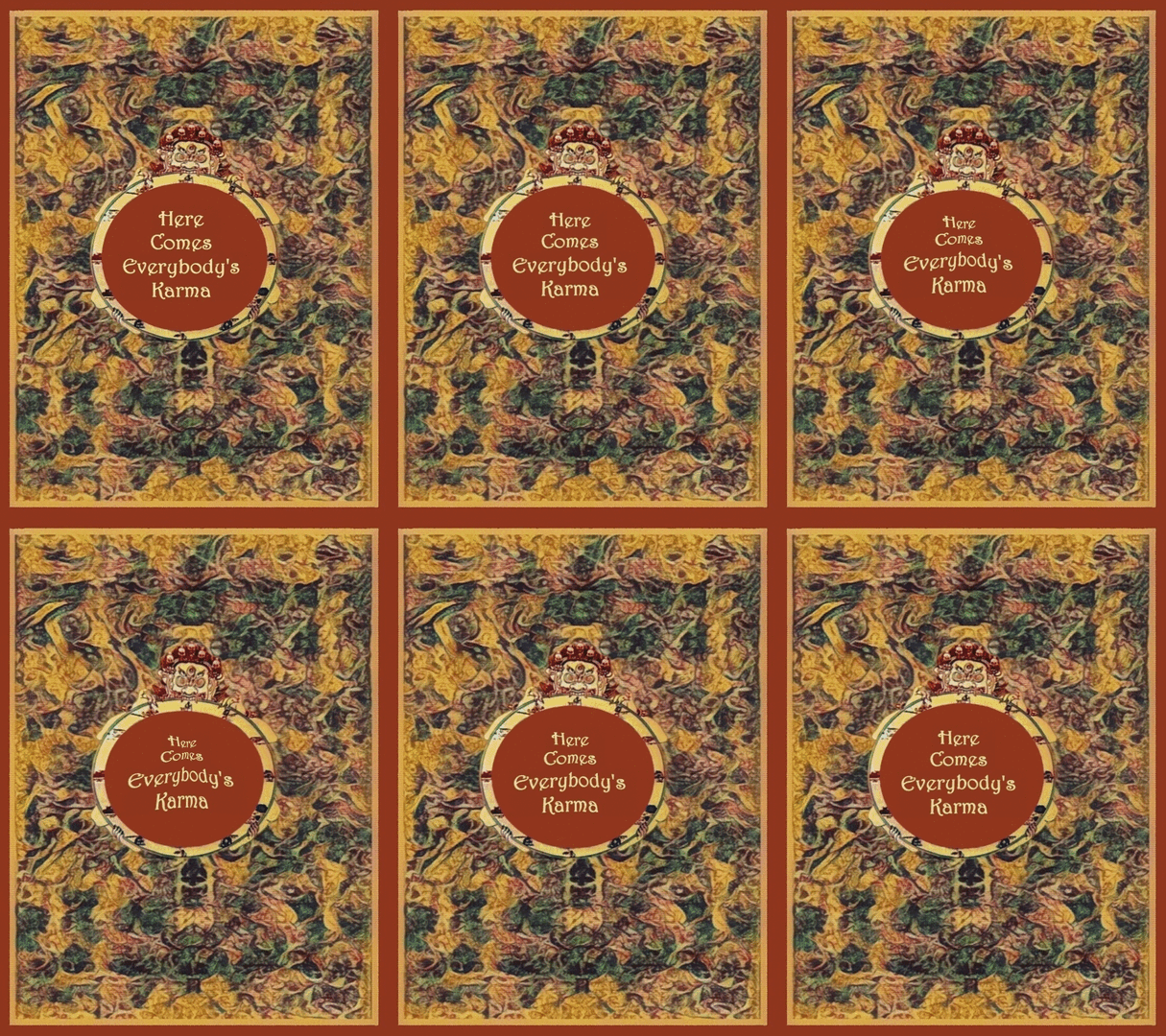
I admit that Finnegans Wake is probably the most enigmatic novel that exists in English Literature and that many readers have set it aside as an unreadable Moloch. My wife was one of those readers, and especially for her I’ve transcribed the book from Joycean Gibberish into plain English (Here Comes Everybody’s Karma, ISBN 9781737783299 or here for the Kindle edition on Amazon) .
That said, even after the removal of all the foreign language idiosyncrasies, it still remains a challenging read due to its stream of consciousness writing style and surrealistic allusions.