
I Used To Work The Streets
We got a call on the radio- “26 Alpha”, accompanied by the street address of the shelter holding the sick man who was in his 50’s. I put the ambulance in gear and we took off toward the location.
Alpha is the least severe, then there is Bravo, Charley, Delta, and Echo. Echo means they are dead. These are just a few of the terms used by EMS over the radio.
“Never underestimate an Alpha,” I would say. They never were what you expected…or they were exactly what you expected…you just didn’t know when it would turn on you and be much worse than you thought.
We arrived at one of the men’s shelters in Salt Lake City. Cold, dark, slushy, we pulled the stretcher out of the back of the ambulance. Navigated ourselves to a dip in the curb, and swerved around the sleeping bodies on the ground outside because there was no more room inside the shelter.
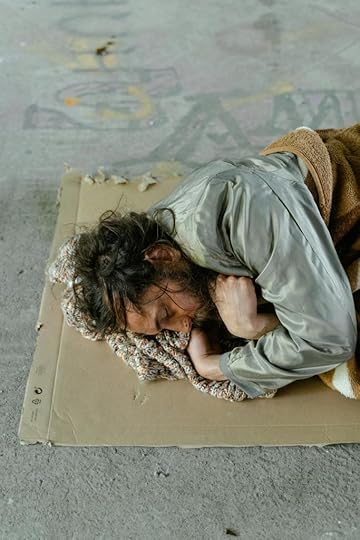
(Image-for I Used to Work The Streets)
The gate opened and we were guided to the heavy metal doors. They opened and the smell hit. Sweaty bodies, whose clothes were drenched then dried in the smell of urine and bile. Trying to hold the heavy door open as we pulled the stretcher in, the front wheel hit a foot.
“Sorry!” I whisper.
The lights were low and the massive cement room about the size of a Mormon church house gym, had men lying side by side filling the entirety of the floor space.
“Where is he?” We asked the young 20 year old watching over the sleeping men. We were directed to a man lying on the floor. I stepped over other bodies to get to him to check his vitals.
Fever, profuse sweating, vomit and diarrhea covered his clothes. “Are you able to stand and walk to my stretcher?” I asked. I help lift the 6 foot something man with my 5’4” self and similar sized partner next to me. We all wobble as we navigate the other men’s bodies and make our way back to the entrance and the stretcher.
Once in the ambulance, I grab sheets and blankets, adjust the heat and grab a blue emesis bag…in case he vomits during transport. Tattoos cover my patient’s neck leading up to his face which had several tiny teardrops tatted next to his eyes. “Doesn’t this mean this man has killed someone?” I think to myself.
“Do you want me to be in the back?” My partner asked. “Um, yeah I’ll take you up on that.” I then drove and my male partner was alone with our patient in the back.
My partner busied himself making the man comfortable and watched his condition to make sure it did not get worse. But he was sick and moaning and we couldn’t get to the University ER fast enough for him.
Once at the ER, I opened the back doors. Feces spilled out of the pant legs of our patient onto the stretcher, onto the ambulance floor and ran out the door. The ER staff welcomed us outside (not common in most ER ambulance exchanges, but based on the details we gave them over the phone, they know better than to let us inside right away.)
There was an outer shower room that the University ER EMT took our patient into. They started to spray hot water over him and his clothes as they gently stripped him down to give him a thorough cleaning. I grabbed an outside hose that sprayed hot water onto our stretcher and inside the back of the ambulance. We then bleached, wiped, sprayed everything off, and kept the ambulance doors open to air the space out for a bit.
*ERs in Salt Lake City take in a large amount of the unhoused (I am sure ERs all over the U.S. do as well). They will clean the clothes, wash the bodies, and feed the mouths of people in this community. Nurses, Police, Fire, and other EMS personnel are the defacto “parents” of these adults with needs they cannot meet themselves.*
The next call? A 26 Alpha, 90 year old female. We drove to a high rise penthouse in the heart of Salt Lake City…just a few blocks north east of the shelter we had been to.
This time the newly cleaned stretcher is pulled down large hallways, but obnoxiously tight elevators (architects did not think through emergency response situations in designing elevator spaces). We arrived at a beautiful wooden door with nice crown molding all around. As we entered, the smell hit. This time nice perfume, clean spacious interior, and the sent of expensive furniture fill my nostrils.
A nice older woman was talking on the phone with her son on one of four sets of couches that the apartment contained. Large expensive rings cover her skinny delicate fingers. Her hair, perfectly in place, moved with her as she turned her head.
Framed pictures of George Washing kneeling in prayer next to another of Moroni with the golden plates are on the walls. There are large pieces of Chinese porcelain throughout along with other country’s and culture’s arts, indicating a lifetime of world travel and by the looks of it, missionary work. We help her onto the same stretcher as before, cleaned and with a new sheet covering the top. I then sit in the back and we take the same ride up to the University ER, this time we roll right through the building’s entrance.
I couldn’t, at the time, formulate the thoughts in my head and the juxtaposition of the two experiences. I loved that we gave them the same treatment to an extent, I felt uneasy by the living conditions of both as well.
Rich, poor, past criminal, harmless old women. Their base emergent needs were met with the same speed, the same care, the same transportation, the same destination.
Same.
But that is where the same treatment ended. We saved their lives long enough to go back to their previous conditions.
And I am left with conflicting thoughts.
**
Related article: Does the Church Use Our Tithing Dollars Responsibly? I Don’t Think It Does!


