Building Intelligent AI Agents with Spring AI: Agentic Patterns Explained — Part 0
In the evolving landscape of artificial intelligence, integrating Large Language Models (LLMs) into applications has become increasingly accessible. Spring AI, a project within the Spring ecosystem, offers developers a robust framework to incorporate AI functionalities seamlessly into their applications.
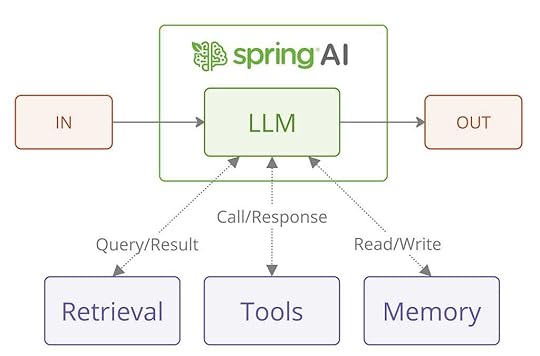
This article delves into the agentic patterns introduced by Spring AI, inspired by Anthropic’s research on building effective LLM agents, and demonstrates how these patterns can be implemented to create efficient AI-driven workflows.
Agentic Systems in Spring AIAnthropic’s research distinguishes between two primary types of agentic systems:
Workflows: Systems where LLMs and tools are orchestrated through predefined code paths, ensuring predictability and consistency.Agents: Systems where LLMs dynamically direct their own processes and tool usage, offering flexibility but potentially less predictability.Spring AI aligns with these concepts by providing structured patterns that facilitate the development of both workflows and agents, catering to various application needs.
Chain WorkflowThe Chain Workflow pattern involves breaking down complex tasks into a sequence of simpler, manageable steps, where the output of one step serves as the input for the next.
Implementation in Spring AIpublic class ChainWorkflow {
private final ChatClient chatClient;
private final String[] systemPrompts;
// Processes input through a series of prompts, where each step's output
// becomes input for the next step in the chain.
public String chain(String userInput) {
String response = userInput;
for (String prompt : systemPrompts) {
// Combine the system prompt with previous response
String input = String.format("%s\n%s", prompt, response);
// Process through the LLM and capture output
response = chatClient.prompt(input).call().content();
}
return response;
}
}
This approach ensures that each step is focused on a specific subtask, enhancing clarity and maintainability.
Parallelization WorkflowThe Parallelization Workflow pattern enables simultaneous processing of multiple tasks, either by dividing a task into independent subtasks (sectioning) or by running multiple instances of the same task to achieve consensus (voting).
Implementation in Spring AI:public class ParallelizationWorkflow {
private final ChatClient chatClient;
// Processes multiple inputs in parallel and aggregates the results
public List parallelProcess(List inputs) {
return inputs.parallelStream()
.map(input -> chatClient.prompt(input).call().content())
.collect(Collectors.toList());
}
}
This pattern is particularly useful for tasks that can be executed concurrently, thereby reducing processing time and increasing efficiency.
ReAct AgentThe ReAct (Reasoning and Acting) Agent pattern combines reasoning and action by allowing the LLM to interact with external tools or data sources iteratively, refining its responses based on the information retrieved.
Implementation in Spring AI:public class ReActAgent {
private final ChatClient chatClient;
private final ToolExecutor toolExecutor;
// Iteratively refines responses by interacting with external tools
public String interact(String userInput) {
String response = chatClient.prompt(userInput).call().content();
while (needsFurtherAction(response)) {
String action = extractAction(response);
String toolResult = toolExecutor.execute(action);
response = chatClient.prompt(toolResult).call().content();
}
return response;
}
}
This pattern is ideal for scenarios where the LLM needs to perform actions based on user input and refine its responses accordingly.
Plan-and-Execute AgentThe Plan-and-Execute Agent pattern involves the LLM creating a comprehensive plan to achieve a goal and then executing each step, adjusting as necessary based on the outcomes.
Implementation in Spring AI:public class PlanAndExecuteAgent {
private final ChatClient chatClient;
// Creates a plan and executes each step, adjusting as necessary
public String planAndExecute(String goal) {
String plan = chatClient.prompt("Create a plan to: " + goal).call().content();
for (String step : extractSteps(plan)) {
String result = chatClient.prompt(step).call().content();
if (needsAdjustment(result)) {
plan = adjustPlan(plan, result);
}
}
return plan;
}
}
This pattern is suitable for complex tasks requiring a structured approach with the flexibility to adapt as the execution progresses
AutoGPT AgentThe AutoGPT Agent pattern empowers the LLM to autonomously set goals and execute tasks without explicit user prompts, making decisions based on predefined objectives.
Implementation in Spring AI:public class AutoGPTAgent {
private final ChatClient chatClient;
// Autonomously sets goals and executes tasks
public void run() {
String goal = determineInitialGoal();
while (!goal.isEmpty()) {
String plan = chatClient.prompt("Plan to achieve: " + goal).call().content();
for (String step : extractSteps(plan)) {
chatClient.prompt(step).call().content();
}
goal = determineNextGoal();
}
}
}
This pattern is effective for applications requiring continuous operation with minimal human intervention, such as monitoring systems or automated content generation.
ConclusionSpring AI provides a versatile framework for implementing various agentic patterns, enabling developers to build AI-driven applications tailored to specific needs. By adopting these patterns, developers can create systems that balance autonomy and control, ensuring both flexibility and reliability in AI integrations.
For a comprehensive understanding and practical examples of these patterns, refer to the official Spring AI documentation and the agentic-patterns project on GitHub.
[image error]Building Intelligent AI Agents with Spring AI: Agentic Patterns Explained — Part 0 was originally published in DXSYS on Medium, where people are continuing the conversation by highlighting and responding to this story.