Writing Multiple POV’s in a Fantasy Series
I’ve been working on a couple of larger projects over the past few years that involve multiple Points of View (POV’s). If you’re like me, you’ve probably come across countless blog posts and YouTube videos talking about how to do just that.
5 Steps for Mastering Multiple POV’sHow to write multiple POV’s with easeYou down with multi-POV? Yeah, you know me!Most of the advice is either so generic it doesn’t need to be written down or it is so specific it isn’t useful for 90% of the people out there. So rather than being yet another voice telling you how to handle multiple POV characters in your fantasy epic (it’s not like I have a novel published…), I thought I would break down some of the trends I’ve seen through the numerous series I’ve read.
The Wheel of TimeRegardless of whether you like the Wheel of Time or not, you can’t deny that it’s popular. It is an enormous, 14-book series with 147 unique POV’s. It’s kind of absurd when I write it down like that…
So, how did Robert Jordan achieve that from a writing perspective? It could be easy to just say “slap in a new POV whenever you feel like it,” but if you analyze Jordan’s writing you’ll notice trends (and some other authors who do this too).
The Eye of the World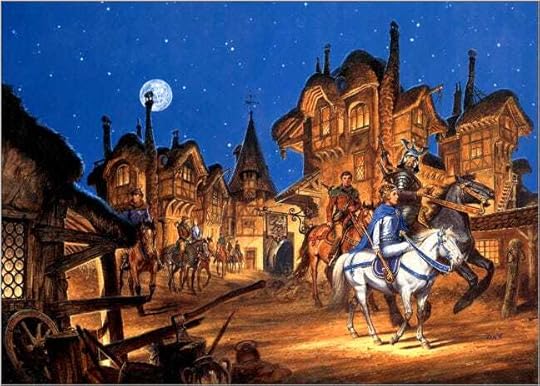
Let’s focus on just the first book. How did Jordan pull in readers and kick off a series with 147 POV characters? By sticking with one character to start!
It takes a whopping 20 chapters before we get one that isn’t from Rand’s point of view. It might be hard to remember if it’s been a while since you’ve read the first book, but it is almost completely told from Rand’s point of view. It isn’t until the party gets separated (mild spoilers… sorry) that we start getting chapters from the other characters.
But what about the prologue??
- Pedantic readers.
My response is: we’re going to skip the prologues from the analysis for now (more on this in a bit).
We literally go through half the book (~400 pages in the version I read) before we get a new POV character. We don’t even get Mat as a POV character until Book 3! Which should be a crime in itself. In fact, if you exclude the prologue and the closing paragraphs (124 words), we only get two other POV’s that aren’t Rand.
So is the takeaway “start with one main character and then slowly introduce others later?”
To answer that, let’s look at another enormously popular series.
A Song of Ice and Fire
George RR Martin’s unfinished series has had 24 POV characters so far. Not as many as Jordan, but that’s still a lot.
Let’s skip the prologue again (I promise I’ll get to it) and look at the early chapter breakdowns.
BranCatelynDaenerysI’m not going to list out all of the chapters because I think these first 3 demonstrate the most important aspect of the POV breakdown. We get chapters from the Starks and we get chapters from Daenerys. And that’s pretty much it. Tyrion gets chapter 9 and a few more, but I put him in the same bucket as “Starks” given he is mostly with Jon for the first book.
One thing that is true throughout the published books, however: after chapter 3, we never get a POV from a character we haven’t met yet. All of the Starks are introduced in the first couple of chapters, along with Tyrion. Every other major POV through the series (Theon, Jaime, Sansa, Cersei, Samwell, Brienne, etc.) we know about before we get a chapter from their perspective.
The same is true for The Wheel of Time. Excluding the prologues, we never get a POV chapter from a character we haven’t met. That makes transitioning to new POV’s really easy because the reader knows how that person fits into the narrative.
Okay, but what about those prologues?Prologues
- Those same pedantic readers
The job of a prologue is to set context for the coming story. It’s to give the reader an idea of the world and possibly knowledge that none of our characters have yet. They usually take place long before the main story and honestly… you can typically skip them.
I don’t think Eye of the World and A Game of Thrones would be any worse if there was no prologue. From a writer’s perspective, this means you can have random characters in your prologues just to set the stage for the chapters to come and not worry about fleshing them out (spoiler: most prologue characters die…).
Other Series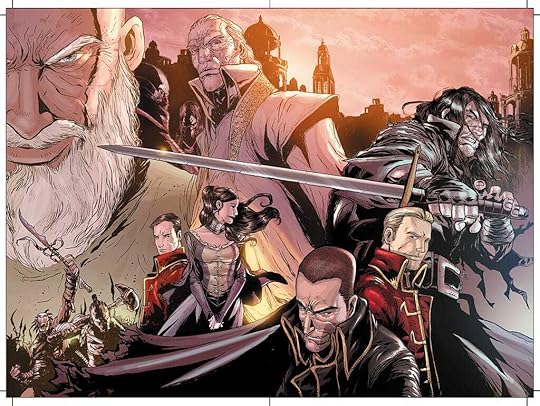
Not every series with multiple POV’s follows this rule. Joe Abercrombie’s First Law series is a great example of characters who all start in different places and come together.
John Gwynne’s Faithful and the Fallen similarly has characters starting in three separate locations, coming together for the climax (at least in the first book). However, both of the series follow a rule: all of the POV characters are involved in the main conflict.
The Greenbone Saga is another great example of multiple POVs where each is the member of an influential family (except for Bero, whose actions affect that influential family… Bero is great, by the way). All three of the series stick to a rule: as the reader, you can see quickly how these different characters fit into the great scheme of the story.
Writing advice time (TL;DR)So how do we distill this into actual writing advice?
When I started out writing a multiple-POV story I had a lot of misconceptions and made-up restrictions. After reading a ton of series over the past few years, here are the things I’ve realized:
Main characters don’t have to have an equal share of chapters. One character can dominate the count if need be or one really important character can have just one or two chaptersNot every main character needs to be introduced early in the storyWhen a new character is introduced later in a story, the reader should know how they fit inPrologues are a free-for-all and you probably don’t need oneA good strategy could be “don’t give a character a POV chapter until the reader has met them”Obviously, there is a lot more to writing multiple characters than all that (i.e. making sure they have distinct voices, the timeline makes sense, etc) but these were technical approaches that I never saw people discussing.
Hopefully, you found this helpful. Leave a comment if you did!
[image error]