Then all men died for me.
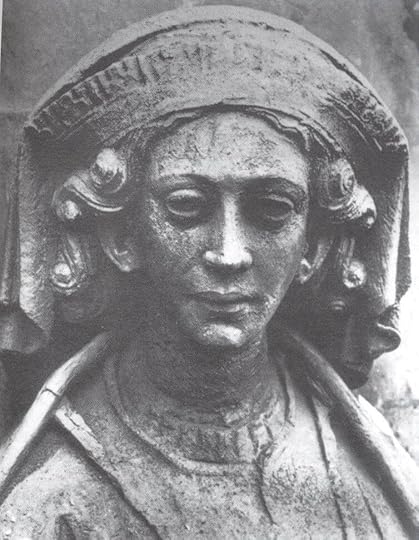 Margaret of France, Queen of England and second wife of Edward, died on 14 February 1318. I missed the anniversary of her death because I frankly couldn't be bothered: the domestic & family life of ancient royals tends to bore me silly, and I much prefer military, diplomatic and spy stuff. Boy's toys, I guess.
It doesn't help that Margaret herself is, at first glance, not a very inspiring figure. In his Yale biography of the king, Michael Prestwich remarks that 'she left only a slight imprint on history'. Her most remarkable feat in life was to have a successful marriage with a much older man: Edward was 60 at the time of their wedding in 1299, Margaret just 18.
Margaret is possibly underrated. Recent studies have argued that she wielded considerable influence: during her eight-year marriage to the king, she interceded between her husband and his subjects on sixty-eight occasions. The pardons issued declare that the transgressors were:
“Pardoned solely on the intercession of our dearest consort, queen Margaret of England".
Margaret was also politically aware, and appreciated the pervasive influence of Walter Langton, Bishop of Coventry, whom Edward relied on entirely in the last few years of the reign. In a letter to a clergyman, Richard of Bury, Margaret described Langton as 'the king's right eye in all matters'. Much of her correspondence is untranslated, and may reveal a few more layers to this enigmatic queen.
Another intriguing reference to her is found in Sir Thomas Gray's Scalacronica. Gray describes a curious episode in which Edward deceived his wife by leaving a forged letter on the marriage bed, which stated that her brother, Philip of France, was about to be captured at the siege of Lille in Flanders. Margaret then betrayed her husband by sending the letter to Philip, which frightened him into lifting the siege of Lille and retreating. The story may sound implausible, but Philip did indeed call off an expedition to Flanders in 1302, for no obvious reason.
After Edward's death in 1307, Margaret declared that all men were now dead for her, and withdrew from public life. She commissioned a Latin eulogy for her late husband, written by John of London, which made Edward sound like some kind of superman, still leaping aboard horses and charging about the place in his latter years. In reality he was crippled by illness and had to be carried about in a litter; this was not how Margaret wanted Edward to be remembered, so she spun a false image of him. That's love, folks, or something like it.


No comments have been added yet.