Anything that mooed or whinnied
 In spring 1297 Count Henri de Bar and his lieutenant, the Sire de Blamont, invaded the county of Champagne in north-east France. This was the first action undertaken by Edward I's expensively assembled allies against Philip the Fair of France. For his service, Henri received an initial payment of 10,000 marks on 1 June and an additional £4000 in 1299, among other sweeteners.
The county of Champagne was held by Philip's consort Joan, queen of Navarre. Henri's raid may have been intended to divert the French from invading Flanders, but the count also had personal motives. For several years he had been at feud with the abbey of Beaulieu, just over the border from his province of Bar-le-Duc (later the Duchy of Bar) on the frontier of the Holy Roman Empire.
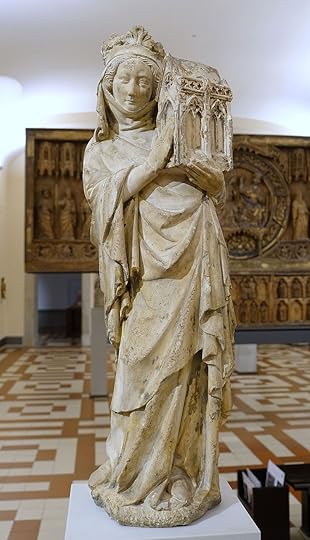
Bar split his forces, taking one part to raid the abbey and dispatching the other, led by Blamont, to attack the French. His forces plundered Beaulieu, burnt the abbey, treasury and archives, as well as the adjacent village: fragmentary surviving accounts record the burning of dozens of 'hearths' or homesteads. He also carried off the bones of a local saint, to be re-interred inside one of his own churches.
Meanwhile Blamont ravaged Champagne, torching villages and storming at least two fortified towns and castles, at Andelot and Wassy. When Philip was alerted to the invasion, he sent his seneschal, Gercher de Cressy, to counter-attack and invade Bar, forcing Henri and Blamont to turn back to defend their own lands. The French destroyed a number of vills and small fortresses along the frontier of the Barrois, and then withdrew to Champagne.
The conflict on the franco-imperial borderlands caused a great stir. A contemporary French soldier-poet, Guillaume Guart, described the French counter-raid on the Barrois in his verse chronicle:
“He turned to attacking it, burning villages and seizing livestock – anything that mooed or whinnied – and despoiling trees and vines of timber, of leaves and of bark, so that by sheer necessity the count, scarcely delaying, was obliged to come there to defend his land...”
When Edward I heard of his son-in-law's action, he quickly dispatched a letter to Adolf of Nassau, King of Germany, urging him to bring up German troops in support of the attack on Champagne. Adolf responded by trekking up and down the western imperial borderlands, using English money to recruit military allies among his vassals. Though willing, he was unable to take affective action against the French until September.
Even so, plenty of damage had been done. Decades later, Philip's tax officers were still trying to work out ways of paying for the devastation. In the end they imposed a special subsidy on the people of Champagne, calculated at a total assessment of almost 100,000 livres tournoise (roughly – if my calculations are correct - £30-£40,000).
The raid was also useful for propaganda purposes. In the summer of 1297, shortly before Edward sailed for Flanders, copies of a newsletter were sent all over England, explaining the king's reasons for war against the French. A version of the newsletter survives, pasted into the Chronicle of Hagnaby. Apart from listing Edward's allies in Flanders and the Low Countries, it also highlights the Count of Bar's invasion of Champagne earlier in the year. This was perhaps meant to show that the king's massive expenditure was not in vain, and the strategy of attacking the French on all fronts had started to bear fruit.
k here to edit.


No comments have been added yet.