A Complete Guide to Mastering Plot Pacing
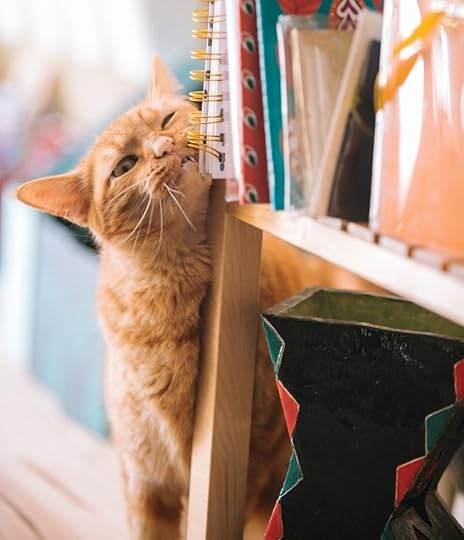
 Photo by Karsten Würth (@karsten.wuerth) on Unsplash Edited by Estell's Place
You set your finished manuscript aside to breathe. Several weeks later, after a few celebratory glasses of wine, you dust off the pages and read it again—for the first time. And it flows with the consistency of sour milk. It’s terrible. But why?
You’ve mastered the plot points and the rise and fall of conflict. The dialogue is sharp and the characters well-developed. So what is the freaking problem?
If I was a betting woman, and I am occasionally with a good game of Blackjack, I’d say your problem lies in the pacing. Scenes must happen at, or near, specific times in the novel for it to flow smoothly.
[Covering my head as the pansters throw tomatoes]
I know… I know… I know! Stephen King is a panster, Nora Roberts, the Queen of Romance, is a panster. But they are author prodigies, people born with an innate sense of story. Just because Stevie Wonder can tickle the ivories without ever reading a sheet of music doesn’t mean I—or you—can do the same. And I would argue that even prodigies don’t always get it right on the initial try.
When I finished my manuscript the first time, I read it to my family. They smiled and said, “It’s okay.”
“Okay? Okay doesn’t sell books! How can I fix it?” I asked.
They didn’t have an answer and offered no guidance. After several days of moping around the house, my husband patted me on the back and assured me I had a great book concept. Some parts made him laugh and were enjoyable. Unfortunately, the execution of that concept left him underwhelmed, and the book as a whole didn’t click.
So with that knowledge, I buried myself in resource books, trying to find a tool I could use to dig my way out of the crap I’d created.
I came across tons of helpful advice, but not one book or resource was the standalone key to fixing my problem. Frustrated, I decided I would take bits and pieces of advice from each of them and compiled them together. And it worked!
In fact, the copyeditor who proofread my completed novel said the pacing was, “very tight and read like a seasoned pro.” Thanks to the methods I’ll share with you here.
**If your manuscript is complete and you need help with polishing it, no worries. I’ll discuss that, too!**
GATHER YOUR RESOURCES
THE REQUIRED RESOURCES
Structuring Your Story K.M. WeilandSave the Cat Writes a Novel Jessica BrodyThe Emotional Wound Thesaurus Angela Ackerman and Becca PuglisiCreating Character Arcs K.M. WeilandHow to Write Dynamite Scenes Using the Snowflake Method Randy IngermanMake a Scene Jordan RosenfeldRomancing the Beat Gwen Hayes [for Romance Writers]Edit Your Own Romance Novel Ebony McKenna [Romance Writers]START WITH STRUCTURING YOUR NOVEL
If you have been writing stories for a while, or are familiar with the main story structure of a novel, you can skip this part. But for anyone who is just starting out, I highly recommend reading this book. In it, you will discover the essential plot points your manuscript should have and where they should be placed. You’ll also gain a basic understanding of story progression, acts, and timing.
Once you have grasped those concepts, try to outline what events or scenes might take place at each of those plot points. Remember, nothing is carved in stone. Things can and should change as you develop your story. But for now, at least give yourself a sense of direction.
Okay, I did what you said, but what about the other 200+ pages of the story? What goes there?
TIME TO OPEN SAVE THE CAT WRITES A NOVEL
Read this amazing book, and afterwards, download the beat sheet. You will need it. Now, take the vague outline you have from Structuring Your Novel and transfer those plot points onto your Save the Cat beat sheet:
Inciting Incident> Catalyst
First Plot Point> Debate
First Pinch Point> Fun & Games
Midpoint> Midpoint
Second Pinch Point> Bad Guys Close In
Second Plot Point> Black Moment
Climax> Act III/Finale
Resolution> Final Image
Once you have those filled in, consider what you might put in the other spaces, what other scenes would fit the flow of your book. Remember, some of these plot points will be composed of multiple scenes ( i.e. FUN & GAMES). With that in mind, brainstorm ideas that would help your character move from one plot point to the next.
Please note, you are vaguely outlining your plot. You are not, and I repeat, you are not limiting the creativity of your overall story. When artists paint pictures, they outline the subject. They then use the sketch as a guide to keep things in proportion. It is not the finished masterpiece no more than your plot outline is a finished novel.
And don’t worry my fellow romance authors, I’ll discuss those smooches and happy ever afters before we’re done.
TURN TO THE EMOTIONAL WOUND THESAURUS
Sure, it’s fun dragging our characters up mountains, pushing them off, and watching them parachute to safety. But it doesn’t mean anything if they never had a reason for climbing the mountain the first place. And if you threw them off the mountain—you better have a good reason for doing such a cruel thing.
In other words, action without motive doesn’t make sense.
So how do we find motive? With this wonderful book, of course. It’s true that our behavior choices are often guided by our experiences. Your character is no different.
This book helps you determine your character’s wound, their fatal flaw, the lie they believe, the thing that caused them to become the person they are in your novel. And then, it teaches you how to pull them out of their slump—give them the thing they need.
Good books feature well-developed characters that respond to the events you throw at them in an appropriate manner, at the appropriate time. The key to perfect pacing is more than perfectly timed events.
CREATING CHARACTER ARCS

You’ve explored the inner soul of your character and now grasp a full understanding of why they are who they are. Now what? Well, it is time to take them on a journey, help them get to the thing they need the most, or take them away from it. How you do that depends on your character’s arc: positive, flat, or negative.
Before you panic, just stop! You don’t have to learn a new language, or take a quiz. You just need to choose how you want your character to grow.
Are you going to throw things at them that make them a better person? Then your story is following a positive arc. Is your character a great person with a stable moral compass who doesn’t need to change but is confronted with a dragon battle? Then you are writing a flat character arc. Will your character end in a worse place than she began? If you were so cruel—then your book is on a steady negative arc course.
The main driving point, or takeaway, is, it is important to create a consistent and well-paced inner character journey.
“Plot and character are integral to one another. Remove either one from the equation (or even just try to approach them as if they were independent of one another), and you risk creating a story that may have awesome parts, but which will not be an awesome whole.”
Weiland, K.M.. Creating Character Arcs: The Masterful Author’s Guide to Uniting Story Structure, Plot, and Character Development (Helping Writers Become Authors Book 7) (p. 16). PenForASword Publishing. Kindle Edition.
Remember when my husband said my story had good parts, but overall didn’t flow? Well, that was one of my problems. My character’s arc didn’t flow with my plot. So keep your character’s emotional growth in line with the events in your plot if you want to master pacing.
Enter the Character Arc Beat sheet. It’s necessary, so don’t skip it!
So now you have the plot points, how do you make them flow together?
LET’S BUILD OUR STORY
Time to read How to Write Dynamite Scenes Using the Snowflake Method and Make a Scene. Because in order to turn your plot points, character arcs, and conflict into a bigger story, you have to master scenes. Scenes are a sequence of continuous action that drive the story forward from point A to point B. They are, in essence, mini-stories within a bigger story.
Imagine them as you would Legos, stack each block in just the right place and those colorful cubes become a charming castle. Get it wrong and who knows what you’ll end up with—a shack? And if you don’t do the scenes justice, don’t understand the necessary components of each, you’ll either bore your readers to death or drive them into a panic attack.
So, take your time and learn how to craft a scene properly. The better the understanding, the better the flow, the better your story will flow—all leading to perfect pacing.
But what about me, I write Romance?
FOR THOSE WHO WRITE ROMANCE
 Photo by Fabrizio Verrecchia on Unsplash
Anyone who writes romance will tell you, even voice frustration, that the structure elements don’t always include the necessary romance elements. You’ve heard of the meet-cute, right? Where would that fit?
Now, I’ve read quite a few books for writing romance and the ones I like the best so far are: Romancing the Beat Gwen Hayes and Edit Your Own Romance Novel Ebony McKenna. What I love about Romancing the Beat is that it reminds me when to add important romantic elements, i.e. the meet-cute, and gives me an overview of what should happen in each of those elements.
And because I have a crazy beat sheet obsession, I take it a step father and combine the beats of Romancing the Beat with Save the Cat into my own master beat sheet, adding the elements where they fit best.
ACT I
Intro H1/H2 & Meet-Cute> Setup
No Way Beat 1> Catalyst
Adhesion Plot Thrust> Debate
ACT II
No Way Beat 2, Inkling> B-Story
Deepening Desire & Maybe This Could Work> Fun & Games
Midpoint of Love Plot Thrust> Midpoint
Inkling Doubt> Bad Guys Close In
Deepening Doubt, Retreat, Shields Up> All is Lost
Break up & Dark Night> Break up
ACT III
Wake up & Grand Gesture> Finale
What Whole Hearted Looks Like & Epilogue> Final Image
Ebony McKenna’s book, Edit Your Own Romance, saved my first novel. After reading all the other books, I still couldn’t “see” where my problem lied. In her book, she suggests using index cards to organize the scene and acts, making sure the number of scenes are balanced on each half of the book.
And finally, I could see my problem. The first half of my book was loaded with plenty of scenes and the second half—not so much. From there, I was able to give my book a makeover, liposuction the front side, augment the back side, and poof! I had a masterpiece [or so I hope].
And so can you!
Have any pacing advice you’d like to offer? Any stories of pacing issues that you solved in your writing? Feel free to share!

Share on facebook
Share on twitter