Prejudice Bones in My Body
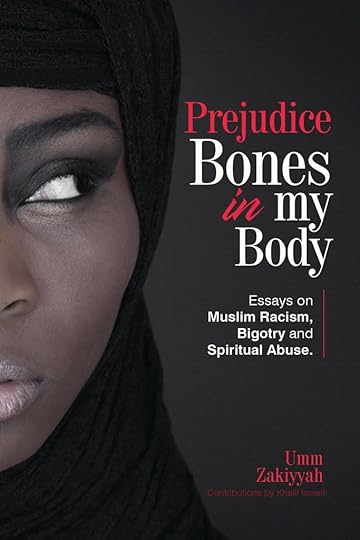
The following is an excerpt from the book Prejudice Bones in My Body: Essays on Muslim Racism, Bigotry and Spiritual Abuse by Umm Zakiyyah:
 CLICK HERE. READ NOW
“Good,” she said so matter-of-factly that I was momentarily confused. Blinking, I held the phone’s receiver as I processed this simple response that held little connection to what I had just said.
It
was months after the 9-11 attacks, and I had just shared with my friend my
distress over Muslims being unjustly detained and imprisoned on charges of
“terrorism,” an injustice that affected mostly immigrant Muslims.
“Now
they’ll know how it feels.”
I
felt weak as the cruelty of her words took meaning. Like myself, my
friend had repeatedly encountered the sober reality that dulled any lingering
dreams of the “universality of Islam.” Muslims worldwide were “brothers and
sisters” in Islam, we had been taught, joined by a bond that transcended color,
race, and ethnicity. And we’d believed it — until we met those “brothers
and sisters.”
But
my friend’s hurt was deeper than mine. While I had grown up Muslim
because my parents had accepted Islam the year I was born, my friend had
accepted Islam after the tumultuous confusion of disbelief. Part of her
inspiration for embracing the religion was its universality — which was an
antidote to the colorism and racism that had plagued her life since
childhood. She had never imagined that while the “universality of Islam”
was an authentic concept, the universality of Islamic brotherhood was not.
In
that brief moment — as I held the phone, shocked at what she’d just said — I felt
a host of emotions. Disgust, anger, and helplessness…
For
years, my friend had been a mentor and confidante to me. I had
admired her self-confidence, her remarkable intelligence, and her persevering
strength. She would offer me a shoulder when I was despondent, and a
patient, attentive ear when I was distressed. And always it was her
optimism, even in the face of adversity, that I cherished most. But we
had lost friends along the way, she and I. Some to disbelief, some
to betrayal, and some to death…
Good.
Now they’ll know how it feels.
At
the reminder of her words, I understood the source of my pain.
Now,
I had lost her too.
If I Were Rich…
“If I were rich,” I
proclaimed earnestly one day while chatting with my sister, “I would give soooo
much money to the poor.”
My
sister nodded heartily in agreement. As we were in our early teens at the
time, we were having a difficult time understanding all the “rich snobbery” in
the world. There was plenty of wealth, but somehow there were still
starving children, homeless people, and so many who did not have even the small
conveniences of life.
And
it hurt most that Muslims played a part in this injustice. In our very
own hometown, my sister and I regularly witnessed the way affluent Muslims
treated others — and how we ourselves were treated time after time.
People behaved as if our not being wealthy was something that affected not only
our material lifestyle but our personal character or likeability as well.
And it didn’t escape us that this mistreatment was most pronounced by wealthy
Muslims who did not share our brown skin and “Black American” status.
“People
don’t change overnight,” someone interjected in response. My sister and I
stopped talking and looked up to find our father walking toward us. We
hadn’t realized he was in earshot.
“If
you don’t share what you have right now,” he said, “you won’t share it when you
have more.” He explained, “If you’re not willing to let your sister wear your
new shirt” — the example touched on an argument my sister and I had just had
earlier that day (I was upset with her for trying to wear my new clothes before
I had a chance to) — “then don’t think anything’s going to change when you have
a lot of money.” He paused. “The only difference will be that
you’ll have a lot more that you’re not willing to share.”
It
has been more than twenty years since my father spoke these words, and still,
they stay with me. His simple insight incited in me a self-reflection
that I had never engaged in. Before then, I hadn’t thought of myself as
greedy or selfish. I hadn’t imagined that those whose stinginess I
resented so thoroughly were merely a mirror image of myself at the time.
Yes,
it’s true,
I realized that day in silent self-reproach. I was not generous with my
new clothes. In fact, I was not particularly generous at all. I’d
argue with my sister about “my side” of the room. I’d taunt my little
brothers and sisters “just for fun.” I’d even neatly tuck away some
prized treat for the sole purpose of making sure I’d have it later —
when no one else did. If I finished my chores early — oh, you better
believe it! — I’d jump into my cozy bed and enjoy the fact that my
sister couldn’t do the same!
If
I were rich, I would give soooo much money to the poor.
My
heartfelt proclamation returned to me as I settled under my covers for the
night, and for some reason they didn’t seem so heartfelt anymore…
“It’s
not their fault that they’re rich,” someone had said once. “Just like you
can’t blame someone for being poor, you can’t blame someone for being rich.”
And
these words gave me pause. So often I’d reflected pensively on the
injustices inflicted on those who were underprivileged or poor (and, certainly,
the injustices toward them were plenty), but I didn’t think of the injustices I
may have inflicted upon those of privilege and wealth — even if my injustice
would never reach them in any tangible fashion.
But
the truth is, I realized sadly one day, we are all guilty of injustice.
Whether consciously or unconsciously, we judge each other harshly, paint
sweeping generalizations of “the other”, and keep our distance from those we
view as “too different.” Yet, amazingly, we become frustrated and even
perplexed by all the injustice in the world…
Self-Proclaimed Prejudice-Free
“I don’t have a
prejudiced bone in my body,” I often hear my fellow Muslims say—with the same
heartfelt earnestness that I’d proclaimed my generosity so many years ago.
Now,
when I hear these words (that I’m sure I myself have uttered on many an
occasion), my heart falls in sadness, and I grow pensive. Then we have
no hope at all, I reflect.
I
just can’t imagine how the Muslim ummah, let alone the world at large, will
ever work to end classism and racism — and injustice itself — if we don’t
openly and honestly acknowledge the magnitude of the job before us.
Yes,
so many of us eagerly proclaim, “Our job is never done.” But we somehow
imagine this ever-unfinished job is “out there” somewhere — and not inside our
own hearts and souls. Yet, in truth, if there is any fight against
injustice that is never done, it doesn’t have roots in an elusive “corrupt
world.” Corruption does not sprout from the dirt of the earth; it sprouts
from the dirt of our own souls.
And
like so many evils around us (and within us), those of bigotry are continued
most destructively by those who imagine they have within them no bigotry at
all.
Allāh
says what has been translated to mean,
“And when it is said to them, ‘Make not mischief
on the earth,’ they say, ‘We are only peacemakers.’ Verily! They are the ones
who make mischief, but they perceive not.”
—Al-Baqarah (2:12)
How
then can a believer imagine himself free of such evil when Allāh himself has
described some evil as beyond the guilty one’s perception? Is it that
Allāh himself has declared us pure from corruption?
Or
do we ascribe such purity to ourselves?
“So ascribe not purity to yourselves. He
[Allāh] knows best who fears Allāh and keeps his duty to Him.”
—Al-Najm (53:32)
And
the only way we can truly keep our duty to Allāh is by constantly engaging in
self-reflection, never feeling safe from any sin. For surely, our
righteous predecessors were known for their weeping in self-reproach and ever
guarding themselves against evil — and no evil did they proclaim safety from.
Even
Prophet Ibrahim (Abraham) prayed earnestly to Allāh to protect him and his
children from the grave sin of shirk — joining partners with Allāh:
“…And keep me and my sons away from worshipping
idols!”
—Ibrahim (14:35)
Who
then are we in comparison to Allāh’s Khalil — His devoted friend?
Who then are we to imagine freedom from a sin more easily committed than the shirk
about which Ibrahim prayed?
It
is true that I detest classism, racism, colorism, and any other form of
bigotry; for I myself have suffered many a time from these injustices, so I
cannot imagine condoning them within myself. The Prophet, sallallaahu’alayhi
wa sallam, himself advised us to stay away from the evils of racism and
nationalism when he said, “Leave it, it is rotten” (Bukhāri and Muslim).
But
my despising the putridity of these sins does not guarantee my safety from them
— just as my abhorring entering the Hellfire does not grant me salvation from
its torment.
So, yes, I detest the idea of having even a single prejudiced bone in my body, but that does not mean I am free from guilt. None of us are — even those who are frequent victims of prejudice..
 CLICK HERE
Good.
Now they’ll know how it feels.
Even
now I shudder at my friend’s words. Indeed, it is terrifying to witness a
victim of prejudice finding comfort in the very injustice that caused her pain.
But
despite my shock and disappointment at these cruel words, I can’t help
wondering why they truly affected me so…
Today,
I know it is because somehow — amidst the prejudiced bones in my own body — I
can understand what she meant. No, I certainly do not share her
sentiments. But I do share her heart — her human heart.
And
a human heart is never free from injustice.
Yet our greatest calamity is in feeling that ours is.
READ THE BOOK:
CLICK HERE. READ NOW
Umm
Zakiyyah is the internationally acclaimed author of twenty books, including the
If I Should Speak
trilogy,
Muslim Girl
, and
His Other Wife
.
In 2019, she launched
UZ Soul Gear
, a passion project fueled by her love of both art
and inspirational reflections.
UZSoulGear.com
offers apparel, wall
décor, and more, aimed at supporting and inspiring the soul-centered lifestyle.
Want to find or improve your writing voice?
Join
UZ University
to learn how, so you too can share inspirational stories with
the world:
UZuniversity.com
Subscribe
to
Umm Zakiyyah’s YouTube channel
, follow her on
Instagram
or
Twitter
, and join her
Facebook
page.
Copyright © 2016, 2019 by Al-Walaa Publications. All Rights Reserved.
Essay originally published via muslimmatters.org
The post Prejudice Bones in My Body appeared first on Umm Zakiyyah.