Do You Have a Toxic Relationship with Your Soul?
Some time ago, a friend of mine shared with me a humorous
post that was posted on the social media account of the famous artist, Cardi B.
I don’t remember the exact words, but it said something to this effect: I
asked God to remove all the toxic people from my life—and I almost died.
Though this post gave me a good laugh, it also made
me reflect on how when we speak of toxic relationships, we almost never focus
on the most crucial relationship in our lives: the one we have with our own
selves. Or more specifically, the relationship we have with our souls.
When I was in the throes of spiritual turmoil and
was fighting desperately to hold on to my emaan (sincere belief in
Islam), I did some painful soul searching. During this difficult period, I dug
deep and asked Allah to reveal to me (and then heal for me) the diseases of the
heart that were making feel like I couldn’t be Muslim anymore. In this period of raw self-honesty, I uncovered
a toxic relationship that I had with myself.
Though much of my emotional and spiritual suffering
was incited by the wrongs others had done to me, I had to come to terms with
the fact that, ultimately, if I was barely holding on to my faith as a result
of all of this, then the most serious problem lay in the wrongs I was doing to
my own soul.
This was a difficult reality to face because the emotional wounding incited by others was so raw, and so real; and I felt so angry with the people who had hurt me. However, I came to realize that others hurting me, and me hurting myself are not mutually exclusive. In other words, both could be happening simultaneously. In my case, both were.
 CLICK HERE
I also realized that my Creator and His last
Prophet and Messenger (peace be upon him) had already taught us that the
wronging of one’s own soul is a reality faced by humans in general, hence the
oft-repeated supplications we are taught to make that include a variation of
this invocation: O Allah! I have wronged my soul, so forgive me.
You
Can’t Blame Others
In the end, I had to come to terms with the fact that I needed to heal from two sources of deep wounding: (1) that which was incited by those around me, and (2) that which was incited by own life and choices. In this, I found myself reflecting on the ayah in the Qur’an which has been translated to mean:
“…And
We have made some of you as a fitnah (trial) for others. Will you have
patience? And your Lord is Ever All-Seer [of everything]” (Al-Furqaan, 25:20).
Reading this ayah really hit my heart because it clarified for me why I, as well as so many others, was suffering due to the wrongs of others. It was just one of the many trials that Allah decreed for all humans on earth. Thus, suffering some form of harm in this world was a given. Even the Prophet (sallallaahu’alayhi wa sallam) himself suffered harm and wrongdoing from others.
Therefore, when we’re facing the inevitable harm
and wrongdoing that was written for each of us during our brief time on earth, the
only question is, How will you handle it? Will you have sabr
(patience), or will you become so angry and frustrated that you end up harming
your own soul in the process?
Here, it’s important to keep in mind that when Allah speaks of sabr, it doesn’t mean sitting still and “patiently” accepting wrongdoing and abuse. In fact, the word sabr indicates the exact opposite. As the scholars of the Sunnah have explained on many an occasion, the Arabic term sabr has two meanings in the spiritual context: (1) consistently withholding oneself from doing anything that harms one’s life or soul, and (2) consistently doing those things that benefit one’s life or soul. Furthermore, this sabr is only actualized when this two-part consistency persists irrespective of what is going on outside of us or within us.
In other words, no matter what harm we are
suffering in the world, or what personal struggles we have going on inside of
us, true sabr (and by extension, true emaan) is manifested
through living a spiritual life that is daily preparing our soul to meet its
Creator in the best state.
What this means is that it is upon each of us to constantly self-reflect and do some honest soul-searching—daily—regarding where we are with respect to this purpose in life.
What
Now?
Ramadan is the time of year that so many of us dedicate to spiritual self-refection and correction. However, if we are not in the habit of working on our spiritual life before the Blessed Month is upon us, then it is very difficult to fully benefit (or even participate) in the month when it arrives.
I myself have experienced this firsthand. For many
years, especially during my spiritual crisis, participating in Ramadan merely
felt like I was just starving myself as I impatiently awaited sunset, when I
could eat whatever I wanted. But that’s not how Ramadan is supposed to be, and
that’s not how our spiritual life is supposed to be.
With Ramadan just a few months away, now is a good time to ask yourself these soul-searching questions: Are you ready? How are you preparing your heart and soul? How are true sabr, emaan and shukr (sincere gratefulness) reflected in your daily life?
For so many of us, Allah often blesses us to live to witness Ramadan. However, when the Blessed Month reaches us, we are unable to take full advantage of the month because our hearts are so weighed down by things that distract us from the Creator—things we do consistently that do not nourish our souls (and, in fact, often harm our souls).
So let’s prepare now. Let’s use these next moments, days, and weeks as an opportunity to self-reflect and clear our minds and hearts, bi’idhnillaah. Also, during these next few months leading up to Ramadan, let’s take whatever “baby steps” we need to better our relationship with our Creator.
Where
Do I Begin?
Two places I suggest starting are with your relationships with Salaah (formal prayer) and with Qur’an.
With regards to Salaah, Allah says what has
been translated to mean,
“Verily,
the prayer (Salaah) keeps one from the great sins and evil deeds…” (Al-Ankaboot, 29:45)
Allah also says,
“But
there came after them a posterity who neglected prayer and pursued desires, so
they are going to face destruction. Except those who repent, believe, and do
righteousness; for those will enter Paradise and will not be wronged at all” (Maryam, 19:59-60).
Prophet Muhammad (sallallaahu’alayhi wa sallam)
said, “The first matter that the slave will be brought to account for on the
Day of Judgment is the Prayer. If it is sound, then the rest of his deeds will
be sound. And if it is corrupt, then the rest of his deeds will be corrupt”
(Al-Tabarani, Sahih al-Jami).
He also said, “The worst type of thief is the
one who steals from his prayer.” The Companions asked, “O Messenger of Allah,
how does one steal from his prayers?” The Prophet (sallallaahu’alayhi wa
sallam) responded, “He does not complete his rukoo’ (bowing), nor
his sujood (prostration)” (Ahmed, al-Tabarani, Ibn al–Khuzaymah, and
al-Hakim).
With regards to the Qur’an, Prophet Muhammad (sallallaahu’alayhi wa sallam) said, “You will not come back to Allah with anything better than that which came from Him (i.e. the Qur’an).” (Mastadrik al-Hakim no. 2077, Sahih).
In another hadith, he said, “Allah [swt] said, ‘I have sent you [O Prophet] in order to put you to test and put those to test through you. And I sent the Book to you, which cannot be washed away by water, so that you may recite it while in the state of wakefulness and sleep” (Hadith Qudsi, Muslim no. 2865, Sahih).
In speaking of the superiority of Al-Baqarah
(the second chapter of Qur’an) in particular, another prophetic hadith advises
us, “Do not turn your houses into graves. Verily, Satan flees from the house
in which is recited Surat Al-Baqarah” (Sahih Muslim 780).
How Do
I Improve My Relationship with Salaah?
With Salaah, I suggest doing something every
day, no matter how small, to give this five-times-a-day appointment with your
Creator more sincerity and commitment. This step should be based on improving
where you are now in a way that does not exhaust you or overwhelm you, with the
goal of ultimate consistency in this improvement.
It could be making sure to pray on time if you tend
to pray late. It could be making sure to concentrate more on the words you are
saying if your mind tends to wander. It could be spending just a few more
seconds in rukoo’ or sujood if you often feel rushed or spiritually
disconnected during prayer. Also, while in sujood, be sure to make a
brief du’aa of your choosing in which you ask Allah’s help in the
spiritual improvements you’re trying to make. Prophet Muhammad (sallallaahu’alayhi
wa sallam) informed us, “The nearest a slave can be to his Lord (Allāh)
is while they are prostrating, so increase in supplication” (Ṣaḥīḥ Muslim, Musnad Aḥmad).
How Do
I Improve My Relationship with Qur’an?
With Qur’an, I suggest making the intention and
commitment to sincerely interact with Qur’an every day, even if only for a few
minutes or even if by reading only a few lines. This is particularly important
for those who are not in the habit of reading the Qur’an on a regular basis. In
making this simple commitment, it is important not to allow Shaytaan or
your nafs to convince you that spending such a small amount of time with
Qur’an is pointless.
Allah says what has been translated to mean,
“…Never
will I allow to be lost the work of any of you, male or female…” (Ali ‘Imraan, 3:195).
Furthermore, the Prophet (sallallaahu’alayhi wa
sallam) said, “Take up good deeds only as much as you are able, for the
best deeds are those done regularly even if they are few” (Ibn Mājah 4240,
graded Sahih by Al-Albaani).
Thus, what is more important than how much Qur’an
you are reading every day is that you are reading Qur’an every day.
Furthermore, while reading Qur’an, take time to think on the meaning of Allah’s
Words, as well as the personal implication and lesson of each ayah in
your life.
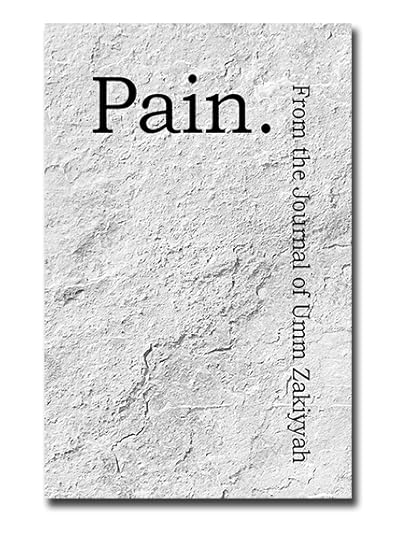
I reflect on this in my book, Pain. From the Journal of Umm Zakiyyah: You have not learned to read Qur’an until you regard every warning, admonition, and reminder—and every call to repentance and promise of Paradise—as an exhortation to you, and you specifically.
 READ NOW. CLICK HERE
How
Do I Make the Qur’an Personally Meaningful?
In a word, you make the Qur’an personally meaningful to you by implementing this one interaction in every reading (whether in your daily reading or in the upcoming month of Ramadan): du’aa.
More specifically, here are some ways to sincerely,
from your heart, interact with each ayah you read:
If you come across an ayah discussing those
with whom Allah is pleased, supplicate to Him and ask to be amongst them. If
you come across an ayah discussing right guidance, ask to be amongst the
rightly guided. If you come across an ayah discussing those who are
disobedient or oppressive, ask for protection from being amongst them (as the
oppressor or the oppressed). If you come across an ayah discussing
Allah’s forgiveness and mercy, ask Allah for forgiveness and mercy for
yourself. If you come across an ayah discussing Paradise, ask to be
admitted amongst the companions of Paradise. If you come across an ayah discussing
Hellfire, ask for Allah’s protection from it.
If you come across an ayah that you do not
understand or that incites confusion, ask Allah to increase you in beneficial
knowledge and understanding.
What
If I Don’t Know Arabic or Tajweed?
If you do not understand Arabic or do not know how
to recite with Tajweed (the rules of reciting Qur’an), then ask Allah to
grant you this knowledge and ability. Also, enroll in an Arabic and Qur’an
class, either online or at a nearby Islamic center. However, do not wait to
interact with Qur’an while you do this.
As you seek to increase your knowledge of Arabic and Qur’an, continue to read the translation of meaning in your native language. Also, take time to listen to Qur’anic recitation while reading along in your native language, even if you’re not fully sure if your reading is keeping up with the reciter.
 READ NOW. CLICK HERE
My
Sincere Prayer
May Allah guide us and forgive us and allow us to
make the necessary changes in our spiritual and personal lives such that we
draw closer to Him in this world and in the Hereafter. This, so that we are
prepared to meet our Creator at any time, no matter what month it is.
And should our Lord, Ar-Rahmaan, bless us to live to witness this upcoming Ramadan, may we be amongst those who benefit from the Month of Mercy and are forgiven our sins and written down amongst those whom He loves.
 CLICK HERE
Umm
Zakiyyah is the internationally acclaimed author of twenty books, including the
If I Should Speak
trilogy,
Muslim Girl
, and
His Other Wife
.
In 2019, she launched
UZ Soul Gear
, a passion project fueled by her love of both art
and inspirational reflections.
UZSoulGear.com
offers shirts,
apparel, wall décor, and more, aimed at supporting and inspiring the
soul-centered life.
Want to find or improve your writing voice?
Join
UZ University
to learn how, so you too can share inspirational stories with
the world:
UZuniversity.com
Subscribe
to
Umm Zakiyyah’s YouTube channel
, follow her on
Instagram
or
Twitter
, and join her
Facebook
page.
Copyright ©
2019 by Al-Walaa Publications. All
Rights Reserved.
The post Do You Have a Toxic Relationship with Your Soul? appeared first on Umm Zakiyyah.