Is your character a mirror image?
...by Karna Small Bodman
This week some of us Rogue writers are discussing our "relationship" with the characters in our novels...is the heroine a mirror image of ourselves? Or could she be a composite of our wish list perhaps? And what about the hero, if we create one? Is he based on someone we actually know? Or does he turn out to be someone we wish we knew?
As I ponder these questions, my thoughts turn to other famous writers and what I've learned about the way they created their own characters. Take Agatha Christie, one of the most famous authors of detective stories in the world. Here was a young woman home-schooled by her father. I read that for some reason (that I don't quite understand), her mother didn't want Agatha to learn to read until she was 8 years old. And so, the youngster taught herself to read at the age of 5 and went on to devour all sorts of stories, eventually writing her own at age 18.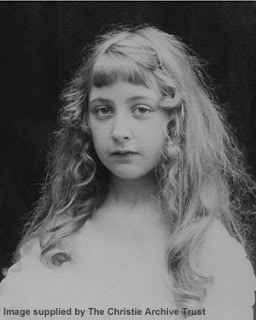 Agatha Christie as a child Later she and her family lived in several countries including Egypt and France. It was there during WWI that she wrote her first detective novel -- on a bet with her sister who said she couldn't write one (little did she know!). It's said that Agatha "found" her characters on a tram in Torquay. It was there that she encountered Belgian refugees and came up with the idea of creating a Belgian detective forced out of his country. And so, Hercule Poirot was "born."
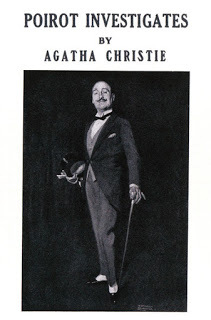
As for her "expertise" in the various methods that her villains used to "dispose" of their victims, Agatha Christie certainly followed that old maxim, "Write what you know." It turns out she learned all about poisons and their varying effects by working in a hospital dispensary. In fact, her use of that knowledge gained a review of her novels in a rather famous Pharmaceutical Journal of the day.
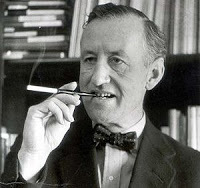 Ian FlemingWhat about male authors creating characters? I've often had the sense that many men, especially those writing thrillers, base their characters on a "wish list -- I wish I were that guy." Let's talk about Ian Fleming. He served as a Naval Intelligence Officer during WWII and had planned a "special op" known as Operation Goldeneye (sound familiar?) In fact, this experience became the basis of his first novel, Casino Royale in 1951. He also came from a wealthy family and was often described as handsome, erudite, debonair -- all traits found in the most attractive character of James Bond.
So he certainly wrote "what he knew." However, I've often wondered if Officer Fleming ever was threatened by a mad man, chased by a steel-toothed thug or carried out a singular operation where he alone thwarted a sinister plot....all the while attracting gorgeous "Bond girls" in the process. (Well, I'm sure there were plenty of few pretty ladies in his background - but were they like the ones with James?)
Now to answer the initial question about whether my own characters are a mirror image - gracious no! I love to create strong women who are MUCH smarter and a great deal more clever and risk-taking that I could ever be. In fact, in my very first thriller, Checkmate, I created a (continuing)character, Dr. Cameron Talbot, who works for a defense contractor and invents a breakthrough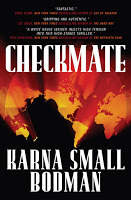 technology for a defense against cruise missiles. My husband and I came up with what I thought was a rather crazy scheme based on the use of frequencies. Cameron figures out the frequency the bad guys are using to "guide" a missile to an exact target. She utilizes the same frequency to track, invade and take over the missile. Then through reverse engineering, she is able to turn it around on the heads of the bad guys. So, in the story I explain what she did, but not precisely how she did it since I actually didn't have a clue how it could really work. And, of course, I made it a Top Secret project. Several years later I happened to be at a luncheon in Washington, D.C. where I sat next to a man working in the intelligence field. He asked about my books and I told him about how my character, Cameron Talbot invented this new technology. When I described this "pipe dream" I had written, he stared at me, leaned over and whispered, "We can do that now." I was stunned. But, of course, I still don't know how my "much smarter than I am" character actually did it.
As for the hero in that story, I created a man who served on the staff of the National Security Council in The White House. I did base that character on some of my former colleagues there on the NSC (where I served for several years). So I suppose I would have to say that particular thriller turned out to be a combination of "Write what you know" and "Write what you wish you knew or wished what you could be."
Last week when we had the great writer Lee Child as our guest blogger, he was asked if he writes what he knows -- and he replied, "No, I write what I feel." So then I wondered if he "feels" the threats that his terrific character Jack Reacher faces. I figure he must -- because he comes up with such great plots, challenges and solutions in his own thrillers.
What about you? Do you think your favorite characters are based on their author's own lives, the author's wish list, or something entirely different? Share your thoughts with us in a comment below. And thanks for visiting us here on Rogue Women Writers.
...submitted by Karna Small Bodman
This week some of us Rogue writers are discussing our "relationship" with the characters in our novels...is the heroine a mirror image of ourselves? Or could she be a composite of our wish list perhaps? And what about the hero, if we create one? Is he based on someone we actually know? Or does he turn out to be someone we wish we knew?
As I ponder these questions, my thoughts turn to other famous writers and what I've learned about the way they created their own characters. Take Agatha Christie, one of the most famous authors of detective stories in the world. Here was a young woman home-schooled by her father. I read that for some reason (that I don't quite understand), her mother didn't want Agatha to learn to read until she was 8 years old. And so, the youngster taught herself to read at the age of 5 and went on to devour all sorts of stories, eventually writing her own at age 18.
 Agatha Christie as a child Later she and her family lived in several countries including Egypt and France. It was there during WWI that she wrote her first detective novel -- on a bet with her sister who said she couldn't write one (little did she know!). It's said that Agatha "found" her characters on a tram in Torquay. It was there that she encountered Belgian refugees and came up with the idea of creating a Belgian detective forced out of his country. And so, Hercule Poirot was "born."
As for her "expertise" in the various methods that her villains used to "dispose" of their victims, Agatha Christie certainly followed that old maxim, "Write what you know." It turns out she learned all about poisons and their varying effects by working in a hospital dispensary. In fact, her use of that knowledge gained a review of her novels in a rather famous Pharmaceutical Journal of the day.
 Ian FlemingWhat about male authors creating characters? I've often had the sense that many men, especially those writing thrillers, base their characters on a "wish list -- I wish I were that guy." Let's talk about Ian Fleming. He served as a Naval Intelligence Officer during WWII and had planned a "special op" known as Operation Goldeneye (sound familiar?) In fact, this experience became the basis of his first novel, Casino Royale in 1951. He also came from a wealthy family and was often described as handsome, erudite, debonair -- all traits found in the most attractive character of James Bond.
 So he certainly wrote "what he knew." However, I've often wondered if Officer Fleming ever was threatened by a mad man, chased by a steel-toothed thug or carried out a singular operation where he alone thwarted a sinister plot....all the while attracting gorgeous "Bond girls" in the process. (Well, I'm sure there were plenty of few pretty ladies in his background - but were they like the ones with James?)

Now to answer the initial question about whether my own characters are a mirror image - gracious no! I love to create strong women who are MUCH smarter and a great deal more clever and risk-taking that I could ever be. In fact, in my very first thriller, Checkmate, I created a (continuing)character, Dr. Cameron Talbot, who works for a defense contractor and invents a breakthrough
 technology for a defense against cruise missiles. My husband and I came up with what I thought was a rather crazy scheme based on the use of frequencies. Cameron figures out the frequency the bad guys are using to "guide" a missile to an exact target. She utilizes the same frequency to track, invade and take over the missile. Then through reverse engineering, she is able to turn it around on the heads of the bad guys. So, in the story I explain what she did, but not precisely how she did it since I actually didn't have a clue how it could really work. And, of course, I made it a Top Secret project. Several years later I happened to be at a luncheon in Washington, D.C. where I sat next to a man working in the intelligence field. He asked about my books and I told him about how my character, Cameron Talbot invented this new technology. When I described this "pipe dream" I had written, he stared at me, leaned over and whispered, "We can do that now." I was stunned. But, of course, I still don't know how my "much smarter than I am" character actually did it.
 As for the hero in that story, I created a man who served on the staff of the National Security Council in The White House. I did base that character on some of my former colleagues there on the NSC (where I served for several years). So I suppose I would have to say that particular thriller turned out to be a combination of "Write what you know" and "Write what you wish you knew or wished what you could be."
Last week when we had the great writer Lee Child as our guest blogger, he was asked if he writes what he knows -- and he replied, "No, I write what I feel." So then I wondered if he "feels" the threats that his terrific character Jack Reacher faces. I figure he must -- because he comes up with such great plots, challenges and solutions in his own thrillers.
What about you? Do you think your favorite characters are based on their author's own lives, the author's wish list, or something entirely different? Share your thoughts with us in a comment below. And thanks for visiting us here on Rogue Women Writers.
...submitted by Karna Small Bodman


No comments have been added yet.