Why Representation In YA Matters – A Guest Post by Elsa Henry | Disability in Fiction
Today’s post is on about writing and reading, it’s about the vital role representation plays for our youth. If you never see yourself in the books you read, or in the stories around you, whatever their medium, it becomes a struggle to see yourself in the world in a positive and whole way. I know I’ve struggled with this myself, and I am so honored today to share this post by Elsa Henry on growing up with just such a lack of representation, and the vital role writers today face in filling that void.
I remember the first time someone handed me books about kids like me. I was probably in the 2nd or 3rd grade, and the options were… slim. I could either read a book about a boy who lost his sight playing with fireworks, and got a guide dog (which I did not have), or I could read about Helen Keller.
Helen Keller was certainly a closer fit, but I didn’t connect with her, because at the end of the day, I was not deaf blind enough.
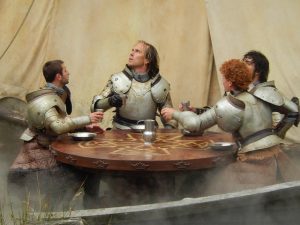
Imagine a book in which knights had more diversity going from them than just the color of their hair…
The reason why representation in YA matters so much, so much that me, a non-YA writer is talking to you about it, is because kids are looking for someone that matches their self image. There wasn’t a half blind, half deaf girl who stepped through a wardrobe door for me to look up to, there wasn’t a girl like me who lifted a sword and pledged her life to the Goddess. There wasn’t someone like me, and so I drifted away from disability narratives.
Because they weren’t like me.
The narrative I was given, not just in fiction, but in reality, was that I wasn’t like the other disabled people because I wasn’t that bad off. I wasn’t like them. But the truth is, I’m just like them and I never got the chance to identify it until I was old enough that the narratives that were lacking didn’t just turn me away from disability lit, but actively enraged me. It made me angry because I wanted to see people who weren’t helpless – or at least, who weren’t expected to be helpless. I wanted to see people who weren’t called savage (like Helen Keller was) but who were seen as whole from the beginning. None of those kids were fighting the things the other able bodied kids were – as an adult I see that these were attempts to show that disabled struggles are different, but I remember what it felt like as a child, and it wasn’t good.
The key to making kids with disabilities feel seen is to give them a variety of representation.
Break down the disability binary, look past the media representations that are rote and overused, and consider who isn’t being seen in YA fiction. Want to have a blind kid? Go look at Kody Keplinger’s Run and see what it’s like to write a legally blind teen. Want a wheelchair user? Write a wheelchair user who is a part time user, or write a character who uses a motorized scooter because they’re fully paralyzed from the neck down. Write teens who ride motorized scooters to the prom, who have full prom dates, not pity dates. Deaf protagonist? Fabulous! Remember that deafness isn’t binary either, and that there’s more to being deaf than not hearing. Autistic rep? Look no further than Corinne Duyvis’ On the Edge of Gone.
Representation matters because there’s a richness to disability you’re probably not aware of.
Look past the Daredevils and the Augustus Waters’. Look past the romanticisation of being sick, of being disabled. Look past the uncomfortable medical wheelchairs you’ve seen in hospitals, and the tragedy narratives.
Instead, write characters who are more than the diagnoses you’ve given them. Write YA characters who have conviction, who use wheelchairs with no handles to be abused by people who want to move them, write blind girls who have guide dragons and who wield swords like their peers.
We have to take disability out of the expected and into the extraordinary. Don’t get me wrong, I don’t want you to write inspiration porn. But if an able bodied girl can be Katniss Everdeen, if she can be more than just a girl living in District Twelve, what’s to stop disabled protagonists from doing the same?
The answer, dear reader, is nothing. Nothing is stopping you from writing the disabled characters that I would have read when I was a girl.
I don’t want other disabled kids to have to wait to find role models, to find heroines. I want there to be a Kamala Khan who uses a white cane. I want there to be an Alanna who uses a cane.
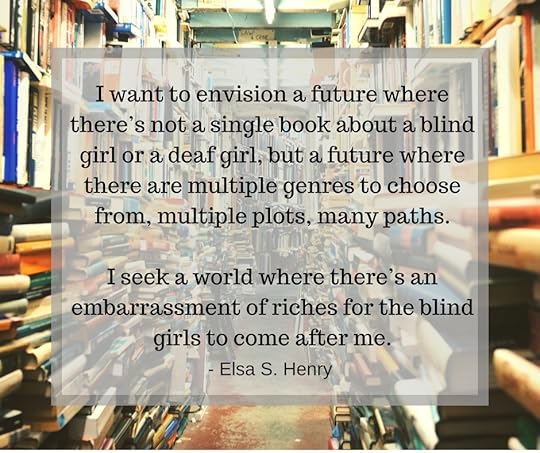
As an adult I strive to be a role model for young blind girls, because I never knew I had any ahead of me. I want to envision a future where there’s not a single book about a blind girl or a deaf girl, but a future where there are multiple genres to choose from, multiple plots, many paths. I seek a world where there’s an embarrassment of riches for the blind girls to come after me.
Who knows how much sooner I would have become the woman I am today if I hadn’t had to fight to find my stories, my heroes? Who knows who I could have become if I’d seen someone like me?
I’ll tell you who I would have been.
I’d have been prouder of myself a lot sooner.
About The Author
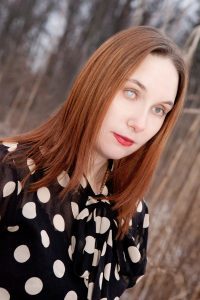 Elsa Sjunneson-Henry is a .5 blind, .5 deaf, .5 Scandinavian science fiction and horror writer. She lives in New Jersey with her husband, cats, and hound dog, and is frequently found on numerous websites talking about disability and feminism. Her fiction work has been included in the Upside Down anthology, and on Fireside Fiction where she is now an assistant editor.
Find Elsa on Twitter at @snarkbat.