The Uncommon Reader
The Uncommon Reader, by Alan Bennett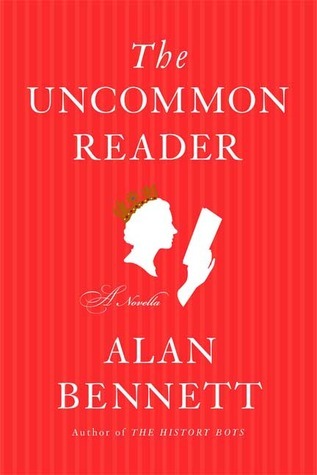 Blurb:When the Queen in pursuit of her wandering corgis stumbles upon a mobile library she feels duty bound to borrow a book. Aided by Norman, a young man from the palace kitchen who frequents the library, Bennett describes the Queen's transformation as she discovers the liberating pleasures of the written word.This book is just so... English! After all, what is more English than the Queen of England? It is also written in a very matter of fact way with a dry wit that I absolutely loved.After reading Th Lady in the Van I was very cautious about reading this book, since I hadn't really enjoyed my previous Alan Bennett book, however, the premise was so intriguing that I couldn't ignore it and I definitely wasn't disappointed.All in all this is a quick, fun read for anyone who understands the addictive joy of reading, or anyone whose ever wondered about what the Queen may be like under that professional persona she shows the world. And the ending... I thought that was great!My favourite quotes from 'The Uncommon Reader':'What she was finding also was how one book led to another, doors kept opening wherever she turned and the days weren't long enough for the reading she wanted to do.''Books are not about passing the time. They're about other lives. Other worlds.''A book is a device to ignite the imagination.''To read is to withdraw. To make oneself unavailable.''Etiquette may be bad but embarrassment is worse.''Authors, she soon decided, were probably best met with in the pages of their novels, and were as much creatures of the reader's imagination as the characters in their books.''You don't put your life into your books. You find it there.''... for some reason Norman was sulking, behaviour she had seldom come across except in children and the occasional cabinet minister.''Though it is true one is eighty and this is a sort of birthday party. But quite what there is to celebrate I'm not sure. I suppose one of the few things to be said for it is that one has at leas achieved an age at which one can die without people being shocked.'
Blurb:When the Queen in pursuit of her wandering corgis stumbles upon a mobile library she feels duty bound to borrow a book. Aided by Norman, a young man from the palace kitchen who frequents the library, Bennett describes the Queen's transformation as she discovers the liberating pleasures of the written word.This book is just so... English! After all, what is more English than the Queen of England? It is also written in a very matter of fact way with a dry wit that I absolutely loved.After reading Th Lady in the Van I was very cautious about reading this book, since I hadn't really enjoyed my previous Alan Bennett book, however, the premise was so intriguing that I couldn't ignore it and I definitely wasn't disappointed.All in all this is a quick, fun read for anyone who understands the addictive joy of reading, or anyone whose ever wondered about what the Queen may be like under that professional persona she shows the world. And the ending... I thought that was great!My favourite quotes from 'The Uncommon Reader':'What she was finding also was how one book led to another, doors kept opening wherever she turned and the days weren't long enough for the reading she wanted to do.''Books are not about passing the time. They're about other lives. Other worlds.''A book is a device to ignite the imagination.''To read is to withdraw. To make oneself unavailable.''Etiquette may be bad but embarrassment is worse.''Authors, she soon decided, were probably best met with in the pages of their novels, and were as much creatures of the reader's imagination as the characters in their books.''You don't put your life into your books. You find it there.''... for some reason Norman was sulking, behaviour she had seldom come across except in children and the occasional cabinet minister.''Though it is true one is eighty and this is a sort of birthday party. But quite what there is to celebrate I'm not sure. I suppose one of the few things to be said for it is that one has at leas achieved an age at which one can die without people being shocked.'


No comments have been added yet.