
Scotland with Grace 2016 - Day 7 Notes and Such
 This was the day we would visit Culloden Moor. We had a bit of travel from Aberfeldy to Inverness, and had some interesting chats during the trip.
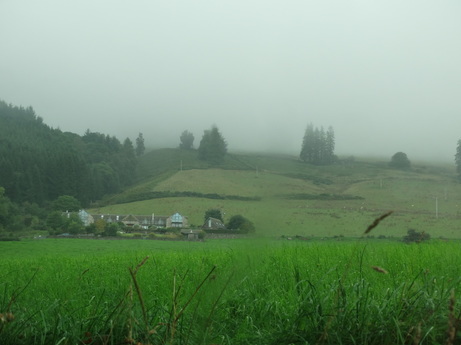
I thought I'd share a few things I found interesting amid some of my favorite flower and scenery photos from the trip.
What is mizzle? We experienced mizzle quite often on our trip. It is, simply, somewhere between a mist and a drizzle. It means you need to take a raincoat and perhaps an umbrella with you most days.
 What is a Piss-Prophet? That was a rather derogatory term for English physicians who would, after taking a verbal history, examine a patient's urine for diagnostic purposes. Supposedly, taste was as important as color and odor. Treatments of the era (1700s) were often applying hot plasters to the patient's feet, or perhaps bleeding them. If you were fortunate, you might get sent to the apothecary who would likely dispense booze or laudanum.
By contrast, medicine in 18th century Scotland was largely influenced by ideas and procedures practiced on the Continent. With the Scottish court in exile in Rome, travel between Italy and Scotland flourished, bringing with it a period of Enlightenment. Physicians were taught to wash their hands between patients. Not that they had knowledge of bacteria, but simply because it was noted patients healed better under clean conditions. It seems a simple thing, but deadly for patients whose unenlightened surgeons waved the idea aside as poppycock.
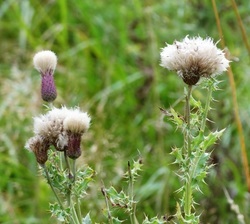
 A Bluebonnet thistle What does it mean to be 'put to the horn'? The sheriff would blow 3 times on his horn before declaring a person an outlaw.
There are ~50 distilleries on the River Spey. They produce a light, honeyed whisky.
By comparison, whisky distilled in Campbelltown on the Kintyre Peninsula has more of a peat taste.
 Gaelic was first a spoken language, not a written one, so the monks decided the spellings of words as they began writing. They made a lot of bad choices. Anyone who has tried pronouncing words written in Gaelic can perhaps attest to this.
Marriage could be accomplished in 3 ways.
By special license: Many of these marriages were held outside the church, such as in ancestral homes, etc. They could be performed at any hour, any day, and with no banns posted.
In a church: Banns were read once a week for three weeks prior to the wedding to give ample time for reason for the couple not to marry to be brought to light.
Handfasting: This was to publicly declare a couple's intent to marry. After the declaration was consummated, it became a binding marriage. It was not a matter of marrying for a year and a day then dissolving the union if you wished.
By English law, none under the age of 21 years were allowed to marry without their father's consent. By contrast, 16 years was the age of consent to marry. Which is why love-lorn teenagers were disposed to run away to Scotland to marry. And Gretna was the first town over the border.
I'd love to hear other tidbits you may have! Feel free to comment below.
 Stirling Castle


No comments have been added yet.


