
Love Triangle in Kampala
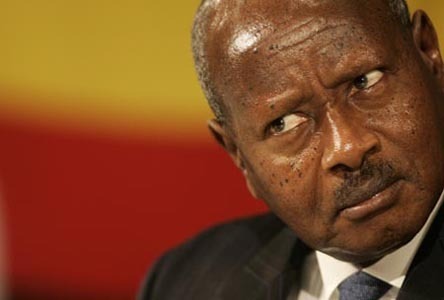
I've been wondering when The New York Times would do an analysis piece on the political protests in Uganda and what angle they would take. They have now. Reporter Josh Kron (is he new in the region?) writes that at the heart of the political crisis is a contest between Life President Yoweri Museveni and Kizza Besigye over a woman. Besigye's wife. Seriously:
[Museveni's critics say] the feud is personal, tied to the president's relationship with Mr. Besigye and his wife, Winnie Byanyima, whom Mr. Museveni has known since childhood and, many say, once wanted to marry.
The history may shed light on the depth of the political movement. It was the winter of 1980, after nearly a decade of Idi Amin's brutal dictatorship, when Mr. Besigye, then a young doctor, started attending rallies for a popular and charismatic new political figure, Mr. Museveni.
"He was a young person who in himself attracted us as young people," Mr. Besigye said. "He was saying the right things that struck a chord with us, about what kind of government Uganda deserved. We started to see him as one of the shining torches."
When Mr. Museveni's new political party came in third in general elections that year, he started a guerrilla movement in the bush. Activists like Mr. Besigye were hunted down, and Mr. Besigye says he and others were locked in the basement of a popular Kampala hotel.
He escaped and in 1982 found the rebels in the bush and was welcomed by Mr. Museveni, who made him his personal doctor. "I lived next to him in a tent," Mr. Besigye said, "and stayed close by him until the end of the war."
Mr. Besigye said he also met Ms. Byanyima. She was a young rebel officer close to Mr. Museveni in the bush while his wife and children were living in Sweden. Years later, Mr. Besigye and Ms. Byanyima would marry.
Mr. Besigye said that at times Mr. Museveni and Ms. Byanyima were involved in a romantic relationship, and that as a doctor he treated both of them, gradually becoming a trusted counsel to the rebel leader. After Mr. Museveni triumphed and became president in 1986, Mr. Besigye was named minister of internal affairs.
But trouble soon began. Mr. Besigye said that when he challenged the president on corruption or constitutional issues, the relationship soured.
Ms. Byanyima also fell out with the president, as did her father, Mzee Boniface Byanyima — an elder statesman and a one-time surrogate father to President Museveni. Mr. Byanyima said he rejected the president when he asked for his daughter's hand, offering to seek an annulment of his marriage to make it possible.
"I didn't like the man's character," Mr. Byanyima, 92, said in a recent interview. "I knew that that man, sooner or later, he will run this country into trouble. I told my daughter, 'Don't allow Museveni to make you his second wife.' "
Ms. Byanyima declined to comment, saying only that Uganda's political row was about national issues.
In 1990, Mr. Besigye was dismissed from his position as minister and was ordered to take military training, a clear demotion. He soon became popular within the armed forces and was elected to the military's high command.
He became increasingly vocal in politics, and in the early 1990s he says he began a romantic relationship with Ms. Byanyima, who left a diplomatic post in France to run for Parliament as an opposition politician. The two campaigned together, romance intertwining with politics.
Mr. Besigye acknowledges an element of romantic friction in the political dynamics between him and President Museveni, but he said it was not a critical factor.
"Even if there was no relationship," Mr. Besigye said of his marriage to Ms. Byanyima, the antagonism between him and the president "would be the same as it is today."
While many observers agree that Uganda's political row is about larger political differences, they say the tight nucleus of personalities is a steering force in the events. "This is about power," said Amii Omara-Otunnu, a Ugandan professor of history at the University of Connecticut, and "animosity."
"Besigye was the one who was closest to Museveni," said Dr. Omara-Otunnu, whose brother is an opposition politician. "The person Museveni fears the most, apart from Besigye, is Winnie."
Another person close to the first family said that, for President Museveni, losing Ms. Byanyima was like "losing Helen of Troy."
Tamale Mirundi, a spokesman for Mr. Museveni, declined to discuss any personal relationship between the president and Ms. Byanyima, and he referred to Mr. Besigye as a "reject." He added that Ms. Byanyima had used her professional relationships with the governing party to "pave the way" for Mr. Besigye.





Sean Jacobs's Blog

- Sean Jacobs's profile
- 4 followers

