
The Rise of Romanticism Part I - The Basics of Romantic Art

CASPAR DAVID FRIEDRICH Wanderer above the Sea of Fog
Romanticism - or the Romantic Era originated in the second half of the 18th Century. The artistic, literary and intellectual movement was a reaction to the Industrial Revolution. Partly a revolt against aristocratic social and political norms of the Age of Enlightenment it was also a reaction against the scientific rationalization of nature. It also had a major impact on historiography, education and natural history.
Strong emotion, such as trepidation, horror, terror and awe became an authentic source of aesthetic experience, particularly in confronting untamed, picturesque nature. Poets like Percy Bysshe Shelley's poem Mont Blanc is a prime example of the sublime.
The Basics of Romantic Art - 1800-1860
The Industrial Revolution took hold in the latter part of the 18th century, beginning in England and spreading to France and America. This revolution, which although far more peaceful than the French Revolution, wasn't entirely free of violence, and brought with it a new market economy, based on new technology. The machine began to replace human tools and animal power. Villages became urban centers drawing people from farms and the countryside to work in the newly opened factories. It was yet to be regulated and Men, women, and children worked 14 hour shifts, going weeks without seeing the sunlight. Cities grew and became dirty and crowded the poor living in squalor, the air polluted by soot from smokestacks.
There were those who looked back with nostalgia to a romantic vision of the days when people worked the land under the clear sky, using animals to draw the plow.
The philosophy of the Enlightenment, for which science and empirical evidence and rational thought was everything was challenged. Romantics rejected the philosophy of reason, turning instead to emotion, imagination, and intuition. A life filled with deep feeling, spirituality and free expression were seen as a way of dealing with the dehumanizing effects of industrialization. Human beings were infinite, with godlike potential.
This was reflected in the poetry of Wordsworth and paintings which turned from the rationalism of the Neoclassical style to art which demanded an emotional response from the viewer, and a nostalgic yearning for rural, pastoral life, the stirrings of life's mysteries and an awareness of the power and grandeur of nature. A Virgilian ideal.

JMW TURNER awareness of the power of nature: The Sublime
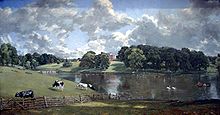 JOHN CONSTABLE a nostalgic yearning for the rural, pastoral life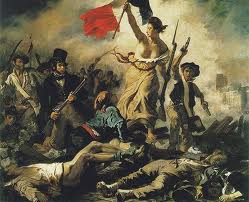
DELACROIX Art of this period also depicted the romantic ideal of nationalism
Source: Wikipedia
The Norton Anthology of Poetry
Sydney University
Part II coming soon: The Romantic Novel


No comments have been added yet.


