
Ed Scarpo's Blog, page 32
June 19, 2015
Perspectives on AMC's "Making of the Mob"
 AMC's ongoing miniseries...
This was written by a guest columnist for Cosa Nostra News....
The AMC miniseries "Making of the Mob: New York" will be be shown over the next two months, highlighting the history of the American Mob and making it a topic of discussion around many water coolers.
Movies like Goodfellas and Donnie Brasco, mixed with The Sopranos, and other guilty pleasures such as Vh1’s Mob Wives and previously high-rated exploits like Growing Up Gotti have always generated huge interest referencing the affects that the Mafia has had on pop culture.
Making of the Mob: New York is an eight-part docudrama chronicling the rise of successors like Carlo Gambino , John Gotti, “Lucky” Luciano, Frank Costello and many more who have inspired countless hit films and TV stories- oftentimes glamorizing the reality behind the myths and every generation’s fascination with the major head bosses of the most infamous crime families.
The authenticity of the American mob begins with the immigrants who passed through Ellis Island in the late 19th and early 20th century. Millions of southern Italians fled poverty from their homes only to arrive in the United States with faith and promise for a better life filled with opportunity. The hardships of the era revolved around providing the necessities for loved ones, as immigrants single handedly began building up a nation forcing them into unforeseen circumstances. New York City developed a “Gangland” of its own caliber as it symbolizes the official birthplace of the mafia.
These so called wise-guys shook down store owners and collected payouts from the weaker, blue-collar workers. Naturally, as evolution often shows, leaders prevailed with their cut-throat attitudes and mentalities, separating themselves from the rest of the pack. These boys plotted, gambled, ate, killed and were killed. That was the only life they knew thus far.
Gang related incidents became more prevalent among the crowded, newly paved roads and so generated a cultural divide. “The mob is an outstanding example of deviant behavior,” suggests clinical and political psychologist, Dr. Bart Rossi. Dynamic capability exuded by the leaders associated the use of intimidation, classic con man, and strong sociopathic skills in order to rule each thriving assembly. For this reason, chartering and stabilizing trust was especially tricky and a very risky endeavor. On the other end of the spectrum, experts like Dr. Rossi explore how the convincing subordinates use denial, repression, or sublimation. Bosses needed to be extremely cunning and master manipulators to make it all function accordingly. Stress and anxiety levels involved in the duality of the precesdence were also very intense and complex as most men channeling advanced direction moonlighted as hard-working family men. From a psychological stand point, “How did they deal with the internal conflicts around murder, fraud, cheating, lies and fabrications?” questions Rossi. Were the head honchos really just insecure front men trapped in the wrong lifestyle?
And no, this is not a rip-off of the plot of the beloved Analyze This franchise, just a certified perspective.
As the docu-series makes evidently clear, discussing the role of the US government playing out its failed pursuit for an experiment known as prohibition, attributes to the ultimate, well, organized creation. This disastrous attempt at controlling the mass public and depriving them of their right to liquor consumption only resulted in rebellion. By infringing on the recreation of the struggling American people in order to prevent ongoing bad behavior, ironically had back-fired. What was initially an issue of monitoring morality turned into a lucrative business racket. The strategy, established through the ideas behind prohibition, helped to transform common street thugs into vast multi-million dollar empires.
Perhaps one of the most interesting aspects analyzed by Dr. Rossi would be with their consistent prowess and marked personality disorders, conceivably what each man would have been able to achieve had he lived a straight life and built a legalized, and real business of value. Thomas La Vecchia, president of X Factor Media, and self-proclaimed mafia trivia buff, also resourced evidence signaling similar to, or the exact qualities among today’s CEOs and A-Players, which drive his credible media train. These affirmed traits represent the force behind wealth and fortune.
After all, mobsters are the first truly effective, profitable, and high-income entrepreneurs in the traditional sense of the word! However, secrets revealed that tides turned quickly as more savage, bloodshed became a part of the deal. These top-tier “mafiosos” became NYC street assassins as they exterminated anyone who stood in their way from the root of all evil or paid off the so-called good-guys to stay quiet. An entire lifestyle emerged from the pitfalls of the structure of the depression and the potential levels of financial prosperity proved possible through connection or being a “made man”. With this authority came great responsibility as a very specific code of ethics continued to be carried out.
However, after a few decades of silent success, the American mafia revamped as a caricature of the very principles it was founded under. Heads inflated and a media sensation ensued. Seemingly invincible chief commanders managed to turn a reigning power based on hierarchy into a circus- a facade. The mighty commissioners were tempting jurisdiction with their newfound fame. Supreme administrators from influential and pristine families began to get “pinched” and “ratted out” to the federal agents who had been eagerly awaiting a breach that allowed threatening prosecution and a final demise. As most accredited downfalls often illustrate greed and ego to be top contributors, with a number of other factors cementing their historical fate. The images of the modern day mobster no longer reflect the spirits of the past, but that does not mean their imprint was not left in the streets of today’s concrete jungle- Manhattan.


June 15, 2015
AMC Series About Mob's Making Debuts Tonight
 Lansky was one tough bastard to the very end, as one Miami cop learned.
Meyer Lansky spent the final years of his life in sun-baked Miami Beach, Florida, not his first choice.
He had fought like hell to stay in Israel, believing it to be the one place where he could live out the rest of his life and die in peace. But following two years of legal battles, he was tossed out.
How sincere was Lansky about wanting to live in Israel?
Probably very sincere. After all, Lansky himself had played something of a role in Israel's very founding. He had smuggled arms (rifles, specifically) there in 1948 to assist Menachem Begin and his guerrillas as they helped to violently forge the Jewish state's foundation.
In fact, years after he was kicked out, Lansky tried to return.
When Begin and his hard-line Likud party rose to power in May of 1977, ending the 30-year-reign of the Israeli Labor party, to which David Ben-Gurion and Golda Meir had belonged, Lansky called a key contact from Florida -- one David Landau, who was then a political correspondent for the Jerusalem Post.
"Do you think I can come back now?" Lansky had asked.
He couldn't come back, Landau had had to explain to him. Begin had come to power, yes, but there had been nothing like a clean sweep, and a coalition cabinet was in operation.
"It was a rather sad conversation," Landau once recalled.
We thought about this story while reading a recent interview with Lansky's grandson focused on the debut tonight of AMC's miniseries about the origin of the American Mafia.
“He wasn’t traditionally Jewish,” the grandson told the Wall Street Journal. “He had Christmas trees. We celebrated Easter.”
Lansky may not have been an observant Jew, but it is quite clear he tried like hell to avoid the pent-up fury of the American legal system, which at the time seemed poised to finally hold the 70-year-old Lansky accountable for a lifetime of crime.
After departing Israel, Lansky next tried to purchase asylum, but his million-dollar offer was seven times refused (by Switzerland, Brazil, Argentina, Paraguay, Bolivia, Peru and Panama).
''That's life,'' Lansky reportedly said following his November 1972 arrest after he disembarked his plane in Miami. ''At my age, it's too late to worry. What will be will be. A Jew has a slim chance in the world.''
He paid his bail and was released an hour later. Ultimately Lansky was too ill to stand trial for the various charges brought against him (which covered everything from tax evasion to conspiracy). He wasn't faking it, or at least that is what we are led to believe since court-appointed physicians made the determination, saying the man was suffering from various ailments, including heart trouble, bronchitis, ulcers, bursitis and arthritis.)
By the time of his death, the gangland figure, who started working with the mob in the 1920s, minting his first fortune during Prohibition, certainly reached a lofty height for an underworld figure. He died of natural causes, cancer, and despite having lived a long life of crime, had served no serious prison time. He also supposedly had a few million stashed away.
Of the infamous mobster with a penchant for self-improvement, an FBI agent once famously said: "'He would have been chairman of the board of General Motors if he'd gone into legitimate business." Perhaps it would be more fitting to say he could have run U.S. Steel, which was supposedly a smaller operation than the American Mafia (according to Lansky himself).
Maier Suchowljansky, the real name of the Russian-born immigrant and American crime lord, is considered a pioneer in the art of laundering money. He certainly had enough money to spend copious amounts of time practicing his art. Lansky earned vast amounts of illicit revenue from a range of rackets, perhaps most famously in gambling (via ownership interests in casinos located in Cuba, the Bahamas and the United States).
A few years prior to Lansky's death, one of his biographers claimed he'd amassed a $300 million fortune, most of which had been carefully hidden inside Swiss bank accounts, real estate and investments. So reported the New York Times in Lansky's obit.
However, on careful review, it seems the Times was playing something of a journalistic trick with its readers. According to one of the two best Lansky biographies now available, Little Man: Meyer Lansky and the Gangster Life by Robert Lacey, 1991 (the other recommended biography is Meyer Lansky: Mogul of the Mob by Dennis Eisenberg, 1979), we read that the $300 million figure was first thrown out by "unnamed federal agents" cited in a Wall Street Journal article in which Lansky was "profiled at length." An honest mistake or did the Times editors simply not want to credit a rival publication? We strongly believe the latter.
(Interestingly, we also read in Lacey's book that when in the mid-1980s, when federal agents raided a Newark, New Jersey luncheonette called Hole in the Wall that served as the Luchese crime family's de facto headquarters for its Garden State operation, two black-and-white "icons" were viewed on a wall. A photograph of Al Capone stood alongside one of Lansky. Lacey considers the two men the "twin patron saints" of the Mafia, with Capone anointed for attaining his place among the mob's violent warlords, the "traditional violence and toughness of urban crime," while Lansky stood for "brains, sophistication, the funny money -- the sheer cleverness of it all.")
There's a story that this undercover Dade County cop once tried to put a scare into Lansky. His name was David Green and one morning while driving, he saw Lansky walking down Collins Avenue.
Now at the time, Green was dressed as a biker, in full "Hell's Angels undercover mode," standing over 6 feet tall, all 260 pounds of him. His hair and beard both long and greasy.
He quickly parks and positions himself farther down the sidewalk from Lansky, so that Lansky will have to pass him. He stood on a perch a few feet above Lansky. Just as Lansky is walking past him, Green jumped down to the ground flapping his beefy arms and shouting "GRRR!!!!"
"It would have scared anybody," Green later recalled. "But he just backed up calmly, put his hand in his pocket like he had a knife, and kind of lifted his other hand. "What do you want?" he said."
Lansky was "cold blooded," Green said. "There wasn't an ounce of fear in his eyes."
In fact, ironically the cop who wanted to scare Lansky was himself shaken by the incident, even while recalling it years later. "Lansky... had given him something to think about -- the cold, hard eyes, quite unmoved, that would stop anyone dead in their tracks. You could understand why, when people got to talking about organized crime in the 1970s, they used to call Meyer Lansky the Chairman of the Board."
I recalled this anecdote, related in Lacey's back, after reading that WSJ article in which Lansky's grandson was interviewed.
“He had a couple of girlfriends,” we also learned from the grandson. The Journal story also mentioned The Mafia Walking Tour by Eric Ferrara of the Lower East Side History Project, describing it as "part of the festivities surrounding the debut of the AMC series “The Making of the Mob: New York” about the rise of the Mafia in New York City."
According to the WSJ, the tour includes a stop at 80 Second Ave., where Joe “The Boss” Masseria was almost assassinated in 1922.
("Lansky," the story continues, "was instrumental in a more successful 1931 assassination attempt of Mr. Masseria on behalf of Lansky associate Lucky Luciano.")
Grandson Meyer Lansky II, who was interviewed for the eight-part miniseries, also revealed that his grandfather had never discussed his underworld past.
“Every time I’d touch on that, he’d steer it away from that. He’d never get into things like what he did.”
 Lansky II, Meyer's grandson.
It wasn't until Walter Cronkite mentioned him on the CBS Evening News that Lansky II got an inkling of who his grandfather was. (The coverage had to do with Lansky trying to get off a plane in Argentina, only to be ordered to get back on.)
“That’s when I started to learn what he was about,” his grandson remembered. “I thought he was a restaurant owner.”
Lansky II grew up in Tacoma, Washington. His father, Meyer Lansky's son, had been an Air Force pilot. The grandson found a career in the gaming industry as a casino employee, with "his famous name apparently opening more doors than it closed," the WSJ wrote.
“When I went to get a gaming card,” so he could work as a Las Vegas croupier, “they wondered what was going on: ‘You’re the grandson?’ But they were pretty cool about it.”
As for AMC's "The Making of the Mob," an interesting story caught our eye. It seems one journalist has been doing a little bit of fact-checking regarding the Mafia's history.
Keertana Sastry writes:
The first episode ends with Lucky planning to kill Masseria and lead his own gang, but the history books tell a more complicated story. Supposedly, at this point Masseria and another alleged mob boss, Salvatore Maranzano, started a war between alleged mob bosses and families in New York, which was famously called the Castellammarese War. By the time it ended in 1931, Maranzano was killed by men some believed to have been hired by Luciano, though that has never been proven. Masseria was also killed by hitmen who were never officially identified, though rumors linked them to Luciano and other associates.
The miniseries premieres tonight on AMC.

June 13, 2015
Rapper Sings of Mafia's So-Called "Good Life"
Sicilian hip hop singer Marracash has a song called Ero Vivo.
It includes wiretaps and promises made to new recruits. As the song progresses, Marra realizes the smoke & mirrors that have been sold.
As for the name, Eros was a Greek god of love.
But in Italy there is no word for "good" or "bad."
Everything is referred to in beauty or what would translate to heaven and hell, if such concepts existed.
Ero=light/heaven, Thanatos=death/hell.
When calling someone they ask "brutta momento?" (or ugly moment? or or bad time?)
When greeting even men, or speaking well of something it's always bella.
Buono e male was adopted much later, and male means more "sick" than "bad"
So Ero Vivo is about the so-called "good life" the mafia promises.
By Rosie" from the Palermo region.

Appropriately Named "Op Rock Bottom" Snags Eight
 Vincenzo Reda of Franklin Square.
Authorities busted an online enterprise that used an offshore website for sports betting, the Rockland County District Attorney said this past Thursday.
Eight were arrested on charges of gambling and loansharking in a probe named "Operation Rock Bottom."
The arrests follow a search-and-seizure operation in April, when law enforcement hit a dozen properties, seizing gambling records and more than $750,000 in New York, New Jersey, Pennsylvania and Florida.
The bust pales in comparison to a previous gambling ring that operated in the same regions. That happened last December when investigators arrested 14 and seized more than $3 million.
The December arrests came on the heels of a federal indictment in August of reputed Ramapo organized crime figure Daniel Pagano and a Suffern-based associate Michael Palazzolo (could he be related to the Bonanno warlord who was caught meeting "suspiciously" in a parking lot? We'll find out...).
Pagano and Palazzolo were charged with loansharking and other gambling-related counts. Pagano was identified as a captain in the Genovese crime family by federal prosecutors.
Operation Rock Bottom, which seems appropriately named for numerous reasons, began with the April seizures of illegal gambling records, computers and more than $750,000.00.
The operation also was active in Westchester County, though further information was not available, as reported by the Journal News.
The crew apparently charged interest rates topping 25 percent.
The offshore website that facilitated the ring offered usernames and passwords with which you could place bets on various games. Those charged also are alleged to be responsible for running the gambling site, as well as for collecting bets and paying winners.
A list of the people arrested for the gambling ring:
■ Ronald Ayes, 71, of 26 College Ave., South Nyack, charged with first-degree promoting gambling, first-degree possession of gambling records, fourth-degree money laundering, and second-degree criminal usury.
■ Nicholas Farese, 51, of 8 Clearwater Court, Nanuet, charged with first-degree promoting gambling, first-degree possession of gambling records, fourth-degree money laundering.
■ John Reyes, 72, of 37 S. Monsey Road, Monsey, charged with first-degree promoting gambling, first-degree possession of gambling records, fourth-degree money laundering, and second-degree criminal usury.
■ Anthony Moschella, 75, of 5 Church Lane, Valley Cottage, charged with charged with first-degree promoting gambling, first-degree possession of gambling records and fourth-degree money laundering.
■ Mark Moschella, 52, of New Jersey, charged with fourth-degree money laundering and a misdemeanor of second-degree promoting gambling.
■ Richard Herman, 75, of Manhattan, charged with first-degree promoting gambling, first-degree possession of gambling records and fourth-degree money laundering.
■ Peter Reda, 57, of Franklin Square, charged with first-degree promoting gambling, first-degree possession of gambling records and fourth-degree money laundering.
■ Vincenzo Reda, 34, of Franklin Square, charged with first-degree promoting gambling, first-degree possession of gambling records and fourth-degree money laundering.
All eight were arraigned by Clarkstown Justice Scott Ugell and released without bail.

June 9, 2015
Tony Lodi Is Out; Spilled the Beans on Fiumara Crew
 Tino Fiumara was the major topic of discussion at
sealed courtroom proceeding.
Anthony "Tony Lodi" Cardinalle, indicted in early 2013, was once upon a time one of 30-plus defendants nailed following a multi-year FBI probe into the mob's control of the private sanitation industry in New York and New Jersey.
Cardinalle, a longtime Genovese associate, cooperated with the FBI and Manhattan U.S. Attorney's office. He plead guilty to two counts, racketeering conspiracy and conspiracy to commit extortion, and copped to his role in a plot to shakedown a cooperating witness who owned a waste hauling company.
In the end, he was sentenced to 30 days and was released last month, on April 14.
He also was ordered to pay a $10,000 fine and $3,400 that he extorted from Charles Hughes, the FBI informer (and pervert who helped sink the case.)
In fact because of Hughes, 19 mobsters and associates were sentenced in the case; charges against the others were unceremoniously dropped (after being ceremoniously announced).
The feds praised Cardinalle for his cooperation; his lawyer handed to the judge around 40 letters of praise from family, friends, employees, law enforcement officials--even the Mayor of Lodi and Johnny Pacheco, the legendary "father of Salsa." The music, not the sauce.
Hughes tape recorded more than 500 conversations from 2009 to 2012.
Cardinalle introduced Hughes to Genovese mobster Peter LeConte and associate Frank Oliver in 2011 when Hughes' co-defendant Howard Ross made a proposal to him about creating a new garbage business.
Those would be interesting transcripts to get a hold off as, according to Gangland News, Tony Lodi "spill[ed] his guts about a real Garden State mob crew that was run for years by powerhouse Genovese capo Tino Fiumara," a bloody story about which we've previously written in: Decades of Mob Violence Behind Recent Waterfront Case: "The family's powerful waterfront capo Tino Fiumara was supposedly part of a three-man panel running the family at the time of his death in 2010."
Fiumara controlled Newark/Elizabeth Seaport-based unions and engaged in loansharking, extortion, gambling, and union and labor racketeering throughout the New Jersey counties of Union, Essex and Bergen. The Feds attribute around a dozen murders to Fiumara, who once belonged to a Genovese family hit squad known to have murdered federal informants on the street.

The Mafia Hit the Jackpot With the Slot-Machine
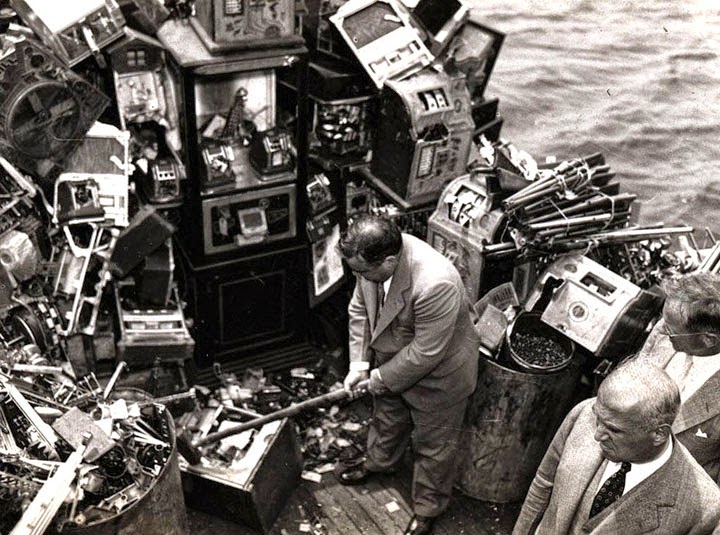 Mayor Fiorello LaGuardia smashes confiscated slot machines
From its inception, the American Mafia included among its plethora of rackets the slot-machine.
So popular during the twentieth century's first few decades were these little games of chance, it's difficult today to truly comprehend it.
Perhaps the most suitable image to remind us is the photograph above of Mayor Fiorello LaGuardia sledgehammering a machine (the scene also was captured on film footage).
All the historical Mafia bosses, especially the men who served as heads of New York's Five Families—Charlie "Lucky" Luciano, Vito Genovese and, most famously of all, Frank Costello, for example—reaped fortunes from slot machine profits.
New York City alone reportedly had more than 25,000 slot machines in the early 1930s. They were placed everywhere—but primarily in places where the general public easily could access them and stuff their coins inside.
LaGuardia was not voicing platitudes nor was he conducting a political crusade to make himself popular.
Historians generally agree that the man truly loathed organized crime, especially the Mafia which perpetuated a negative stereotype of the Italian-American community (and in LaGuardia's view, brought great shame upon it).
His first order as mayor, reportedly, was for his chief of police to arrest Lucky Luciano -- for any reason.the chief could invent. (He wasn't finished with Luciano, however.)
In 1934 LaGuardia hunted down Frank Costello's slot machines, resulting in the action caught in the photograph atop this story. Mayor LaGuardia sledgehammered a slot machine as part of his larger public effort to show his distaste and zero-tolerance policy for both the New York Mafia and the citizens who used the machines.
“Let’s drive the bums out of town,” he said on radio in September 1934, the same day the photograph was snapped. He then tossed a huge batch of confiscated slot machines into the Long Island Sound. Around 12,000 machines were eventually tossed into the water.
In a Getty Images video, shot on October 15, 1934, LaGuardia tells the camera: “Let the gamblers, tinhorns, racketeers and gangsters take notice that they have to keep away from New York from now on.”
Whether the slots still exist at the bottom of the Sound, we can't say.
In 1935 LaGuardia appeared at The Bronx Terminal Market to institute a city-wide ban on the sale, display, and possession of artichokes, whose prices were inflated by the mob. When prices feel, he lifted the ban.
In 1936, LaGuardia had special prosecutor Thomas E. Dewey, a future Republican presidential candidate, single out Lucky Luciano for prosecution. Most readers know what followed, we assume.
The Mayor, while able to remove the slot machines from the collective memory of everyday urbanites, didn't live long enough to see the resurgence in the Mafia's use of new slot machines with video displays in the 1980s and 1990s, a time when the illegal gaming machines were once again linked to organized crime, albeit with a lower profile than the mob's pre-1930 efforts.
The video gaming machines, called “VLTs” ( Video Lottery Terminals), "reintroduced gambling into the urban fabric of New York City," as the website Untapped Cities noted in a report.
The amount of money the mob earned in the 1990s from these machines was worth killing over, as we noted.
As one example, there's the case of Bonanno mobster Antonio Tomasulo, also known as "Boots," who built up and operated a highly lucrative Joker Poker slot machine gambling operation (one establishment reportedly served up $15,000 per week).
After he died in 1990, his son Anthony assumed daily control and presumed he'd inherit the operation. But the Bonanno family claimed the racket for itself. Anthony objected -- and threatened the life of his mob superior.
Sal Vitale ordered the young man's 1990 murder.
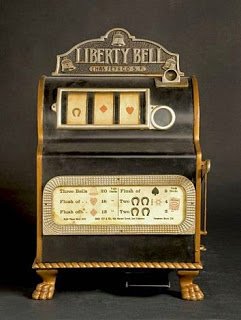
New Invention for Amusement
The slot machine was invented in Brooklyn in 1891 by Sittman & Pitt as just another amusement for placement in bars and taverns. It used drawings of playing cards to mimic card games.
The machines were rigged from the beginning, usually by "missing" certain important cards to reduce the probability of a player winning with, say, a royal flush.
These nickel machines could not provide cash payouts so bartenders would offer beer or cigars to winners.
The first slot machines were hugely popular despite technical drawbacks, such as the player being unable to draw new cards, for example.
"One would be hard pressed to find a bar in New York City that didn’t have at least one poker machine besides the bar,” author Jack Harper wrote in King of Slots: William “Si” Redd, about the life and rags-to-riches story of Redd (1911-2003), who changed the casino gaming industry.
Amazon.com's promotional copy reads:
"Both a business book and a biography, it introduces readers to the nation's leading gaming centers, Apollo-era technology and how it changed gambling, and the race to perfect the first video poker game. It also gives them a chance to meet the characters with whom Redd rubbed shoulders, including Howard Hughes, Raymond Patriarca, Arizona cowboy and pig farmer Jimmie Hughes, gaming legend Bill Harrah, and casino visionary Jay Sarno."
Machines with a more realistic user experience--that used real playing cards, versus sketches of them--were created in San Francisco. Automatic payouts also were included in the new generation of slot machines.
San Francisco also was the perfect city to capitalize on the new machines due to widespread political corruption and theproliferation of the city's drinking establishments.
The hugely popular Liberty Bell slot machine arrived on the scene in 1895, sparking the initial use of the “one armed bandit” nickname.
Minining towns in Nevada saw an enormous uptick on the slot machine business, while in San Francisco, an effort to ban the gambling machines gained traction, which prompted a movement that quickly spread into the rest of California, as well as Nevada.
Bar owners, slot machine operators and distributors didn't watch their fortunes dissipated in the face of this new mindset--and the slot machine kings' efforts had such an impact on the gaming industry its ripples are still scene today.
Daniels Antiques, which sells vintage slot machines made by firms in Chicago, said, "The owners were not going to take the ban sitting down and they “fired back” by changing the coin slot machines to offer candy, gum, or tokens, and so they decorated the wheels on the slot machines with pictures of gum or different fruits i.e.. cherries."

The “disguise” enabled placement of slot machines in new public venues, such as stores that children inhabited. Soon, machines seemingly designed for children appeared -- the ramifications of which were reported as recently as 1998 when the New York Times reported: “Video arcades for children along the Boardwalk in Atlantic City include reconditioned slot machines that work just like the real thing but offer prizes instead of money.”
Charles Fey desperately tried to hold onto his immense business by not licensing his technology or give up his sizable control over the production of the machines.
Still, new players entered the fray.
The successful Mills Novelty Company put out the Mills Liberty Bell slot machine in 1906, utilizing the principles of assembly line production and mass marketing.
 Herbert Stephen Mills, head of the company, became known as the “Henry Ford of slot machines.” The Mills Novelty Company would become the preferred (and perhaps only) producer for Frank Costello’s slot machine racket in both New York City and New Orleans.
In part two we look at Frank Costello's slot-machine business.... and further innovations...

June 3, 2015
Exposing the Mafia's "Honorable Men" Myth
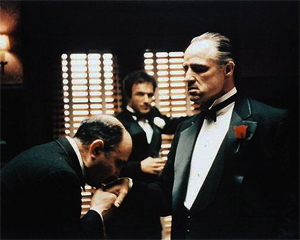
By Nick Christophers, from the May issue of Saint Red Magazine.
People look at him and think 'there goes a good looking man with style'. But when they learn about his checkered past, fear sets in. It is a normal reaction and comes with the territory for someone like him. John Alite was John Gotti Jr.'s bodyguard and did what he was told within the world of the mafia. But those days are over as he begins to build a new life.
Coming from an Albanian family the world of crime was not so foreign to him. Albania itself has been pegged as a breeding ground for criminality. Yet not all Albanians follow that lifestyle. John himself attempted to lead a law-abiding life but somehow was side-tracked. He was raised in Jamaica, Queens in the 1970's were it was a strong-hold for the mob.
Eventually he was sucked into that "life" and became close friends to the infamous John Gotti.
The Gotti family lived only a few towns away from Jamacia in Howard Beach. John was soon to been seen all around town with the scion of the Gotti clan. He ran with a small crew that committed all sorts of crimes. From extortion to murder. But John would eventually see the light and remove himself from that life many years later.
His tales have currently been put to the pen when award winning author George Anastasia agreed to work on his biography, "Gotti Rules". While running with the Gotti clan he decided to flee the country to avoid an ensuing indictment. He would travel around the world from Europe to South America finally settling in Brazil.
"I did not care really where I ended up whether it was in Holland or Colombia. I would try to search for the "street people" of that particular city and use them for my purposes."
When it came to which type of country served him the best, he admitted that the Latin countries seemed more fitting for him. John explained that their hospitality and willingness to work with him was a welcome relief. He also spoke Spanish which helped. In addition to that John found they can relate to him being from an improvised country like Albania. They opened their doors to him seeing they had some commonality.
Europeans were less trusting and were slower to befriend him. Hence, the reason why he settled in Brazil. Yet Brazil ended up being the opposite of what he hoped for. It is there that he was captured by the Secret Police and incarcerated in one of the worst prisons in the world, Ary Franco.
John would survive the cruel and inhumane conditions of the Brazilian prison system which was just as corrupt as anywhere else. After returning to the US he would testify in court against the one he once called brother, John Gotti Jr. His decision to became what he dreaded most, a rat, was because while he was locked him his own crew ratted him out. It was a "textbook case of survival".
"I did what I had to do. Not to save my life but to expose the truth of the one's who called themselves "men of honor".
Now John has devoted his experiences to help children deal with bullying that has ran rampant across America. He has decided to take on this task as a keynote speaker to shed light on the misconceptions of being in the mafia and bullying. John is not doing this for redemption but to give back for what he took away. The Gotti's for all intensive purposes were bullies themselves. Using others to do their dirty work whether it was Gotti Sr. or Jr.
John's goal is to expose this myth that the Gotti's were honorable men of the "life" which he does through the book. Even though people do say negative things about him they never say it to his face. He does find it interesting how people become judgmental when there is no ensuing threat. But when he was on the street no one said a word. John, for who he was and who he has become ignores these rants and repeatedly challenges anyone to come forward. Is John a changed man 100 %? Maybe not, but he has turned a new corner by working to help others avoid going down the same unforgiving road he had taken thirty years ago.

June 1, 2015
Luchese Chief "of Interest" in Meldish Mob Hit
 Michael Meldish, former Purple Gang leader, may have died for pissing off
a high-ranking Luchese Mafioso.
Suspects were never in short supply regarding the murder of Michael Meldish, the former Purple Gang boss offed during November 2013 in what's described as a classic gangland hit.
His body, expensively attired, ensconced in a camel-colored leather jacket, was slumped over in the driver's seat, his head back and mouth agape.
“Michael was a stone-cold killer,” Joseph Coffey, former commanding officer of the NYPD’s organized crime homicide task force, told the New York Daily News.
Coffey admitted he'd spent years trying to pin murders on Meldish, though acknowledged that he faced one insurmountable obstacle: “We couldn’t get any witnesses," Coffey has said. "They had the people so terrified they just wouldn’t cooperate.”
Meldish is believed to have committed as many as 10 mob-related hits, and was never prosecuted for a single one. His brother and longtime street partner Joseph Meldish has been serving a 25-to-life sentence for a 1999 slaying. Joseph is believed to have committed as many as 70 contract killings.
Both Meldish and Joseph were leaders of the notorious Purple Gang, which back in the 1970s and 1980s dealt heroin in the Bronx and Harlem and whacked people for the Bonanno, Luchese, and Genovese crime families.
The gang appropriated its named from the Prohibition-era Detroit gang. The "new" Purple Gang had a distinction, however, for dismembering victims' bodies.
The Purple Gang also may have had ties to Latin American terrorists in a firearms for narcotics trade agreement.
By the late 1980s, members increasingly were apprehended in drug busts. Some of the remaining members then joined the 116th Street Crew, with a few of them landing buttons in three crime families.
Meldish was a Luchese associate at the time of his death.
 Meldish was slain in front of this house, when he stopped his car.
Joseph, 60, is serving his sentence at Shawangunk Correctional Facility for murder in the 2nd degree for the 1999 mistaken identity execution of Joe Brown inside Frenchy’s Bar, formerly located in Throggs Neck.
According to the New York State Department of Corrections and Community Supervision, Meldish will be eligible for parole on September 22, 2032.
Gangland News reported the arrest of two suspects a couple of weeks back:
"Law enforcement sources identified the definite new suspect in the slaying as mob associate Christopher Londonio.
"Londonio, 41, and his reputed mob superior, Bonanno soldier Pasquale (Patty Boy) Maiorino were arrested on federal gun charges... and ordered held without bail.... The federal charges stem from a state gun possession rap, filed against the defendants in November. The two men had been free on bail.
"Sources say Bronx prosecutors will soon ask a grand jury to indict Londonio and a hoodlum named Terrence Caldwell for the gangland style rubout...."
Caldwell, 57, was arrested in early May on charges of murder, manslaughter and criminal possession of a weapon. He currently resides in Manhattan at 129 W. 147th Street and has a long record that includes 20 prior arrests dating back to 1973, the Bronx Times reported.
Caldwell and Londonio, of 753 Revere Avenue, have had a long standing relationship, according to the NYPD.
Meldish, who had 18 prior arrests dating back to 1971, seemed to have pulled to a stop at a crosswalk and was exiting his vehicle when he was fired on.
The shooter had either ambushed Meldish at this location or was his passenger.
Further investigation determined Meldish was shot in the right side of his head from a short distance (gunpowder residue was lacking).
The motive for the Meldish killing remains unknown. However, we may now know the first inklings of the reason for the murder, according to Gangland News, which reported that, in addition to the two suspects facing pending indictments, law enforcement officials are parsing a list of mob-affiliated suspects that includes two high-level gangsters in two crime families: the Bonannos and Lucheses.
"In the months before Meldish was whacked, powerful high-ranked wiseguys from two rival crime families — Michael "Mikey Nose" Mancuso and Matthew "Matty" Madonna — each voiced their fury about the murderous Bronx-based drug dealer who was murdered in 2013, according to court papers and knowledgeable Gang Land sources.
"There is no evidence either of the veteran mobsters had anything to do with it. As former NYPD detective Joe Coffey said right after the murder, Meldish "was a stone-cold killer" with many enemies "in the mob" who were happy that he was dead. But sources say imprisoned Bonanno boss Mancuso, as well as reputed Luchese underboss Madonna, both vented their anger at Meldish and his ways in the 15 months before he was shot to death in front of his home in the Throgs Neck section of the Bronx on November 15, 2013 at the age of 62."
Mikey Nose ordered a Bonanno mobster to administer a beating to Meldish "for what Mancuso considered disrespectful acts toward Mancuso on Meldish's part," according to a court filing by Manhattan prosecutors against nine Bonanno family mobsters and associates hit with state racketeering charges in July of 2013.
An unidentified informant told the feds that an acting capo in the Bonanno family named Ernest Aiello caught up with Meldish in August of 2012 in uptown Manhattan, supposedly outside East Harlem's infamous Rao's restaurant.
Aiello, 35, is not charged with assaulting Meldish and he is not a suspect in Meldish's murder, Gangland News noted. The mobster has an ironclad alibi -- denied bail, he's been sitting in a Riker's Island jail cell since his July 2013 arrest -- several months prior to the Meldish hit.
It's alleged that the 59-year-old Mancuso, behind bars for 11 years now, had ordered a new Bonanno member named Frank "Frankie Boy" Salerno to deliver messages from Danbury prison, where Mancuso's held.
Matty Madonna, 79, was badmouthing Meldish around eight months before the doomed associate was hit in his car that November night in 2013.
 Matty Madonna at 2010 arraignment.
At the time, Meldish supposedly worked for Madonna, collecting payments, among other things. Meldish also seemed to have angered the Luchese chief at some point.
Madonna is known to have a lot of juice in his crime family. Sources have described him as acting boss Steven Crea's right-hand-man, as well as a trusted "street boss" for the imprisoned-for-life official boss, Vittorio "Little Vic" Amuso.
According to Gangland News, "Madonna, and the Luchese crime family [are considered to be the] more likely [suspects] in the murder of Meldish than Mancuso and his Bonanno family cohorts."
Gangland further noted that crime families remain territorial, especially when the topic is clipping one of their own guys. For example, while Mancuso wouldn't face much recrimination for having a goon slap around a Luchese associate, he likely wouldn't dare give the ultimate order to end the man's life.
Also, Londonio, who is expected to be indicted soon for the Meldish hit, is a Luchese mobster who, like Meldish, was closely associated with Madonna.
Madonna, 79, pleaded guilty in Manhattan earlier this year to an unrelated 2009 gambling case. Later this year he is expected to be sentenced to one-to-three years.
Londonio and Maiorino were arrested on federal gun charges on May 11, on a complaint filed by FBI agent Theodore Otto, who for years has investigated the Gambino and Luchese families, Gangland News reported.
Gangland sources say Maiorino, 55, is not a suspect in the Meldish murder.

May 27, 2015
What the Hell Happened in Waco "Biker Brawl"?

UPDATED; ADDITIONAL INFO I have not previously covered the 1%er motorcycle clubs (though I have been considering launching a new blog dedicated to that volatile world).
However in the recent Waco, Texas, case, I have some inside information from a knowledgeable source that seems to jibe with recently published reports.
My information is that all nine of the bikers slain in the not-so-widely covered Waco, Texas incident were killed by law enforcement officials. This was not another case of what happened in 2002 at Harrah's in Laughlin, when members of the Hell's Angels and Mongols suddenly clashed inside a packed casino, indiscriminately shooting at each other --and any civilians caught in the crossfire (see actual surveillance footage, below).
Another interesting trend has to do with the Mexican Cartels -- seems they have been ramping up production of meth and cocaine for distribution inside the United States. This is because America's laws regarding marijuana continue to evolve.
Apparently the cartels expect weed to be widely legal here to the extent that there will be no more profit in selling that particular drug.
As the Washington Post reported:
Mexican traffickers are sending a flood of cheap heroin and methamphetamine across the U.S. border, the latest drug seizure statistics show, in a new sign that America’s marijuana decriminalization trend is upending the North American narcotics trade.
The amount of cannabis seized by U.S. federal, state and local officers along the boundary with Mexico has fallen 37 percent since 2011, a period during which American marijuana consumers have increasingly turned to the more potent, higher-grade domestic varieties cultivated under legal and quasi-legal protections in more than two dozen U.S. states.
In any event we believe the southern-based biker gangs will begin killing each other more than ever because of the increasingly profitable drug business's "new paradigm."
One story caught my eye:
Just How Badly Are Authorities Screwing Up The Arrest Of 170 Bikers In Texas?It's from the Above the Law blog.
Also, since many readers typically comment I'd be interested in hearing your thoughts on whether I should begin a blog focused on outlaw bikers -- it seems there's more action in that world than Cosa Nostra these days.
Of course, I could also simply fold any biker coverage into this blog, too. Let me know.....
On Sunday afternoon, an enormous biker gang brawl broke out at a Twin Peaks restaurant in Waco, Texas. Authorities claim that when members of several motorcycle gangs, including the Bandidos and Cossacks, gathered to hash out an ongoing turf war, the meeting turned bloody. When the scene quieted, a reported nine people were dead, at least 18 seriously wounded, and 170 or so in police custody.
Bikers can be some bad mothers f*ckers. The state of Texas identifies gangs such as the Bandidos as serious organized crime syndicates, deeply entangled with Mexican drug cartels and other ne’er-do-wells, every bit as nasty as notorious groups like the Bloods and Crips.
So, why should civil libertarians care what happens to 170 or so bikers in Waco? A closer look reveals how authorities arrested too many, set bail too high, and charged with too much. The results not only infringe on the civil liberties of many of those arrested, but will create a disaster for the criminal justice system in and around Waco.
Here’s why.
It’s Not Obvious That Everyone There Was Breaking The LawWaco police spokesman Sgt. W. Patrick Swanton told the Associated Press on Thursday that all those killed or injured were part of five criminal motorcycle gangs. “They were not here to drink and eat barbecue,” Swanton said earlier this week. “They came here with violence in mind.”
However, loved ones of some of the bikers claim that law-abiding members of motorcycle clubs were gathering for a meeting of motorcycle enthusisasts, with no violent intentions. The family of one of the victims, Jesus Delgado Rodriguez, a man with no criminal history and a Purple Heart from Vietnam, say he was not affiliated with a gang. One of those arrested was himself a retired detective from the San Antonio Police Department. The AP reports that “more than 115 of the 170 people arrested in the aftermath of a motorcycle gang shootout outside a Central Texas restaurant have not been convicted of a crime in Texas.”
While there’s a first time for everything, there’s also good reason to think that some of the men and women picked up on Sunday might actually have gathered to, well, drink and eat barbecue.
Earlier this week, police told the press that they expected to recover 1,000 weapons from the scene. Yesterday, they revised that number to 318, 118 of which were handguns. Police also confiscated knives, brass knuckles, and items like chains with padlocks.
How many of the items are actual weapons? How many of the actual weapons are actually illegal?
Chapter 46 of the Texas Penal Code makes clear that not all knives are “illegal knives.” It’s not yet clear how many of the knives seized at the scene in Waco fall into the latter category.
Even some of the firearms confiscated could be legal. Holders of Texas concealed carry permits would not necessarily be violating the law by having guns on their person at the time the brawl broke out. Permit holders would only be violating Texas law if they were drunk while carrying, even if they were drinking.
In the state of Texas, all retailers of alcoholic beverages must post one of two signs announcing the status of firearm possession in the establishment. So, a bar will typically post a “51% Weapons Warning Sign” indicating that so much booze flows on those premises that no one, not even folks with valid concealed carry permits, is allowed to possess a concealed weapon. Restaurants will typically post a blue TABC Weapons Warning Sign warning folks of the penalty for people without a license. A blue sign means that someone with a CHL can carry on the premises. A 51% sign means they can’t.
The Twin Peaks restaurant where the shooting took place was not a 51% sign establishment, according to the TABC database.
Did any of those arrested on Sunday have CHLs? We don’t currently know because information on who is licensed to carry a concealed handgun in Texas is confidential and not subject to requests under the Public Information Act.
 Cossacks' bottom rocker panel saying Texas a reason for a war?
$1 Million Is Certainly “Excessive Bail” For Many Of Those Arrested
Justice of the Peace W.H. “Pete” Peterson set bonds for more than 174 gang members charged with engaging in organized criminal activity at $1 million each. Even if this amount is appropriate for some of the defendants, it certainly counts as excessive for many.
When setting bail, the court must take into account the person’s ability to pay. One million dollars bond translates to a defendant’s family or friends coughing up $100,000 in cash. Few bail bondsmen in the vicinity of Waco would even be able to cover the amount needed to spring one of the bikers from jail. Even if a few bondsmen can, how likely is it that 170-plus will?
Why set such a high amount for everyone? Justice of the Peace Peterson told press that “I think it is important to send a message. We had nine people killed in our community. These people just came in, and most of them were from out of town. Very few of them were from in town.”
Texas Code of Criminal Procedure 17.15 sets the rules for fixing the amount of bail. “Sending a message” is not among them. Bail is intended to ensure that the defendant will return for future court proceedings, not to punish people who haven’t yet been convicted of a crime.
The court’s decision to set bail so high for every defendant may turn out to doubly offensive to justice. For the average defendant, $1 million bond has the same effect as setting no bond at all. They simply won’t be able to pay it. Who will might manage to post bond? Gang leaders supported by the drug cartels and criminal syndicates. So, the people the authorities should most want to keep in jail are most likely to get sprung, while the folks who are least likely to have been serious criminals may be left to wallow.
The Costs
An avalanche of bond reduction hearings — and appeals — is virtually guaranteed. Defendants can challenge the initial amount whether through a motion for bond reduction or through an application for a writ of habeas corpus. If the court denies a habeas application, the defendant can immediately appeal. So, the courts may have to process interlocutory appeals if the bond isn’t reduced.
So far, all of the bikers arrested are being held for the offense of engaging in organized criminal activity leading to capital murder. That’s going to be tough to prove for most of the people arrested, many of whom will require state-funded defense counsel.
No one has yet been charged with capital murder (not that that fact matters for a conspiracy charge to stick). Given the high cost of prosecuting capital cases, though, McLennan County may end up not charging anyone with a death-eligible offense.
All of this amounts to a lot of money from public coffers, as well as massive headaches for an already burdened criminal justice system. Even if the people arrested in Waco on Sunday don’t deserve our sympathy, perhaps the court system now faced with processing and prosecuting nearly 200 defendants does.

May 26, 2015
Many Ghosts Haunt Witness Protection Program
 Stefano Magaddino kept the Marshals busy.
PART TWO; CONCLUSION
Stefano Magaddino kept the Marshals busy.
PART TWO; CONCLUSION
Pascal "Paddy" Calabrese robbed Buffalo's City Hall during daylight.
While serving a five-year stretch for his daring but unsuccessful feat, he started nursing a deep hatred for his boss, Stefano Magaddino, who had cut him loose the moment he was cuffed by law enforcement.
Magaddino had done the same to the drug-dealing Agueci brothers, forgetting about them as soon as they were arrested. Magaddino had been well aware of the brothers' narcotics business and was glad to pocket their generous tributes in return for police protection. But Magaddino couldn't have cared less when the cops busted the two.
While out on bail, Albert Agueci threatened the 75-year-old Cosa Nostra boss, saying if Magaddino didn't use his connections to help him and his brother, he'd talk to the FBI about everything.
Albert was found dead a few days later, his body badly burned and missing 40 pounds of flesh, which had been sliced off. Both arms and legs were broken, as was his jaw. The sawing, cutting and breaking had been done while Albert was alive. He had been strangled to death, then doused with gasoline and set afire.
Magaddino was old but certainly had lost none of his ferociousness.

Gerald Shur and his strike force had recalibrated their sights by 1964.
Realizing New York's powerful mob bosses were beyond their reach, the OCRS decided to focus on Buffalo, where Magaddino's crime family held sway.
Members of six federal agencies (including the Bureau of Narcotics, Labor Department, Secret Service, ATF and others) had since joined the OCRS strike force. Hoover's FBI stayed away.
An imprisoned Calabrese was well aware of the Agueci brother's fate, but he also knew that Albert and his brother were not made members. Calabrese, on the other hand, had been inducted into Magaddino's crime family and he expected better treatment from the boss, who was viewed by even law enforcement as "a cheap old man."
Calabrese, without even realizing, set the agenda for what became the Witness Protection Program by saying he'd testify against his boss in return for an end to his prison sentence; relocation for him, his girlfriend and her children; and new identities for all.
 Albert Agueci, above, was tortured and killed for threatening a boss.
During a secret meeting on Feb. 27, 1967, Calabrese named every "major criminal" in the Magaddino family and also gave information regarding several Mafia-related crimes.
Although Calabrese was unable to implicate Magaddino himself, he gave up two important underlings, Freddy Randaccio (the murderer/torturer believed to have killed Albert Agueci) and Patsy Natarelli, who was known to be handy with an ice pick.
Before Calabrese testified, his girlfriend and her kids were relocated to a military base, while Calabrese was spirited to the "Valachi Suite" in a Texas federal prison.
The strike force eventually used the Hobbs Act to arrest Magaddino's two viceroys.
Magaddino's men hunted for Calabrese and his girlfriend immediately.
Mobsters questioned friends and family members of both. They even interrogated Calabrese's barber.
As the trial date drew near, the Buffalo mob grew more daring, calling strike force members and threatening their lives. Up until then, it was believed that the old informal "agreement" was in place: the mob didn't go after legit law enforcement officials doing their jobs.
But members of the OCRS started traveling in well-armed pairs. Some sent their wives out of town as well.
Finally two OCRS members, Sam Giambrone -- the Buffalo police sergeant who brought Calabrese's offer to Shur in the first place-- and a former member of the FBN decided to have a talk with Magaddino.
They went to his Niagra Falls home and knocked. Magaddino opened the front door. Before he could say a word, Giambrone was pushing his gun into the elderly gangster's mouth.
The strike force chief told the Buffalo Cosa Nostra boss:
"If one more phone call comes in or anyone attempts to do harm to my family or anyone else's on the strike force, we're going to come back and blow your fucking head off."
The harassment stopped.
The two gangsters Calabrese gave up were sent away for 20 years.
Afterward, Calabrese and his family were sent to Michigan and left to fend for themselves, save for a single $600 payment (strike force members had passed a hat around).
The "Angelos," Calabrese and his family's new surname, skipped town three months after their relocation. They'd taken out a loan -- they were a "legitimate family" after all -- and fled without repaying a cent.
Calabrese later was identified as the first mob witness to provide testimony in return for relocation and new identities.
"It was not an awe-inspiring beginning," Shur said.
Calabrese returned to haunt Shur, who labeled WITSEC's first customer as one of three "ghosts" that later haunted him and other officials involved in forming the Witness Protection Program.
In 1970, a lawyer called a strike force chief about Calabrese, requesting his address. Calabrese's girlfriend, Rochelle, and her three children had left behind a family member: her husband/father of her children.
Thomas Leonhard believed the government had helped a gangster kidnap his family, his lawyer argued.
Thomas Kennelly, the strike force chief who spoke with the lawyer, was immediately suspicious. The strike force knew that Rochelle once had been married -- but she had divorced her husband.
Nevertheless, the lawyer argued that the father had visitation rights.
Still, why had the man waited years to complain about his "missing" children? As it turned out the father, in fact, had not waited years; he'd been spending the time searching for his children. He'd been unable to find any government officials who could help him.
Once Kennelly confirmed that the man wasn't a Magaddino assassin in disguise, he realized what had happened and felt sorry for the man. Kennelly himself was a father and understood how the man felt. But there was little he could do because Calabrese and Rochelle didn't want to hear a peep out of the ex-husband.
A book was later written about Thomas Leonhard's story, which was later turned into a film, the 2010 release called film Hide in Plain Sight (which starred James Caan).
Vincent Canby, The New York Times critic, called the film: "an unusually satisfying, almost perfectly scaled little melodrama about so-called ordinary people trapped in extraordinary events."
The book didn't fuel support among the general public for the Witness Protection Program. It did quite the opposite, in fact.
The Leonhard story got lots of play back in the 1970s -- and WITSEC was widely viewed as a program that facilitated the kidnapping of a man's family by a "plotting gangster" who used the feds to get what he wanted in return for putting two mobsters away.
The media would have more examples of gangsters who didn't "get" with the program...
These stories condemning WITSEC in the 1970s could very well explain a puzzling mindset, of which we've noted in the past -- namely, why do newspaper reporters and other media members, for example, craft headlines about RATS and write stories about former gangsters who dare live "publicly," whatever that means?
Perhaps it's the vestiges of a forgotten institutional mindset of the 1970s fueled by the widespread anti-WITSEC sentiment of the taxpaying public, which newspapers then, and possibly now, continue tapping into, albeit now on a subconscious level.
In any event, Shur took note of the situation and went to great lengths to avoid something similar from happening again.
Shur's second "ghost" was Gerald Zelmanowitz, a demanding witness who testified against New Jersey's once powerful Mafia Don Angelo "Gyp" DeCarlo.
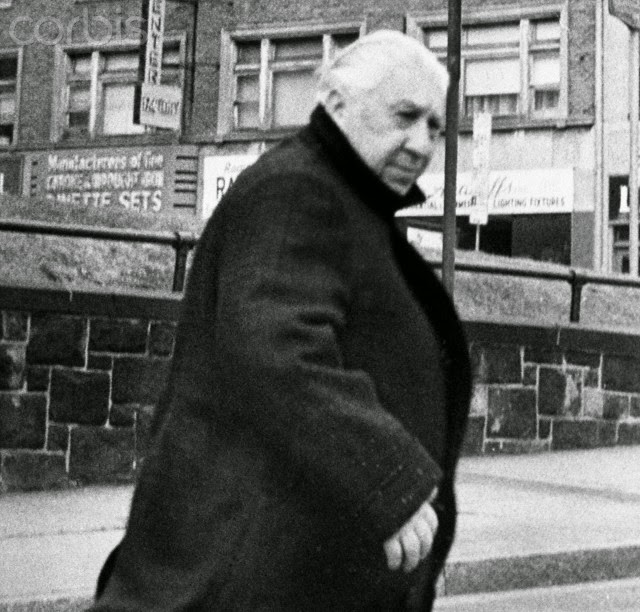 "Gyp" DeCarlo created a head ache for WITSEC.
Gerald had done quite well for himself while living his second life in San Francisco. Using his new name, "Paul Maris", he rose to the presidency of a small dress manufacturer. "Maris" had a great mind for legitimate business -- and after running a pioneering magazine advertising campaign, he exponentially increased the company's revenues and turned the small firm into "the hottest label in women's knitted tops and clingy dresses."
He and his wife grew extremely wealthy and the media showed interest. Since Maris couldn't reveal his true background, he chose to invent one, filling it with colorful anecdotes. Sharp journalists were soon looking into some "problems" with the exec's bio.
Long story short, Maris grew too big for his britches. He put 13 members of his wife's family on the company's payroll. The stockholders grew furious when they learned this and quickly decided they wanted him out. They sent an undercover private detective in to investigate. The detective eventually hit pay dirt, uncovering everything and delivering it to the unhappy investors.
They quickly warned Maris that they were going to issue a press release about his Mafia past, which would have been fatal.
The IRS, which had been keeping tabs on Maris the entire time -- the agency also believed he'd salted away millions in European bank accounts -- chose to hit him at the very moment he contacted Shur to save his life from angry shareholders.
The former mob associate and his family were relocated and given new identities --again -- and Zelmanowitz filed a $12.5 million lawsuit against Shur and WITSEC.
The end result was another book, this one the first to focus on WITSEC. Called The Alias Program, it was a hit. Since it was published on the heels of the Watergate scandal, it received an enthusiastic reception from the public, whose mistrust of the government was at its highest.
This also didn't help fuel general support for the program, flawed though the book was.
The Alias Program was deeply critical of Shur, who had ensured the funding of WITSEC by prompting the McClellan Committee to allow for the Justice Department to spend funds "for the care and protection" of mob turncoats.
 "The Animal" Barboza gives false testimony in an attempt to gain reentry
into the Witness Protection Program.
Shur, the book charged, had taken "vague language" to justify manipulating the Justice Department to relocate turncoats and provide them with new identities.
The book also led to reams of media stories about WITSEC, most of which were critical and sought to frighten the general public with the pronouncement that a former Mafioso might be living next door to them.
The third ghost appeared in February of 1976.
Joseph Donait stopped beside his car, parked on a San Francisco street. In broad daylight, he stood there and searched for his keys.
A shotgun blast ended his life.
The van from which the killer had fired was found abandoned a block away, the shotgun inside on the backseat. The murder weapon's serial number was gone, thanks to an acid douse.
Law enforcement believed it to be a mob hit, though there was ostensibly no reason to believe "Joseph Donait" had anything to do with the Mafia.
Until, of course, the man's real name was revealed to be Joseph "The Animal" Barboza.
In a story about last year's Boston Mob: The Rise and Fall of the New England Mob and Its Most Notorious Killer, the New York Daily News noted:
Joe (the Animal) Barboza, a mob hit man so vicious he “made Caligula look like a saint,” once tallied his violent crimes at 75 stabbings, 500 beatings and around 20 murders.
Give or take a few gutted corpses.
Barboza grew up dirt poor in New Bedford, Mass. He'd spent years in prison before he decided to commit himself to Cosa Nostra life in 1962. Of Portuguese decent, he knew he'd never get his button but that was not a problem. The fast money and opportunity to commit violence were enough.
"The Animal" was associated with Raymond Patriarca, the legendary New England crime boss who worked out of The Office and had close ties to New York's Genovese and Colombo crime families.
Barboza set a new low for turncoats starting over. He'd dealt drugs, fenced stolen securities (to the Patriarca crime family, no less) and even murdered a man over a soured drug deal. For that he was sentenced to five years in prison.
To get out of his sentence he tried to pass on "information" about Frank Sinatra being a puppet of organized crime. He was even called before a House committee investigating organized crime in 1972, where he testified that Sinatra was a front man for Raymond Patriarca, the true owner of the Sands casino in Las Vegas and Foutainbleau hotel in Miami, according to Barboza.
His charges were widely reported and Sinatra was compelled to appear before the House committee.
Sinatra was not pleased about having to testify, as noted.
The committee was dissolved shortly after it was revealed that all of Barboza's claims were based on rumors and hearsay.
WITSEC refused Barboza when he was released from prison, but federal agents recommended he leave California when he was paroled.
Instead he moved to San Francisco and shook down drug dealers. He'd tell them "I'm Joe Barboza, the mobster you've read about in all the newspapers. You better pay me or else."
Stories about Barboza's violent demise didn't help WITSEC either.
------
Paddy Calabrese, mentioned earlier, later turned up in Seattle, where he worked as a private eye.
A rather large number of turncoats who joined the Witness Protection Program were resettled in and around Seattle and Spokane, Washington.
One Spokane man, Michael Milano originally hailed from New Jersey. His real name is Nicholas Mitola Jr., and he also had no problem reapplying himself to a life of crime after he'd been relocated by the Marshals.
He was even described as a "one-man crime wave."
 Does this man look like a "one-man crime wave?"
In 2006, he was sentenced to 15 years in federal prison for selling a firearm to a federal witness.
Mitola was previously convicted for a 1991 killing in Spokane over a “drug scam gone sour” and involvement in the largest, most-sophisticated bookmaking operation ever busted in the city.
“I admit I’m not the cleanest person, but I’m not a violent gun guy,” he told a U.S. District Court Judge at his sentencing.
After his arrest in 2004, Mitola confessed to the FBI and offered to “help burn this town down” by providing the agency with information about gambling, drugs and other criminal activity.
But the FBI, who used Mitola to infiltrate the Luchese organized crime family in New Jersey in the late 1980s, turned down his offer.
When he’s released from prison, Mitola will be on federal supervision another five years. He will be banned from any form of gambling.
His September 2004 arrest was for selling a handgun to an informant for the FBI.
Mitola said he got the gun for Al “The Penguin” Anglisano, another former federally protected witness and also the man who turned Mitola in to the authorities because “I didn’t know if he was going to kill me and turn me in for a bounty” to Luchese family members Mitola testified against in the longest organized crime trial in U.S. history. The trial ended with acquittals. (Yes, The Boys from New Jersey trial, which was rigged.)
During its investigation, the FBI also learned about other criminal activity Mitola was involved in, including insurance fraud and food stamp fraud in the Spokane area.
Henry Hill, whose past deeds recently resurfaced in a book by a couple of our friends, Rob Sberna and Dom Cicale, was arrested there during the long dark journey he took after departing the Luchese family. Hill was arrested in Seattle in 1987 for cocaine trafficking. Using the name Martin Todd Lewis, Hill himself was so coked up he was unable to consummate a drug deal with an informant posing as a drug buyer.
Two years later he'd be divorced and jammed up over a string of additional crimes.
Vincent "Fat Vinny" Teresa, formerly of the New England Mafia (was he top-ranking figure or not? We're still not sure if that book he wrote is legit or not -- My Life in the Mafia), died in 1990 of kidney failure. He too had gotten in some trouble in Seattle when he was indicted there in the 1980s for smuggling either rare birds or cocaine -- Seattle Vice says the former, the Internet the latter.
In 1969, Teresa was indicted and sentenced to twenty years for conspiracy and transporting stolen securities. He served several months at Lewisburg, housed in a cell near John Gotti, Jimmy Hoffa and Carmine Galante.
After Teresa discovered that Patriarca crime family members had nabbed a $4 million package meant for his family, he agreed to become an informant for the FBI.
He testified in front of the US Senate in 1971 and was responsible for the indictments of over 50 mobsters. He entered the Witness Protection Program as Charles Cantino.
One more story, which might be a myth, though the story's end seems to indicate there was some truth in the fiction....
Max Kurschner put a smile on our face.
In the early 1980s, he was arrested in Seattle on income tax evasion charges. He'd been using the pseudonym Joey Black and had written a series of crime books in which the narrator was a professional killer. Supposedly, some of the story was based on true experience.
The author's fictional hit man, which was supposedly based on the author's personal experience, specialized in killing other hit men.
"Black" wrote that he'd killed 38 men, most for the mob. He claimed to have been investigated for 17 murders but had never been convicted.
The Seattle Times wrote about Kurschner while he was in prison, and he wasn't fond of it. When he got out he called up a reporter, saying he wanted to kill the scribe.
The "Joey Black" story -- a purported hit man who writes books about his crimes -- then got a good share of the media's limelight. Soon a San Francisco-based private detective was trying to link "Joey Black" to the slaying of Barboza.
Joey Black ultimately died by the gun as well.
Someone blew him away with a shotgun in a San Francisco hotel.


