
Ed Scarpo's Blog, page 29
September 8, 2015
Franzese Discusses Adoption, Champagne
 Michael Franzese, while still in the bosom of the Colombo family.
Thought this would interest you as I continue researching South Beach's history to finish writing the conclusion to How the Gambinos lost a fortune in Florida (as well as the followup story based on your questions in the comments section of another story.) (Michael addresses key topics I was hoping to discuss with him....)
The Sydney Morning Herald interviewed Michael Franzese who addressed a couple of compelling topics, one of which is the murder of Larry "Champagne" Carrozza, supposedly over a married Carrozza having the audacity to date the also-married daughter of Colombo powerhouse John "Sonny" Franzese."
Michael also reveals that he learned in recent years that he was not adopted.
(Franzese is visiting Australia to promote "An Evening with The Godfather," which was delayed because "Australian immigration authorities pondered "character" issues before granting Franzese's visa.")
A 1991 Vanity Fair article described Sonny Franzese as "a shark-eyed, bull-necked hoodlum ... a legendary enforcer given credit for dozens of murders; a man who had been tossed out of the US Army as a 'psycho-neurotic with pronounced homicidal tendencies'."
 Sonny in the Elizabeth Street precinct.
Born in 1917, he is the oldest active member of the American Mafia.
In 2010, John Franzese Jr turned state’s evidence against his father. At trial, Sonny’s lawyer argued that his client hadn’t been a threat to law enforcement since “the age of Eisenhower and Lyndon Johnson and maybe the age of George Washington.” Sonny earned the “Nod Father” nickname in the press when he was observed dozing during the trial. Convicted of extortion and sentenced to eight years in prison, Sonny is slated for release in about two years.
John Franzese Jr. entered the Witness Protection Program and lives with HIV, acquired via drug use.
Do Champagne and Gasoline Mix?Some believe the Carrozza hit "stank of gasoline money" and that Michael himself may have ordered the murder, committed when he was at the Colombo crime family's pinnacle running a billion-dollar gasoline racket.
Michael Franzese idolized his father as a child, the article notes.
"Sonny was everything to me," he says. "He was my hero." He didn't believe what kids at school said about his father being a violent mobster, and it wasn't until the early 1960s - when law enforcement agencies targeted Sonny, and their Long Island home was under constant surveillance - that reality dawned.
Until a few years ago, Franzese believed he'd been adopted by Sonny, and that his real father was one Frank Grillo. But it turns out that his late mother, Christine "Tina" Capobianco, had been a 16-year-old cigarette girl at the Stork Club in Manhattan when Sonny, already married with three kids, got her pregnant with Michael.
She married Grillo to avoid a scandal, and later, after the Mob gave Sonny permission to divorce his first wife (who'd left him and the kids), Grillo "disappeared", and Sonny and Tina got married.
"So then my mother suddenly had all these kids in the house, and she didn't treat them very well, not well at all," Franzese says gravely. "Thinking Sonny was my stepfather, I was always worried that he was gunna turn on me, like my mother did with his kids.
"That's one of the reasons I did everything I could to please him. He wanted me to be an athlete; I was an athlete. He wanted me to be a doctor; I went to college to be a doctor. That became the motivating force in my life: to please him, because I was so grateful he never turned on me."
Franzese also discussed Larry Carrozza, other things:
As Franzese likes to point out, no one of his status has ever before turned on the Mob and lived to tell the tale. (Let alone turned the tale into a lucrative industry.) He scoffs at suggestions that he actually paid Mafia bosses $10 million dollars in advance not to kill him.
"That came from one of my old prosecutors, who predicted my death right off the bat," he says. "When I survived, the same guy suggested I must have paid. Which just showed that this guy still doesn't understand the life [Mafia ways]. Because if I had paid they would have taken the $10 million and killed me anyway!"
Serendipitously, it seems, Franzese's moral crusade happens to embody one of the best-selling entertainment themes ever. Ordinary, law-abiding citizens can't resist a good, inside-the-Mob yarn, as The Godfather, Goodfellas and The Sopranos attest. The key ingredients are Brooklyn accents, dangerous sex, pitiless violence and the whatever-it-takes pragmatism Mob bosses hone by studying the works of their "champion": 16th-century Italian philosopher, diplomat and apparent sociopath, Niccolo Machiavelli.
Franzese's contribution to the genre heightens the vicarious thrills by being real. One of his oft-used lines is the question his enforcer father, John "Sonny" Franzese (still in prison at 98), asked him before he took the Mafia oath and became a "made" man: "He said, 'Mike, if you ever had to kill anybody, could you do it?' And I said, 'Dad, if the circumstances were right, I could.'"
By the time he was 35, and a caporegime like Sonny, he was pulling in more bucks than any Mob boss since Capone in the 1940s. (In 1986, he was the youngest individual listed in Fortune magazine's survey of the "Fifty Most Wealthy and Powerful Mafia Bosses".) His empire included car dealerships, gambling rackets, high-rise construction and the production of B-movies. But most of the loot came from an audacious bootleg gasoline scheme that generated almost $US50 million a month and brought him, personally, $US2 million a week.
The scam involved a process for circumventing state and federal excise tax (then 40¢ a gallon), which allowed Franzese to undercut the competition. He soon controlled 350 gas stations, storage terminals and fleets of tankers.
"We hadda get rid of [competitors]," Franzese says. "I mean, get them outta the business ... a lot of Arabs and Turks were in the business then, and we blew up a couple of their gas stations and stuff like that."
The Yuppie Don, as the media called the foppish gangster, bought homes on Long Island and in Florida and California, a private jet and a helicopter he used "instead of a car" because it could zip him away from FBI surveillance teams. Among the movies he financed was Knights of the City, a teen-gang musical. On the set he met the beautiful Cammy Garcia, a 19-year-old born-again Christian dancer who became his second wife early in 1985.
"At that stage I wasn't really buying into the Christian stuff"- Franzese was indicted on a range of charges related to his gasoline dealings. He cut a deal, pleaded guilty to some charges and got 10 years in prison. He was released after five years, after denouncing the Mob and agreeing to testify against his partners in crime (a deal he never kept), but was returned to jail for a further three years for breaching his parole and was finally freed in 1994.
Franzese maintains he never intended to testify about anything serious, but tricked investigators into believing he would. "I had immunity, so I just talked mostly about what I did, and tried to keep everybody else out of it. I was walking a fine line and it was nerve-racking. But in the end, thanks to a few lucky breaks, it worked out."
 Michael and his wife. (Certainly a great reason to leave the Mafia!)
Did Michael Franzese ever kill anyone himself?
He smiles in a practised way. "Listen," he says, "The Life is very treacherous. If you're part of it, you're part of the violence. There's no escape. I was a captain at a very high level, and I saw my share of things, let's put it that way."
What about Lawrence "Champagne Larry" Carrozza, a member of Franzese's crime crew who was murdered in 1983 for having an affair with Franzese's sister, Gia. Did he kill him?
Franzese: "Obviously not, because I was in Florida and three guys later admitted to it." (At that time, to commemorate the launch of Franzese's movie production company, Miami Gold, Miami Beach gave him the keys to the city and actually made him an honorary police commissioner.)
"They claimed I ordered Carrozza's murder," he says. "But I didn't. My sister and he were in love, but they were both married. And he was like my brother, that close. I said to him, 'Have you lost your freakin' mind? I can't even save you now!' Did I want it to happen? No way. Am I responsible? Well, I knew it was going to happen, and I didn't save him." He shrugs.
Franzese says he declined a suggestion from his boss in the Colombo family that he kill Carrozza himself. "He said, in that case, they'd handle it, and that's how it went down. Larry also had a drug habit which was another no-no. They told him they were taking him somewhere to help him straighten out. Larry was driving. They told him to pull over, then - boom - they shot him in the back of the head." Gia, who never recovered from Carrozzo's murder, took her own life nine years later.
In 2008-09 when two undercover police informants wearing bugging devices recorded 200 hours of Sonny singing like a bird about Mob crimes, including murders and the importance of properly disposing of bodies.
Even worse: one of the undercover agents was his own son, John Franzese Jr.
"I love my brother," says Franzese, "but he's been a selfish kid his whole life. I think he was always resentful that he never made it to another level [in the Mob]."
As Franzese tells it, he found his faith during his last three-year prison term, most of which was spent in solitary confinement, or "The Hole" as prisoners know it. "Cammy sent me about 400 books, and I studied every faith out there," he says. "The evidence for Christianity is very strong, and it just became real for me. I can't explain ... it was just a transformation of the heart."
He points out that he didn't leave jail as an evangelist: "I was recruited from outta prison by pro baseball leagues to come and speak to their athletes about gambling. It was years before I started speaking in churches."
Yet although he's passionate about the evils of the Mafia - "I don't know one family that's part of that life that hasn't been totally devastated!" - Franzese can switch, in a moment, to nostalgia for the homicidal brotherhood. "I miss it still," he confesses. "I'm a guy's guy. I like being around men and having their camaraderie ... we had good times, I won't deny it."


September 5, 2015
"Deep Throat" Mob Hit Tied to Recent Events
 Peraino Sr. survived the hit, but was paralyzed.
Since it's a holiday, I thought I'd trot out an older post, which I revised and edited slightly. Something to tide you over. Wishing everyone a great rest of the weekend....
An episode of the now-cancelled television series"Nothing Personal," titled Money Shot highlighted a notorious hit related to the classic porn film Deep Throat.
The Colombo crime family was behind what was supposed to be a double murder that went sideways one night in Brooklyn in the early 1980s. Nothing Personal used a Colombo turncoat to tell the story and didn't mention a key member of the hit team: Thomas "Tommy Shots" Gioeli.
Former Colombo hit man Salvatore "Big Sal" Miciotta was a jailhouse snitch who got 10 years shaved off his sentence for helping put away for life Anthony "Gaspipe" Casso. Nothing Personal left that part of the story out too.
Colombo shooters lured a father and son into a trap to kill them. Their crime was skimming from the proceeds generated by Deep Throat for New York's smallest, youngest and most violent crime family.
The porno film, one of the most successful of all time, had been bankrolled by the Colombos, who were not pleased when they learned that family soldier Joseph Peraino, Jr., and his father, Joseph, Sr., had stole from them.
Accidentally marked for death that night was a former nun who lived in the Gravesend, Brooklyn house used to lure the Perainos. The large front porch offered a means to trap the two men when Colombo shooters opened fire.
The woman was doing laundry in her and her husband's home when a pellet from a shotgun blast tore into her head, killing her. The couple had moved into the house only about 10 days prior to the shooting.
None of the shooters knows with certainty who killed the innocent bystander, but it has been bothering Gioeli ever since, to the extent that he implicated himself in the shooting by bemoaning his soul's fate, telling his confederates that he was going to hell.
Miciotta said he'd been ordered to hit the Perainos, who for years had been stealing from the Colombo administration's share of the growing piles of cash accumulating thanks to Deep Throat.
"Big Sal, in fact, had told lies while on the witness stand,
and the feds would never be able to use him again.
He was worth nothing to them."
The story of Gioeli's involvement, primarily based on his confession to an informant, has been widely published, including by the U.K.'s Mail Online.
Miciotta, when he originally told to law enforcement the story of the hit, which took place in early 1982, he named the shooters, but Tommy Shots's name was not on the list. Why the omission?
A law enforcement source told us that Sal is known for selectively telling the truth -- and is unable to ever testify again, his reputation has been permanently impugned by his lying on the witness stand.
In Gioeli's case, Tommy's own confession to another informant sunk he. He expressed his fear for his own soul due to the former nun's death.
Miciotta -- who before switching sides, also took out Larry "Champagne" Corrozza, highlighted on an episode in the first season of this show -- had lied on the witness stand when the Feds put some Colombos on trial for crimes related to the family's war.
Tommy Shots was "definitely" at the house when the Peraino's were shotgunned, the source said, adding that even Joe Waverly Cacace was likely to have been onsite as well.
Both men rose high in the Colombo hierarchy, reaching the acting boss position. Cacace, a legitimate tough guy with the wounds and reputation to back it up, was even a potential candidate for the death penalty, which was taken off the table in Tommy Shots's case, a racketeering trial including a handful of murders and other things.
Gioeli beat the top-line murder charges in his case but was still slimmed on other charges. He is incarcerated at Butner Low FCI in North Carolina. His projected release date is September 9, 2024.
Joel "Joe Waverly" Cacace is imprisoned on murder and racketeering charges and his release date is slated for September 1, 2020.
But that is now; this was then:
Selecting the Hit's Location
In January of 1982, Miciotta claimed, once given his fatal assignment, he searched for a house with a big front porch that was enclosed, which would serve as a death trap for the thieving father and son.
The Perainos arrived at the scene believing they were attending another of the countless meetings they regularly had with the Colombo bosses. They had no clue that the administration was setting them up to be killed.
Miciotta selected the house simply because of the porch. The plan called for the use of shotgun. Such heavy artillery was deemed necessary because both father and son were enormously overweight. The son was called "The Whale," the father "The Fat Guy."
The Perainos, this family strain at least, had been bottom feeders all their street lives, and were trying to eke a living from pushing porno, which Miciotta said was such a low-down business that the "Mafia I joined never would have been involved in it." The Perainos filled their coffers and passed up a piece from their production and distribution of cheapo adult films, called "loops," which prior to home video, played in seedy dimly lit theaters, such as those once located on New York's Time's Square.
Deep Throat practically fell onto their prodigious laps thanks to a creative hairdresser who had written the comedic porno script. The director also found the perfect actress, Linda Lovelace.
He filmed the entire thing in a week by himself, with financing, about $20 large, coming from the Perainos, who decided to finance the film after Lovelace gave the two piggies a demo of her sexual skill set. The hairdresser/filmmaker survived -- but got only about $22 grand for his efforts, which he humbly accepted, thankful to be left alive, according to his son. But his film, despite his ridiculous payout, earned anywhere from tens to hundred of millions of dollars for the Perainos, who paid their crime family as well.
Only they didn't pay enough and it ended up costing lives. Not the right ones, though.
Murder Via Shotgun
Colombo family soldier Joseph Peraino, Jr., and his father Joseph, Sr., made off with most of the profits, because Joe Sr.'s brother departed the U.S. for Italy just as "Deep Throat" was evolving into the mega hit it's known as today.
Feds claim that on Jan. 4, 1982, Big Sal and alleged Colombo family soldier Joseph Carna, also known as "Junior Lollipops," and Gioeli, according to the Feds, opened up with shotguns on the Perainos. The accidentally shotgunned social worker and former nun was named Veronica Zuraw, 53 when she died, court papers say. According to The Wiseguy and the Nun in The Village Voice, Zuraw was shot in the head while putting away laundry.
Joseph Peraino, Jr., was found dead outside the Lake Street home. Jr's father, however, survived but was paralyzed. This was actually his second survival -- he also lived through a previous attempt on his life.
Feds were given details of the case by former mobster-turned informant Miciotta, who was one of the shooters.
Federal prosecutors claim alleged Mafia boss Gioeli had told a government informant that he feared he was "going to hell" because of the former nun's death, as was widely reported.
Sal was kicked out of the witness protection program in 1995. He encountered Phil Colletti in prison. He confided to Sal his plans to state plain untruths on the stand. William Corolleo, a former Bonanno loanshark, also made the mistake of confiding in Sal, admitting to the ex-mobster that the feds didn't know about his bookmaking business.
Sal's masterpiece was served to him on a silver platter by "Gaspipe" Casso, was was serving time with Sal. The former Luchese underboss told Miciotta that he and a few other inmates were using an employee of the housing unit where they all lived to supply them with premium contraband, including narcotics, cigars and cellular phones. Upon hearing this, the fed's dropped Casso, too, leaving him to rot for life.
Big Sal managed to win his way back into the good graces of the fed's with his jailhouse snitching. In the end, the ex-mobster got nine years whacked off his sentence, and he was able to begin his new life in 1999.
The hit to Big Sal's credibility is something the producers of Nothing Personal should have revealed to the show's viewers.
RELATED POSTS
Cosa Nostra News: Could Be Lights Out For Joe Waverly
Cosa Nostra News: Alleged Mob Boss Gioeli's Voice
Cosa Nostra News: Two (More) Colombos on Trial for Cop Kill

August 31, 2015
Boss Cali Would Bring Gambinos Full Circle
 Whose the boss? Frank Cali, maybe.
Jerry Capeci reported that Frank Cali had ascended to the role of street boss of the Gambino crime family, though now it appears that, yet again, there's uncertainty.
"Several usually reliable sources had strongly different opinions than those expressed in last week's column," Capeci noted last Thursday, adding his initial source was sticking to his guns. "From where I'm standing," said this source, "it's Frank Cali who's calling the shots."
Whether he's street boss or not, one thing seems clear: Francesco Paolo Augusto Calì would bring the New York-based crime family, one of the fabled five, back where it belongs: in the grip of a shrewd Sicilian who likely will strengthen its ranks and magnify its fortunes. Yes, "Italian Dom" is Sicilian but in terms of boss material, there are more suitable candidates, according to Michael "Mikie Scars" DiLeonardo, with whom we spoke for this story.
His rise would also have an historical significance. It brings the Gambinos, once the largest and most powerful Mafia family in the country, full circle.
If Cali is street boss, "the Gambino family is where it's supposed to be," DiLeonardo told me, "back in the hands of Sicilians. If you look to the beginning, it started out Sicilian" and remained so until 1951, when Vincent Mangano disappeared from the face of the earth by Albert Anastasia, who took over. "In 1957, the Calabrian is dead. Then you have Carl [Gambino] and then Paul [Castellano] until December of 1985, when John Gotti, the Neapolitan, takes over. He's gone in 1990 -- and now it's back to being Sicilian."
 The Neapolitan usurper: John Gotti... Jackie Nose enjoyed prestige engendered
from being seen in pictures and on television opening doors for Gotti.
Look, it appears as if he's reaching for a door knob right now....
"Franky Boy," as he's known, was born in New York (in March 1965) and is as American as a slice of pizza. (If Cali speaks in any accent, it's Brooklynese.) His father, Augusto Cesare, is a native of Palermo and ran Arcobaleno Italiano Inc., a record and video store, on 18th Avenue.
Frank's father was never indicted and is considered a citizen, though an FBI file dating back to 1986 describes how he was questioned as part of the Pizza Connection probe. According to investigators, he was partners with Domenico Adamita, a known associate of Gaetano Badalamenti, once described by federal authorities as the ‘boss of bosses’ of the Sicilian Mafia and the ringleader of the billion-dollar drug smuggling operation known as the Pizza Connection.
Franky Boy married Pietro Inzerillo's sister Rosaria (called "Roseanne"), who is related to the Inzerillo crime family, based in Passo di Rigano. "Tall Peter" and Rosemary were both born in New York City, according to Mikie Scars.
"Tall Pete," said DiLeonardo, using Pietro's nickname, "is of the bloodline of the Inzerillos of Sicily."
He noted that back in the 1990s, Tall Pete once wore a mustache and had long hair that he'd pull into a ponytail. "Get rid of that," DiLeonardo told him. He did.
Yes, the family was (or is still) run by the Sicilian Domenico "Italian Dom" Cefalù, but he isn't a good fit, according to DiLeonardo. Reports describe Cefalu as tired, lacking in vision and not known to be a major revenue generator.
"He's a tough guy, he's a standup guy but he's not for that position.If this change in leadership is being made, Franky [Cali] and Lorenzo Mannino would be much more suitable for those positions," he added.
 Tall Pete, who once wore a ponytail, and Frank Cali, with hand on chest.
Mannino, who was once part of a five-man hit team lead by Sammy the Bull Gravano, spent years in prison for narcotics trafficking. He was once described as a "rising star" in the family. Mannino accompanied John Gambino to Philadelphia with a handful of other Gambinos to meet with then-boss Joseph "Uncle Joe" Ligambi. The so-called LaGriglia meeting was one of dozens tape recorded by "Nicky Skins" Stefanelli for the FBI during a two-year period beginning in 2009. Stefanelli committed suicide.
Mannino also set what must be an historical precedent in that he was mentioned by name by President Barack Obama at the ceremony commemorating James Comey's rise to FBI director in October 2013.
Comey is "the prosecutor who helped bring down the Gambinos," said the President.
During his prosecution of the Gambino case, "one of the defendants was an alleged hit man named Lorenzo. And during the trial, Jim won an award from the New York City Bar Association. When the court convened the next morning... a note was passed down from the defendant’s table... to Jim, and it read: “Dear Jim, congratulations on your award. No one deserves it more than you. You’re a true professional. Sincerely, Lorenzo.”
The thing is, the event never happened, according to Mannino's defense attorney, Charles Carnesi. “He never wrote the letter,” Carnesi, who defended Mannino during a lengthy 1993 trial that ended in a hung jury, told Jerry Capeci. “It didn’t happen. Although I personally agree with the sentiments expressed in it.”
Cali and Previous Gambino Bosses
Cali has an abundance of leadership qualities.
If anyone can put a crime family on solid footing in America in 2015, it's Cali, who is known far and wide on the street for being a fair negotiator.
Cali was made in January 1997, according to "a very reliable FBI source" who added that he was placed in Jackie "Nose" D'Amico's crew.
As for "official boss" Peter Gotti, who is 75 and in an Ohio-based federal prison, he isn't a factor anymore, though DiLeonardo believes Cali won't do anything to upset whatever apple cart was put in place.
"Peter, once he was pinched, became irrelevant," DiLeonardo said. He was semi-relevant when he was on the street. "No one respected him as a boss," DiLeonardo said. Still, Cali likely will continue with whatever arrangement the Gambinos have had with Peter Gotti.
"He's gonna die in prison," so there's respect there for that simple fact. Also, having an imprisoned official boss seems to be a tradition these days in New York's Cosa Nostra, with the bosses of four of the five families in prison. (Aside from Gotti, the Luchese's Vittorio "Vic" Amuso, the Colombo's Carmine Persico and the Bonanno's Michael "Mikey Nose" Mancuso are currently imprisoned, all serving life sentences save for Mancuso, who is due out in March 2019.)
"Would they go to war with the Gambinos?" It's possible, Scars says, but unlikely.
As for the previous string of Gambino bosses and acting bosses, DiLeonardo noted that the members grew to "resent and hate John [Senior]. They were sick of Junior with his arrogance. And they thought Peter was an imbecile."
Arnold "Zeke" Squitieri held power while on the street but stayed far out of the limelight, probably too far. "The whole time he was underboss, I never met him formally as underboss," Mikie Scars said, adding that Zeke had done nothing of note but deal junk and work for Gotti. "He was a John Gotti loyalist for sure."
 Zeke kept a low profile as acting boss. Greg
 DePalma often complained to "Jack Falcone"
about having to meet with "Number One."
One Gotti, however, could be a potentially major variable awaiting Cali and the Gambinos. Gene Gotti is due to be released on Sept. 14, 2018. He is currently in Pollock FCI.
"There's a dynamic there," Scars said. "Would Gene and Johnny [Carneglia, who is due out one month earlier than Gene] put a crew together" and start making moves on the street? It's possible, DiLeonardo said. "Would they go to war with the Gambinos?" It's possible, Scars says, adding however it's not likely.
"Frank will probably meet with Genie and feel him out, keep him as a captain. Genie did a lot of years in prison. Too many, John should have let those guys plea out," DiLeonardo said. There's no truth to reports that Gene Gotti was broken down from skipper by the family for dealing in drugs, according to DiLeonardo.
DiLeonardo believes, however, that more than likely Gene Gotti will collect what's his and stay in his own orbit, outside of the Gambino crime family.
Also, the Gambino brothers may have some residual animosity for the crime family named for their distant relative, Carlo Gambino, who rose to the pinnacle of organized crime in America, dying in his bed with all his wealth and still retaining the official boss position. This would stem from John Gotti Senior breaking down John Gambino from captain to soldier, while the wily drug-dealing Sicilian was in prison. The reason for the jailhouse demotion had nothing to do with Gambino being sentenced for drug dealing. Rather, it was the result of John Gotti Senior learning that the Gambino brothers had minted a much larger fortune from their drug business than Gotti had ever known. The Gambino brothers were paying, but apparently not a large enough slice, at least in Senior's view, so he broke Gambino down in rank.
Later, when Peter Gotti was on the street overseeing the family's operations, Leonard "Lenny" DiMaria and Nicholas "Little Nicky" Corozzo spoke with him about promoting John Gambino back to capo. Peter Gotti apparently wanted a consensus before making the call. We know he at least consulted with DiLeonardo, who told him that he should indeed reinstate Gambino as captain: "It is the right thing to do," Michael agreed.
Having a Mob Boss's Skill SetOne of Cali's talents is his ability not to upset apple carts. He's a master at forging alliances and cutting fair deals. He's also a sharp businessman who came up on his own, not having anyone within the mob to assist him.
"Frank got where he is because of Frank," DiLeonardo said. "He got himself up.He had doors open for him because of the way he conducted himself."
Law enforcement sources say Cali's rise would not be surprising. They call him old school in that he doesn't talk on the phone and only meets with those with whom he's very close. However, apparently he let into his inner circle a confidential informant (CI), according to FBI documents.
 "Mikie Scars" enjoys wine and a cigar while on a recent vacation.
 We can speculate that he may have been lamenting a move he'd
wanted to make in Florida, which Junior nixed, likely costing the
Gambino crime family a fortune.
Cali is named as a major Mafia figure in an investigation regarding "the continuing strengthening of ties in US territory - in particular with members of the Inzerillo-Gambino American mafia family. These ties are likely to be related to illicit trafficking across the Atlantic between the new generations of the American and Sicilian Cosa Nostra."
A November 2007 report by Palermo's Antimafia District Attorney's Office, which referenced and included extracts from FBI documents, noted:
"The gathering of evidence in police operations codenamed 'Grande mandamento' ('Big District') and 'Gothà' have underlined connections between the American Mafia and the Sicilian Mafia."The key families under the spotlight were both the Gambino crime family and the Sicilian Inzerillo Mafia clan, which was nearly exterminated in a Mafia war sparked by the Corleonesi.
In 2003-2004, the Inzerillo-Gambino alliance involved a "complex dispute" regarding the return of Inzerillo Cosa Nostra family members to Palermo from the U.S. Law enforcement also believed narcotics trafficking was on the agenda.
The report documents "trips to the USA carried out by numerous mafia members from Palermo between the end of 2003 and the beginning of 2004..."
A confidential informant mentioned but not named in FBI documents was close to Cali during the investigation. He detailed for the feds some of Cali's moves in and out of Palermo.
Sammy Bull Creates Vacuum
Cali rose to prominence, as did many others, following the flipping of Sammy the Bull Gravano, who put away around 100 gangsters, many from the Gambino family, creating a huge vacuum on the street.
Specifically, it was a decision that John Gotti made that ultimately created Cali's path. In September of 1992, capo John Gambino hightailed it out of New York with his brother. They both faced heroin smuggling charges and had disappeared, though they were caught not long after.
But with Gambino gone, Gotti needed a new overseer on 18th Avenue, a Gambino stronghold in Bensonhurst, Brooklyn. DiLeonardo and John "Jackie Nose" D'Amico were put in charge.
 When a major gangster like Sammy the Bull flips, an entire generation of Mafiosi
moves up prematurely, which may have a detrimental impact on a crime family
if those who rise are too inexperienced. Likewise, "stars" get their break sooner.
Eighteenth Avenue, specifically from 75th Street on down, though not exactly enemy territory, wasn't overly friendly either, as DiLeonardo related it. The area was rife with Sicilians, some of whom were made members of the Gambino family. An assortment of them, however, belonged to the Sicilian Cosa Nostra, mainly the Inzerillo family who'd fled the murderous Toto Riina and his Corleonesi. Dual memberships were not allowed. Those seeking to be made in America needed to be "released" from their Sicilian crime family.
As DiLeonardo lived in Bensonhurst near 18th Avenue, he was the face of the Gotti administration. (Jackie Nose, mainly a Manhattan gangster, probably didn't know Bath Beach from Brighton Beach -- and wouldn't even be able to locate Brooklyn, meaning the entire borough, if given a map to consult, Mikie Scars said. "I used to call him Christopher Columbus," Mikie Scars said.)
"Jackie knows nothing about the men in my area and the goings on,” Scars said. "He thinks 18th Avenue is new-found territory." Still, DiLeonardo has some fond memories of his former partner. "Jackie was a very personable guy. He can talk to you for 12 hours over coffee."
He added: "I was very loyal to Jack, more than he knows. That’s a story for another day."
Among other things, DiLeonardo found himself dealing with the issues of the Sicilian mobsters on 18th Avenue. He used Cali as his go-between. Both DiLeonardo and D'Amico quickly realized Cali was different than the other offspring of imprisoned Sicilian gangsters.
"Frank understood the concept of Cosa Nostra better than the sons of John and Joe Gambino, by far," DiLeonardo said. Cali eventually raised his profile by serving as a skillful go-between for the Sicilians and the Italian-American Gambino administration.
Two key dynamics had been established by the time DiLeonardo and D'Amico arrived on 18th Avenue. One was the creation of vast fortunes from drug peddling rackets. This money was used to purchase a variety of business, including bakeries and pizzerias. The other dynamic was gambling -- the area was rife with slot machines and gambling and the degenerate gamblers who gravitate to them. In fact, the Sicilians gambled so often, ownership papers for all those bakeries and pizzerias, as well as a fleet of Lincolns and Cadillacs, regularly changed hands.
In fact, the Pizza Connection case had decimated the area of its Sicilians by the time Scars was there.
"It's scorched earth," he said of the area. "A lot of the Sicilians got arrested. We got their sons. We're monitoring them. We oversaw for the family and got 10 percent from them," Scars said.
Cali's New Generation
The new generation of mobsters, which included Cali (then an associate), went into the cafe business as well as import/export. They also owned the pizzerias and bakeries they'd inherited from their incarcerated fathers.
The Gambinos also were able to take effective control of a huge revenue generator as well: Brooklyn's feast of Santa Rosalia, Palermo's patron saint. The September feast, beginning in August, brings large numbers of visitors annually to Brooklyn's Bensonhurst section.

Mikie Scars and Jackie Nose taking control certainly improved the family's finances, but there were other factors. The section was far from being a smoothly purring machine. "The kids ran wild after their fathers went away." Because of this, DiLeonardo and D'Amico took some of them under their wing, Cali among them.
Cali initially got closer to D'Amico, eventually driving for the mobster. DiLeonardo found himself practically raising one of the many Gambino offspring -- several of whom were named Thomas.
Scars's Tommy was nicknamed "Heavy Tommy" because he was overweight. "He became my 'project,'" DiLeonardo said. (There also was a "Curly Tommy," a "Tommy from LA" etc.)
"We grew these kids into the life," DiLeonardo said.
Phone Cards: Opportunity, RiskEventually, Jackie brought Frank Cali into phone cards, where again Cali made a name for himself as an earner. More importantly, Cali also was able to show off his mediating skills when he, D'Amico and Joe Watts (who'd started the phone card operation, then brought D'Amico and Cali in) found themselves in trouble with John "Junior" Gotti when he assumed the role of final decision maker of a five-man panel running the family. On the panel were James "Jimmy Brown" Failla, Louis Vallario, D'Amico. Peter Gotti and Junior.
Junior Gotti, DiLeonardo told us, never held the acting boss title.
 John Gotti sent Jackie Nose and Mikie Scars to oversee
18th Avenue. Nose, from Manhattan, couldn't find Brooklyn
on a map, according to DiLeonardo.
Watts is one of the pioneers of the phone card racket. The scam was simple. The Mafia widely distributed cheap phone cards in neighborhoods throughout New York and other big cities with large immigrant populations. Sold at prices ranging from $5 to $500, the cards offered blocks of minutes for the buyers to dial international calls at low rates. Theoretically, anyway.
Some cards actually worked for a brief time. Others only returned busy signals. The distributors would yank the operation and reappeare in another guise to flood the street with replacement cards by the time a consumer returned to complain about the card.
There was also a use for these cards by mob members and associates, among others.
“Cards were untraceable,” said DiLeonardo, noting that they definitely provided a clear benefit to the criminal element.
The companies supplying the minutes, including AT&T and MCI, got stuck with unpaid invoices.
And mob guys like Joe Watts grew wealthier.
A typical news story about the phone card racket, from the Daily News:
Mob-linked firms including one controlled by John (Junior) Gotti have made big scores with pre-paid phone cards, court papers and law enforcement sources say. The alleged scams are being investigated by two federal grand juries. The phone-card industry is ripe for corruption, having mushroomed to an estimated $2 billion last year from $40 million in 1993, authorities say.
"It's better than drugs, because they're making so much money and the penalties are zip," a veteran organized crime investigator said in the report.
Watts, a long-time Staten Island resident with links to the Gambino crime family going back decades, had helped John Gotti Senior shoot his way to power. Because of this, Watts thought he could write his own ticket and by this time was accustomed to doing his own thing. (I referred to Watts as "a Staten Island Gambino associate" in conversation with Michael. "Resident," he corrected me.)
Watts had good relations with Mikie Scars. "Joe pushed for me to get made, way back," said DiLeonardo. However, it was Paul Zaccaria who ultimately proposed him.
 Watts, a shrewd, wealthy gangster, now
in prison, was a professional hitter
who thought he had carte blanche.
Enter Nicholas "Little Nicky" Corozzo, who ran a crew in Brooklyn. Learning that Watts, D'Amico and Cali were spinning off vast fortunes from their card business, he moved to capitalize on the opportunity. "Nicky's got his guys buying all these phone cards off of Watts," DiLeonardo said.
When Nicky handed Junior his 10 percent tribute from the phone card business, he asked Junior if he'd had any idea how much Watts and his guys were themselves earning off of phone cards.
DiLeonardo said that Corozzo was in the right here. Watts was basically running wild, not turning in any money to the family's administration.
"Watts thought he had carte blanche to do anything," DiLeonardo said.
Watts was extremely shrewd. Called "The German" he was a confirmed shooter and killer. He also didn't like Junior. "Watts didn't respect him," DiLeonardo said.
Upon hearing what Nicky said about Watts, D'Amico and Cali, Junior grew furious.
 Guys like Nicky Corozzo are lucky that guys like Frank
Cali tend to forget the past out of expediency.
He met with DiLeonardo to vent his anger about not getting his end of the phone card operation, Scars said.
"Junior told me he wanted to break D'Amico from capo to soldier. He wanted to call Watts in to abuse him and he also said he wasn't going to make Frank Cali."
Michael told Junior that he would handle the situation. "I told Junior that I would go talk to Jack and Frank."
Michael asked Cali to meet him by his Shore Road apartment. "I told him what Nicky had told Junior about Junior not getting an end from Watts's operation."
"I told Frank that Junior was going to break Jackie, call Watts out and abuse him and that he was not going to make him, Cali."
"What should I do?" Cali, then a mere associate, asked DiLeonardo, whose reply was simple: "You gotta give him money."
Right then and there, without consulting Watts or D'Amico, Cali said, "Michael, how about I give him 25 cents a card."
"I'll bring it back to him," Mikie Scars told Frank. "I am sure he'd be happy."
Michael met with Junior Gotti and said: "You can't hold this against the kid." Noting that Watts was really the one sticking it to Junior, he said: "You can't get mad at him (meaning Cali). He didn't go back to them, he told me what he wanted to do."
Junior was pleased with Cali's offer. Cali and D'Amico from that moment were off the hook.
"I went back and told Frank and I patched it up," DiLeonardo said.
The beef between Watts (in sync with other members of the old Gotti guard) and Junior continued to escalate. Junior started up his own phone card operation and ultimately faced law enforcement's wrath.
As did others. One operation apparently tied to many Gambino mobsters was Communications Network Corp. (Conetco), which began selling cards in 1995, according to the News story. By the spring of 1996 it activated $20 million worth of cards a month. Conetco went bankrupt that year, leaving WorldCom, then the nation's No. 4 long-distance carrier, holding the bag for $94 million. And yes, this is that WorldCom, once the nation's No. 2 long-distance phone company when its Chapter 11 bankruptcy filing rocked the business world in 2006. Only one month previous it offered revelations regarding the improper booking of $3.8 billion.
Junior's card case was rolled into the larger Scores indictment. The Secret Service even was able to wiretap and record Junior offering his wisdom about the phone card business to an underling:
“You never get jammed up,” Junior was recorded saying. “But if it happens we have several cards, you come right to their stores and you bring the other cards in. Pump them right in. Tell them we're having a problem with the other card, ‘Here, take this card.’ ”
Cali was on his way....
We asked Michael what advice he'd give Cali if DiLeonardo were the Gambino crime family's consigliere.
"I'd tell him just what I told John Junior after his father went away and Junior was made the final decision maker for a five-man panel then running the Gambino family.
"Keep the family happy. Let everyone eat and spread the wealth around. Stay away from murders and stay away from the drug business and we'll have good long run. There's a lot of money to be made."
Michael's grandfather often used the Sicilian saying "mangia troppo s'afugga," which translates roughly into people who eat too much tend to choke. Don't be greedy, in other words. That was one of the principals that guided Michael during his decades in the life -- and he believes that Frank must have heard that phrase often as well because it also seems to have guided Cali.
We dedicate this story to Mikie Scars' grandfather.

August 27, 2015
Greg Scarpa Jr "Transitioning, Yeah"
 Greg Scarpa Jr., left, Senior, right....
EXCLUSIVE: Well, I guess the guy who answered the phone at that RRM field office in Kansas didn't like the sound of my voice....
So a long-time friend of Cosa Nostra News telephoned the facility today and recorded the discussion, emailing the MPEG to yours truly.
Apparently, her feminine voice worked its magic on him and within seconds he gave her what we needed and couldn't get -- recorded confirmation.
Greg Scarpa Junior is "transitioning, yeah."Gregory Scarpa Junior, as noted, was sentenced to 40 years to life for assorted mob mayhem.
Only Scarpa Junior moved -- we're not sure when -- to a Residential Reentry Management Field Office in Kansas City, Kansas.
His BOP release data, however, is 2035 still, so it looks like -- if we're onto something here, and I believe that we are -- he is certainly getting "special" assistance which could do with the information he gave - or has given - on those despicable terrorists who took him into their inner circle mistakenly believing he'd flex Mafia muscle in service to their hatred of these United States.
I don't have confirmation that this is the case -- but what else can we make of the recorded response of "transitioning, yeah"...?
He grudgingly said it too, as if knowing he was hiding something in plain sight.
I'll have to check if I can somehow post the audio clip for you all to hear.....If B allows it and someone out there knowledgeable about posting audio clips comes to my aid, I will upload the data....
Also: If the little image I sketch here is correct -- I say "Hats off to Greg Scarpa Junior!"
Well played.
This is one "informant" I don't think any of you will have problems with.... I certainly don't.
A doff of the hat to friend B.R. too who stretched out her smooth silky hand of friendship (and used her sexy beguiling vocal chords to assist this humble web entity).
Saluti....
Also see:Greg Scarpa Jr. A Mafia wiseguy uncovers a treasure trove of al Qaeda intel | Peter Lance: "By Peter Lance. The 9/11 Commission Report, published in July 2004 and later nominated for a National Book Award, concluded that the original World Trade Center bombing cell was made up of a “loosely based group of Sunni Islamists”; further, that the 9/11 plot had originated not with Ramzi Yousef in Manila in 1994, as I had demonstrated, but with Yousef’s uncle Khalid Shaikh Mohammed, who—according to Snell’s account—merely pitched the planes-as-missiles operation to Osama bin Laden in 1996. The evidence I’d obtained from the Philippines National Police demonstrated that the Yousef-KSM Manila cell was funded directly by bin Laden via his brother-in-law, but the Commission, with the backing of Snell and other ex-Feds, concluded that KSM wasn’t even a member of al Qaeda in 1996. By mid-2004 I was getting closer to the truth. The 1996 FBI 302 memos I’d tried to share with the commission showed that the Bureau, and prosecutors from the Justice Department, had affirmatively covered up evidence of an active al Qaeda cell in New York City. A number of those 302′s can be accessed HERE."

August 24, 2015
What's Going on with Greg Scarpa Jr?
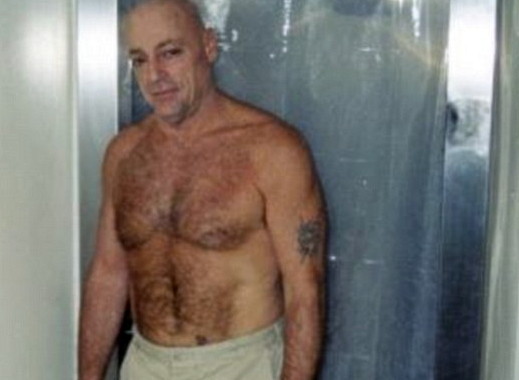 Scarpa Junior at Colorado's ADX.
Gregory Scarpa Junior, sentenced to 40 years to life for assorted mob mayhem (a law enforcement source told us he's been linked to 24 homicides alone), has been transferred from the same Supermax that Vinny Basciano was in.
Only Scarpa Junior has been moved -- we're not sure when -- to something called a Residential Reentry Management Field Office based in Kansas City, Kansas.
"He's never getting out," the source told us. "They might have moved him to make him more comfortable now that everything has settled down." But still -- a a Residential Reentry Management Field Office?
We phoned the RRMs press office to ask the question: if someone is transferred to an RRM, does it mean they are being prepared to be released.
The phone rep couldn't give us an answer and suggested we call another phone number. But if a person who works for the RRM unit couldn't provide us with a simple definition of what an RRM is, can we honestly expect someone from the BOP to give us an answer? We never mentioned Scarpa Junior, only asked for a definition of what those places are. They are defined on the website as:
RRMs administer contracts for community-based programs and serve as the Federal Bureau of Prisons local liaison with the federal courts, the U.S. Marshals Service, state and local corrections, and a variety of community groups within their specific judicial districts. RRM Staff also monitor local Residential Reentry Centers which are responsible for providing federal offenders with community-based services that will assist with their reentry needs.
Scarpa Junior was about to testify at the Roy Lindley "Lin" DeVecchio trial. He never got the opportunity.
In 2006, Brooklyn district attorney Charles Hynes indicted DeVecchio on charges that he'd helped Scarpa kill four people in the 1980s and early 1990s by supplying confidential FBI information. The trial was destroyed in the fall of 2007 when Tom Robbins of The Village Voice came forward with an interview he and Jerry Capeci had conducted with Schiro in 1997 in which Schiro denied that DeVecchio had been involved in murders. This eventually orced prosecutors to move for a dismissal of charges against DeVecchio, which was granted on November 1, 2007.
Sandra Harmon authored Mafia Son: The Scarpa Mob Family, the FBI, and a Story of Betrayal.

View a collection of Scarpa Junior's 302s posted online by Peter Lance, and a recap of part of his story.
The following is footnoted summary of Scarpa Junior.
As a prison informant Gregory Scarpa Jr. claimed that Ramzi Yousef had told him of plans to bomb an airplane or kidnap a US Attorney to cause a mistrial in Yousef's 1996 trial. Yousef also implied having assistance from a foreign government and claimed this government would offer Scarpa asylum. [1] The FBI report did not name the foreign government, but Wikipedia citing Simon Reeve's The New Jackals notes that "Yousef's maternal uncle, Khalid Sheikh Mohammed, was living in Qatar as the guest of a Qatari cabinet official." [2]
On March 31, Scarpa claimed that Yousef had sent a bomb through the DHL postal service. [3] On June 13, Scarpa named Abdul Hakim Murad as a co-conspirator in a plan to bomb an airplane. [4] On July 18, the day of the bombing, Scarpa would say that Yousef had previously warned a Jerry Koupakis not to fly on any TWA aircraft on the morning of July 18. [5] Scarpa would also say that Yousef credited Bojinka (Bojinga) with the Dhahran bombing of June 26, 1996, [6] and that Yousef had people from England scouting the Atlanta Olympic Games. [7]
Coincidence
The destruction of TWA flight 800 on the evening of July 17 was officially determined to be an accident. This has been disputed by independent investigators.
A Christian supremacist, Eric Rudolph, would take credit for the July 27 bombing of the Olympic Games.
Cover-up
Rodney Stich claims that the FBI covered up Scarpa's reports to protect FBI supervisor Lindley DeVecchio from murder charges. [8]
In 2005, Scarpa would tell police that Oklahoma City Bombing conspirator Terry Nichols had told him about a cache of explosives hidden in his old home. Scarpa failed a polygraph examination. The FBI, under pressure from Congress, searched the house and found the explosives where Scarpa said they would be. [9]

Vinny Gorgeous Sprung -- from Supermax Housing
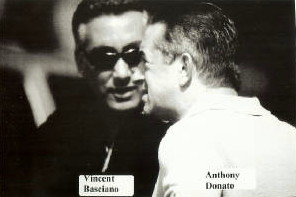
Vincent "Vinny Gorgeous" Basciano won his freedom... from Colorado's Supermax prison, that is.
He's not moving far. His new digs are located within a high-security facility on the compound as the Administrative Maximum Security or ADX, according to an exclusive New York Post report.
"Better than the hellhole Supermax prison in Colorado... where ex-Bonanno crime boss Vincent (Vinny Gorgeous) Basciano had been rotting since 2011 after he was convicted of racketeering and murder. Basciano, 55, was recently sprung from the most infamous jail in the nation to a high-security facility located on the same 31-acre compound in Florence, Colo., the Daily News has learned. The exact date of the transfer is unclear," the Post noted. "Vinny B" was convicted in 2011 of ordering a mob murder and was also suspected of drawing up a hit list while awaiting a separate racketeering and murder trial. Brooklyn Federal Judge Nicholas Garaufis, a federal prosecutor and cooperating witnesses were included on the list, which Basciano insisted wasn't a hit list. Basciano was convicted in the second trial, but he was not formally charged for writing the list of names.
Basciano is serving two life sentences.
"Now, the special administration measures ordered by the attorney general that kept Basciano in almost total isolation in the prison’s notorious “H Block” are history. So is the 23-hour-a-day confinement to a cell," noted the Post.
Sources told the Post's John Marzulli that Basciano apparently had successfully "graduated" from a Supermax “step-down program,” which rewards good behavior with a transfer to a less-restrictive jail.
“Inmates who continue to demonstrate positive institutional adjustment for 12 months are referred for transfer to another facility,” according to documents on the bureau website.
Basciano will be able to mingle with other inmates, room with a bunkmate and play sports. And if Basciano stays out of trouble, it's possible he'd eventually be moved to a penitentiary closer to his family in the Bronx.
Supermax, the concept...
The federal Bureau of Prison’s highest security lock-up is the Colorado Supermax where is housed prisoners incarcerated as part of the US's war on terror. Mobsters also are known to occasionally be housed on Supermax prisons, unfairly in our opinion. John Gotti and Vinny B are two names.
British “shoe bomber” Richard Reid is held there. Omar Abdel-Rahman, jailed for conspiracy after the 1993 bombing of the World Trade Center, is also believed to be an inmate.
Ramzi Yousef, also implicated in the 1993 plot, is also behind bars at the institution known for its harsh conditions.
Abdel-Rahman, also known as the blind sheik, has been transferred to a minimum security facility in Butner, North Carolina due to failing health. He is in the same institution as Bernie Madoff.
The U.S. government uses the abbreviation ADX for the Florence supermax. ADX stands for Administrative Maximum Security.
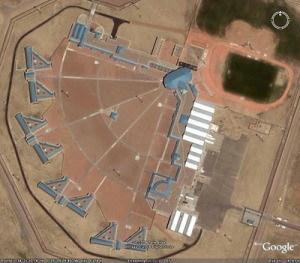
Built in 1994 at a cost of about $60m, ADX Florence is said to be equipped with 1,400 remote-controlled steel doors, motion detectors, pressure pads and gun towers with perfect sightlines across the complex.
Tightly controlled and technologically advanced, such facilities are designed for the most dangerous and disruptive prisoners – and have been a source of controversy for many years.
Solitary confinement is an almost permanent way of life, with ADX Florence’s 400-or-so prisoners locked in spartan cells for at least 23 hours each day.
An hour each day can be spent in a concrete-walled recreation yard.
A typical “Supermax” cell’s furniture – bed, desk, stool – is made from poured concrete.
The cells are equipped with showers that run on a timer, and a toilet that shuts off if plugged. Meals are delivered to inmates in their cells to restrict interaction. Each cell also is equipped for 24-hour video and audio surveillance.
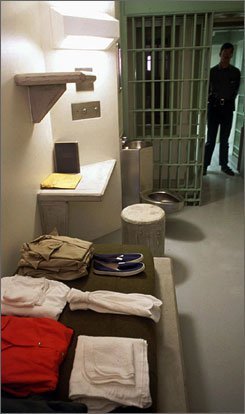
Typical supermax cell.
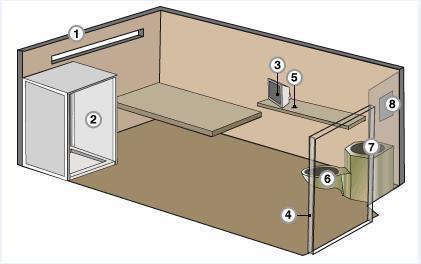
1. Typical cell sized 7ft x 12ft (3.5x2m) with small slit window
2. Shower works on timer
3. Small black and white TV showing educational programmes (some prisoners only)

4. Heavy duty steel door or grate
5. Writing desk
6. Toilet which shuts off if blocked
7. Sink
8. Steel mirror, rather than smashable glass
From Markosun's Blog

August 23, 2015
How the Gambinos Lost a Fortune in Florida
 John Gotti 2.0
John "Junior" Gotti did have something in common with his father after all. It took us a while to find it -- but it's there, and to our surprise, nobody has commented on it before.
The list of what he didn't have in common is quite long. Junior didn't position himself to be a modern-day capo de tutti capi. He didn't take out a boss and take over a crime family. He didn't kill guys for refusing to come when he called (and no other reason). In fact, he didn't come close to meeting his father's body count, and as we noted previously, he implemented a ban on killing that lasted for a pretty good time (though he didn't reach that decision to ban murder alone, as we also previously noted).
John Junior wasn't as popular within his family (or has hated without); he didn't dress like a million bucks and didn't have his father's innate charm and natural ease among anyone, whether a female newscaster at the courthouse door or some punk whose head he was ready to sever.
Junior did order the beating of a high-profile newscaster but the two incompetents brought a gun with them that day and actually shot the guy in broad daylight.
The fact that they lived to flip on Junior is testament to his lack of blood lust.
We also heard a story about a court hearing related to the Scores stripclub case. Apparently, Greg DePalma, sitting at the hearing with the rest of the cast (albeit in a wheelchair, with oxygen mask) was muttering things, only his volume was too high.
One of the indicted sitting near Greg heard the man cursing the prosecutor (most of the courtroom heard Greg, actually). At one point this guy next to DePalma turned to Junior (who was seated on his other said) and said: "We gotta do something about him."
To which Junior allegedly replied: "Whaddya want me to do? Kill the guy?" Only Junior's volume was up too high also. (In all fairness, this was before he got out on bail so he was probably feeling downright surly. How'd you like getting three hots and a cot in Valhalla?)
The full story of what transpired during that hearing would make a great book alone, which is why we say again, we hope someone tells the Scores story, preferably on the big screen. Hollywood, this is a dynamite property -- contact us and we'll put you in touch with the guy who we believe has the inside track.
[By the way, apparently Peter Gotti was made official boss at some point...which means the Gambinos are stuck with him until he dies.]
Speaking of tracks, we're getting off ours. We were talking about a skill Junior had in common with Gotti Senior.
Now, before we can go into that, we have to give you bit of background that involves Mickey Rourke, The Westies (or at least a film that was supposed to be made about them), Jackie Nose and Joe Watts, Michael "Mikie Scars" DiLeonardo, who told us this story we're about to convey, The Binger, a small dilapidated beachfront property and finally John "Junior" Gotti himself..
[FADE OUT: Screen grows blurry as we enter a flashback]
This is how the Gambino crime family under John Gotti Senior cultivated ties to Mickey Rourke (who played an instrumental role in helping the family lose that fortune, as we will relate). Yes, we mean Mickey Rourke the Hollywood actor, who self-destructed and looks like a freak due to about a dozen too many stints under the plastic surgeon's scalpel.)
 Mickey Rourke, the Hollywood god we
all know and loved.....
In the 1980s, he was a good-looking man, a top-tier Hollywood actor who made millions starring in big-budgeted Hollywood films.
To be continued.....

August 21, 2015
Say Hello to the Gambino Family's New Acting Boss

Revised, updated : The Gambino crime family is reportedly now under the auspices of Staten Island-based Frank Cali, 49, who'd been serving on a ruling panel for several years, according to Ganglandnews.com's Jerry Capeci.
Domenico Cefalu stepped down as acting boss, allowing Cali's advance.
Cali, Sicilian-born, is related by marriage to Gambino members as well as members of a Sicilian Cosa Nostra family. Cali's wife's uncle is Gambino capo John Gambino, and his brother Joseph and brother-in-law Peter Inzerillo are both allegedly soldiers in the Gambino crime family.
He rose to capo before 40, less than a decade after he was inducted. Cefalu wanted Cali to grab the reigns earlier.
As for official boss, two names have been said to hold that title, Peter Gotti and Arnold Squitieri. This will be explored in a follow-up.
Cali has only one criminal conviction: a federal extortion charge. He served 16 months in prison. News of his promotion no doubt means the Fed's will be watching him much closer, though he's been on their radar for years.
The Gambinos are believed by law enforcement to have the strongest ties to Sicily's Cosa Nostra (Gambino consiglieri Bartholomew "Bobby Baboots" Vernaci also is Sicilian, and is serving life). New Jersey's DeCavalcante crime family also is controlled by Sicilians and is reportedly under the control of the Gambino's today,
Cali was considered to be the Gambino's "ambassador to Sicilian mobsters" and is linked to the Inzerillo Mafia family, from Palermo, as noted above.
"Cali is seen as a man of influence and power by organized crime members in Italy," according to Assistant U.S. Attorney Joseph Lipton.
 Domenico Cefalu.
Salvatore Inzerillo (Palermo, 1944 – Palermo, May 11, 1981) was an Italian drug dealing mafiosi who rose to be a powerful boss of Palermo's Passo di Rigano family. He was murdered in May 1981 by the Corleonesi of Totò Riina, who opposed the established Palermo Mafia families.
The Inzerillo family came close to total annihilation by the Corleonesi. New York-based mobsters, including members of the Gambino crime family, worked out deal under which the surviving Inzerillos could depart for the U.S. The agreement entailed none of them, or their offspring, ever returning to Sicily.
Many went to the New York area and joined the Gambino family.
"However, after the arrest of Totò Riina and other Corleonesi like Leoluca Bagarella, some Inzerillos returned to Sicily.
Francesco Inzerillo returned in 1997 -- after he was expelled by officials from the U.S.
Cali's promotion a couple of years ago to underboss marked something of a comeback for the Sicilians in New York's Cosa Nostra.
In May 2010, Cali's uncle, capo John Gambino, headed the crime family’s delegation that met in New Jersey with the Philadelphia crime family.
Unfortunately for them, that meeting was recorded by then-cooperating witness Nicholas "Nicky Skins" Stefanelli and was played during the racketeering trial of Philadelphia's former mob boss Joseph "Uncle Joe" Ligambi, who is on the street today.
Stefanelli committed suicide as reported; but, the former North Jersey mobster had already done the damage, having recorded dozens of conversations along the East Coast for about two years. He never testified, however, limiting the recording's value.
Developing....

Say Hello to the Gambino's New Acting Boss
The Gambino crime family is reportedly now under the auspices of Staten-Island based-Sicilian Frank Cali, 49, who'd been serving on a panel for several years, according to Ganglandnews.com's Jerry Capeci.
Domenico Cefalu stepped down as acting boss, allowing Cali to advance.
Cali, Sicilian-born, is related by marriage to members of a Sicilian Cosa Nostra family. Cali's wife's uncle is Gambino capo John Gambino, and his brother Joseph and brother-in-law Peter Inzerillo are both allegedly soldiers in the Gambino crime family.
He rose to capo before 40, less than a decade after he was inducted.
Cali has one criminal conviction: a federal extortion charge. He served 16 months in prison.
The Gambinos are believed by law enforcement to have the strongest ties to Sicily. New Jersey's DeCavalcante crime family also is controlled by Sicilians and is reportedly under the control of the Gambino's today,
Cali has been on the Feds' radar. He was considered to be the Gambino "ambassador to Sicilian mobsters" and he is linked to the Inzerillo Mafia family, from Palermo, as noted above.
"Cali is seen as a man of influence and power by organized crime members in Italy," according to Assistant U.S. Attorney Joseph Lipton.
Domenico Cefalu.Salvatore Inzerillo (Palermo, 1944 – Palermo, May 11, 1981) was an Italian drug dealing mafiosi who rose to be a powerful boss of Palermo's Passo di Rigano family. He was killed in May 1981 by the Corleonesi of Totò Riina, who opposed the established Palermo Mafia families, which included Inzerillo.
The Inzerillo family came close to total annihilation by the Corleonesi. New York-based mobsters, including members of the Gambino crime family, worked out deal under which the surviving Inzerillos could depart for the U.S. The agreement entailed none of them, or their offspring, ever returning to Sicily.
Many went to the New York area and joined forces with the Gambino family...
"However, after the arrest of Totò Riina and other Corleonesi like Leoluca Bagarella, the Inzerillos started to return home to Sicily.
Francesco Inzerillo returned in 1997 -- after he was expelled from the U.S.
Cali's promotion a couple of years ago to underboss marked something of a comeback for the Sicilians in Cosa Nostra.
In May 2010, Cali's uncle, capo John Gambino, headed the crime family’s delegation that met in New Jersey with the Philadelphia crime family.
Unfortunately for them, that meeting was recorded by then-cooperating witness Nicholas "Nicky Skins" Stefanelli and was played sometime during the racketeering trial of Philadelphia's former mob boss Joseph "Uncle Joe" Ligambi.
Stefanelli committed suicide as reported; but, the former North Jersey mobster had already done the damage, having recorded dozens of conversations along the East Coast for about two years.
Developing....
August 20, 2015
Inside Dope on Colombo Family's Michael Persico
 Michael Persico
This arrives directly from Kenji Gallo's Breakshot Blog:
This Tuesday another man who has lived the mafia life will face a judge and be sentenced for his crimes: Michael Persico.
This so called “mafia prince” never had to get in the trenches to get his hands dirty. He was born into power and ordered others (who were not born into the ruling class) to do his work for him. He lived the life of privilege, wealth and power that comes with being mafia royalty. A position he never earned. He was able to live the way he did because of the murderous reign of his father Carmine.
Michael Persico was never an inducted member of the Colombo Family, yet he held the power of life and death. He held a position that was higher than the capos in the family. He was able to amass wealth from the family. He was the conduit to his father, imprisoned-for-life Boss Carmine Persico. He held the purse strings for the Persico Family. When his brother Allie Boy was locked up and his ex-wife decided move on with her life, Michael was in the the thick of it. He took calls from his brother. He met with men who had one purpose and that was murder. He took part in the murder of Michael Devine who was not part of the life. Michael Devine had nothing to do with the Colombo Family or the Mafia he was a civilian. He was shot to death in his car on Staten Island because he loved the wrong woman and that woman happened to be Allie Boys ex-wife.
Michael Persico got away with murder for 18 years until another Colombo soldier decided to change sides.
Tuesday Michael Persico will only face a maximum of 5 years. He has had a battery of high priced lawyers (that none of the family soldiers would ever be able to afford) delay the sentencing for 3 years.
One of the tapes the FBI used to bring the racketeering charges against Michael was made by Steve Marcus who Michael gave a $100,000 Shylock loan. Steven was partners with Teddy Persico and Eddie Garofalo in the trucking business on Staten Island.
Eddie has already taken a 7 year deal and Teddy took 12 years. The two people who really gained the most but face the least are Michael Persico and Alicia DiMichele. They both got great deals for pleading out.
The enterprise could not have functioned without those two.
Maybe the judge will grant Michael Persico his wish and let him take back his plea deal. Send him to trial where he will face murder and racketeering charges.
Teddy Persico will emerge from prison ready to continue on in the family tradition because that is what he knows. Eddie Garofalo, whose father was a big man in the construction industry in New York until he was murdered in front of his Brooklyn home by Sammy the Bull’s crew, continued on in the footsteps of his father regardless of his father’s fate. The Gambinos wanted to take away Eddie’s business after his father was murdered, but Teddy stepped in the argument. Teddy told them to let the kid earn a living. Once Teddy and I were talking about a guy who bad mouthed Eddie for not doing anything about his father’s murder. The guy was talking about using a gun to get revenge. Teddy said what was he supposed to do? He was a kid. Fight the whole Gambino family? A few years later Eddie was in a bad spot because nothing happened to him after I wore a wire on him. The Colombos wondered why nothing had happened to him as a result. I wonder also.
I hope more guys continue to get out of the life. Maybe more will see that it leads to a dead end. There are no happy endings in the Mafia. There are no exceptions to the rule.
The Colombos need to take notice of how Michael lives and how many lawyers he has and how he was able to post millions in bail. Then they need to look at what they have for themselves. Michael, and those like him, live off the blood and sweat of others.


