
Ed Scarpo's Blog, page 48
November 19, 2014
Kill One of Ours, We Kill Two of Yours: A Bath Ave. Story
 Anthony Spero with godson Georgie Adamo, murdered in 1992.
In the late 1980s/early 1990s, mobsters and associates were routinely murdered in New York's five boroughs.
In places like Bath Avenue, the remains of violent gangland hits were found in car trunks or slumped over steering wheels; they ripened in the backs of trucks and vans. Some were buried, many never to be found. The victims were shot late at night or in the early morning when no witnesses were around. But bullets also flew in broad daylight, sometimes just across the street from a police station.
Often, law enforcement--NYPD, DA's detectives, the Feds--knew who the killer was, but knowing and having the evidence to prove it in court are two different things and can be worlds apart.
George Conte back then was a capo in the Luchese family. Called "Georgie Goggles," he and Luchese capo George "Georgie Neck" Zappola were later charged for the slaying of painters union official and potential government witness James Bishop on orders from underboss Anthony "Gaspipe" Casso.
[Kenji Gallo has written about Conte on his Breakshot Blog: "[Conte] and the other Brooklyn capos [of the Luchese family] did not like the fact that after Gaspipe went away the power of the family shifted back to the Bronx with Steve Crea and his faction running the family. Steve Crea is more what Tommy Lucchese had in mind for the future of his family. Steve is in construction and that is where the big money comes from for the family. So George and the others decided to kill Steve Crea but it never went down."
 Jimmy Calandra (seated, far right); Luchese's Frank Lastorino stands behind Calandra;
Gambino capo Joe Gambino is next to Lastorino; sitting next to Calandra is Luchese's
Patty Dello Russo; Florida wiseguy Michael Sessa is next to Patty
[Conte, who was reportedly busted down to soldier, likely with the rest of the Brooklyn Luchese faction, and Zappola got out of prison in March of this year.]
Conte was around 10 years older than members of the Bath Avenue Crew who lost one of their own in December of 1991. Georgie Adamo, godson to then-Bonanno acting boss Anthony Spero, was murdered.
Adamo had a troubled life and took up crime at an early age; eventually he stole mainly to feed a voracious drug habit. He'd lost his father while an infant. In 1975, NYPD officers came to the family's Bensonhurst, Brooklyn home to tell Georgie's mother that her husband had been murdered. A suspected Gambino associate, his body was found with that of another man; both had been shot in the head and then tied in blankets and tossed in the back of a stolen van. Spero stepped up to act as the boy's godfather.
The murder devastated the Bath Avenue Crew. Paulie Gulino, who'd been mentored by Tommy "Karate" Pitera and ran the crew, said: "We gotta get revenge. It's our friend and this ain't right."
Steven Romano was the killer. The cops knew this but there were no witnesses.
Georgie had tried to rob "Fat Stevie," who dealt crack cocaine. He got into Stevie's car with a knife and Fat Stevie took the knife from him and plunged it into Georgie's heart, killing him. He died in front of his house inside the car.
Paulie G told the others to find Romano and kill him. But Romano, who knew Adamo was connected to Spero, disappeared from Brooklyn and hid in Manhattan, though occasionally he'd visit Neil Nastro, who lived by the intersection of 15th and Benson.
 The Bath Avenue kids; Georgie Adamo, in middle, in jail; Paulie Gulino
to the left and Jimmy Calandra to the right.
When the Bath Avenue Crew learned this, Paulie G changed the order: "Kill Neil. We can't get to Romano, so we'll kill his friend." The only potential problem was that Neil was on record with George Conte. There could be some blowback.
The hit was organized and the team locked and loaded. Jimmy Calandra was wheelman and driving with him were William "Applehead" Galloway, Joey Calco and Tommy Reynolds.
Around Bay Street and Cropsey Avenue, they beeped Neil. This was 1992; beepers were all the rage, especially among drug dealers like Neil and Fat Stevie. Instead of calling first, Neil drove to meet them. Apparently, Neil had no inkling of potential danger; when beeped and given an intersection, he'd driven straight there. Only that time he had a driving companion: his uncle.
Neil pulled over on Bay 8th and Cropsey. Calandra was parked not far away. Reynolds and Calco got out of the car and walked up to Neil. Reynolds opened the driver's door, put a .357 Magnum to Neil's head and blew his brains out. Then, he trained the gun on the uncle and fired one into his head. Reynolds and Calco then robbed any cash and cocaine they found within.
"The guy was all wired up," Reynolds said later, by way of explanation for shooting the uncle. At the time, the crew had no idea who Neil had been driving with. Also, Calco apparently touched a car door, leaving prints. They were never connected to him though.
The two hurried back into the car. Doors slammed and Calandra put the pedal to the metal and took off. The car hurtled down the street, shoveling away from the scene of the double-homicide. A bystander picked the wrong time to cross the street. Calandra hit the person, sending him flying through the air.
"I feel like Action Jackson!" Applehead yelled, referencing the 1988 Carl Weathers action film.
Calandra headed for Staten Island, pulling over first on the Verrazano–Narrows Bridge to drop the gun in the icy waters of the Narrows, the tidal strait separating Staten Island and Brooklyn.
Jimmy dropped Calco and Reynolds off at the Staten Island mall parking lot, where their cars were parked. He and Applehead drove back to Brooklyn. Calandra then stopped to check in with Paulie G, who was at Gregs Inn. He told Gulino the details. None of them knew if the guy Neil was driving with (the unfortunate uncle) was connected to anyone in the Mafia, Gulino noted.
Early 1992 was a busy time for the Bath Avenue Crew. The situation with Mikey Hamster was still going on. Hamster tried to take credit for the murder of John Polio, which is why the Bath Avenue Crew was gunning for him in the first place. Only Hamster had nothing to do with the murder.
 George Conte in the middle next to his bride; on left is
Frankie Marraconda.Polio was selling drugs with Albert Slavin for Conte.
Polio had pissed off a lot of people before his murder. Word on the street was he'd been screwing the wife of a Luchese mobster (the one for whom he dealt drugs). Polio also had problems with Bobby DeCicco, son of Gambino crime family heavyweight George DeCicco. "Big George" DeCicco, who died this past October of natural causes, was part of John Gotti's inner circle. The Dapper Don was then at perhaps the pinnacle of his power.
The Bath Avenue Crew three times had gone after Hamster, but missed each time.
Two weeks after the double hit, Calandra got a phonecall from Charles “Charlie Tuna” Giustra, who was married to Frankie Marraconda’s sister. Frankie was a Gambino associate then not long for this world. He died later that same year, shot to death by Frank "Frankie Bones" Papagni, a Luchese captain. Luchese capos were killing people left and right in those days, when Casso and Vittorio "Little Vic" Amuso were running the family.
"You around?" Charlie Tuna asked Calandra.
Calandra was around, he told Charlie Tuna.
"Come by."
"Gimme an hour," Calandra said.
Calandra called Tommy Reynolds to tell him what's going on.
"Jimmy! Don’t go! Tell Paulie! Tuna is with the Little Guy!" Reynolds shouted at him over the phone. Conte was called "The Little Guy." Neil and the uncle were both with Conte, the Crew had since learned. Neil had been handing the Luchese capo a portion of his cocaine proceeds every week. But he wasn't doing so anymore because Reynolds had blown his head off.
"Bring Paulie with you!" Reynolds yelled at Jimmy before they hung up.
Gulino took the call from Jimmy in stride. Just mob life in Brooklyn in 1992.
"Want me to come with you?" he asked Jimmy,
"No. I got my gun," Calandra said. "I'm just letting you know what's going on...." he said, not finishing the sentence.
Purring through the Brooklyn Streets in his Corvette, Calandra arrived at his destination, near Bay 13th and Cropsey.
He walked up the three steps that led to the screened front door. Through the screen, he saw Charlie Tuna inside sitting on the couch. Tuna held up a hand and said nonchalantly, "C'mon in Jimmy!"
Calandra opened the door and put one foot inside the house. Then he froze. Faintly, he heard the floor creak. In a split second he made a fast calculation: he hadn't made the floor creak; Charlie Tuna hadn't made the floor creak. But straight across the room from Jimmy was a wall, behind which was a staircase that rose to the second floor. The guy hiding on the stairs made the floor creak...
Calandra instinctively pulled out his gun. His heart raced. "Fight or flight" kicked in, the body's inborn muscle memory defense system. Calandra jetted back to his Corvette and sped away.
Rounding Bay 23rd and Bath Avenue, the 'vette screeched to a hault. Standing there on the street corner were Pauli G and Bonanno capo Joe Benante, who served as the crew's conduit to Spero.
Calandra walked up to them and told them what happened. "It was like they were gonna ambush me," he said.
Just then, another car came to an abrupt hault. George Conte was the driver. He rolled the window down and called out: “Jimmy, I want to talk to you!”
Calandra took a few steps toward Conte.
"I just left Tuna’s house and you’re driving over here now," Calandra said. "Were you in that house?"
"Jimmy, would I do that to you? I know you you're whole life..."
Conte got out of the car and walked away with Calandra to speak privately.
"Look, Jimmy, tell Tommy and Joey to get out of town," Conte said.
Calandra stopped and called Gulino over.
"He’s telling me that Tommy and Joey had something to do with Neil," Calandra told Paulie G, referring to Conte who was standing right there.
Gulino looked at Conte. "Georgie, what's going on?"
Before Conte could get too many words out, Gulino stopped him.
"You killed one of ours. We killed two of yours. Now we're even."
"Jimmy is over here with you guys?" Conte asked. He was too young for it to have been a senior moment. Perhaps it was an absentminded pronouncement of guilt?
"Yeah, but you know that." Gulino glared at him and then walked back to Benante.
Calandra had known Conte since he was 7 years old. In fact, when he was 12-13 years old, Conte needed to redecorate his house, so he invited Calandra and other kids to come over for a sort of playtime, Brooklyn style. He armed them with bats and axes and told them to destroy as much of the interior of the house as they could.
Later after the ambush, Calandra found out that Conte thought the Bath Avenue Bonanno associates had killed Neil in revenge for the murder of Polio.
When Calandra was doing time in prison, he grew closer to Conte.
They talked about a lot of things. Calandra recalled one night when he and some friends were eating at a diner on Cropsey and Bay 25th when in walked a guy called "Frankie Sharp."
"He's a manipulator," Conte interjected. "I'm gonna kill him when I get out of here."
This story is based on a draft of a chapter in Jimmy Calandra's memoir, which he furnished us with. He expects to be finished by April of 2015.
I am not answering any questions about this story--Ed Scarpo


November 18, 2014
How Rizzuto Got His Revenge, Mafia-Style
 Rizzuto was referred to as the Tall Guy.Adrian Humphreys' National Post story is required reading for anyone interested in the Canadian mob war (which included both Cosa Nostra and 'Ndrangheta members) that reached its bloody crescendo under the stewardship of now-deceased Montreal Godfather Vito Rizzuto.
The article focuses on new information regarding how Rizzuto swiftly took charge when he returned home from prison, marshalled his forces and with true Sicilian cunningness, set loose the dogs of war by first testing his own men's loyalty.
He seems to have taken a page from John Gotti's playbook by topping his death list with the names of those who blinked when he summoned them.
Gotti famously once said: "He's gonna die because he refused to come in when I called...." Louis DiBono, otherwise, hadn't done anything wrong. And this was not even during a war--though Gotti came close to being a wartime Don following the DeCicco murder.
The source of the new information in Humphreys' story is wiretap recordings of a Canadian mobster living in Sicily who "reveals tantalizing details about the recent Mafia war that killed more than 40 people in Montreal, Toronto, Mexico and Italy," noted Humphreys.
The target of a wide-ranging investigation in Palermo, the mobster offered a blow by blow account of Rizzuto's vendetta from its initial stages, which took place in Cuba and the Dominican Republic, where Rizzuto "summoned top henchmen to secret meetings..." What was discussed? Well, if you were invited and failed to attend, you were "among his first targets."
After his release from a U.S. prison--where he must have mentally murdered Joe Massino a million times for enabling the RMCP to yank him away, prompting the deadly turmoil in Montreal that claimed the lives of both his father and son--Rizzuto knew he had little time because cancer was devouring his lungs. So he got right to work.
A court in Italy heard the details. "It’s like the saying goes — when the cat’s away the mice will play,” veteran mobster Juan Ramon Fernandez said, referring to those who betrayed Rizzuto while he was away, Humphreys wrote.
“But mice can only dance for a while, because they’re small,” he added -- "as a warning of Rizzuto’s power," Humphreys added.
While these events occured, all Fernandez’s phone calls were recorded for presentation at a Palermo murder trial.
Rizzuto’s trips south allowed him to plot privately with his senior men about the attacks on his family, including the murders of his eldest son and father, police said.
Months before Rizzuto’s scheduled release from prison on Oct. 5, 2012, his friends were already making plans.
Fernandez frequently spoke with a man identified in court as Frank Campoli, 58, a Toronto businessman who is related by marriage to the Rizzuto family. Mr. Campoli said Rizzuto was planning a trip to Cuba on Nov. 22 and asked Fernandez to come, court heard.
“Yes, I’ll come, I’ll come,” said Fernandez.
Fernandez then immediately called a friend in Toronto, identified in court as Rosario Staffiere, 55, owner of a limousine rental firm, and told him of his conversation.
“He wanted to put me to the test,” Fernandez said. “He wanted to know if I still want to see him [Rizzuto], and I said ‘Yes, of course.’”
Then, he added with a laugh: “Take a shot in the f—ing head? Of course I’m going to see him.”
On the day of Rizzuto’s release, Fernandez again spoke with Mr. Campoli, court heard. “How is he?” Fernandez asked.
“I don’t know where the hell he went,” answered Mr. Campoli. “He didn’t want to be seen with anyone right now, know what I mean?”...
On Nov. 5, 2012 — a month after Rizzuto’s release and two weeks before his Cuba trip — Joseph Di Maulo, a veteran Quebec mobster, was gunned down in his driveway, a murder seen as the first volley of Rizzuto’s revenge.
Fernandez immediately phoned Canada asking about the shooting. He called a Montreal man identified in court as Antonio Carbone, 79, who was close to the mobsters.
Mr. Carbone said Rizzuto’s opponents were afraid, staying indoors, wearing bulletproof vests or driving armoured cars.
“The important ones are hiding,” Mr. Carbone said. “A few big names will soon feel…” he said, with his words trailing off....
READ ENTIRE ARTICLE

The Day "Jimmy Gap" Almost Bought It
 Jimmy Calandra, middle
Jimmy "The Gap" Calandra, a well-known former gangster out of Brooklyn, provided me with an excerpt of a manuscript he is working on about the life and crimes of the Bath Avenue Crew.
I've been waiting for him to email me the thing for three goddamn days but I finally have it, am giving it a read and will post it later today.
Calandra made an appearance on National Geographic's documentary about the New York Mafia.
He also made news last year when he visited his old stomping grounds and stepped into a Dunkin' Donuts on 18th Avenue. A couple inside recognized him and harassed him. The male, a local convicted hoodlum, shouted "rat" at him while the lady threw a cup of coffee in Calandra's face.
Lucky for Jimmy it was iced coffee. Not so lucky for the other guy, Jimmy can use his fists. A well placed crack to the jaw knocked the guy flat-on-his-ass unconscious.
The upcoming excerpt involves George Conte, formerly a Luchese capo who was supposedly knocked down to soldier. Conte got out of prison a few months ago. Back in the 1980s, Gregory "Georgie Goggles" Conte was heavily associated with Brooklyn Luchese chiefs Frank "Big Frank" Lastorino and Anthony "Gaspipe" Casso.
All of them were on the street and active when our story occurs.... stay tuned....

Ndrangheta Members Arrested; La Santa Induction Rite Videotaped
A video of one conversation between clan leaders and Italian transcription can be seen here.
Italian anti-mafia police arrested 40 Ndrangheta members in northern Italy this week, and even filmed a "series of initiation rites," according to IBT. The video clip above contains reference to La Santa, a "secret society within a secret society."
According to Mafia Brotherhoods: Organized Crime, Italian Style by Letizia Paoli, the santista rank was established at the end of the 1960s by Girolamo Piromalli, leader of the Piromalli family in Gioia Tauro, along with bosses of other families, to create a way around traditional Ndrangheta rules forbidding drug trafficking.
The arrests resulted from two years of investigation, ANSA reported. Police bugged cellphones and planted hidden cameras. Those arrested face charges related to racketeering, extortion and possession of unlicensed firearms.
The arrests reportedly took place in the small villages of Como and Lecco in Lombardy, northern Italy. Some Ndrangheta members were also arrested in Sicily.
The ceremony filmed involved initiating a member as a “Santa,” the highest rank in the organization. It took place at a mangiata, or feast, of three clans.
Members referred to each other and their absent colleagues with the names of 19th century Italian unification leaders, like Giuseppe Garibaldi, the name used for one of the clan leaders. The larger meeting involved assigning jobs and roles to each member and organizing a chain of leadership among the clans.
The operation was led by prosecutor Ilda Boccassini, who led the arrest of 300 suspected ‘Ndrangheta members in 2010 in a countrywide, synchronized operation.

November 17, 2014
Kenji Gallo on Mafia's New Communication Tactics...
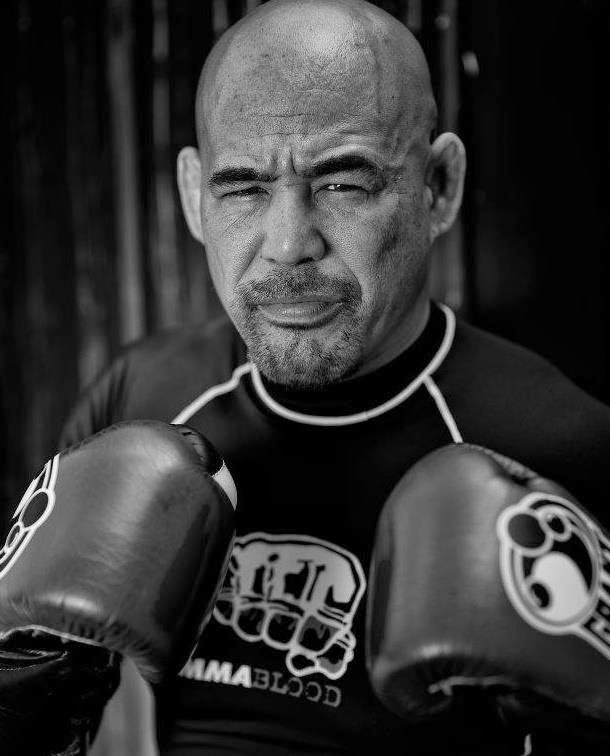 Kenji Gallo, blogger, asskicker, author of "Breakshot,"
one of the best books about the Mafia available.
From this week's Breakshot Blog by friend Kenji Gallo (a onetime associate of the Colombo family who became a turncoat charged with running a radio show for the feds. Kenji also wrote a great book about life in the mob -- particularly in the crazy madhouse known as the Colombo family. We wrote a little about Kenji and his book back in this post.) some interesting info on how the mob communicates...
"The Colombo’s were aware that the FBI and others were always watching or listening to them so they adopted some new tactics. A thumb across the cheek was how they referred to a made guy and a thumb across the back was their way of indicating a Capo. All the families used methods close to this, in Los Angeles they would point to the chest for a soldier, the shoulder for a Capo and the sky for Pete Milano the Boss.
The stories and the methods are the same all over the US in the Mafia families. Chicago is the same, just not as “Cowboy” as the rest of the families. All the the families now have a good chance of continuing on because the FBI is busy with terrorists.
 Tabitha Stevens. Yes, we did include this image fortuitouslyand we did have to crop the bottom half...
The information they got from men like Joey Caves, Joey Massino, Sammy Gravano, Andrew DiDonato, Mikey Scars, Philip Leonetti, Al D’Arco and so many more is priceless and provides a glimpse into a secret criminal world that few on the outside can understand.
Hollywood will keep churning out their mindless gangster flicks with stars who carry a new pistol with designer gloves on their hands. Most of these will fall short of the life but all you have to do is look at the trials of the real deal. SEE FULL STORY
According to the "about me" section on his Breakshot blog, Kenny "Kenji" Gallo, 45, is a half-Japanese/half-Italian-American gangster turned informant and former director and producer of pornographic films. Kenji is one of the most unlikely and controversial gangsters... When the police cracked down on his drug-trafficking empire, Gallo abandoned the cocaine trade for life in the American Mafia as a jet-setting playboy gangster, marrying porn star Tabitha Stevens, and making millions in prostitution, credit fraud, "pump-and-dump" stock fraud, gambling, extortion, and the porn business. As the protégé of Mafia legends like John "Sonny" Franzese, Jerry Zimmerman, and Vincent "Jimmy" Caci, Gallo quickly earned the reputation as one the smartest and most capable young mobsters in America.

November 15, 2014
Outfit Crews Face Pressure; New Boss Takes Reins
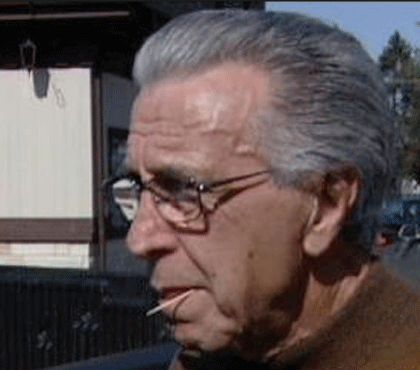 Johnny No Nose....This has been quite a year for the Chicago Outfit, which saw an historical transition in July in terms of the guy in the big seat. Johnny “No Nose” DiFronzo, suffering from health problems, was replaced.
Meanwhile, Gangland News noted that The Chicago Outfit has been facing a full-court press from law enforcement involving the FBI and the Cook County prosecutor's office.
Four members of the Outfit's Cicero crew were recently convicted on federal extortion charges. Frank Orlando and Robert McManus lost at trial on charges of conspiring to extort money for Mark Dziuban, then vice president of sales for American Litho, a printing company in Carol Stream.
Prosecutors alleged the two sought the aid of alleged crew chief Paul Carparelli, 45, an Outfit-connected pizzeria owner who outsourced the muscle to union bodyguard George Brown and plumbing contractor Vito Iozzo. Brown, 51, and Iozzo, 43, each pleaded guilty to one count of conspiracy to commit extortion and also copped to participating in several additional collection attempts in Nevada, Wisconsin and New Jersey (apparently the state's seven crime families don't mind the Outfit operating there). One victim was beaten by the two thugs.
Dziuban and Carparelli are awaiting trial.
Meanwhile, the west side has been hit hard by the Cook County Sheriffs' Department as part of Operation Crew Cut in which Cook County prosecutors charged five people in a racketeering investigation that involved drug trafficking, home invasions and kidnapping. Robert "Bobby Pinocchio" Panozzo, Paul Koroluk and Maher Abuhasah face charges for racketeering conspiracy and criminal drug conspiracy. Panozzo's son and Koroluk's wife face drug charges.
"Operation Crew Cut" was a 10-month investigation by state and federal law enforcement targeting members of the Panozzo-Koroluk street crew.
As noted here: Panozzo and Koroluk have several burglary convictions and had been operating one of the most sophisticated burglary rings police had ever seen, prosecutors said. Panozzo and Koroluk operated in the area of Grand and Western, the old Italian neighborhood known as the Patch on the near West side, where Joey the Clown Lombardo and many other mobsters once held forth.
The crew’s crimes included home invasions, armed robberies, burglaries, insurance fraud and prostitution; they were said to have posed as cops to rob around five or six major drug-houses per year and were considered to have sophisticated methods. Police scanners, police vests, and real police badges stolen from police officers’ homes were seized by police while arresting each member of the crew.
Members of the drug-dealing Outfit crew robbed their product by posing as police officers to gain access to Mexican Cartel stash houses, which the mobsters then pilfered for drugs. According to the Chicago Tribune, the men were known to utilize violent methods, such as once slicing off the ear of a reported cartel member who lied to them during one robbery.
Gangland News also reported that Panozzo, who had been mentored by Lombardo, also is under investigation for his alleged roles in a 1987 murder and a 2013 attempted murder. Panonzzo's former driver, Jeff Hollinghead, decided to flip following a 2012 arrest for burglary and home invasion. "Hollinghead has told the FBI and police that Bobby Pinocchio, nicknamed by the imprisoned Joey the Clown for his deceptive ways, bragged about murdering an elderly woman in downtown Chicago in October 1987," Gangland News reported.
Hollinghead also copped to plotting with Panozzo to kill a witness in Hollinghead's case in November 2013.
Cicero crew chief Carparelli is said to be a lieutenant of Lake County mob chief Salvatore "Solly D" DeLaurentis, and Panozzo and Koroluk are allegedly tied to Albert “Little Guy” Vena, the reputed head of the Grand Avenue mob, according to Gangland News.
So who is the boss of the Chicago Outfit? Supposedly a panel of elderly wiseguy statesmen, which includes DeLaurentis and Vena, as well as Marco D’Amico, Johnny Matassa, James Iandino, Peter DiFronzo and Joseph “The Builder” Andriacchi. But in reality, former Outfit overlord Johnny “No Nose” DiFronzo, whose mental and physical health are rapidly declining, was replaced by “The Builder” Andriacchi, it was reported in July,
An Outfit expert noted that The Builder has occupied the Outfit’s top seat before, filling in for DiFronzo when No Nose was incarcerated in the early 1990s. Andriacchi is the fifth Outfit boss in the past 40-plus years. Previous bosses included Paul Ricca, Anthony “Joe B” Accardo, Joseph Aiuppa and John DiFronzo.
Joseph Fosco wrote that DiFronzo is "one of the most respected Outfit bosses that Chicago has seen since the death of Joseph Aiuppa in 1997," also adding that "it is apparent that [No-Nose] sold out the organization in order to remain unscathed by the landmark Family Secrets trial."
 Andriacchi holds the power now...
Fosco further noted of the panel: "Out of the... fellows [listed as panel members]... only one of them would continue standing if Joe [The Builder] told them all to sit down. Pete is the one who would remain standing (at least for a while). Pete would probably remain standing out of habit since his reduced status is still a rather new thing for him. With Johnny DiFronzo in a compromised state, Pete’s power in the Outfit is drastically reduced.
"Pete would eventually sit down for Andriacchi, though. Additionally, out of all the names on the list above, it is my opinion that all of them are capable of committing murder. Hands down, Albert Vena ranks as number one in the killing category. In addition to his role in the Chicago Outfit, Vena holds a significant position of power in an extremely ruthless and capable street gang in Chicago called the C-Notes."
Vena assumed control of the Grand Avenue crew while "The Clown" Lombardo began dying in prison. According to reports, Vena stands just over 5 feet tall and is one of the most feared men in Chicago.
No one in the Outfit calls him Albert. It's Albie, or behind his back, "the little guy," and guys who know, know. As in "the little guy is active," a phrase that might mean nothing to you, but it's the kind of thing that prompts nightmares from Oak Brook to Rush Street for some.
Vena was acquitted in Cook County Circuit Court of the 1992 murder of Sam Taglia of River Forest. Vena was alleged to have shot Taglia in the head, slit his throat, then stuffed him in the trunk of his own car in Melrose Park.

Interest in Vince Isoldi Baffling...
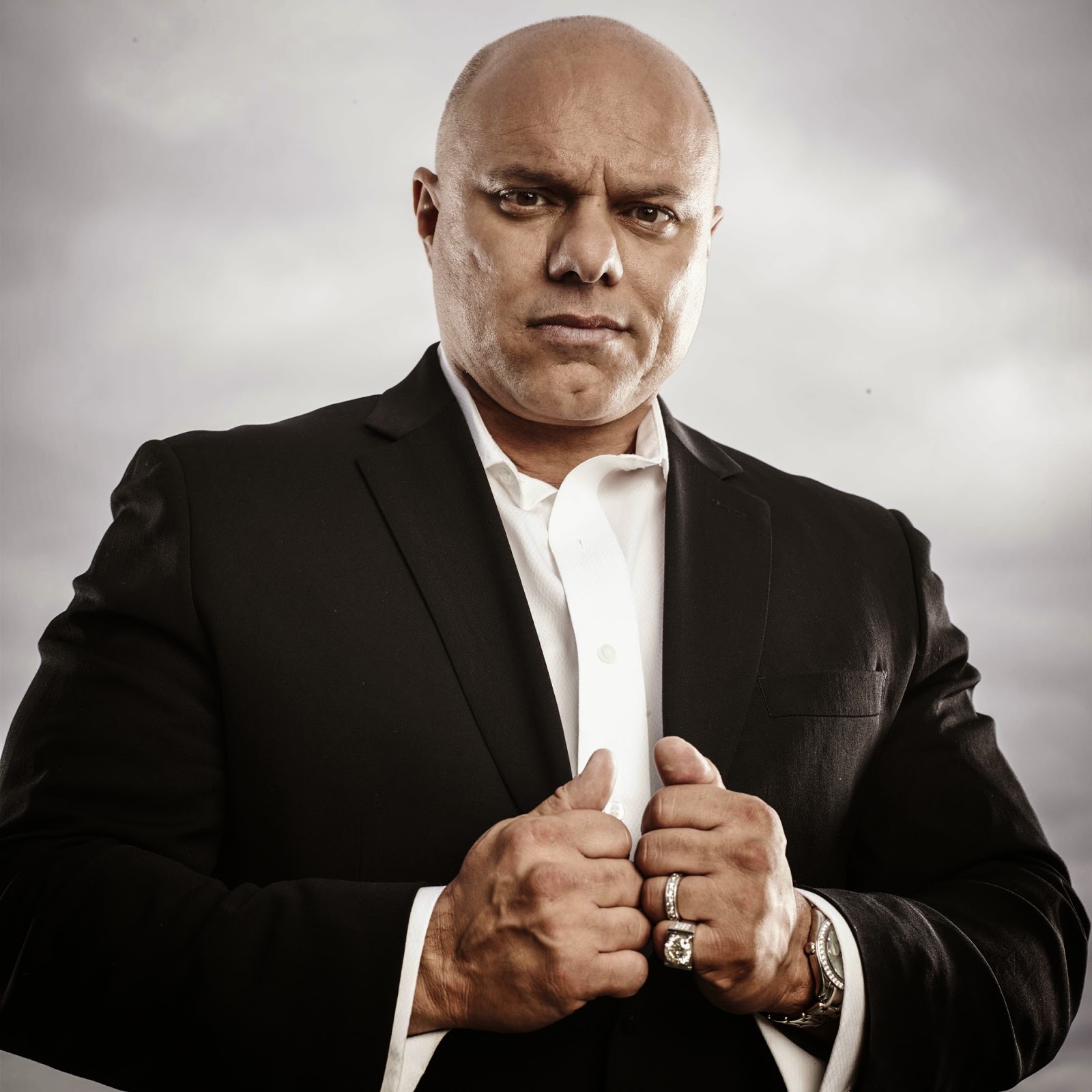 Vince IsoldiWhen a story cracks my all-time top-10 list, I take notice.
One story about Vince Isoldi, the "Godfather of Pittsburgh," is now number 6 on that list (see below). What I find interesting is it is kind of a "nothing" story.... I included info from a couple of restaurant reviews in the piece!
Interestingly, it doesn't follow the usual formula.... As you can see on the list below, usually the top posts generate the most comments, I assume a byproduct of interest in the topic. But in the Isoldi story, there is not a single comment.
So what do you all think? Why is this show so popular?
Leaked Court Records Expose D'Avanzo Mob TiesFeb 1, 2013, 9 comments
Hoodwinked: Long Island Restaurateur on Ramsay's '...Aug 14, 2011, 81 comments
Wanna Know Each Mob Wife's Net Worth? Read This......Jan 13, 2013
Cast Named for VH1's 'Mob Wives' Reality ShowApr 18, 2011, 31 comments
Dad Graziano Is Speaking to 'Mob Wives' Daughters,...Feb 6, 2012, 57 comments
Woman Killed on Property Owned by A&E "Godfather"May 17, 2014
Bull Victim's Son Prompts 'Mob Wives' Reboot: Kare...Oct 28, 2013, 11 comments
Lee D'Avanzo, Not Tall Guy, Behind "Mob Wives" Reb...Dec 22, 2013
From Renee: Drita's Hubby Cheated on Her with 'Jun...Feb 6, 2012, 2 comments
AllAboutTRH Blog: Ramona’s Dad a Gambino Capo?Feb 27, 2012, 25 comments
I remember writing that story. It was a Saturday, I believe early in the AM. I was bored, looking around the web for something interesting to read when I found the quirky A&E announcement about the show. Researching Isoldi that night, all I could find were a few minor stories that I packaged together with the brief announcement from A&E.
I actually ran part of a restaurant review written by Elizabeth Downer for the Pittsburgh Post-Gazette: Pittsburgh's StripDistrict has a long history as a food distribution center and the home of the original Primanti's Brothers sandwich but upscale dining is a recent Strip phenomenon. First Kaya, then Lidia's, Eleven, and now Isoldi's are transforming The Strip into a dining destination.
From another review, on TribLIVE, I posted: Pittsburgh nightclubs open one day, close the next and open yet again another day. Vince Isoldi knows the drill. He is proprietor of two former venues, Club Millennium and Club Chemistry, which were on the second floor of a building along 19th Street in the Strip District. Club Chemistry recently was gutted, remodeled and renamed Pure Pittsburgh...
The other story, about a murder, definitely piqued my interest. The murder had nothing to do with Isoldi, but nevertheless I got a pretty good headline out of the post--which generated a ton of pageviews (and continues to, everyday): Club in Strip shuts doors after New Year's fatal shooting - Pittsburgh Post-Gazette: The owner of a Strip District nightclub has voluntarily shut its doors in the aftermath of New Year's Day shootings in which one woman was killed and three men were wounded.
Goes to show you how difficult it is to anticipate where your readership's true interests reside....

November 14, 2014
Quebec Corruption Probe Ends; Findings Due April
 Grainy frame from police video of Nicolo Rizzuto stuffing cash
into his socks.The Quebec corruption probe called the Charbonneau Commission, created in late 2011 by then-premier Jean Charest amid widespread public pressure, which worked to illuminate Mafia ties to the province’s construction industry, ends today, Friday, Nov. 14.
The Commission led to "startling testimony from bureaucrats, engineering executives and construction bosses about widespread collusion aimed at hiking the price of contracts," according to The Globe and Mail, which noted that the first witness to "drop a bombshell" was an ex-construction boss now facing charges of corruption. Lino Zambito testified for days about his links to a "bid-rigging cartel, a Mafia tax on projects and corrupt city officials who accepted kickbacks."
CBC News reported that Zambito, the first official the Commission grilled last fall, "became a household name..."
The biggest news to flow out of the entire Commission arose from evidence of the involvement of Vito Rizzuto, the fierce Cosa Nostra boss who died of lung cancer last December. As the Globe and Mail noted: "The inquiry heard how Rizzuto once helped decide who should win a certain bid for a road project in Quebec.
 Vito Rizzuto, a Cosa Nostra boss who will be remembered.
"Zambito testified he was once invited to a restaurant owned by his competitor and, sitting there as a mediator, was Rizzuto himself.
"The Mafia kingpin suggested Zambito didn't have the expertise for the job, so he decided not to bid on the contract.
In addition to Zambito's testimony, the members of the inquiry eyeballed police video of meetings between Mafiosi and big shots in construction.. The most memorable footage: Nicolo Rizzuto Sr., Vito’s father, viewed stuffing in his socks large wads of cash.
Shown last September, the video depicts Nick Rizzuto Sr., exchanging tens of thousands of dollars with Nicolo Milioto, then the head of Mivela Construction Inc. and Rocco Sollecito. Milioto told the commission he had no regrets over his friendship with Rizzuto.
Nicolo Rizzuto (February 18, 1924 – November 10, 2010) pushed out the Calabrian Cotroni family and assumed control of Montreal's Cosa Nostra, which his son, Vito, then took over.
On November 10, 2010, Nicolo Rizzuto was killed at his residence in the Cartierville borough of Montreal when a single bullet from a sniper's rifle punched through two layers of glass in the rear patio doors of his Montreal mansion. His death, at the time, was believed to be the final blow against the Rizzuto crime Family.
Vito, who'd been in an American prison following Joe Massino's flipping and testifying, returned and avenged the deaths of his father and son, among others.

November 13, 2014
Alex Hortis on the Mob and New York City
 C. Alex Hortis last week spoke about his book The Mob and the City: The Hidden History of How the Mafia Captured New York.
We have so much material, we decided to do a two-parter; part two will follow in a few days.
Hortis's book sets the benchmark for books about the early history of the Mafia in New York. He answers with lucid reasoning based on fact festering questions long victimized by speculation.
Why for instance did the transitional handoff of the reins of organized crime stop with the Italians? Organized crime throughout history was dominated by different ethnicities -- the Irish, the Jews -- but once the Italians gained dominance, they formed an American Cosa Nostra and have controlled it ever since.
No other ethnic group ever usurped the Mafia. Plenty of candidates were put forth by the media: the Jamaican Posses, the Russians, the Albanians.
But the only true "mafia" in America is the Italian Mafia. Why is that? Hortis's answer is convincing. (Unless you've read his book, the answer you think is correct is more than likely not).
A fan of gangster films--the Godfather, Goodfellas, etc.--Hortis had pondered writing about the Mafia for years. As the book slowly brewed in his mind, he hit upon the formula he eventually followed: focus on original documents to write an early history of the Mafia in New York (including the gangs that eventually formed Cosa Nostra, then the Five Families, including key players), a time period mostly overlooked.
"The truth [about the Mafia] is more interesting than the mythology," he told Cosa Nostra News, adding "I wouldn't have written it without using primary sources."
For example, Hortis posits convincingly that the Castellammarese War is largely overblown by writers, and that Salvatore Maranzano was not the philosophizing Sicilian he portrayed himself to be; rather, he had more in common with a politician. Likewise, the fact sheet on Joe "the Boss" Masseria is not accurate; the man was not slovenly and stupid, as typically portrayed.
Hortis simply avoids some fictional anecdotes, such as the one about Lucky Luciano washing his hands in the mens' room in a Coney Island eatery while a spray of hot lead annihilated one boss of bosses.
"Tommy Lucchese – an argument could be made he was more important. It wasn’t Bonanno; it was Lucchese who wanted to overthrow Masseria – he was 30, 31. He comes up under Gagliano – then he’s a boss in the 1950s through the 1960s. That's 37 years at the top of the Family. ... He’s more important than Luciano."
The more immediate spark for Hortis's decision to write a book about organized crime was an opportunity he nabbed in the 1990s, when the Mafia was very much active and facing a systematic shredding by the Feds. He worked as a researcher for James B. Jacobs (now Chief Justice Warren E. Burger Professor of Constitutional Law and the Courts Director, Center for Research in Crime and Justice) while Jacobs was at work on Gotham Unbound: How New York City Was Liberated From the Grip of Organized Crime. The book is considered "the first comprehensive account of the ways in which the Cosa Nostra infiltrated key sectors of New York City's legitimate economic life and how this came over the years to be accepted as inevitable, in some cases even beneficial."
Gotham follows a clear format (which also inspired Hortis). The first part focuses on how organized crime infiltrated New York City's garment district, Fulton Fish Market, freight at JFK airport, construction, the Jacob Javits Convention Center, and the waste-hauling industry. The second half details efforts by law enforcement to create innovative regulatory strategies to combat the mob and dismantle its stronghold over these industries and institutions.
Hortis first considered writing a prequel to Jacob’s book. But then he found his own angle, partly from a personal passion. "I always wondered: how did it start? How did they take over so many important industries?"
Selwyn Raab's Five Families: The Rise, Decline, and Resurgence of America's Most Powerful Mafia Empires seems to vie the most for the same shelf space as Hortis's The Mob and the City. But not really. While Raab provides a first-rate work of nonfiction on the five Mafia families of New York, he places the greater emphasis on what happened from roughly 1960 up until near the present. He gives short shrift to the early history of the mob in New York. This is apparent from a simple glance at the table of contents. For a book of around 750 pages, only the first 100 or so are devoted to early Mafia history in New York.
This is a glaring omission, which Hortis fixes; The Mob and The City could be viewed as a supplement to Raab's Five Families, focusing on events that took place in the decades leading up to Appalachin, which is when the book ends. Those decades -- when the Mafia infiltrated and then dominated organized crime -- have not been given the comprehensive focus that Hortis offers.
"Take the myth of drugs, that it was the younger guys who started it. The Mafia was doing it since the 1930s. Tracing what happened is more interesting than the fairytale that they were against drugs."
"They [the New York Mafia] were the most sophisticated crime gang in history. It is pretty remarkable when you think about it. These uneducated street thugs were running these relatively sophisticated rackets. The early history hasn't gotten enough attention. It falls between the cracks; the real journalists and historians don't view it as seriously. But it is part of the American story. The reverse fairy tale..."
There are certainly excellent books written from primary sources that focus on a specific organized crime figure or family -- but not many provide a detailed view of the early history of the Mafia in New York City, the void Hortis fills.
One book that focuses on the formation of the Mafia in America overall is David Critchley's The Origin of Organized Crime in America: The New York City Mafia, 1891-1931. It's written in dry academic prose and is filled with charts and tables. It is definitely worth reading for those of a more scholarly bent who want to know the nuts and bolts of how Italians emigrated to America and formed a new version of the Sicilian Mafia here in those four decades.
Thomas Hunt's quarterly magazine Informer is worth subscribing to and devouring if the Mafia, including stories about the early history, is among your interests.
Hortis, in a concise, clearly written work, offers a detailed view of the various rackets the Mafia either created or took dominion of -- and then held onto. No organized crime group followed them; the only entity that ever wrestled them away from anything was American law enforcement.
"They used to say that the Mafia kept drug dealers out of the neighborhood. The idea that you could build a moat around the Italian neighborhood was a myth. It was really tragic what happened. Really cheap high-grade heroin floods into Harlem."
Writing a book from primary sources (versus using other books) is no easy task. However, "I decided I was going to find primary sources written near the time [of the event described] or by people who were there at the time," Hortis said.
Combatting the various myths that have replaced the truth about the Mafia was among Hortis's chief goals.
"Take the myth of drugs, that it was the younger guys who started it," he said. "The Mafia was doing it since the 1930s. Tracing what happened is more interesting than the fairytale that they were against drugs."
He includes a chart of all Mafiosi who were arrested on drug trafficking charges. Just about every "old school" mobster you can think of was at one time or another pinched for drugs. They all were neck deep in the narcotics business. It's a proven fact, too, noted on arrest records that Hortis picked up and blew the dust off before reading.
"Corallo, Salerno, Lucchese -- as well as high level people in all the families, all had records."
Some may have difficulty believing certain myths are myths. "Some prefer the mythology," Hortis said.
Charles "Lucky" Luciano is generally named the chief architect of the American Mafia and is often viewed as its patron saint. Said Hortis: Luciano "is highly over rated. He did play a pivotal role – he helped to kill two [men who each served as a] boss of bosses. He helped kill Masseria and Maranzano," Hortis said.
"He had this martyr thing. too," Hortis said. Acknowledging that Tom Dewey's case against Luciano was "thin," he added: "[Luciano] is put away at a young age. Women thought he was attractive. He really was a nihilist -- 'I love women, l love living the good life' but he was also a sociopath.
"I think if he'd not been arrested [and put on trial and hit with a draconian prison sentence], which gives us all these images of him marching around," he never would have achieved the level of fame that he did, Hortis said. Then, during World War II, "he was let out of prison – overhyping his power at the docks. I think he was in the right place at the right time."
 Tommy Lucchese played a more pivotal role than
Lucky Luciano in the formation of organized crime
in New York City.
Hortis believes a contemporary of Luciano's played a more effective role in terms of establishing the Mafia's dominance in New York City. "Tommy Lucchese – an argument could be made he was more important. It wasn’t Bonanno; it was Lucchese who wanted to overthrow Masseria – he was 30, 31. He comes up under Gagliano – then he’s a boss in the 1950s through the 1960s. That's 37 years at the top of the Family."
"Lucchese was at the office" where Maranzano was murdered by Jewish hit men pretending to be IRS agents. "If you read the 1951 testimony at the Waterfront Commission," Lucchese testified that he arrived at the office before the murder. "He claims he didn't know who they were" -- of course. "But it was Lucchese who set up Maranzano."
Hortis was very interested in writing a full biography on Lucchese, but does not believe there is enough source material to write such a work in the manner he believes it should be written. "He’s more important than Luciano." Further, Hortis added, Lucchese and his crime family "were huge in narcotics." Prior to the Bonannos in the 1970s, it was the "Lucheses [who] were the dominant drug distributors."
"They processed the heroin in East Harlem. The 107th street mob. The FBN gave them that name because they didn't know who they were," Hortis said. The neighborhood was made up of six-story buildings with thousands of people living on one block. Still, "no one would talk to the police," Hortis added.
The hugely profitable narcotics business was a "double-win for the Mafia. The riskiest part is selling the drugs on the street. In the beginning the Italians did sell it on the street. Then they sold to the black dealers. The Mafia doesn't have the exposure then. And the most profitable part is the wholesale."
"They used to say that the Mafia kept drug dealers out of the neighborhood. The idea that you could build a moat around the Italian neighborhood was a myth. It was really tragic what happened. Really cheap high-grade heroin floods into Harlem."
As for the book's format, Hortis divided it by topic. "What did they actually do to make money" was the ultimate question he wanted to answer and he does so by topic.
How does one research and write a book as detailed as Mob and the City?
"I'm an obsessive researcher," said Hortis. "If I want to write about drugs in the 1940s and 1950s – I read everything I can. A lot of it isn't useful. You look for the treasure houses. And you can buy books so cheaply.You can buy many of them for a dime on a website. You can have a library shipped to you. This saves me the time of going to the library. You can buy a lot at that price."
Still, researching his book required Hortis to travel all over the country. The University of Notre Dame, for example, houses a diary kept by Federal Bureau of Narcotics (FBN) agent Max Roder. "The FBN is tracking the Mafia in the 1930s. Every single day, he wrote what he did. Names like 'Joe Valachi' start popping up in the 1940s. It says 'Joe Cago is moving a lot of heroin.'"Hortis made some major discoveries about the 1957 Appalachin meeting, which was an emergency gathering prompted by the murder of Albert Anastasia. The previous year the bosses had met there as well -- and while driving home afterward Carmine Galante was pulled over for a traffic offense and then investigated, which opened wider the already glaring eyes of local state trooper Edgar D. Croswell, a very odd man, as Hortis noted, who'd already been investigating mobster Joe Barbara, at whose house the meetings were held; more on Croswell in our next installment.
Finding these golden nuggets required Hortis to journey to Albany, New York, where "you have 20 different state police officers writing their version of who they picked up. I always wanted to know exactly what happened. Who was there, where did they get caught." He noted around 15 boxes of research material in the Albany archives looked like they had not been touched since first filed away in the late 1950s.
"Joseph Barbara's housekeeper's testimony is there. She's as objective as you can get." One gangster who didn't run on that famous day in 1957 was Galante, who knew from his 1956 Appalachin pinch to stay in the house. He was identified by the housekeeper as one of the men who spent the night in Barbara's house. There were others, but the housekeeper could only identify Galante. This part is not in Hortis's book: He didn't believe the available research met the bar he'd set -- but he has a strong suspicion that both Stefano Magaddino and Tommy Luchese were also overnight guests.
PART TWO COMING SOON....

November 12, 2014
"Last Mafia Empire" Cracks Amazon Best Seller List
.jpg) We just launched it a couple of days ago and already we cracked Amazon's Organized Crime True Accounts: Paid Best Sellers list.
We just launched it a couple of days ago and already we cracked Amazon's Organized Crime True Accounts: Paid Best Sellers list.Cosa Nostra News: The Cicale Files, Volume 1: Inside the Last Great Mafia Empire was no. 13 on the list, the last time I checked.
We already have three reviews -- which reminds me - please, please, please -- if you read the book and like it the greatest way to help us would be to write an honest review.
Here's what people have written so far (and I swear these aren't ringers!)....
A solid title. I thoroughly enjoyed this title.
The best parts were Mr. Cicale talking about his days in the early 2000s with the Bonanno family, which, at the time, had no rats.
Must have been a crazy life. Had no idea the extent of it.
I am looking forward to the next installment and learning more of his inner circle.
Seemed like a real bunch of cinderblock cowboys.
Well done Mr. Scarpo. I am a regular reader of your CosaNostraNews.com website and I have been waiting for you to take one of your many great stories and write a book about it. So glad you chose Dominic Cicale. What a story! So well written and researched. Kudos to you and Mr. Cicale. Congrats on a job well done! Can't wait for the next one.
Excellent read. Highly recommended. I'm blown away totally consumed couldn't stop reading it. Can't wait for Dominick's Bio!!!!! Bravo! Dom


