
Ed Scarpo's Blog, page 47
December 1, 2014
Bonanno's Plan Kept the Peace in Canada's Mafia
 Stefano Magaddino appointed Giacomo Luppino
to be his representative, among others.
I am revising previous stories into a short series that offers background and insight into the Mafia war in Canada, which has claimed over 40 lives and appears to be continuing today...
The Mafia in America evolved into one organization linked to the Sicilian Cosa Nostra, though from its inception it was composed of former members of all Italy's Mafias, including the Calabrian Ndrangheta and Neapolitan Camorra.
For some reason, things happened differently in Canada. It is composed of two distinct Mafia organizations, the Sicilian Cosa Nostra and the Calabrian Ndrangheta. The American Mafia did business with both groups, apparently not noticing the difference or using any rivalries to manipulate the territory.
The American Mafia's Commission in 1931 decreed how Canada would be carved up. Quebec, including the key city of Montreal, fell under the purview of Joseph Bonanno. Southern Ontario, including Toronto and the waterfront steel-making town of Hamilton, were placed under the control of Bonanno's cousin, Stefano Magaddino. (Canada's crime families were historically subservient to their American brethren, though today this has changed; relationships likely still exist if they are mutually beneficial; in fact we'd wager the Mafia in Canada, including both the Ndrangheta and Cosa Nostra, is larger and more powerful than the American Mafia. Chalk it up to American law enforcement; the RCMP (Royal Canadian Mounted Police) need a Canadian version of the RICO act, it would appear.)
There were great benefits to having affiliated mobsters in Canada during Prohibition, when crime families made fortunes. Following Repeal, narcotics replaced booze.
Carmine Galante, the mental dullard with the low IQ, was among the first to recognize the vital benefit Canada -- specifically, Montreal -- provided the narcotics trade; he was consumed with a passion to capitalize on his discovery until his brutal gangland death on Knickerbocker Ave. in the mid-1970s. Galante had been using his connections in Canada to control the importation of drugs to America for distribution on the streets of New York and other major cities in the country. But he didn't want to share. End of Galante.
 Paolo Violi was best placed toestablish a legacy for DonGiacomo Luppino.In the 1950s, after Galante went to Montreal to "organize" things, Bonanno appointed a two-man panel to oversee his interests; he favored Ndrangheta boss Vic Cotroni and named the Sicilian Cosa Nostra boss Luigi Greco as Cotroni's lieutenant.
Bonanno "gave Cotroni the edge," as Lee Lamothe and Adrian Humphrey's reported in "The Sixth Family."
This balance of power by Bonanno established two decades of peace and prosperity.
As for Magaddino's Ontario group, he named Giacomo Luppino as the Buffalo crew's long time representative, as noted in Andre Cedilot and Andre Noel's "Mafia Inc.: The Long, Bloody Reign of Canada's Sicilian Clan."
Giacomo's term also was long and stable. In Southern Ontario, perhaps even to a greater extent than in Montreal, there was a precarious balance of power due to all the crime families and other organized crime rings riddling the area, especially the key port town of Hamilton. Giacomo was more of a negotiator, and a not very violent boss. Luppino had many children, but none ever rose far in the criminal underworld. The most well known of them was Vincenzo, who died a natural death and never saw the inside of a jail cell.
Luppino was well-respected. Consider that violence for control of Southern Ontario didn't commence until Giacomo's death, at age 88, in 1987, when Johnny "Pops" Papalia assumed control.
It was then that the third family in Hamilton, the Musitanos, worked with Rizzuto family boss Vito when he first tried to consolidate power there in the late 1990s. Rizzuto was, in fact, closely involved with the hits on the Papalia family, so close that one of his right hand men was seen by law enforcement meeting with Musitano family leaders after each of three key hits went down in the late 1990s. Among the killed: Johnny "Pops" himself.
Afterward, Vito himself was seen meeting with Musitano boss Pat.
All three of the key families in Hamilton -- the Luppinos, Papalias and Musitanos -- were Calabrian Ndrangheta clans. Still, Pat Musitano, boss of the family in the late 1990s, "fell in with Vito Rizzuto," the Sicilian Cosa Nostra boss.
 Bonanno appointed a two-man panel,which established a long time of peace.It ended in bloody violence thatcontinues to this day.
Consolidation of power in Southern Ontario and Montreal was the prize Vito Rizzuto coveted.
Paolo Violi, who played a lead role in the Montreal battles and was in the best position to create an ongoing legacy for Giacomo Luppino, arrived in Canada in 1951 at age 20. In 1955 he killed another Calabrian, Natale Brigante, in what was determined by law enforcement to be "self-defense" following a parking lot altercation. It may have in fact been a hit ordered in Calabria. (Natale had pulled a knife and stabbed Violi in the chest; Violi unleashed four shots into his opponent, according to the police report. While Violi was not charged, the police believed Natale had been the victim of a sanctioned hit, a settling of a vendetta begun in Calabria.)
And so Violi established his bona fides by murdering for his Mafia family. He was then taken under the wing of the Luppino boss, Giacomo, who had been friends with Violi's father, who settled in the U.S., near Cleveland. Violi had eyes on eventually running the show; Giacomo likely saw him as a possible heir to the throne, especially when Violi married Luppino's daughter, Grazia, in 1965.
Violi had by then moved to Montreal to help back Vic Cotroni, the Calabrian boss in Montreal who had decided he needed more Ndrangheta support when his "partner" Greco formed an alliance with Nicolo Rizzuto.
Magaddino had every reason to be furious; one of his key people in Ontario had hauled up shop and journeyed to Montreal to work for his cousin, Bonanno. He "was not well pleased," with Violi's actions but the venerable Giacomo Luppino reassured him, noting that Paolo's move would not unsettle things in Ontario.
And he was correct, at least during both their lifetimes, Giacomo's and Magaddino's.
Violi gradually eclipsed all the Cotroni lieutenants, including the Sicilian Luigi Greco. He was an old school mobster who did not want to traffic in drugs -- "stick with stealing; it's safer," is the advice he gave to one low-level mobster who approached him seeking finance for a drug deal.
The concept of respect also was very important to Violi; he never ceased complaining to American bosses that one Sicilian refused to respect him -- Nicolo Rizzuto, a man who eventually became very popular with the same American Cosa Nostra bosses to whom Violi complained.
The opposition between Vic Cotroni/Paolo Violi and Nicolo Rizzuto hardened when Rizzuto struck out on his own in places like Venezuela. He lost sight of the fact that he was viewed by his Montreal counterparts as a soldier of the Bonanno family under an appointed boss (Cotroni) and that it was his duty to report to his boss.
Violi was loyal to Cotroni and saw himself as taking over for the boss when the boss stepped down. The problem was Nick Rizzuto had no desire to play second fiddle.
That is the foundation that led to the eventual turmoil in Montreal between the Sicilians and the Calabrians. The war got hot and bodies began dropping after Cotroni sought permission from the Bonannos to kill Nicolo Rizzuto. They declined to support this move, then told Nicolo what was going on.
Don Luppino comes back into the picture after the murder of Paolo Violi in 1977.
Violi was dining with companions when an assassin burst into the restaurant and blew his head off with a lupara, the double-barrelled sawed-off shotgun favored by Sicilian Cosa Nostra members seeking to permanently solve a problem.
In 1980, Paolo's brother, Rocco, was deported from America. The Rizzutos viewed him as a potential threat, even though in America there was one Cosa Nostra that all Italians belonged to by then, whether of Sicilian, Calabrian or even Neapolitan descent. Rocco even had shown fealty to the Gambino family before his deportation by attending the funeral of Carlo Gambino.
The Rizzutos still took him out.
While Rocco ate dinner with his family in Saint-Leonard, a borough of Montreal, a sniper's bullet tore into his head and ended him in front of his horrified family. (This is exactly how Nicolo Rizzuto would die decades later. Coincidence? In the Mafia there are few coincidences...)
The widows and children of the slain Violi brothers packed up and moved under the warm, protective umbrella of Don Giacomo Luppino, where his Hamilton Mafia was still keeping the peace in that region of Canada.
"The last of Canada’s old-style Mafia godfathers" died in 1987, at age 88.
"Pops" Papalia, who then assumed control, had two lieutenants: Enio "Pegleg" Mora and Carmen Barillaro.
In the 1990s, Mora borrowed $7.2 million from Vito Rizzuto, giving the bulk of it to Johnny Papalia and Carmen Barillaro. When Vito start inquiring about repayment of the loan, he was ignored. (The loan is convenient; one wonders if Vito knew it wouldn't be paid back and used this as his pretense for a larger strategy.)
The violence, the real violence, commenced on Sept. 11, 1996. Pegleg Mora was shot four times in the head at point blank range after pulling his gold-colored Cadillac into the driveway of his farm in north Toronto.
Thus, did the Rizzutos launch their first attack on Southern Ontario.
Luppino's sons never outgrew their father's shadow. After the Don's natural death, Vincenzo became less active within the family. Orders were even given to kill Luppino and his brothers; the plans were aborted for reasons unknown. This is according to Ken Murdock, the hit man who pulled off the three Papalia hits for Rizzuto and Musitano, during an interview in 1999.
Vincenzo Luppino, the most high profile of the sons, who'd been a Papalia associate, led an uneventful criminal life, likely dabbling in small-time crime. He died on July 13, 2009, at the age of 83. His funeral was well attended, with about 350 mourners, including members of the Hells Angels.
Luppino was never convicted but two of his brothers were imprisoned for 1982 crimes.


November 29, 2014
"Last" Corsican Godfather Seized in France
 Last Corsican Godfather
 Corsican mobster Jean-Luc Germani, France's most wanted man, was arrested Thursday by Paris police, Vice reported.
Branded the last of the Corsican godfathers by French media, Germani, on the lam for three years, was arrested when a detective in the midst of tailing another man recognized him, despite a drastic change in appearance (he'd put on weight and grown his hair long; he was also wearing a baseball cap and eyeglasses).
Germani was charged with threatening police officers with a firearm outside his trailer in 2011, according to AFP. The 49-year-old Germani was previously wanted for the 2008 murder of Jean-Claude Colonna, a cousin of former Corsican godfather Jean-Jé Colonna, who died in a mysterious car accident in 2006. Germani was charged and jailed in 2009 but eventually freed.
Readers of The Cicale Files: Inside the Last Great Mafia Empire will be familiar with the Corsican Mafia, which is more similar to the Sicilian Cosa Nostra than one would think at first blush. As we noted: The American Mafia was supplied with heroin by the Sicilian Cosa Nostra working with crime families based on the French Island of Corsica. The Corsicans are culturally similar to the families of the Sicilian Cosa Nostra. Although French, they even speak in an Italian dialect. From the port city of Marseilles, the Corsicans ran smuggling operations throughout the Mediterranean. C. Alex Hortis wrote about them in the The Mob and the City: The Hidden History of How the Mafia Captured New York.
Reported Vice:
He is perhaps best known for showing up with a team of heavies at the Paris Wagram casino in January 2011 to wrestle back control of the gambling establishment. The casino, which had been in the hands of Germani's late mentor Richard Casanova, had been taken over by a rival clan, the Guazzellis, following Casanova's assassination.
Casanova — also Germani's brother-in-law — was another Corsican mafia big shot, who headed the "Brise de Mer," or "Sea Breeze" gang, named after a café in the port of Bastia where the mobsters held their meetings.
The gang was one of the most important organized criminal groups in '80s France, and was involved in a variety of both criminal and legal activities, from racketeering to managing bars and nightclubs, mainly in Corsica and in the south of France. Casanova, who was murdered by a rival gang member in 2008, was allegedly the brains behind the 1990 robbery of the UBS bank in Geneva, Switzerland, one of the largest heists in European history.
The Sea Breeze gang took over from the French Connection — also known as the Corsican connection — a gang immortalized in William Friedkin's 1971 film. Headed by Paul Carbone, a powerful figure in the Marseille underworld who ran a prostitution empire and collaborated with the Nazis during World War II, the group ran a transatlantic heroin ring between Marseille and New York. At the height of their activities, in the late 1960s and early 1970s, the group allegedly provided the majority of the heroin used in the United States.
Following the death of Casanova, Germani, loyal to his mentor's clan, allegedly went on a rampage of revenge. In the months following Casanova's assassination, several members of the Brise de Mer gang were found dead. Around the same time, Germani wrestled back control of the Wagram casino, which was at the center of the gang's money laundering operations.
Thierry Colombié, a specialist in organized crime and the author of two books on the French Corsican mafia, told Vice that he disputes the "godfather" label for two reasons. One, the Corsican mafia is structured around a non-hierarchical association of families, unlike the Italian mafia model of the Cosa Nostra. Two, Germani does not fit the classical godfather archetype.
"A godfather is someone who has been in power for a while," Colombié explained. "[A godfather] may have dabbled in criminal activities, but once he has accumulated a big enough stash, he re-invests it in the gaming industry. His ambition is to become a key figure in town, in the region, in politics, in finance, or in sports."
Colombié said that godfathers have "tremendous financial and military power." They have other people do dirty work on their behalf. The classic godfather, Colombié said, "doesn't need to go on the run, because he has nothing to fear." He said Germani — who had a reputation for violence — didn't fit the mold of the politically protected mafioso. For Colombié, the real French godfathers operate on a whole different level.
"The most powerful figures within the Corsican mafia are people with political links, links to the secret service," he said. "They are people who move in the Fortune 500 circles, whose contacts are key players within the French economy. They have infiltrated the chambers of commerce."

November 26, 2014
Why Did Vito Rizzuto Take Out "Joe Bravo"?
 The gangster once known
as "Joe Bravo."
In May 2013, the charred, bullet-riddled remains of two gangsters from Canada were found in Sicily. Italian police feared a trans-Atlantic Mafia war was brewing.
Actually, the battle was already raging. Vito Rizzuto, the Montreal Godfather who died last December, had taken care of business. Yet again. So far, the death count is pegged at more than 40, with law enforcement having recovered bodies in Montreal, Toronto, Mexico and Italy.
Wiretap recordings played at the trial of the suspected murderers explain something we've been puzzling over since May 2013: namely, did Rizzuto induct non-Italians into the Montreal Mafia?
According to published reports concerning wiretap recordings released following the discovery of the bodies in Sicily, Rizzuto had apparently permitted the "making" of men not of Italian descent, breaking a cardinal rule as old as the Sicilian Cosa Nostra.
One of the bodies found (after an anonymous tipster phoned police) was that of Juan Ramon Fernandez Paz, aka "Joe Bravo." He and his associate, Fernando Pimentel, were slain in a hail of bullets, then the assassins burned the bodies in an attempt to make them disappear.
"Fernandez was born in Spain in 1956 but grew up in Canada and earned a ferocious reputation on the streets of Quebec and Ontario," Adrian Humphreys recently wrote for the National Post. "When the Montreal Mafia took control of Ontario’s underworld in 2001, Vito Rizzuto, Canada’s top mob boss, sent Fernandez as his point man. Fernandez attracted and frightened people in equal measure. He once punched his 17-year-old girlfriend so hard she died. One gangster in Toronto shook so much when meeting Fernandez in a café that a ceramic espresso cup in his hand clattered against its saucer."
Fernandez slipped back into Canada several times after getting booted out for Mafia-related crimes. But in 2012, Fernandez had had enough and sought to stake his claim in Sicily, where he partnered with Pietro Scaduto, another Canadian gangster who also had been deported from Canada. Scaduto also was one of the men who is said to have murdered Joe Bravo.
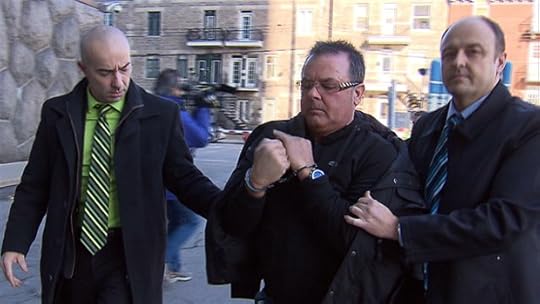 Raynald Desjardins, arrested in December 2011 for the murder
of Salvatore "The Iron Worker" Montagna.
After arriving in Palermo, Fernandez regularly met with local Cosa Nostra bosses as he went about setting up his own criminal operation (drugs). Turns out, he never had a chance of escaping law enforcement, though ultimately he was murdered before Italian police nabbed him. "... Fernandez went from unknown man of mystery to being one of Sicily’s most monitored residents. Police secretly wiretapped his phones, his friends’ phones, his car, home and even the street outside his apartment. Video cameras monitored his hangouts and all of it was watched from a wire room in the secure ROS headquarters," as the National Post story noted.
He was caught laughing while voicing moronic phrases like: “This is the Mafia’s city. I’m in a completely Mafia city."
Fernandez used Rizzuto's name left and right all over Sicily when it benefited him, a May 2013 National Post story noted: "Most perplexing, to both police and mobsters, was Fernandez’s insistence on being treated as a “man of honour” in Sicily. As a non-Italian, he could not be a “made” member of the Mafia according to the mob’s centuries-old tradition. But Fernandez claimed he was an exception; along with his long-time friend, Quebecer Raynald Desjardins, he claimed Vito Rizzuto had inducted him into the Mafia."
One conversation caught on tape:
Declaring that Mr. Rizzuto “makes the f–king rules” regardless of what Mafia bosses in Sicily thought, Mr. Fernandez asserted his right to sit at the table with other “men of honour.”“Vito ‘made’ me and my compare, Raynald,” Mr. Fernandez is heard saying on a wiretap, a reference to being officially inducted into the Mafia, a right previously reserved for Italians.“You’re not Italian,” said the surprised man he was speaking with.“No, no. Me and my compare,” Mr. Fernandez insisted, were “made” men despite their lineage.
The revelation that Rizzuto was inducting non-Italians is pure fiction; Fernandez had talked his way to a seat at the same table.
Reportedly, his undoing was caused by his friendship with Raynald Desjardins, one of the leaders of the faction that sought to take control of Montreal's underworld from the Rizzuto Cosa Nostra family.
Fernandez only attained his mob status in Canada because of Desjardins, who was part of Rizzuto's inner circle. The French-Canadian and the Sicilian mob boss even lived near each other.
Fernandez's key role was serving as emissary to outside groups associated with the Rizzuto Cosa Nostra family; the Hells Angels motorcycle club was among the criminal affiliates.
A few short years after Rizzuto's imprisonment in the U.S. open warfare had bloomed in Montreal's streets as Desjardins and others, including Salvatore "The Iron Worker" Montagna, vied for control of Montreal's underworld. Something happened though -- relationships soured and Montagna, former acting boss of the Bonanno crime family, allegedly tried to have Desjardins executed. Desjardins survived and extracted revenge. He remains in jail for the Montagna murder.
 Bravo served as emissary to the Hells Angels for the Montreal
Mafia, then run by Vito Rizzuto.
Once Rizzuto was released, he tested the loyalty of his men. As the Montreal mob boss organized his revenge against those disloyal to him as well as key members of the rival faction, Joe Bravo in Palermo expressed his “love” for Rizzuto, according to wiretaps.
But to his close friends, he sang a different tune. Desjardins was his “compare," as Humphreys wrote, "who first brought him into the upper echelons of crime..."
“I know both sides, you know? I’m stuck in the middle of these guys,” Fernandez lamented
The bodies started to pile, and Fernandez reportedly grew uncharacteristically afraid.
As noted in a recent story, How Rizzuto Got His Revenge, Mafia-Style, Rizzuto sent for various members of his family to meet him in Cuba and the Dominican Republic; those who were invited but failed to attend wound up dead.
Fernandez frequently spoke with a man identified in court as Frank Campoli, 58, a Toronto businessman who is related by marriage to the Rizzuto family. Mr. Campoli said Rizzuto was planning a trip to Cuba on Nov. 22 and asked Fernandez to come, court heard.
“Yes, I’ll come, I’ll come,” said Fernandez.
Fernandez then immediately called a friend in Toronto, identified in court as Rosario Staffiere, 55, owner of a limousine rental firm, and told him of his conversation.
“He wanted to put me to the test,” Fernandez said. “He wanted to know if I still want to see him [Rizzuto], and I said ‘Yes, of course.’”
Then, he added with a laugh: “Take a shot in the f—ing head? Of course I’m going to see him.”But he didn't see Vito; he didn't accept the invitation, we now know.
So he died because of his "friendship" with Desjardins.
Or was it possibly because Joe Bravo knew that Vito may have heard about the bullshit the Spaniard was spreading across Palermo?
We admit this is a question only we ask.
One thing all can agree on: Fernandez certainly had every reason to be afraid.
Very afraid.

November 25, 2014
Graphic Novel Mafia Apocalypse Debuts
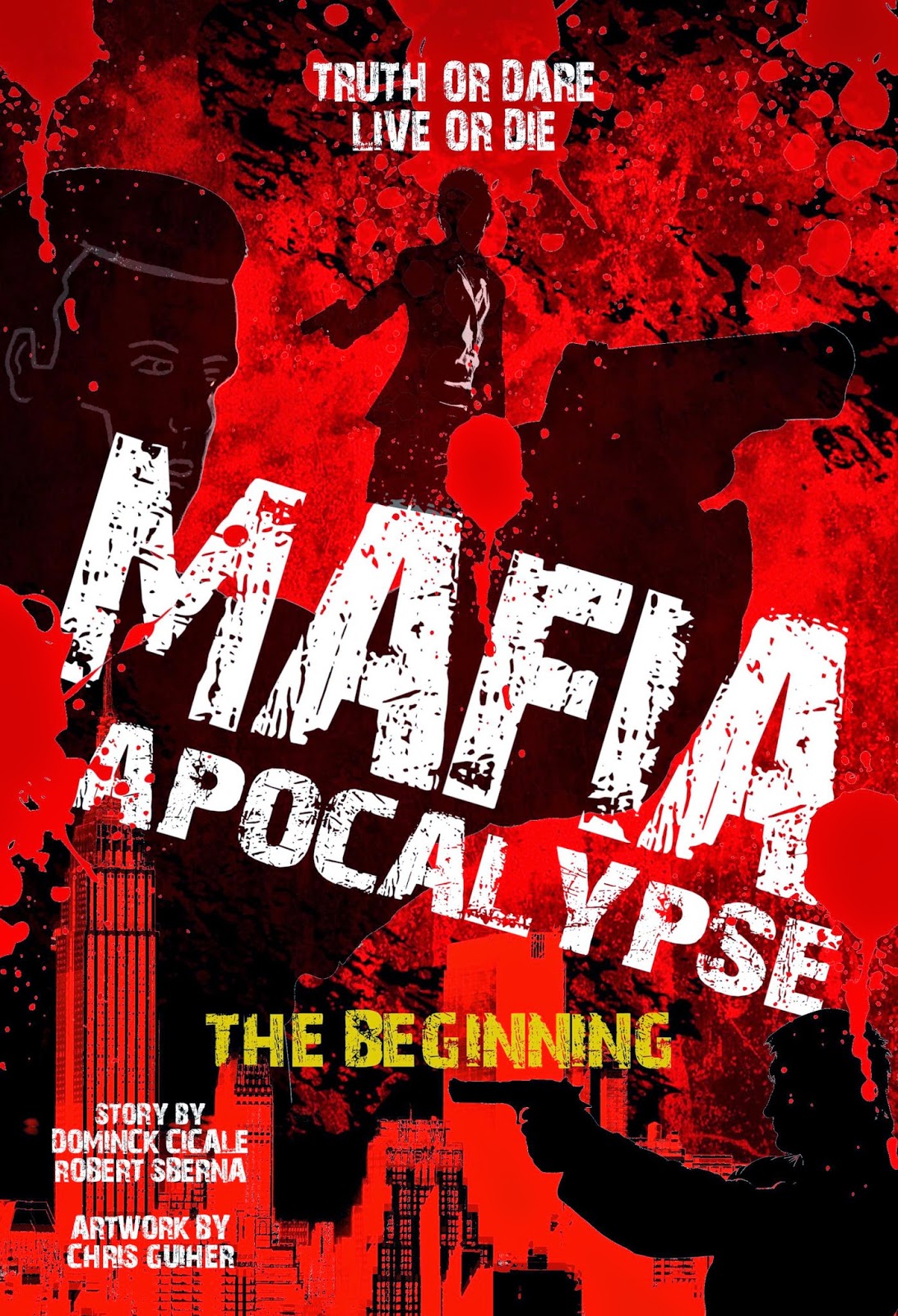 Mafia graphic novel
Mafia Apocalypse is a true-crime graphic novel based on the experiences of Dominick Cicale, a former capo in the Bonanno crime family.
Written by Cicale and Robert Sberna – and illustrated by award-winning artist Chris Guiher – this 32-page dramatization is a unique look at the secret society of the Mafia.
Cicale, who turned his back on the mob and became a government informant, reveals the treachery, risk, and rewards of organized crime. Mafia Apocalypse’s gripping narrative chronicles Cicale’s induction into the mob, his fast rise to the top, and his ultimate betrayal by men whom he considered brothers. Buy on Amazon via: Mafia Apocalypse: The Beginning is book 1 of a continuing series.

November 24, 2014
A Bath Avenue Crew Story... Book Excerpt
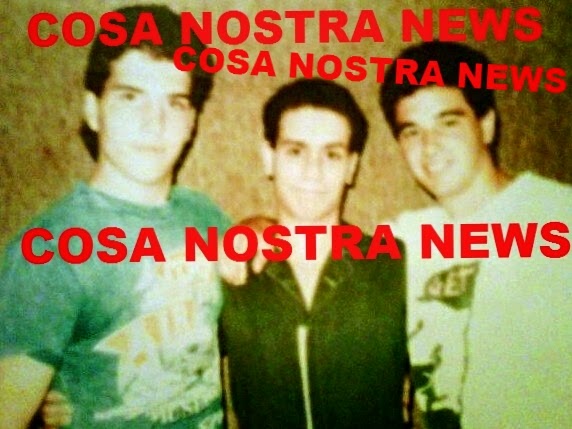 Paul Gulino, left, Georgie Adamo in middle (as
young as he looks this is a prison picture).
In the late 1980s/early 1990s, mobsters and associates were routinely murdered in New York's five boroughs.
In places like Bath Avenue, the remains of violent gangland hits were found in car trunks or slumped over steering wheels; they ripened in the backs of trucks and vans. Some were buried, many never to be found. The victims were shot late at night or in the early morning when no witnesses were around. But bullets also flew in broad daylight, sometimes just across the street from a police station.
Often, law enforcement--NYPD, DA's detectives, the Feds--knew who the killer was, but knowing and having the evidence to prove it in court are two different things and can be worlds apart.
George Conte back then was a capo in the Luchese family. Called "Georgie Goggles," he and Luchese capo George "Georgie Neck" Zappola were later charged for the slaying of painters union official and potential government witness James Bishop on orders from underboss Anthony "Gaspipe" Casso.
[Kenji Gallo has written about Conte on his Breakshot Blog: "[Conte] and the other Brooklyn capos [of the Luchese family] did not like the fact that after Gaspipe went away the power of the family shifted back to the Bronx with Steve Crea and his faction running the family. Steve Crea is more what Tommy Lucchese had in mind for the future of his family. Steve is in construction and that is where the big money comes from for the family. So George and the others decided to kill Steve Crea but it never went down."
[Conte, who was reportedly busted down to soldier, likely with the rest of the Brooklyn Luchese faction, and Zappola got out of prison in March of this year.]
 Jimmy Calandra (seated, far right); Luchese's Frank Lastorino stands behind Calandra;
Gambino capo Joe Gambino is next to Lastorino; sitting next to Calandra is Luchese's
Patty Dello Russo; Florida wiseguy Michael Sessa is next to Patty
Conte was around 10 years older than members of the Bath Avenue Crew who lost one of their own in December of 1991. Georgie Adamo, godson to then-Bonanno acting boss Anthony Spero, was murdered.
Adamo had a troubled life and took up crime at an early age; eventually he stole mainly to feed a voracious drug habit. He'd lost his father while an infant. In 1975, NYPD officers came to the family's Bensonhurst, Brooklyn home to tell Georgie's mother that her husband had been murdered. A suspected Gambino associate, his body was found with that of another man; both had been shot in the head and then tied in blankets and tossed in the back of a stolen van. Spero stepped up to act as the boy's godfather.
The murder devastated the Bath Avenue Crew. Paulie Gulino, who'd been mentored by Tommy "Karate" Pitera and ran the crew, said: "We gotta get revenge. It's our friend and this ain't right."
Steven Romano was the killer. The cops knew this but there were no witnesses.
Georgie had tried to rob "Fat Stevie," who dealt crack cocaine. He got into Stevie's car with a knife and Fat Stevie took the knife from him and plunged it into Georgie's heart, killing him. He died in front of his house inside the car.
Paulie G told the others to find Romano and kill him. But Romano, who knew Adamo was connected to Spero, disappeared from Brooklyn and hid in Manhattan, though occasionally he'd visit Neil Nastro, who lived by the intersection of 15th and Benson.
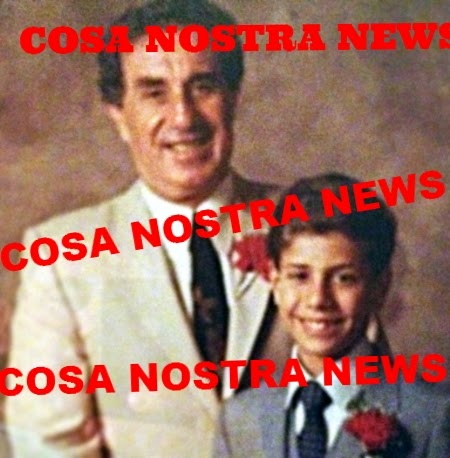 Anthony Spero with his godson, Little Georgie Adamo.
When the Bath Avenue Crew learned this, Paulie G changed the order: "Kill Neil. We can't get to Romano, so we'll kill his friend." The only potential problem was that Neil was on record with George Conte. There could be some blowback.
The hit was organized and the team locked and loaded. Jimmy Calandra was wheelman and driving with him were William "Applehead" Galloway, Joey Calco and Tommy Reynolds.
Around Bay Street and Cropsey Avenue, they beeped Neil. This was 1992; beepers were all the rage, especially among drug dealers like Neil and Fat Stevie. Instead of calling first, Neil drove to meet them. Apparently, Neil had no inkling of potential danger; when beeped and given an intersection, he'd driven straight there. Only that time he had a driving companion: his uncle.
Neil pulled over on Bay 8th and Cropsey. Calandra was parked not far away. Reynolds and Calco got out of the car and walked up to Neil. Reynolds opened the driver's door, put a .357 Magnum to Neil's head and blew his brains out. Then, he trained the gun on the uncle and fired one into his head. Reynolds and Calco then robbed any cash and cocaine they found within.
"The guy was all wired up," Reynolds said later, by way of explanation for shooting the uncle. At the time, the crew had no idea who Neil had been driving with. Also, Calco apparently touched a car door, leaving prints. They were never connected to him though.

The two hurried back into the car. Doors slammed and Calandra put the pedal to the metal and took off. The car hurtled down the street, shoveling away from the scene of the double-homicide. A bystander picked the wrong time to cross the street. Calandra hit the person, sending him flying through the air.
"I feel like Action Jackson!" Applehead yelled, referencing the 1988 Carl Weathers action film.
Calandra headed for Staten Island, pulling over first on the Verrazano–Narrows Bridge to drop the gun in the icy waters of the Narrows, the tidal strait separating Staten Island and Brooklyn.
Jimmy dropped Calco and Reynolds off at the Staten Island mall parking lot, where their cars were parked. He and Applehead drove back to Brooklyn. Calandra then stopped to check in with Paulie G, who was at Gregs Inn. He told Gulino the details. None of them knew if the guy Neil was driving with (the unfortunate uncle) was connected to anyone in the Mafia, Gulino noted.
Early 1992 was a busy time for the Bath Avenue Crew. The situation with Mikey Hamster was still going on. Hamster tried to take credit for the murder of John Polio, which is why the Bath Avenue Crew was gunning for him in the first place. Only Hamster had nothing to do with the murder.
Polio was selling drugs with Albert Slavin for Conte.
Polio had pissed off a lot of people before his murder. Word on the street was he'd been screwing the wife of a Luchese mobster (the one for whom he dealt drugs). Polio also had problems with Bobby DeCicco, son of Gambino crime family heavyweight George DeCicco. "Big George" DeCicco, who died this past October of natural causes, was part of John Gotti's inner circle. The Dapper Don was arrested in 1991, and a year later turned into the Velcro Don and was convicted. Prior to his arrest he'd been at the pinnacle of his power and his word was practically law in the Bath Beach area (ah, the good old days, in so many different ways...).
The Bath Avenue Crew three times had gone after Hamster, but missed each time.
Two weeks after the double hit, Calandra got a phonecall from Charles “Charlie Tuna” Giustra, who was married to Frankie Mariconda’s sister. Frankie was a Gambino associate then not long for this world. He died later that same year, shot to death by Frank "Frankie Bones" Papagni, a Luchese captain. Luchese capos were killing people left and right in those days, when Casso and Vittorio "Little Vic" Amuso were running the family.
"You around?" Charlie Tuna asked Calandra.
Calandra was around, he told Charlie Tuna.
"Come by."
"Gimme an hour," Calandra said.
Calandra called Tommy Reynolds to tell him what's going on.
"Jimmy! Don’t go! Tell Paulie! Tuna is with the Little Guy!" Reynolds shouted at him over the phone. Conte was called "The Little Guy." Neil and his uncle were both with Conte, the Crew had since learned. Neil had been handing the Luchese capo a portion of his cocaine proceeds every week. But he wasn't doing so anymore because Reynolds had blown his head off.
"Bring Paulie with you!" Reynolds yelled at Jimmy before they hung up.
Gulino took the call from Jimmy in stride. Just mob life in Brooklyn in 1992.
"Want me to come with you?" he asked Jimmy,
"No. I got my gun," Calandra said. "I'm just letting you know what's going on...." he said, not finishing the sentence.
Purring through the Brooklyn Streets in his Corvette, Calandra arrived at his destination, near Bay 13th and Cropsey.
He walked up the three steps that led to the screened front door. Through the screen, he saw Charlie Tuna inside sitting on the couch. Tuna held up a hand and said nonchalantly, "C'mon in Jimmy!"
Calandra opened the door and put one foot inside the house. Then he froze. Faintly, he heard the floor creak. In a split second he made a fast calculation: he hadn't made the floor creak; Charlie Tuna hadn't made the floor creak. But straight across the room from Jimmy was a wall, behind which was a staircase that rose to the second floor. The guy hiding on the stairs made the floor creak...
Calandra instinctively pulled out his gun. His heart raced. "Fight or flight" kicked in, the body's inborn muscle memory defense system. Calandra jetted back to his Corvette and sped away.
Rounding Bay 23rd and Bath Avenue, the 'vette screeched to a hault. Standing there on the street corner were Pauli G and Bonanno capo Joe Benante, who served as the crew's conduit to Spero.
Calandra walked up to them and told them what happened. "It was like they were gonna ambush me," he said.
Just then, another car came to an abrupt hault. George Conte was the driver. He rolled the window down and called out: “Jimmy, I want to talk to you!”
Calandra took a few steps toward Conte.
"I just left Tuna’s house and you’re driving over here now," Calandra said. "Were you in that house?"
"Jimmy, would I do that to you? I know you you're whole life..."
Conte got out of the car and walked away with Calandra to speak privately.
"Look, Jimmy, tell Tommy and Joey to get out of town," Conte said.
Calandra stopped and called Gulino over.
"He’s telling me that Tommy and Joey had something to do with Neil," Calandra told Paulie G, referring to Conte who was standing right there.
Gulino looked at Conte. "Georgie, what's going on?"
Before Conte could get too many words out, Gulino stopped him.
"You killed one of ours. We killed two of yours. Now we're even."
"Jimmy is over here with you guys?" Conte asked. He was too young for it to have been a senior moment. Perhaps it was an absentminded pronouncement of guilt?
"Yeah, but you know that." Gulino glared at him and then walked back to Benante.
Calandra had known Conte since he was 7 years old. In fact, when he was 12-13 years old, Conte needed to redecorate his house, so he invited Calandra and other kids to come over for a sort of playtime, Brooklyn style. He armed them with bats and axes and told them to destroy as much of the interior of the house as they could.
Later after the ambush, Calandra found out that Conte thought the Bath Avenue Bonanno associates had killed Neil in revenge for the murder of Polio.
When Calandra was doing time in prison, he grew closer to Conte.
They talked about a lot of things. Calandra recalled one night when he and some friends were eating at a diner on Cropsey and Bay 25th when in walked a guy called "Frankie Sharp."
"He's a manipulator," Conte interjected. "I'm gonna kill him when I get out of here."
This story is based on a draft of a chapter in Jimmy Calandra's memoir, which he furnished us with. He expects to be finished by April of 2015.
I am not answering any questions about this story--Ed Scarpo
Molotov Cocktail Thrown Into Restaurant Once Frequented by Vito Rizzuto
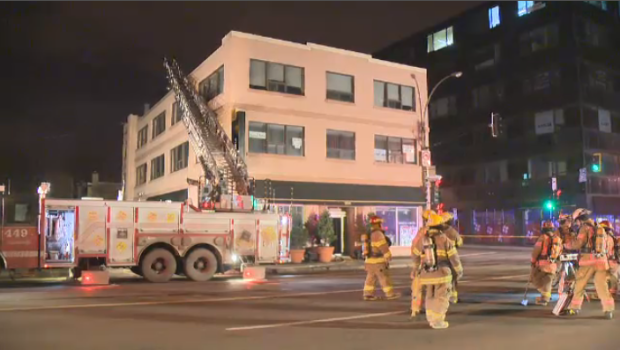 La Cantina this morning.Early this morning, someone threw a Molotov cocktail into a restaurant once frequented by deceased Montreal Mafia boss Vito Rizzuto.
The burglar alarm went off and police and firefighters arrived at around 1am local time.
La Cantina restaurant, located on St. Laurent Blvd. at Legendre St., was aflame. Firefighters extinguished the fire, limiting damage. When arson was found to be the cause, police took over and are investigating.
No one has been arrested.
Vito Rizzuto, the former Mafia boss of Montreal, was a regular at La Cantina, according to several sources.
In August 2009, the first shot of the bloody Montreal Mafia war (ongoing today) was fired. Convicted drug trafficker Federico del Peschio, 59, a former cellmate and friend of Nicolo Rizzuto, Sr., Vito's father, was shot dead in a gangland hit.
Del Peschio, a co-owner of La Cantina, actually was shot dead behind the restaurant. He'd been starting his day when the shooter, who was very familiar with the restaurateur's routine, killed him.
Del Peschio was laid out in a funeral home owned by the Rizzuto and Renda families.
Supposedly he was set to serve as acting boss of the Rizzuto family after many of its leaders were sent to prison following Operation Colisee. (Vito Rizzuto himself was in an American prison.)
Some 300 attended the funeral and the mother of Vito Rizzuto and his sister were seen weeping.
Then, the bodies began to fall. In December 2009, Nicolo Rizzuto Jr., 42, son of Vito Rizzuto, was shot to death.
In May 2010, Rizzuto consigliere Paolo Renda vanished.
In June 2010, Agostino Cuntrera, 66, who ran the Rizzuto crime family's daily operations, and his bodyguard Liborio Sciascia, 40, were murdered.
On Nov. 10, 2010, Nicolo Rizzuto Sr., 86, was assassinated by a sniper while eating dinner with his family in his home.
Does anyone believe this is an isolated case of arson?

RealityTVScandals Breaks Mob Wives Exclusive
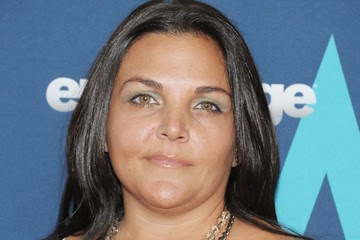
Exclusive: Mob Wives Creator Jennifer Graziano Criminal Past + Did Renee Graziano Reject Her Bi Racial Nephew? - Reality TV Scandals: The thrust of the story is that, during a sentencing hearing years ago, Mob Wives creator Jennifer Graziano's lawyer revealed that:
"Jennifer’s family did not accept her biracial child who was only two years old because he was not white. Get all of the details and click to read...
"The court document is a good read; the prosecutor slams the claim of Jennifer Graziano‘s “psychological problems” by revealing Jenn has a master degree in Psychology."
You can read the whole court document on this page. If you do, for reference, according to Reality TV Scandals:
The parties in the transcript are:The Court: Judge Charles P Sipton
Paul Lemole: Jennifer Graziano’s Attorney
Ms. Nordenbrook: Ruth Nordenbrook Prosecutor
The Defendant: Jennifer Graziano
One snippet from the transcript:MR. LEMOLE: Well, Judge, I really don’t have too much to add to my submissions. I asked Your Honor for a downward departure basically for various identified bases. Namely, her extraordinary family circumstance, and not that I want to rehash what I wrote because I thought what I submitted to Your Honor was as complete as I could make it. But here is a girl, Judge, notwithstanding her psychological problems, diagnosed disorders, which is even supported by the government psychologist, Judge, she stands before the Court with a one-and-three-quarter-two-year-old child, Judge, who who is basically, if I might, Judge, a — a product of an interracial relationship. Her family, Judge, doesn’t look kindly upon it. Her family can’t take care of this child. They won’t take care of it. They won’t treat this child like a, quote, white human being.

November 21, 2014
Mafia Hitman "Confesses" to Assassinating Kennedy
.jpg)
We still believe in the lone-assassin theory (Lee Harvey Oswald acted alone) since reading Gerald Posner's excellent analysis of the assassination, Case Closed. But we don't claim to have the monopoly on wisdom, especially when guys like G. Robert Blakey believe exactly the opposite.
Blakey famously said:
"Jack Ruby all by himself is substantial enough reason to believe in the Mafia's involvement [in the assassination of JFK]... The Mafia profited by JFK's death. What's worse is, they got away with it."
We learned from a blogger to read every day that in a new documentary called I Killed JFK by Barry Katz an imprisoned former mob associate, James Files, claims that "he worked along with major mob figures and fired the shot that killed Kennedy from the grassy knoll at Dealey Plaza in Dallas."
As noted in the Friends of Ours post, Jim Meyers for Newsmax reported that:
Files, who changed his name from Jimmy Sutton, was born in Alabama in 1942, and after a stint in the Army became associated with both the Chicago mob and the CIA. He worked under mobster Charles "Chuckie" Nicoletti, an underling of mob boss Sam Giancana. Giancana and other mobsters had been angered by the president’s brother, Robert, who as U.S. attorney general was targeting organized crime in a major prosecution effort. * * * The documentary chronicles how Files, along with Nicoletti and mobster Johnny Roselli, came to be in Dallas on the day Kennedy was assassinated.
Retired FBI Special Agent Zack Shelton, who also appears in the documentary, "is one of two former FBI agents who believe Files' story is credible":
He said:
"I have tried to verify Files' story. A lot of that story I have been able to verify," including that a shot was fired from the grassy knoll "exactly where Files said he was standing."
Former FBI special agent William Turner has dedicated his life to investigating the case as reported by KMAX:
"I believe the mafia was allied with the CIA in assassinating Kennedy, and I think we've proven that and should go ahead with closure -- designating it a conspiracy and not a single man's work,' said Turner."

In Galante’s Grip, Montreal “Wept and Bled”
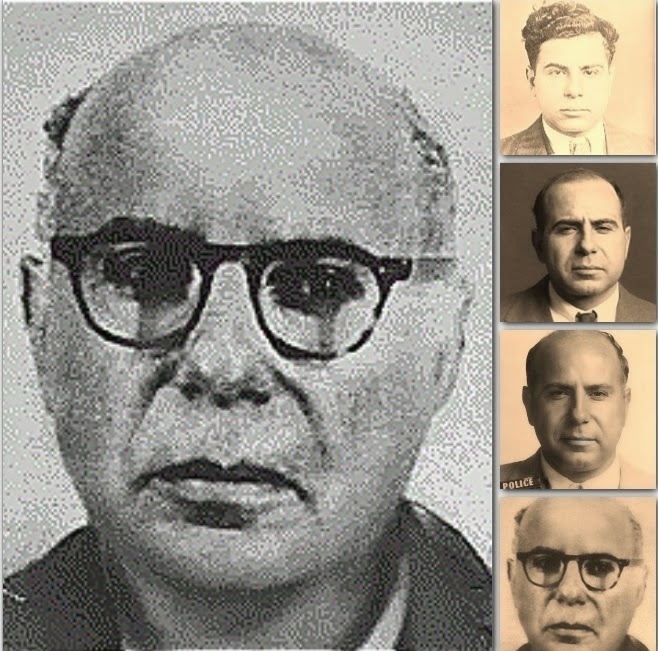 Man of Steel...By now, I am sure many of you are sick of reading about Cosa Nostra News: The Cicale Files, Volume 1: Inside the Last Great Mafia Empire. I am almost sick of writing about it... but if you keep reading you'll find some "content" you might like -- it is related to the above headline.
We do have a couple of announcements to make. We are finally uploading the files for the print version, which should be available next week. I encountered some formatting problems (to put it mildly). Again, I want to note that this is not a full-sized book; it is about 70 pages and the ebook is $4.99, the price Amazon suggested. Not sure what the print version will cost -- that is out of our hands.
Also, the ebook is finally in the Amazon Select program, which means you can borrow it (then write an honest review--please, I can't stress this enough, on Amazon -- but also Goodreads, which is a great site I advise everyone to join).
When I started this blog four years ago (a lot of my early posts are crap--some of you no doubt wholeheartedly agree, and also include my recent posts in that category), making money was the last thing on my mind. This was, and still is, a labor of love. I can't write about something unless I am passionate about it. That is why sometimes I don't follow through on some stories I say I am working on: the chief reason, I lost interest or don't see a compelling reason to continue (or some other reason, like I forgot!).
 But, briefly, back to monetization (though I earn peanuts off this blog). Once I realized the size of my audience versus that of most of my blogger friends, I was compelled to monetize (I am sure you all have noticed those annoying ads that pop up all the time). Which reminds me.... Is anyone out there a Google Adsense expert? I could use some help. Google continues telling me--it's getting annoying, frankly--that I have not optimized Adsense on this site. Anyway, if anyone can contact me (eddie2843@gmail.com) I'd appreciate it mucho.
If you signed up for my newsletter you will have already seen this part of the post: I sent out another excerpt; this one is it, the last excerpt. I have it on good authority that Dominick will beat the crap out of me if I give away anymore content (unless Jimmy Calandra gets me killed first).
This excerpt hopefully will show what I mean about including "micro-details" of larger events. Some of us, for example, know Carmine Galante went up to Montreal in the 1950s to "organize" crime. I was interested in the details. Did he do it alone? What did he do exactly? Actually, he didn't do it alone. He had a crew of strong-arm enforcers up there waiting to back him. And I do mean: strong-arm enforcers. Galante's second in command, Frank Petrula, was equally ruthless and sadistic. Petrula is considered the Canadian mobster who campaigned to entice the New York Mafia to establish an outpost up north. Joseph Bonanno took him up on it. Petrula screwed up, though, and disappeared.
Adrian Humphreys in his book The Enforcer: Johnny Pops Pappalia: A Life and Death in the Mafia wrote about Carmine's campaign. While caught in Galante’s grip, Montreal “wept and bled,” he wrote.
So, here is the link to the newsletter.
And to make it even more easier for you, here's the first part of it right here:
Carmine Galante. No one could accuse the murdering Mafia strongman and former underboss to Joe Bonanno himself of not having the right stuff to be boss. Linked to more than 80 gangland murders, he stood a mere 5-foot-4, though there was “power and little compunction packed into his wiry… frame,” noted Adrian Humphreys in his book, The Enforcer: Johnny Pops Pappalia: A Life and Death in the Mafia. Utterly fearless, Galante—of whom an NYPD lieutenant famously said: “The rest of them are copper; he is pure steel”—was among the first to recognize the importance of Canada as a drug smuggling route into the U.S. He had, in fact, gone to Montreal in 1953 at the age of 43 and had literally organized the region’s criminal activity for boss Joe Bonanno.
“He was a very motivated and motivating man,” Humphreys wrote in The Enforcer, “and his organizing drive in Montreal was alarmingly thorough.”
Backing Galante was a gang of strong enforcers led by Frank Petrula, who helped cultivate Bonanno’s initial interest in Montreal. But fueling Bonanno’s immediate personal concern were the 100 bookies who had fled to Montreal to escape litigation created in wake of the 1950-1951 televised “Kefauver Committee.” Galante went up there to tell them that although they had departed New York, they were still beholden to the Bonanno crime family. In Galante’s grip, Montreal “wept and bled,” Humphreys wrote. Every nightclub and brothel, even underground abortionists, was shaken down by Galante and Petrula, who shared a sadistic streak. Humphreys relates a story about the two forcing a busboy in one establishment to dance barefoot atop crushed glass.
Galante brought organized crime in Montreal under his purview, but his wandering eye quickly sized up and remained forever focused on the opportunities Montreal afforded heroin trafficking. It was where drug wholesalers from Europe could meet with American and Canadian dealers to make their trafficking arrangements. The Mafia—particularly the Bonannos, straddling both countries—enjoyed supremacy in the heroin trade; they wholesaled the diluted heroin to dealers in major cities throughout the U.S. As Alexander Hortis noted in The Mob and the City: The Hidden History of How the Mafia Captured New York, their heroin was “superior” due to [the mob’s] overseas connections in the underworld.
The Mafia was supplied with heroin by the Sicilian Cosa Nostra working with crime families based on the French Island of Corsica. The Corsicans were culturally similar to the families of the Sicilian Cosa Nostra. Although they were French, they even spoke in an Italian dialect. From the port city of Marseilles, the Corsicans ran smuggling operations throughout the Mediterranean. ...

November 19, 2014
A Bath Avenue Crew Story... Book Excerpt
George Conte in the middle; on left is Gambino associateFrank Mariconda.
In the late 1980s/early 1990s, mobsters and associates were routinely murdered in New York's five boroughs.
In places like Bath Avenue, the remains of violent gangland hits were found in car trunks or slumped over steering wheels; they ripened in the backs of trucks and vans. Some were buried, many never to be found. The victims were shot late at night or in the early morning when no witnesses were around. But bullets also flew in broad daylight, sometimes just across the street from a police station.
Often, law enforcement--NYPD, DA's detectives, the Feds--knew who the killer was, but knowing and having the evidence to prove it in court are two different things and can be worlds apart.
George Conte back then was a capo in the Luchese family. Called "Georgie Goggles," he and Luchese capo George "Georgie Neck" Zappola were later charged for the slaying of painters union official and potential government witness James Bishop on orders from underboss Anthony "Gaspipe" Casso.
[Kenji Gallo has written about Conte on his Breakshot Blog: "[Conte] and the other Brooklyn capos [of the Luchese family] did not like the fact that after Gaspipe went away the power of the family shifted back to the Bronx with Steve Crea and his faction running the family. Steve Crea is more what Tommy Lucchese had in mind for the future of his family. Steve is in construction and that is where the big money comes from for the family. So George and the others decided to kill Steve Crea but it never went down."
[Conte, who was reportedly busted down to soldier, likely with the rest of the Brooklyn Luchese faction, and Zappola got out of prison in March of this year.]
Jimmy Calandra (seated, far right); Luchese's Frank Lastorino stands behind Calandra;Gambino capo Joe Gambino is next to Lastorino; sitting next to Calandra is Luchese's
Patty Dello Russo; Florida wiseguy Michael Sessa is next to Patty
Conte was around 10 years older than members of the Bath Avenue Crew who lost one of their own in December of 1991. Georgie Adamo, godson to then-Bonanno acting boss Anthony Spero, was murdered.
Adamo had a troubled life and took up crime at an early age; eventually he stole mainly to feed a voracious drug habit. He'd lost his father while an infant. In 1975, NYPD officers came to the family's Bensonhurst, Brooklyn home to tell Georgie's mother that her husband had been murdered. A suspected Gambino associate, his body was found with that of another man; both had been shot in the head and then tied in blankets and tossed in the back of a stolen van. Spero stepped up to act as the boy's godfather.
The murder devastated the Bath Avenue Crew. Paulie Gulino, who'd been mentored by Tommy "Karate" Pitera and ran the crew, said: "We gotta get revenge. It's our friend and this ain't right."
Steven Romano was the killer. The cops knew this but there were no witnesses.
Georgie had tried to rob "Fat Stevie," who dealt crack cocaine. He got into Stevie's car with a knife and Fat Stevie took the knife from him and plunged it into Georgie's heart, killing him. He died in front of his house inside the car.
Paulie G told the others to find Romano and kill him. But Romano, who knew Adamo was connected to Spero, disappeared from Brooklyn and hid in Manhattan, though occasionally he'd visit Neil Nastro, who lived by the intersection of 15th and Benson.
Anthony Spero with his godson, Little Georgie Adamo.When the Bath Avenue Crew learned this, Paulie G changed the order: "Kill Neil. We can't get to Romano, so we'll kill his friend." The only potential problem was that Neil was on record with George Conte. There could be some blowback.
The hit was organized and the team locked and loaded. Jimmy Calandra was wheelman and driving with him were William "Applehead" Galloway, Joey Calco and Tommy Reynolds.
Around Bay Street and Cropsey Avenue, they beeped Neil. This was 1992; beepers were all the rage, especially among drug dealers like Neil and Fat Stevie. Instead of calling first, Neil drove to meet them. Apparently, Neil had no inkling of potential danger; when beeped and given an intersection, he'd driven straight there. Only that time he had a driving companion: his uncle.
Neil pulled over on Bay 8th and Cropsey. Calandra was parked not far away. Reynolds and Calco got out of the car and walked up to Neil. Reynolds opened the driver's door, put a .357 Magnum to Neil's head and blew his brains out. Then, he trained the gun on the uncle and fired one into his head. Reynolds and Calco then robbed any cash and cocaine they found within.
"The guy was all wired up," Reynolds said later, by way of explanation for shooting the uncle. At the time, the crew had no idea who Neil had been driving with. Also, Calco apparently touched a car door, leaving prints. They were never connected to him though.
The two hurried back into the car. Doors slammed and Calandra put the pedal to the metal and took off. The car hurtled down the street, shoveling away from the scene of the double-homicide. A bystander picked the wrong time to cross the street. Calandra hit the person, sending him flying through the air.
"I feel like Action Jackson!" Applehead yelled, referencing the 1988 Carl Weathers action film.
Calandra headed for Staten Island, pulling over first on the Verrazano–Narrows Bridge to drop the gun in the icy waters of the Narrows, the tidal strait separating Staten Island and Brooklyn.
Jimmy dropped Calco and Reynolds off at the Staten Island mall parking lot, where their cars were parked. He and Applehead drove back to Brooklyn. Calandra then stopped to check in with Paulie G, who was at Gregs Inn. He told Gulino the details. None of them knew if the guy Neil was driving with (the unfortunate uncle) was connected to anyone in the Mafia, Gulino noted.
Early 1992 was a busy time for the Bath Avenue Crew. The situation with Mikey Hamster was still going on. Hamster tried to take credit for the murder of John Polio, which is why the Bath Avenue Crew was gunning for him in the first place. Only Hamster had nothing to do with the murder.
Polio was selling drugs with Albert Slavin for Conte.
Paul Gulino, left, Georgie Adamo in middle (as young ashe looks this is a prison picture), Jimmy Calandra on right.Polio had pissed off a lot of people before his murder. Word on the street was he'd been screwing the wife of a Luchese mobster (the one for whom he dealt drugs). Polio also had problems with Bobby DeCicco, son of Gambino crime family heavyweight George DeCicco. "Big George" DeCicco, who died this past October of natural causes, was part of John Gotti's inner circle. The Dapper Don was arrested in 1991, and a year later turned into the Velcro Don and was convicted. Prior to his arrest he'd been at the pinnacle of his power and his word was practically law in the Bath Beach area (ah, the good old days, in so many different ways...).
The Bath Avenue Crew three times had gone after Hamster, but missed each time.
Two weeks after the double hit, Calandra got a phonecall from Charles “Charlie Tuna” Giustra, who was married to Frankie Mariconda’s sister. Frankie was a Gambino associate then not long for this world. He died later that same year, shot to death by Frank "Frankie Bones" Papagni, a Luchese captain. Luchese capos were killing people left and right in those days, when Casso and Vittorio "Little Vic" Amuso were running the family.
"You around?" Charlie Tuna asked Calandra.
Calandra was around, he told Charlie Tuna.
"Come by."
"Gimme an hour," Calandra said.
Calandra called Tommy Reynolds to tell him what's going on.
"Jimmy! Don’t go! Tell Paulie! Tuna is with the Little Guy!" Reynolds shouted at him over the phone. Conte was called "The Little Guy." Neil and his uncle were both with Conte, the Crew had since learned. Neil had been handing the Luchese capo a portion of his cocaine proceeds every week. But he wasn't doing so anymore because Reynolds had blown his head off.
"Bring Paulie with you!" Reynolds yelled at Jimmy before they hung up.
Gulino took the call from Jimmy in stride. Just mob life in Brooklyn in 1992.
"Want me to come with you?" he asked Jimmy,
"No. I got my gun," Calandra said. "I'm just letting you know what's going on...." he said, not finishing the sentence.
Purring through the Brooklyn Streets in his Corvette, Calandra arrived at his destination, near Bay 13th and Cropsey.
He walked up the three steps that led to the screened front door. Through the screen, he saw Charlie Tuna inside sitting on the couch. Tuna held up a hand and said nonchalantly, "C'mon in Jimmy!"
Calandra opened the door and put one foot inside the house. Then he froze. Faintly, he heard the floor creak. In a split second he made a fast calculation: he hadn't made the floor creak; Charlie Tuna hadn't made the floor creak. But straight across the room from Jimmy was a wall, behind which was a staircase that rose to the second floor. The guy hiding on the stairs made the floor creak...
Calandra instinctively pulled out his gun. His heart raced. "Fight or flight" kicked in, the body's inborn muscle memory defense system. Calandra jetted back to his Corvette and sped away.
Rounding Bay 23rd and Bath Avenue, the 'vette screeched to a hault. Standing there on the street corner were Pauli G and Bonanno capo Joe Benante, who served as the crew's conduit to Spero.
Calandra walked up to them and told them what happened. "It was like they were gonna ambush me," he said.
Just then, another car came to an abrupt hault. George Conte was the driver. He rolled the window down and called out: “Jimmy, I want to talk to you!”
Calandra took a few steps toward Conte.
"I just left Tuna’s house and you’re driving over here now," Calandra said. "Were you in that house?"
"Jimmy, would I do that to you? I know you you're whole life..."
Conte got out of the car and walked away with Calandra to speak privately.
"Look, Jimmy, tell Tommy and Joey to get out of town," Conte said.
Calandra stopped and called Gulino over.
"He’s telling me that Tommy and Joey had something to do with Neil," Calandra told Paulie G, referring to Conte who was standing right there.
Gulino looked at Conte. "Georgie, what's going on?"
Before Conte could get too many words out, Gulino stopped him.
"You killed one of ours. We killed two of yours. Now we're even."
"Jimmy is over here with you guys?" Conte asked. He was too young for it to have been a senior moment. Perhaps it was an absentminded pronouncement of guilt?
"Yeah, but you know that." Gulino glared at him and then walked back to Benante.
Calandra had known Conte since he was 7 years old. In fact, when he was 12-13 years old, Conte needed to redecorate his house, so he invited Calandra and other kids to come over for a sort of playtime, Brooklyn style. He armed them with bats and axes and told them to destroy as much of the interior of the house as they could.
Later after the ambush, Calandra found out that Conte thought the Bath Avenue Bonanno associates had killed Neil in revenge for the murder of Polio.
When Calandra was doing time in prison, he grew closer to Conte.
They talked about a lot of things. Calandra recalled one night when he and some friends were eating at a diner on Cropsey and Bay 25th when in walked a guy called "Frankie Sharp."
"He's a manipulator," Conte interjected. "I'm gonna kill him when I get out of here."
This story is based on a draft of a chapter in Jimmy Calandra's memoir, which he furnished us with. He expects to be finished by April of 2015.
I am not answering any questions about this story--Ed Scarpo


